
Volume at craft breweries outside of the Brewers Association’s (BA) definition of small and independent declined 4% on a comparable basis, to 6.752 million barrels, in 2024, the trade group reported in the May/June edition of The New Brewer magazine.
The decline amounted to nearly 450,000 barrels, driven by the sale or shuttering of once acquired craft brands and year-over-year (YoY) volume losses.
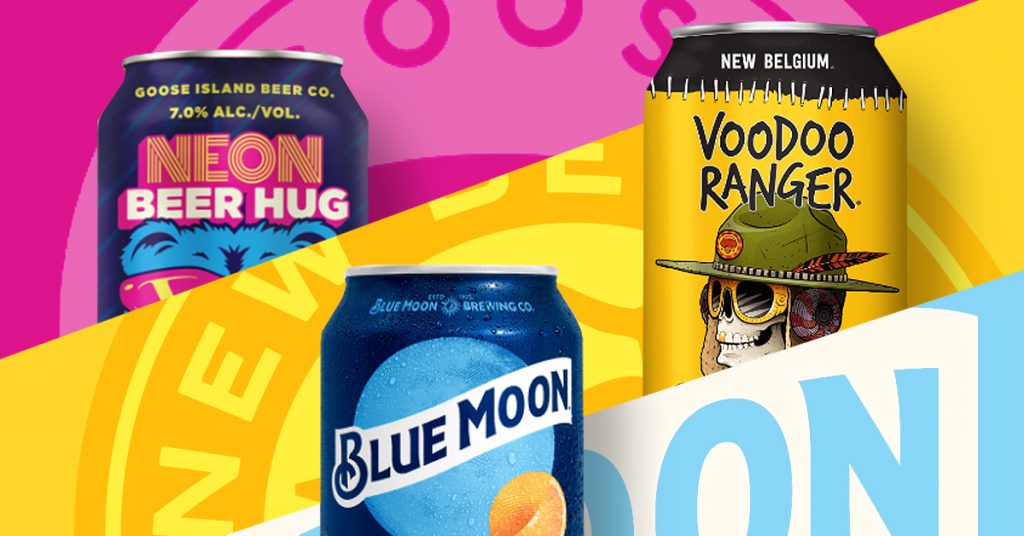
Breweries with at least 25% ownership by a larger brewing company with more than six million barrels of global production annually are excluded from the BA’s craft brewer data set, including New Belgium, Bell’s Brewery, Goose Island, Kona Brewing, Lagunitas, Blue Moon, and Leinenkugel’s, among several others.
The most notable movement among the largest big beer craft brewers came from New Belgium Brewing – the combination of Fort Collins, Colorado-based New Belgium and Kalamazoo, Michigan-based Bell’s Brewery, under the ownership of Japanese brewing giant Kirin. The company surpassed Anheuser-Busch InBev’s (A-B) craft portfolio to become the No. 2 big craft beer producer in 2024.
New Belgium trailed A-B by just 200 barrels in 2023 and made the leap in 2024 as combined output for New Belgium and Bell’s increased 1%, to 1.864 million barrels.
Molson Coors remained the No. 1 big craft beer producer in 2024, with 1.947 million barrels combined of Blue Moon and Leinenkugel’s. Molson Coors’ total craft volume fell due to an 8% decline in output and the sale of Atwater Brewery, Terrapin Beer Co, Revolver Brewing and Hop Valley to Tilray Brands, returning those breweries to BA-defined craft.

Blue Moon alone contributed 1.516 million barrels (-5% YoY) to Molson Coors’ total, while Leinenkugel’s output amounted to 431,000 barrels (-9% YoY). 2024 was the second-consecutive year in which Leinenkugel’s volume was below the 500,000-barrel mark and is now less than half of its 1-million-barrel peak in 2015.
Blue Moon has shed 709,000 barrels since reaching its peak output of 2.225 million barrels in 2015. Nevertheless, the brand remains the top-selling craft beer brand in off-premise retail channels. Molson Coors has attempted to stem the losses through expansion of the Blue Moon family with higher ABV Extra, non-alcoholic Blue Moon and a rebranding of Blue Moon Light Sky as Blue Moon Light.
As New Belgium continues its ascent, the company trails Molson Coors by 83,000 barrels. The New Belgium brand’s volume increased 2%, to 1.408 million barrels last year. Although the company’s streak of double-digit growth that started in 2020 ended in 2024, New Belgium has added 433,000 barrels since its start, including a 25,000-barrel gain last year alone.
The output of Bell’s Brewery declined 2%, to 456,000 barrels last year. The 11,000-barrel loss was more than offset by New Belgium’s growth.

Mixed Performance For A-B Craft Portfolio
A-B’s craft portfolio was firmly in third, with 1.79 million barrels (-3% YoY) last year. 2024 was the third-consecutive year of single-digit declines, following -6% in 2023 and -4% in 2022. A-B also rationalized its craft portfolio through a sale of underperforming brands to Tilray in late 2023.
The remaining A-B craft portfolio was led by in overall volume by Goose Island with 508,000 barrels (-3% YoY), followed by:
- Kona’s U.S. volume and Cisco Brewers, 386,000 barrels (+2%);
- Elysian, 262,000 barrels (-8%);
- Golden Road, 204,000 barrels (+5%);
- Four Peaks, 132,000 barrels (+1%);
- Wicked Weed, 126,000 barrels (+5%);
- Karbach, 116,000 barrels (-14%);
- Devils Backbone, 50,000 barrels (-23%);
- And Platform Beer, 6,000 barrels (-60%).
2024 marked a return to volume decline for Goose Island after two consecutive years of 6% growth.
In a LinkedIn post, A-B High End president Andy Thomas noted a strong start to 2025 for the company’s scale craft brands, with Golden Road Mango Cart wheat ale being the fastest growing craft wheat beer and Wicked Weed, Goose Island and Elysian helping the company become the fastest growing 19.2 oz. craft IPA family.
Declines for Lagunitas, Founders
Heineken-owned Lagunitas Brewing continued its volume slide, declining 8%, to 706,000 barrels in 2024. The Petaluma, California-based craft brand has tumbled from its peak of more than 1 million barrels in 2019, with 366,500 barrels lost in the years since.
Mahou San Migel’s production declined 4%, to 437,000 barrels last year, with Founders contributing 400,000 barrels (-2% YoY) and Avery Brewing adding 37,000 barrels (-17%).
Founders has lost 192,000 barrels since reaching its peak output of 592,000 barrels in 2020.
Sapporo-Stone Brewing’s numbers were not published for 2024. The company ranked No. 14 in the BA’s rankings of the overall top 50 U.S. brewing companies by volume. That would place it below Duvel Moortgat’s 647,000 barrels but above Mahou’s 437,000 barrels, indicating significant volume growth with the addition of domestic production for Sapporo. In 2023, the company produced 320,288 barrels in 2023, with Stone’s volume declining 6%.
FIFCO USA’s craft portfolio of Magic Hat (6,000 barrels, -14% YoY) and Pyramid (2,000 barrels, flat) declined -11% YoY.
Earlier this year, a FIFCO USA spokesperson confirmed to Brewbound that Magic Hat “is not being discontinued or going away.” However, Pyramid is no longer being produced.