
After years of concern that cannabis and THC products could cut into bev-alc occasions, some of the bev-alc industry is starting to view THC-infused beverages as an opportunity. But not everyone is completely on board.
Opinions on intoxicating hemp beverages and their role in the market – as well as how involved bev-alc industry members should be in the category – seem to shift as quickly as regulations do.
We dove into some of the recent public discourse on intoxicating hemp and how the category is impacting strategy across the three tiers …
Intoxicating Hemp, Delta-9, Delta-8, THC … What Are We Talking About?!
The most encompassing term for what is being debated across the industry is “intoxicating hemp,” which includes all hemp-derived THC products.
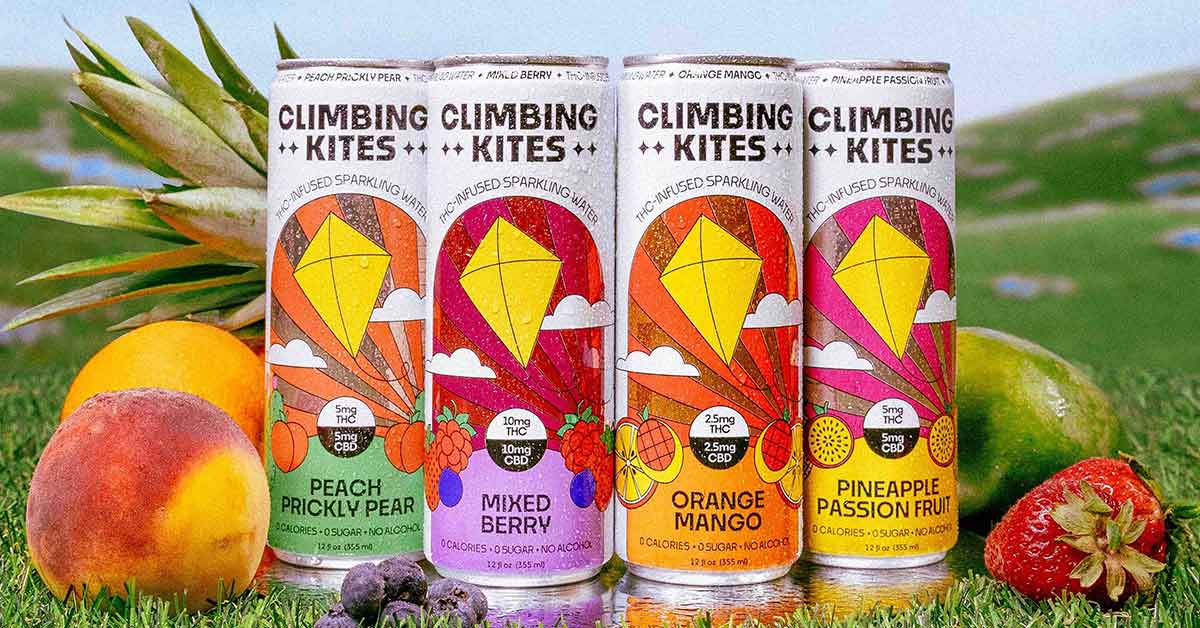
The differentiation between hemp-derived products and marijuana was made with the 2018 Farm Bill, which “bifurcated the cannabis sativa plant,” according to Climbing Kites co-founder and Hemp Beverage Alliance (HBA) board member Scott Selix. Cannabis with more than 0.3% THC by weight is considered marijuana (illegal federally), while cannabis with 0.3% or less THC is hemp.
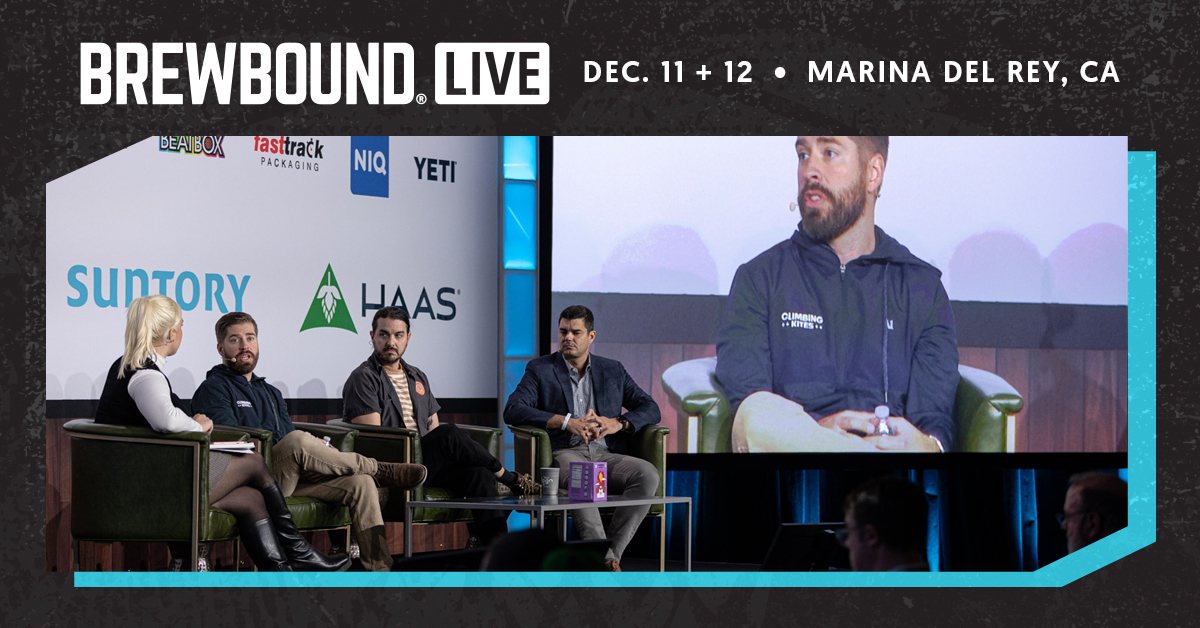
“And then they said, ‘States, take it, you can do what you want with it,’” allowing states to make their own regulations around hemp-derived THC products, Selix said last month during a Brewbound Live panel discussion that included Indeed Brewing chief business officer Ryan Bandy and BevStrategy LLC and Creature Comforts co-founder Chris Herron.
Oftentimes Delta-9, Delta-8 and other terms are used interchangeably, but those names refer to specific cannabinoids.
About 40 states so far have passed “some sort of hemp regulation plan,” Selix said. One of the most discussed is the 2022 law enacted in Minnesota. The state legalized edibles and beverages with up to 5 mg per serving of hemp-derived THC – a move that surprised even some of legislators.
Minneapolis-based Indeed Brewing was among the first breweries to jump into intoxicating hemp, launching two sparkling THC seltzers within two months of the new law passing. The company had previously released CBD beverages along with its beer lineup.
“Joints have been smoked on our patio probably since the day we were open,” Bandy said during last month’s panel. “So it was a natural progression for us.”
While the rollout was quick, developing products took time and the company continues to experiment with what works best in a THC beverage – as Bandy pointed out, “You can’t call up a craft brewery that’s been doing it for 20 years.”
According to Indeed’s website, the brewery now offers four sparkling THC beverages ranging from 2 mg of THC to 10 mg. The company also has MDS Sports, a “THC sports drink” with caffeine, electrolytes and 10 mg of THC.
THC beverages could make up around 15% of Indeed’s sales, particularly as retailers and distributors become more comfortable and interested in the products, Bandy added.
“The market is changed so much,” he said. “You have stores like Total Wine and stuff stocking a whole shelf with all THC beverages.”
“And it’s very incremental,” Herron noted, acknowledging the “misnomer” that THC products are taking consumers away from beer occasions. Instead, intoxicating hemp is creating new occasions for beverages, including as a sleep aid, and helping beer-makers add back occasions with consumers who have lowered their bev-alc intake.
“That consumer movement that’s happening right now with people sort of becoming more sober or drinking alcohol less, that wasn’t started because of this [THC] beverage,” Herron said. “This beverage is taking the occasion that alcohol is potentially losing and filling it with something it’s not necessarily taking alcohol’s occasion.”
The appeal of THC beverages for consumers is the familiar experience of having an intoxicating drink, according to Herron. Instead of eating a gummy or other THC edible, or smoking weed, consumers can have a similar experience and reaction, but with a vehicle they’re used to. And low-dose beverages allow consumers to have a similar experience to drinking alcohol and remain in control of how much effect they want on their body, he added.
“One of the things that has scared people from this industry, from THC for a while, was, ‘I don’t want to be high,’” Herron said. “And it’s funny, because when you hand someone a beer, they don’t say, ‘Well, I don’t want to be drunk.’
“We understand that there’s a world between sober and drunk, and we’re now really being able to provide people a mechanism for enjoying the world between sober and high. There’s a lot of other space to play in the middle.”
Note, not all intoxicating hemp beverages are low dose. However, the HBA recommends a maximum dosage of 10 mg of THC per serving.
The full intoxicating hemp panel discussion between Selix, Bandy and Herron is available to watch in the video above. The trio also dove into tips for beverage companies wanting to expand into THC, and lessons learned so far (such as how grapefruit can degrade THC), as well as the “huge” on-premise opportunity, and whether intoxicating hemp is the new “fifth category” in beverage.
Wholesalers’ Ever-Shifting Opinions
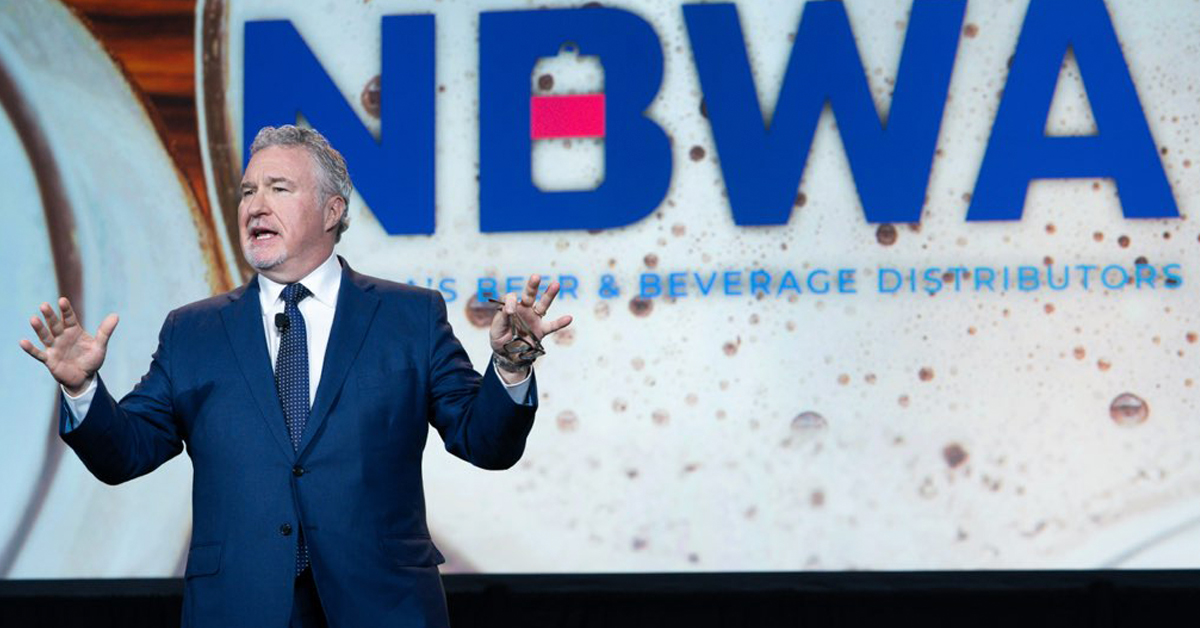
At the National Beer Wholesaler’s (NBWA) Annual Convention in September, there appeared to be a shift in industry acceptance of intoxicating hemp and the role cannabis could play for the beer industry.
“Nobody should be surprised that the emerging hemp beverage industry is eyeing beer distributors as the best way to get to market,” NBWA president and CEO Craig Purser said at the time, encouraging members to embrace intoxicating hemp beverages to make sure the segment and its products are in the hands of an industry that is used to regulation and selling intoxicating beverages.
In a panel discussion held earlier this month during Business Business Daily’s Beer Industry Summit, Selix noted that more distributors are open to intoxicating beverages than those that aren’t, and Climbing Kites has been “successful” with bringing distributors on board because the company – along with other beer producers – “understand what they’re looking for in a distribution agreement” and “what they’re looking for in a partner.”
“Two years ago, I was driving trucks around myself because I couldn’t get a distributor to take the product,” Selix said. “And now, we’re in a position where they’re calling us, which is a big flip.”
However, not all distributors are keen on putting intoxicating hemp beverages on their trucks – particularly as the regulatory landscape continues to evolve, and there’s a looming risk that products could be pulled from shelves.
“We don’t touch the stuff,” Manhattan Beer and Beverage VP Alex Bergson said during a Summit discussion.
Bergson, who was joined by Bill Lenahan, AVP of marketing for Martignetti Company’s Quality Beverage division (Martignetti acquired Quality in 2024), said there is “lot of gray legislation” when it comes to intoxicating hemp and it’s unclear what can be sold in New York. He referred to the intoxicating hemp allowances as a “loophole” around the federal ban of marijuana, and said it’s “not worth it.”
Meanwhile, Lenahan and the Quality team in Massachusetts cannot participate in the category, due to 2024 regulations that ended the sale of hemp-derived CBD and THC products at bev-alc retailers, requiring all sales occur at licensed dispensaries. However, Quality was not participating in the category before the regulatory changes, and in turn did not have to worry about pulling products from shelves when the change happened, Lenahan said.
Purser previously acknowledged the concern some distributors have about pulling products during his Annual Convention speech, noting that it still may be best practice for beer wholesalers to take on these beverages while they can, as the industry has the infrastructure to support mass pullbacks if necessary.
“You all know that when there’s been a recall of one of the products you carry, you better believe you’re able to track every shelf and tap where that product needs to be pulled,” Purser said. “Our partners understand this.”
Big Beer Keeping An Eye Out, But Staying Hands Off
Large beer producers appear to be even more hesitant to participate in intoxicating hemp, according to several remarks at the Beer Industry Summit.
Simon Wuestenberg, Anheuser-Busch InBev’s (A-B) U.S. chief sales officer, was arguably the most vehemently against the category when asked about intoxicating hemp onstage during a one-on-one conversation, responding “it’s illegal.”
“All I can say is that I am 100% focused on making sure that we are doing the right thing for the category and for our role within the category,” Wuestenberg said.
He also spoke directly to wholesalers, of whom he has the “same expectation” of prioritizing driving “the health of this [beer] category.”
“Which, by the way, keeps the lights on and much more in all of our business,” he added.
Constellation Brands CEO Bill Newlands said in his own one-on-one discussion that intoxicating hemp is “not an area where we’re spending much time and attention today.” Recall, Constellation invested $4 billion in Canopy Growth, a Canadian cannabis company, in 2018. However, the company began to step back in 2022, and are now no longer involved with the “day-to-day” operations, Newlands said.
Boston Beer Company co-founder and board chair Jim Koch called intoxicating hemp “attractive,” but “a mess.” Boston Beer dabbles in cannabis through TeaPot, a cannabis-infused hard tea brand made and sold in Canada, where cannabis is legal nationwide. TeaPot allows Boston Beer to experiment with the category “knowing that at some point it will become federally legal” in the U.S., Koch said.
Tilray Brands executives were the only panelists on stage beyond Selix’s hemp-focused panel with an intoxicating hemp beverage in the market. But even Tilray – a global cannabis firm – was hesitant to bring intoxicating hemp products into the U.S. market too quickly.
Tilray launched its first U.S. foray into intoxicating hemp beverages in October, with the addition of a new business unit, Tilray Alternative Beverages. The unit’s beverage portfolio includes several brands, all 5 mg hemp-derived THC beverages: 420 Fizz, Herb & Bloom mocktails, Fizzy Jane’s seltzers and Happy Flower cocktail-inspired beverages.
Tilray had been “watching and staying close” to the intoxicating hemp beverage market for “well over a year” before launching, Tilray Brands president Ty Gilmore said. The company had previously been waiting for federal legalization, and is still holding out hope for federal approval.
Gilmore was asked whether Tilray would prioritize cannabis over its acquired bev-alc brands should cannabis become federally legal in the U.S. While he did not answer directly, he noted that “these acquisitions allow us to go out to market to do a lot of different things as different things migrate.”
“Consumers love brands,” Gilmore said. “We have some regional jewels that we can do a lot with those brands.”