

Hard tea continued to fill Boston Beer’s sails in Q2, but it was newbie Sun Cruiser that put in the brunt of the work rather than veteran Twisted Tea, company leadership shared Thursday during a call with investors and analysts.
Vodka-based Sun Cruiser was introduced in 2024 and is now “one of the top volume gainers in RTD [ready-to-drink] spirits so far this year,” now claiming 4% share of spirits-based RTDs, Boston Beer founder and chairman Jim Koch said.
The offering launched regionally with an on-premise focus, but is now available on shelves at national retailers, tripling points of distribution over the past few months and is set to be “the next iconic brand for the company,” CEO Michael Spillane said. With that recent distribution growth, Sun Cruiser is up triple-digits in dollar sales (+729.4%) and volume (+751.8%) in the last 26 weeks (data ending July 12) in NIQ-tracked off-premise channels, according to data shared by 3 Tier Beverages.
However, Sun Cruiser’s growth was unable to counteract declines from its sibling brands in Q2. As reported Thursday, Boston Beer’s collective portfolio – which also includes Twisted Tea, Truly Hard Seltzer, Samuel Adams, Angry Orchard, Dogfish Head and Hard MTN Dew – recorded year-over-year (YoY) declines in both shipments, or sales to wholesalers (-0.8%) and depletions, or sales to retailers (-5%) for the three-month period ending June 28.
Those declines are on top of Q2 losses recorded in 2024 (shipments -6.4%, depletions -4%) and 2023 (shipments -4.5%, depletions -3%). Year-to-date (YTD) through the first half of FY25 (H1), Boston Beer shipments declined 1.7%, while depletions declined 3%.
The soft quarter was due to “a challenging and unpredictable macroeconomic environment” combined with “poor weather in key selling weeks,” Koch said. Additionally, “higher than expected” declines across the flavored malt beverage (FMB) segment heavily affected Boston Beer, with FMB off-premise volume down 3% YTD, after ending 2024 up 7%, Spillane shared.
Notably, 85% of Boston Beer’s volume is within the “beyond beer” space, including primarily FMBs, such as its lead brand Twisted Tea. The hard tea subsegment is about flat YTD, according to Koch.
A year ago, Boston Beer leadership was highlighting Twisted Tea as a growth leader in its portfolio, with only upward trajectory expected, as the brand had nearly 85% of hard tea’s volume, but only about 65% of its shelf space, Koch shared last July. Flash forward to July 2025 and Twisted Tea is in the red, with dollar sales down 3.6% and volume down 5.6% in NIQ-tracked off-premise channels YTD (data ending July 12). In the last four weeks, the FMB recorded double-digit YoY declines (dollar sales -11.5%, volume -13.2%).
Leadership insisted Thursday that the declines were not due to cannibalization from Sun Cruiser. About 20% of Twisted Tea’s declines can be attributed to vodka-based hard teas, including Sun Cruiser competitors such as Gallo’s High Noon Vodka Iced Tea, Stateside Vodka’s Surfside and smaller brands, Koch said.
“Sun Cruiser’s a premiumization of the tea category, so to the extent we’re swapping some Twisted Tea drinkers for Sun Cruiser drinkers, it’s margin and revenue accretive,” he added. “We would hope that as the year goes on, the momentum that we have behind Sun Cruiser will more than make up for what’s going on with Twisted Tea.”
What is more heavily affecting the brand is lost display space, disproportionate impacts from Hispanic consumers’ changing habits and self-made pricing problems, Koch continued, noting the importance of creating more distinction between Twisted Tea and more premium hard tea offerings.
“There are places where the [pricing] gap between Twisted Tea and mass domestics has gotten significantly bigger over the last four years, so we may have pushed the price up during COVID[-19] and the preceding couple of years higher than sustainable,” Koch said. “So we may have to make some adjustments there.”
Koch added that Twisted Tea was typically priced between domestic beer – where there is a larger crossover of consumers with the hard tea brand – and craft beer, but in recent years has been priced closer to craft, which “may have been overly aggressive,” impacting certain package formats, such as 12-packs.
Additionally, Twisted Tea was “pushed off the floors” and “lost a lot of display space in the last few months” with retailers prioritizing spirits-based RTDs, Koch said.
“I was really surprised when I’ve been out in the market to see how the retailers have swung towards RTD displays,” he said. “Gallo – who we never really thought we were competing for beer display space with – had big High Noon displays and big displays for their new vodka lemonade, Lucky One. So displays that last year went to Twisted Tea didn’t go there.”
Koch said he believes those display shakeups will correct themselves.
“We’ve got a healthy brand, and we will continue to support it at very high levels,” he said. “And we got an increase in our distribution this year, so those retailers still have confidence in it. It’s a big brand for our wholesalers, so we’re continuing to get support from them, so I feel more comfortable about the long term than the last few months.”

Despite the volume declines, Boston Beer leadership highlighted growth in other areas of the business, including Q2 net revenue growth of 1.5%, to $587.9 million, and a net income increase of 15.5% YoY, to $60.4 million (+$8.1 million). Gross margin also grew 380 basis points, to 49.8%.
H1 net revenue increased 3.6%, to $1.042 billion, while net income increased 30.7%, to $84.8 million (+$19.9 million). Gross margin is up 410 basis points YoY, to $49.1%.
As reported Thursday, Boston Beer has updated its full-year guidance, with lower volume and higher gross margin expectations, factoring in the impact of tariffs:
- Depletions and shipments down high-single-digit to down low-single-digit (previously down low-single-digit to up low-single-digit);
- Gross margin, including tariffs, between 46% and 47.3% (previously between 44% and 46.5%);
- Gross margin, excluding tariffs, between 47% and 48% (previously between 45% and 47%).
“I’m confident we have the right strategies and team in place,” Koch said. “We’re continuing to invest in our brands, we’re building a strong innovation pipeline, and we’re making progress on our multi-year productivity initiatives. Importantly, we’re focused on controlling what we can control.”
As Boston Beer’s updated full-year guidance suggests, the company does not expect beer’s downward trends to improve anytime soon.
“Regardless of what happens in the macro environment, we see ourselves holding or gaining market share, so that regardless of what happens, we feel like we’re going to compete,” Spillane said.
Some analysts on Thursday’s call questioned why Boston Beer’s new guidance had such a wide range in results with half of the year already in the books. CFO Diego Reynoso noted that part of the reason is that “the highest piece” of the company’s selling season, July and August, “are still to come.” Additionally, “nobody in the industry can accurately tell you what the market’s going to do,” he said.
“For that reason, we’ve widened our range of the depletion targets, because we know what we can control, but again, there’s the weather, there’s a bunch of other things that have been happening that are outside our control,” Reyoso said. “So I think it’s the prudent thing to do is to expand our range in a more volatile environment.”
“I would anticipate that we continue to maintain our market share and grow where the opportunity presents itself, but given the macro headwinds, it’s really hard to predict,” Spillane added.
Below are other highlights from the call:
On Sun Cruiser’s ability to sustain growth (and avoid Truly’s mistakes) …
Spillane admitted that Boston Beer has “done a lot of things right” but also “made all the mistakes in the world” throughout its history. What the company has learned from those mistakes is that innovation needs “a strong foundation” beyond being shiny and new, and for Sun Cruiser that foundation was built in the on-premise, he said.
“The most important thing we did here was we built this on-premise to start,” Spillane said. “There’s a lot of great exposure to consumers and therefore they go out and purchase it off-premise as they enjoy the product.”
Some of Boston Beer’s recent mistakes came with its handling of Truly, which remains down double-digits YTD (dollar sales -16.2%, volume -18.2%) in NIQ-tracked off-premise channels.
“While Truly continues to be a top two hard seltzer brand and a top four beyond beer brand, we’re not satisfied with its performance,” Spillane said. “We’re refreshing our marketing strategy and continuing to support the Truly Unruly high ABV innovation as we work to stabilize the brand.”
Boston Beer is “launching a new creative platform” with “significant investment” in regional marketing that will launch in Q3. As the official hard seltzer of the U.S. Soccer Federation, Truly is also set to have extra eyes on it in the lead up to the 2026 FIFA World Cup, and with new media partnerships, leadership added.
Truly Unruly (8% ABV) has contributed some growth to the parent brand, now claiming 3% share of total hard seltzer volume YTD. The Truly Unruly variety pack is also the No. 1 12-pack share gainer in beyond beer in the last 52 weeks, Spillane shared. The offering was expanded in April with a second variety pack, Truly Unruly Lemonade, which “is helping Truly Unruly build momentum and gain shelf space,” he added.
On Dogfish Head’s turning of the tides …
Dogfish Head – which seldom receives extensive comments during Boston Beer earnings calls – was the only brand other than Sun Cruiser to contribute notable growth to the company in Q2, leadership shared.
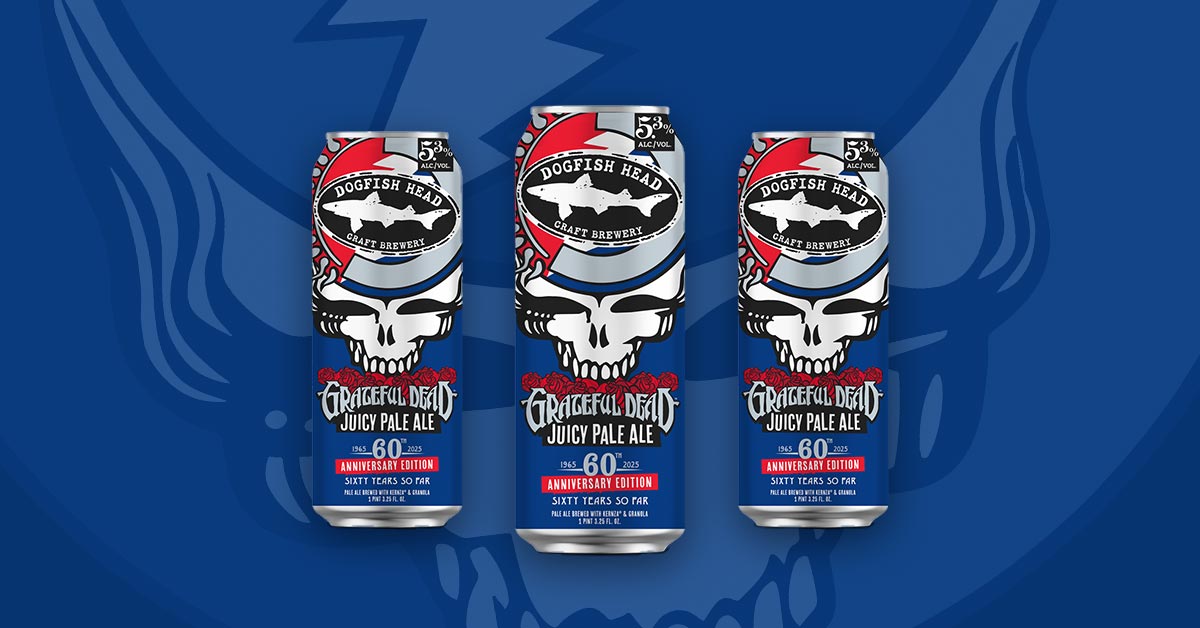
Dogfish Head’s depletions grew “for the first time in many years” in Q2, thanks to the launch of Grateful Dead Juicy Pale Ale, which was “the largest launch in Dogfish Head’s 30-year history,” Spillane shared. The offering “continues to build volume and distribution,” with a focus on on-premise accounts and venues.
“Partnering with the Grateful Dead has allowed our team to gain distribution, not only in our core Dogfish markets, but beyond, including the sphere in Las Vegas for the Dead and Company concerts,” Spillane said.
Dogfish Head dollar sales (-4.1%) and volume (-6%) are both in the red YTD in NIQ-tracked off-premise channels. However, the craft brand’s trends have turned positive in the last four weeks (dollar sales +2.5%, volume +0.3%).
On Samuel Adams American Light …
Boston Beer’s answer to the craft light beer craze, Samuel Adams American Light, went national in March. While initially available in 12 oz. cans, Boston Beer recently added glass bottles to the lineup “to support its positioning as the most premium light beer in America,” Spillane said.
American Light is the focal point of Samuel Adams’ marketing through the summer, along with Summer Ale, which will both be featured in a “summer patriotic program.”
Samuel Adams dollar sales (-6.8%) and volume (-7.2%) are both down YTD in NIQ-tracked off-premise channels. Trends have remained relatively consistent over the last four weeks (dollar sales -6.4%, volume -8%).