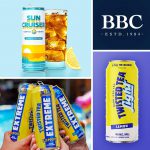
Boston Beer Company has found another growth driver with its spirits-based hard tea brand Sun Cruiser, which continues to deepen its distribution footprint. But the hot ticket item continues to be unable to stop flooding volume from its sibling brands, as the company recorded yet another quarter of shipments and depletions losses.
Seven of the 10 largest Brewers Association-defined craft breweries recorded production volume declines in 2025, according to data shared by the trade group in the May/June Issue of The New Brewer magazine.
Boston Beer Company has “gotten over the hump as a supplier” and become an “important” part of its wholesalers’ and retailers’ businesses, founder, chairman and CEO Jim Koch told analysts during the company’s Q1 2026 earnings report Thursday evening.
Dogfish Head’s canned cocktails are gaining traction in the fast-growing spirits-based, ready-to-drink (RTD) canned cocktail market. Dollar sales of the Dogfish Head brand family (+92.3%) are outpacing the overall segment (+56.5%), according to NielsenIQ total U.S. all off-premise data, shared by Bump Williams Consulting.
A little more than two years after announcing it would open, Boston Beer’s Dogfish Head taproom in Miami will shut its doors on November 5 due to “marketplace factors beyond our control,” according to an internal memo.
Boston Beer Company is launching a multimillion-dollar, multi-channel marketing campaign to support Truly Hard Seltzer, which it recently reformulated with real fruit juice. In the new ad campaign, Boston Beer, which has leaned on singer Dua Lipa in previous Truly ads, has instead turned to fruit flies to help promote the reformulated hard seltzer brand.
The college football season kicked off last weekend and will go into full throttle this Labor Day weekend. For those watching at home, Boston Beer Company’s Twisted Tea will be heavily featured this weekend and throughout the season. Boston Beer’s playbook for Twisted Tea includes a 360-degree marketing “Tea Drop” campaign, with new 15- and 30-second TV spots that will be featured across the major networks airing college football games.
One year after its launch, the joint venture between Boston Beer Company and Beam Suntory revealed a third product: Twisted Tea Sweet Tea Whiskey. Hard MTN Dew – a collaboration between Boston Beer and PepsiCo – rolled out to Las Vegas retailers this week after a regulatory standoff with the Nevada Department of Taxation.
For the 52 weeks ending July 16, the combined malt- and spirits-based hard seltzer segment reached $4.263 billion, according to Jefferies equity research managing director Kevin Grundy. In the last four weeks, spirits-based seltzer’s share of the business has reached 9.1%. Malt- and sugar-based hard seltzers account for 90.9% of the segment – and their sales are declining.
Boston Beer Company’s leadership admitted the company has not performed “as expected” so far this year, lowering its guidance to a volume loss between -2% and -8%, during an earnings call with investors Thursday afternoon.
Due to the “greater than expected continuing decline in demand in the hard seltzer category,” Boston Beer Company has “reduced” its fiscal year 2022 volume and earnings guidance, founder and chairman Jim Koch said in a press release announcing the company’s Q2 2022 results.
Another financial services firm has lowered Boston Beer Company’s stock (SAM). RBC Capital Partners today downgraded the company’s stock from an “outperform” rating to “sector perform.”
Goldman Sachs’ pessimism for Boston Beer Company’s 2022 sales performance and the company’s ability to reach its 2022 guidance continues, with analyst Bonnie Herzog downgrading Boston Beer to a “sell” rating in the financial services firm’s June Beverage Bytes retailer survey.
The life of Bevy Long Drink, Boston Beer’s malt-based foray into the Finnish long drink segment, won’t be very long after all. The company has discontinued the brand, which it launched in 20 test markets late last year and expanded nationwide earlier this year.
Boston Beer Company has launched its first-ever media campaign to support Hard MTN Dew, its ready-to-drink, fermented sugar-brew produced through a licensing partnership with PepsiCo.
Cowen is lowering its fiscal year 2023 estimates for Boston Beer Company, analyst Vivien Azer wrote in a report today, noting the financial services firm has become “increasingly skeptical” that Boston Beer will meet its guidance of +4%-+10% shipment and depletion growth.