

Mark Anthony Brands is narrowing its focus in 2025, with a “dramatically” simplified portfolio, Mark Anthony Brands president David Barnett shared Monday during Day 2 of Beer Business Daily’s Beer, Wine and Spirits Summit in Palm Beach, Florida.
Like many bev-alc companies prioritizing “focus” in the new year, Mark Anthony Brands’ 2025 ambitions will be anchored by its core offering, White Claw Hard Seltzer – the No. 1 hard seltzer brand, with 67% share of the segment’s dollar sales – and offshoots of the 5% ABV brand, including:
- White Claw Surge (8% ABV), which is nearing 10 million cases sold and growing around +20%, according to Barnett;
- White Claw Zero (0% ABV), launched in late 2023 for consumers who “want to hold White Claw in their hand, but are not drinking;”
- Clawtails (7% ABV), a new line of malt-based, cocktail-inspired ready-to-drink (RTD) beverages.
“We tried a lot over the years from an innovation front – some have worked, some haven’t – and now we have a really strong portfolio strategy, which has anchored around our core product,” Barnett said.
Mark Anthony Brands is the fourth-largest beer vendor by 2024 dollar sales in off-premise channels tracked by both Circana and NIQ.
Year-to-date (YTD) through December 29, the company’s dollar sales increased +1.5%, while volume, measured in case sales, declined -1.7%, in Circana-tracked channels (total U.S. multi-outlet + convenience).
In NIQ-tracked channels (total U.S. xAOC + liquor plus + convenience), dollar sales increased +1.2% and volume declined -1% YTD (ending December 28).
White Claw Hard Seltzer was the eighth-largest brand by YTD dollar sales in NIQ-tracked off-premise channels, with dollar sales increasing +2.5% and volume flat (-0.1%), according to data shared by 3 Tier Beverages.
White Claw’s Spirits-Based RTDs ‘Didn’t Work the Way We Wanted’
“Clawtails, endorsed by White Claw” will launch in March with four flavors: Margarita, Cosmo, Mai Tai and Mojito. The offerings will be available in 12 oz. can 12-packs and single-serves, hitting shelves in time for spring resets.
Clawtails are a part of Mark Anthony Brands’ ambitions of “now tackling and refreshing the cocktail occasion,” Barnett said.
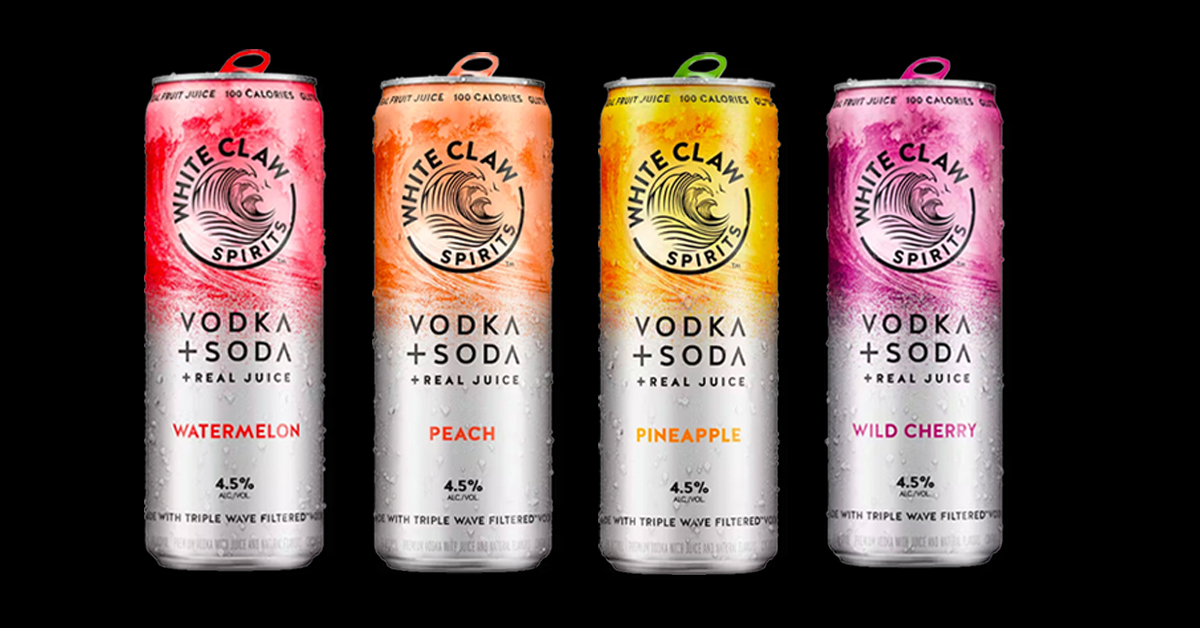
Barnett admitted the company’s share in spirits-based RTDs is minimal (0.9% of off-premise dollar sales in the last 52 weeks, according to NIQ data), as attempts to expand with White Claw Vodka + Soda and Tequila + Soda have fallen flat.
“We tried a few things, particularly with White Claw that didn’t work the way we wanted it to work, and that was taking a bit of our own medicine there,” Barnett said.
In the last 52 weeks (ending December 28), White Claw’s spirits-based RTD dollar sales have declined -34.5% and volume -33.7% in NIQ-tracked off-premise channels.
Mark Anthony Brands still has total-beverage aspirations, and has expanded its spirits-based RTD portfolio by introducing existing brands into the U.S. market, including Ontario-based Dillon’s Small Batch Distillery, which Mark Anthony Brands acquired in 2011. The company will push Dillion’s gin- and vodka-based RTDs into 18 markets across the U.S. this year, Barnett shared.
Mark Anthony Brands is also testing another Canadian RTD, Olé – a canned margarita brand acquired last May – in California and Southwestern states in 2025. The 5.2% ABV margarita brand comes in eight flavors, and claims to offer Canada’s first tequila variety pack.
However, the spirits-based RTD market is still hard to succeed in, with more than 500 brands and 2,500 SKUs in the market, Barnett shared.
“It’s two-times hard seltzer in terms of the proliferation of the category, so you have to pick and choose to make sure you’re doing it the right way,” he said.
In response, Mark Anthony Brands is allocating marketing dollars to a cocktail-adjacent product, Cayman Jack, the company’s malt-based margarita brand. The brand is a “classic discovery brand,” and just surpassed 10 million cases in sales, but only has half the distribution of White Claw, Barnett shared. He believes there’s a “big impact opportunity in terms of romancing the margarita mindset,” although the cocktail already has now reigned for multiple years as America’s favorite.
After extending its flagship brand White Claw into straight spirits via White Claw Vodka three years ago, the company is also “looking to strategically improve” its share in the mother category. In addition to White Claw Vodka, the company owns Glendalough Irish gin and whiskey, as well as Canadian whisky, Bearface.
“The consumer cycle is much slower, so it’s going to take a longer time in spirits,” Barnett said.
In the last 52 weeks, White Claw Vodka dollar sales have declined -12.9%, while volume has increased +2% in NIQ-tracked off-premise channels.
‘Mega M&A Deals’ Not A Part of Growth Strategy
Despite bringing some acquired RTD brands stateside, “major M&A deals” are not a part of Mark Anthony Brands’ growth strategy, Barnett said.
“I’ll never say never – we look at virtually everything that comes available to us,” Barnett said. “But I don’t think mega M&A deals are gonna be a part of our long-term growth strategy.”
“Where it makes sense to amplify and build a diverse portfolio across categories [and] where we can get a headstart with some entrepreneurs, maybe,” he continued. “But for those of us who know [founder] Anthony [von Mandl], who are we as an organization, we are an innovation-led, disruptive-category, start-from-ourselves-type of an organization.”

White Claw Zero
White Claw Zero is for when “you’re not drinking for whatever reason, and you don’t want to have a traditional beer non-alcoholic (NA), but you don’t want to hold something in your hand at a party that your kids are also drinking,” Barnett said.
Barnett believes the adult NA beverage space outside of NA beer is “just starting to happen,” but that White Claw Zero has “done well” and the company is “optimistic about it.”
“We’re learning everyday to make sure it’s an important part of our portfolio,” Barnett said.
On-Premise
Mark Anthony Brands and White Claw are “just getting started with the on-premise,” Barnett shared.
He estimated that about half of the total on-premise accounts in the U.S. carry a hard seltzer, but it’s “getting better and better every day” and “there’s plenty of runway for White Claw still.”
Navigating Marketing for Más+ Hydration Beverage
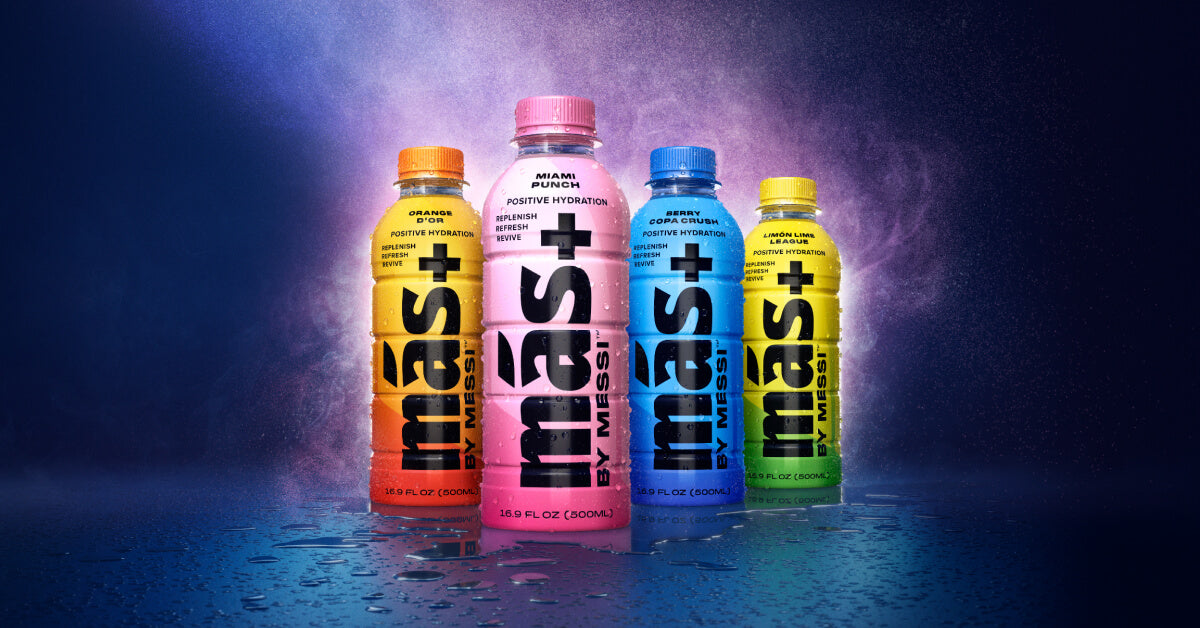
Mark Anthony Brands launched its hydration beverage Más+ in South Florida in June 2024, backed by professional soccer star Lionel Messi. The offering is now available in eight markets, with a national launch slated in the next 3-4 months, Barnett shared.
In the markets where Más+ is available, it’s a top 10 hydration product, and Mark Anthony Brands feels “great about the proposition” of the product, “great about the support that we’ve gotten through our distributors and our retailers,” and happy with its partnership with Messi, Barnett said. However, the company is “working on marketing.”
“It’s relatively new for us as a category, and we’ve learned a lot in terms of how we really amplify Leo’s network and work with a celebrity of that scale,” Barnett said. “And that’s what our focus is right now, is really getting our marketing right so that we go national, we’re ready to go.”
The majority of Más+’s distributor network – approximately 85% – is Mark Anthony Brands’ existing network of beer distributors, Barnett said. However, “for the most part, Más+ is a startup company,” and its sales and marketing resources separate from Mark Anthony Brands’ beer resources, “so that we can maintain focus on our core portfolio,” he added.
Barnett did not share comments (nor was he questioned) on the company’s legal battle with Prime Hydration, the hydration beverage company backed by influencers and YouTube personalities Logan Paul and KSI.
Prime has alleged that Más+ looks similar to Prime in its branding and packaging, and causes consumer confusion – particularly as Prime has connected itself to professional soccer through several partnership deals, including a partnership with Messi’s former team, FC Barcelona.
Mark Anthony Brands filed its lawsuit first, pursuing a court declaration that Más+ was not infringing on any trademarks. Prime countersued in late November, alleging consumer confusion and citing comments from consumers on social media.