
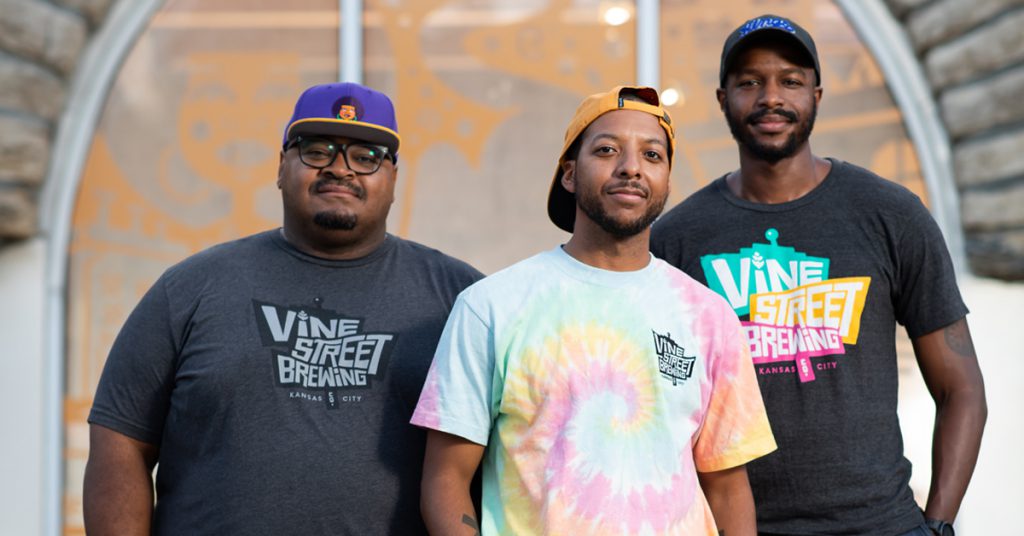
Vine Street Brewing Co. is Missouri’s first Black-owned brewery and part of the revitalization effort in Kansas City’s 18th and Vine Jazz District.
In the latest edition of Brewbound’s A Round With – an Insider-exclusive Q&A series – Vine Street co-founder Kemet Coleman shares why being a part of that turnaround effort was important and how the brewery is working through daily challenges and opportunities.
Here are excerpts from the Q&A, lightly edited.
Kemet, you opened Vine Street in Kansas City’s historic 18th and Vine Jazz District. Why was that location the right space for your brewery?
Kemet: The 18th and Vine Jazz District is not just rich in history; it’s a nexus of tourism and a vibrant hub for Kansas City’s African American community. We saw an opportunity to revive this area, which has immense potential but is often overlooked by the broader KC metro.
By opening Vine Street Brewing Co. in one of the district’s historic buildings, we aim to catalyze its rebirth, create jobs, and bring manufacturing back to our community, all while showcasing a unique cultural experience that celebrates our roots.
What’s the biggest daily challenge you’re facing right now?
Kemet: Our biggest daily challenge is balancing our focus on taproom sales, which are our highest priority, providing the best margins with the growing distribution demand. With a seven-barrel system, capacity is tight, making on-site sales essential for maintaining revenue.
We’re navigating debt management from startup costs while ensuring we cover payroll and operational expenses. Finding creative ways to generate consistent taproom traffic, including food options to extend customer stays, is crucial to sustaining our brand and team. Balancing these financial pressures is a daily hurdle we’re tackling head-on.
What’s the biggest opportunity that you see for Vine Street in the next year?
Kemet: Thanks to our two-acre downtown site’s flexibility to accommodate weddings, festivals, and more, I see our most significant short-term opportunity as driving taproom sales by hosting or being the venue of events of all sizes. With site improvements underway, we aim to solidify our role as a community hub and catalyst for the Jazz District.
Additionally, we’re expanding our fermentation capacity by +40%, which supports our growth and allows us to revisit opportunities with stadiums and larger venues, expanding our reach significantly.
Have you had a win that surprised you recently?
Kemet: Seeing the various organic ways our taproom and beers serve the community. From our RUN VSB run club, to being an inclusive space that welcomes a diverse mix of cultures, the taproom has become a vibrant gathering spot.
Witnessing this sense of community and connection, especially in the Jazz District, has been a rewarding and joyful experience that reaffirms why we do what we do.
There are always failures when starting new ventures. What’s something that didn’t work that you’ve learned from recently?
Kemet: I wouldn’t call them failures, but losing our consistent food option has definitely been a challenge. We’re now working with our landlord to find a new partner that complements our concept.
Additionally, I see opportunities to use our space as a recreational area with games like cornhole and washers to keep the patio busy. Providing shade in summer and heaters in the colder months will also help enhance the guest experience year-round.
As Missouri’s first Black-owned brewery, what does it mean to you to represent Black culture within the brewing scene in the state and Kansas City?
Kemet: Being Missouri’s first Black-owned brewery is more than just business for us; it’s about setting the standard for urban development when Black innovation is at the forefront. Meeting Vice President Kamala Harris because of Vine Street Brewing Co. was a powerful reminder of our impact.
Learning that beer was an African invention, with Egypt playing a crucial role, tied perfectly to my own story – my name, Kemet, is the original name of Egypt. The stars aligned, and it became clear this was a calling to create and represent something bigger.
Vine Street is a member of the National Black Brewers Association (NB2A). How has joining the trade group helped you grow as a business?
Kemet: Holding down our busy day-to-day operations and strategic goals, having the NB2A as our sidekick, and putting in work on our behalf in the broader industry is huge. Thanks to their hard work, we’re able to showcase at major events like the Great American Beer Fest and tap into a robust network of resources that would be harder to access from Kansas City.
The NB2A has opened doors for marketing, advocacy, and invaluable mentorship from other Black-owned breweries across the country, which is essential as we continue to grow and elevate our brand in a competitive market.
You made it to the finals of last year’s Brewbound Pitch Slam. Was there a comment or piece of advice from the judges that stands out?
Kemet: The importance of having beautiful, clear, and consistent packaging that looks great on the shelf. When we competed, we were still in our early stages and had much to juggle, including packaging that wasn’t fully dialed in.
The judges emphasized that while the beer inside the can matters, the outside needs to be just as impressive. Taking that feedback, we invested heavily in our packaging, and with the help of Whiskey Design, we went on to win several national American Advertising Awards.