
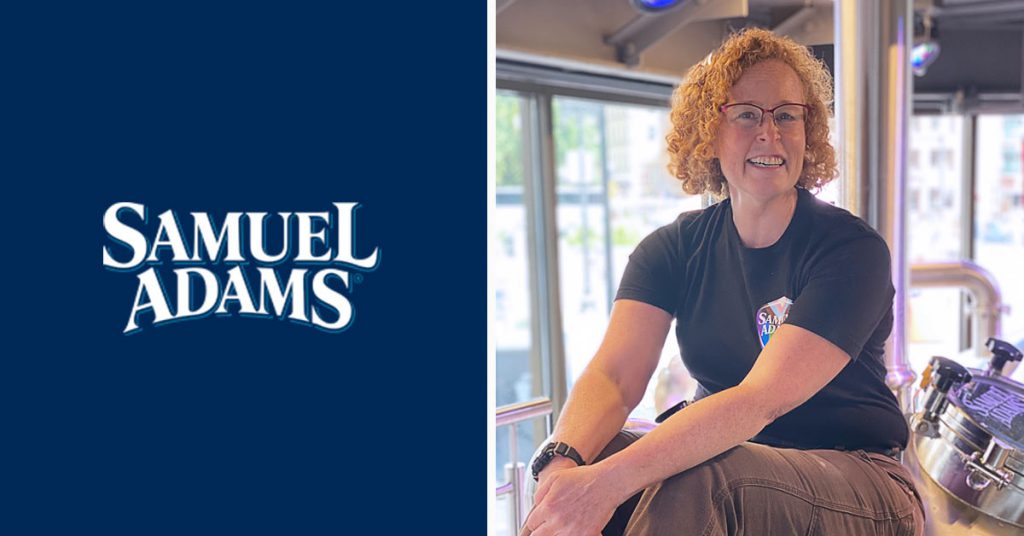
Beverage options abound in downtown Boston: properly poured Guinness at an Irish pub, wine at an Italian restaurant in the North End, a large iced regular at one of several (several!) Dunkin’ locations. But there’s only one place you can find a pint of pineapple basil ale, and that’s Boston Beer’s Samuel Adams Boston Taproom, where head brewer Megan Parisi is brewing all sorts of interesting beers for tourists and locals alike.
In this week’s Insider-exclusive A Round With Q&A, Parisi discusses where she finds inspiration, why innovation is good for business, the craft beer trends that are giving her hope and the difficulties of “tank Tetris.”
Here is our conversation with Megan:
What’s the most unexpected place you’ve found inspiration for a beer?
Megan: Food has always been a source of inspiration for me.
One memorable place I found inspiration for a beer was from when I was just starting out as a brewer. I was at an Indian restaurant and had a saffron ice cream for dessert. It was one of the most luscious flavors I had ever eaten. I knew that someday I wanted to use that flavor in a beer.
It took a few years, but I wound up incorporating saffron into the Project Venus brew back in 2011.
The Sam Adams Boston Taproom overlooks historic Faneuil Hall at the heart of the city’s bustling downtown and must draw visitors from all over the world. What do you notice about their beer preferences?
Megan: Our drinkers at the Boston Taproom really drink a spectrum of flavors and styles. While we do bring in loyal local fans, our largest group of patrons comes from all over the world. Certain styles, like sours and IPAs, are always very popular, but we see a lot of interest in unique ingredients as well as classic styles.
Our drinkers really enjoy the wide array of styles that we offer. Our flights are our most popular offering and that’s where we see people branch out from the core beers that initially draw them in the front door. They are generally willing to try anything.
What’s the most challenging part about brewing for an extremely diverse pipeline to fill all those taps?
Megan: It is hard to predict just how quickly any one beer will sell, so trying to make a brew schedule that covers a variety of styles always available is a real challenge. Some beers like lagers take longer and ales can generally be ready much more quickly, keeping a good balance between even those can be challenging.
I call it doing my “tank Tetris” to balance that variety and flow!
What’s exciting you in craft beer these days?
Megan: The growing interest in lower alcohol offerings is refreshing. You can hide more things behind more alcohol, but brewing lower alcohol beers that still have flavor takes a lot of skill – it keeps us on our toes as brewers! Also, it’s nice to have more of those types of beers out there to drink and enjoy.
I’m also excited by the growing fluidity of styles. Don’t get me wrong, I love my classic and traditional styles (aka “beer-flavored beer”), but it is fun seeing lines blur and redefine what “beer” can be. You see inspiration from cocktails to wine to spirits, and when we incorporate those kinds of flavors and experiences in our beers, we increase our appeal to the traditional non-beer drinker.
At a time when craft beer feels like it’s under pressure, innovation may help draw in new drinkers. What’s the business case for why research and development is so important?
Megan: I’ve been in the industry for 20 years and have seen a lot of ebbs and flows of trends, business health, and industry growth, and this does seem to be a unique time. R&D has always been important, but never more than now. We’ve seen the growth in generational appeal that we’d been wishing for 15 years ago, and that is reflected in the dynamic pace of consumer preference change.
We see a customer base that seems less brand or singular product loyal, and more driven by new experiences. It means we have to work even harder to understand what those ever-changing preferences are and how to continue to deliver new, high quality, memorable experiences to keep customers looking to us to be the ones who consistently meet their needs and desires. That means we can’t rest on our laurels and take for granted that we’re going to keep our drinkers with the same things, and also look for ways to draw in new ones as well.
What out-of-vogue styles would you like to see make a comeback?
Megan: I’m a sucker for a British mild. The style name gets a bad rap as far as sounding like it’s going to be sort of milquetoast, but they are light (only 3.5% – 4.2% ABV) yet very rich in flavor. There’s something so refreshing about the simplicity or a really well-made, flavorful beer that you can sit with and drink a few of.
From a dill pickle ale to a matcha milkshake IPA, you’ve created a lot of funky beers along the way. Have there been any out-there or risky releases that consumers have latched onto or had a surprising response to?
Megan: There have been many surprises! A brew we did last year on a whim that I honestly had no idea whether it would be good was a pineapple basil ale (The Pineapples of Rome). It was a crazy hit with our drinkers, our staff, and even myself! It was so delicious and popular that we brought it back this year, in fact it was released last week.
We also brewed a beer with chamomile and honey (Honey Blossom) which on the surface might not sound like an obviously “exciting” beer, but it was wildly popular, and of course delicious!
As an industry vet, what advice would you give to new brewers looking to forge a path?
Megan: It is still funny to realize that I am an “industry veteran” because sometimes it still feels like I have so much to learn. And I think that is a key to success. That curiosity is what keeps you growing as a brewer and developing new skills and strengths.
You would think that after 20 years I would know a lot, and I certainly know a lot more than when I started. But it doesn’t stop with what I know now – constant curiosity is what will keep you brewing new and great beers, and perhaps pushing boundaries that you didn’t know were there. Always be open to learning and adapting to the ever-changing landscape of our industry.
Curiosity should also lead you to go out into the brewing community and meet people – get to know your peers, your community, your people. They will teach you, support you, and help you grow.
Community in this industry is what keeps me here after all these years – the people teach me so much and have made me a better brewer and person. Get out there and engage with one another – we’re all in this together.