Search across the BevNET CPG Media network including BevNET, Nosh, Brewbound, Taste Radio, Nombase and CPG Jobs.
Welcome & State of the Market: Emerging Brands at Mid-Year
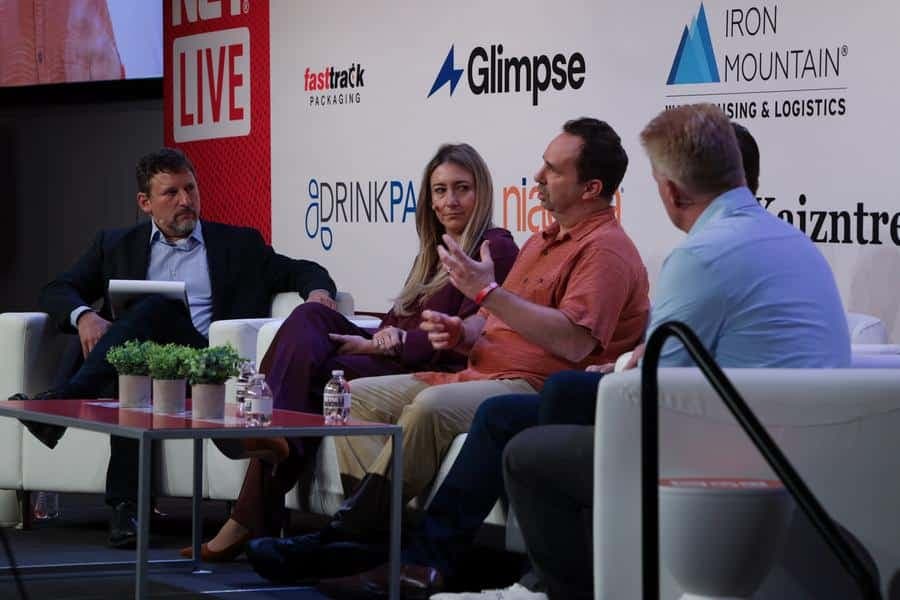
Examining the beverage marketplace for trends in consumer, retail, investment and brand performance issues from experts who are in the mix on a daily basis.
Speakers:
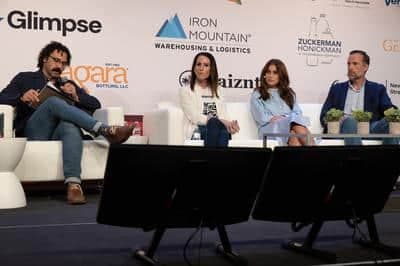
Trent Moffat, Founder, Gotham DSDJennifer Ross, Co-Founder/Co-CEO, Swoon
Daniel Grubbs, Managing Director, William Hood & Company
John Lawson, Senior Local Forager, Whole Foods Market
Transcript
Note: Transcripts are automatically generated and may contain inaccuracies and spelling errors.
John Craven [00:27] My name is John Craven, and I'm the founder and CEO of Bevnet, and I want to be the first to welcome you here to BevNet Live in New York City. Thanks so much for coming. As usual, we have a busy program over the next two days. But first, I just want to say a quick couple of things as we kick off what I think is the 31st Bavnet Live that we put on. Yeah. So on top of that, as some of you know, last month marked Bevnet's 30th anniversary, which I guess at this point, I'm not younger than I look anymore, but I did start Bevnet before I was even at legal drinking age. And you know, really, there's a lot that's changed in the past 30 years in this industry. Back then, you know, better for you brands, they just didn't even exist. If you were going into the natural channel, I mean, that was just a kiss of death and kiss investment goodbye. If you were focusing on grocery, it was written off as a place where there was no volume for emerging brands. And there was this term new age beverages that back then was used for brands like Red Bull and Sobi that are now the legacy brands of today. The ones that you in this room are taking market share or aspiring to take market share from. But remember this, every brand you idolize today started as somebody's long shot. And somewhere in this room is the long shot you'll be chasing in 10 years. And how do I know this? Because I've lived it. This is Bevnet back in 1996. Nobody, nobody looked at this and said, Hey, that's a future authority on the beverage industry. We were the newbie, the long shot, a stupid website with the tagline of Drink yourself silly and legitimately a page dedicated to the comedic origins of Mountain Dew. If you don't believe me, it's still on the Internet Archive. Please do not go look at it. So I could talk for hours about all the entrepreneurial missteps I've made and lessons I've learned, but I'll leave you with just a few quick things. First, everyone's entrepreneurial journey is different. Don't let what others seem to be doing, especially if it's in a LinkedIn post, dissuade you or make you feel bad. Second, change, pivot, refine and strive to move forward. As you can see, we've done plenty of that in the past 30 years and we're far from done. It's scary, but also one of the most rewarding things about working on Bevnet all this time. But really the most rewarding thing are all the great people that I get to work with. We have an amazing team that's helped put this, uh, event on as well as, you know, just get Bevnet to where it is. And one of those amazing people that I really appreciate, especially today, since he's doing all the content is my colleague Jeff Kleinman. So Jeff, take it away. Thank you, everyone. Thanks a lot, buddy.
Speaker 2 [03:25] How about that John Craven, you know, in, uh, when he was getting this started, I was starting to, to work for, for company, for, for newspapers and we were starting to cover these sort of dorm room internet companies. And this one made it, you know, and most of them didn't, so I'm thrilled to, to have gone, gone native. Um And thank you all for coming. We made it. Um, and that was, there was a question about that cause more than one person warned me that if the Knicks had won on Monday, there was the potential for some kind of orange and blue Armageddon, um, and that what we planned for today and tomorrow is gonna have to be delivered on Zoom from a secure bunker. And that was just if they'd won game 3. The build up toward a potential sweep was going to create some kind of interdimensional vortex so powerful that it could bend time and space, put an end to distributor chargebacks. And make all payment terms 30 days. So for nothing else but safety reasons, I'm glad the Knicks lost Monday's game. I don't believe in sweeps. I don't think anything should come that easy, and I don't think that you do either, because if you did, you wouldn't be sweating the price of aluminum, worried about a protein shortage. You wouldn't be getting yelled at by Jerry Rita. You wouldn't be filming those videos where you're overjoyed just to be standing in a Target parking lot somewhere near Wheeling, West Virginia. There are no 4 game sweeps in the beverage business. Even the fastest growing brands struggle. They have to dig for cash. They have to fight for shelf facings, bear the uncertainty of a buyer's or an investor's decision. As much as we might put stock in a celebrity co-founder or a single investor meeting as the glide path to massive success, the fact is that no single meeting, single investor, or single athlete or influencer will outweigh the value of testing, learning, positioning, selling, growing, and repeating that process. So what we've done Thank you. What we've done for the past 15 years that we've assembled our lineups for Bevnet Live is to build for you a series of case studies, conversations, viewpoints that combine the nuts and bolts of the business with an analysis of the forces that are swirling around them. In the next 2 days we'll meet investors and retailers. We're going to learn tactics from founders. We're going to have experts talking about things like the changes that are brought by AI or the ways that you operate a hemp business under changing regulations. We're going to hear about up to the minute financing conditions and classic tactics for helping maintain margins and control costs. Via the new beverage showdown, we're gonna see the innovation on the horizon. Through the rest of the program, we're gonna learn how to bring those innovative brands into shore. And we do this because we are so enamored of your ability to keep going. To build bridges of confidence over the pitfalls of uncertainty. To see your vision through that we try to work equally hard to help you build an edge, to learn new tactics and techniques, to rethink strategies, to find a new teammate, to speak with this and speak with this incredible lineup of coaches to help support you. I want to say personally thank you. So much for the faith, thank you for your faith that our work can be helpful to you in your endeavors. It's been an honor over all these years to know that this event that we all worked so hard to build has proven worthy of your time and expense, and we will continue to strive to earn that every time. I'm grateful to the speakers who are being generous enough to share their wisdom with us and help us in that mission, and I'm confident that our lineup will help you navigate your next steps and that we'll be home safely to watch the rest of the finals without fear of being trampled. So to start things off, let's talk about how things are going right now from people who are in the arena every day as we like to do, we're bringing together a slate of speakers who have an insider's view of the state of the market in stores, in the boardroom, on the trucks, and on either side of the buyer's table. To help us gauge the state of the market for brands as they travel from their first accounts toward toward national scale and strategic interest, let's welcome Jennifer Ross, one of the co-founders of Swoon. John Lawson, the New England Whole Foods forager, Trent Moffatt, the founder of Gotham DSD, and Daniel Grubbs, the head of food and beverage at the at the investment bank, William L. Hood. Please give him a big hand. What's up brother? Thanks for coming. I, I, I'm, I'm always excited when we, when we get to chop it up together, um, so we're gonna start off with John. Um, you've seen hundreds of emerging beverage brands before most people in this room ever have the, the good fortune to hear of them. Um, what in your opinion has changed most about what makes a beverage brand successful today?
Speaker 3 [10:21] Well, let's see. Um, success is about the person who's bringing the brand. Um, Success is about how you position your brand. Obviously, success is in how it tastes. Um, if it doesn't taste good, then you haven't gotten to step one. Um, you know, so I think, uh, for us, looking for authenticity, looking for something that, that speaks to an experience, a memory, um, uh. History, heritage, that type of thing, you know, I think you know something that a successful brand is one that's going to bring energy to the shelves and is going to drive customers into our stores. We're a brick and mortar, so when you're working with brick and mortar retailers, make sure you're driving customers into the stores and having a strategy and a plan for that when you, when you bring your brand to us. I think those are, those are the initial, the initial steps that you Um, that can get our interest and then differentiators. I mean, there's a long list, differentiators. You want to be different than other, other products that are on the shelf, and you want to make sure that your product stands out. I talk a lot about contrast. Contrast is differentiation in ingredients, differentiation in Adaptogens, callouts, things like that. And then it's also, you know, the categories are crowded, they're tight, they're super competitive. So how do you stand out and contrast from your, from your, from your competitors in that space?
Speaker 2 [11:53] Is the level of competition the biggest difference from, say, 5 years ago?
Speaker 3 [11:59] Uh, beverage was competitive five years ago. I think, I think, you know, it's the evolution of, of what customers are looking for. Um, you know, I think you've got, uh, non-alk, you've got, um, uh, you've got adaptogenic like has really evolved, um, you know, uh, the functions of gut health, energy, um, you know, caffeine is starting to pop up a lot as a, um, like sports recovery type thing or sports, I guess, pre. Pre-sports, uh, I don't know what the right word for that is, but, uh, in any case, the, um, you know, on the athletic side, so, you know, I think, uh, the functionality has evolved, so I think it's more, it was always competitive. Now it's more of an evolution.
Speaker 2 [12:39] Yeah, so category breakdown, uh, subcategories, some, some shifting between non-alk and, and that's affecting what gets brands in, um.
Speaker 3 [12:53] Adaptability too. So if you have a product that's that's that's that's resonant, but you need to adapt, you need to shift a little bit to be just a little bit more competitive, to differentiate yourself a little bit more, I think you have to have that flexibility too. You have to be able to say, you know what, I've got this product, it's really good. If I just do X, Y, or Z, I can, I can stand out a little bit more from the from the competition and and. Um, and I think that's, I think that's a, a smart move for, for people to think about.
Speaker 2 [13:26] Um, so that, that's at the granular level, at the, let's call it the national level. Daniel, you spent the last decade. Uh, evaluating emerging brands from the strategic side with PepsiCo. Has the, has the playbook for entrepreneurial beverages fundamentally changed in terms of building awareness at that strategic level?
Speaker 4 [13:54] Um, building awareness? No, no, I mean, I think that the, a lot of the fundamentals are, are still the same in terms of part of your question is around also is like, what's going to matter, right, from a strategic level. Um. You know, the biggest things are you Uh, you know, actually, let me just say it's like strategic I would say 5 years ago, 10 years ago. Maybe, you know, and even going back further. There was a lot more appetite for things that were earlier, right? Um, in particular, I'd say the last 556 years, the appetite is, is much more businesses that are bigger in beverage, north of 100 million, generally speaking, you know, and even then that's still a, that's sort of like just starting to get the attention, um, in most respects.
Speaker 2 [14:43] Is that because you have brands that are basically one category and they're, they're waiting for that one representative brand to emerge?
Speaker 4 [14:53] Yeah, to a degree, but I think it's also on the, on the buy side is there's a lot more of a realization is it's much harder to integrate into fast track businesses unless they already have some heft or some call it meaningfulness or call it consumer passion and drive. That's easier for a strategic to be able to then accelerate. Um, where historically it was a lot of, well, the, the, the power of the organization should be able to do this in a realization that's actually, it's a lot harder. Um, so in many cases, actually, what's important is being able to, is to accelerate the business obviously to a certain size, but For most businesses, that's much further downstream. I think what matters consistently from years ago to today is you got to be in meaningful categories. You got to be in, you got to be in a category actually and back to this point of adaptability is like, you got to be able to define yourself as you're operating within a space that is actually a well-defined space and is or is going to be increasingly become a well-defined space. Um, and that has size, we're going to continue to grow in terms of consumer interest. Um, but increasingly, you also can't be, you can't be the 15th, 16th business in that space. You know, um, goes back to the point is, otherwise, your point of differentiation must be quite, quite different, right? To be able to break through all that. But overall, you know, so it's about kind of um operating within those, those key important spaces that are going to continue to matter, you know, and, and those things that generally haven't changed dramatically over the last, you know, 5, 1015 years in terms of energy, hydration, protein, you know, and all, and now, where do you operate within those and how do you carve out your, your Your niche is is really the important aspect.
Speaker 2 [16:43] So beverages delivery mechanism for those for those trends, Trent, where a brand is merch how a brand is merchandized, where it shows up is really important at the early stages. Um, you're in the store every day. Uh, what are the brands gaining momentum right now have in common in the way they operate.
Speaker 5 [17:11] The way they operate is very similar for everybody. They want to get on the shelf. They want to be seen. They want to do the right thing and be visible where they think they should be visible. The difference is for a lot of brands when they first get on the shelf is, does it fit on the shelf? Is it worth competition? Is it priced correctly? But I think For most operators, they are able to John said the best adapt. So then they get on the shelf and it's not exactly what they thought it would be. Um, it, it's great division something on a PDF or, you know, in a, in a, your flavor house and something in a mixer, but now it comes through a co-packer out of a 2000, you know, gallon vat that's heated up and it doesn't taste exactly what you thought it would. Or, you know, somebody comes out, you've got 15 g of protein, somebody next to you has 25 g tomorrow and and now you got to adapt to that. So. I think the operators that do well are the ones that look at the market, not just Have this baby that they've built from scratch and taken it to the point where now it's on the market and they just let it go. Now they're looking to the market to say how can we improve it? What do they need to do to improve it to compete with everybody else and surpass everybody, and we do that at a low scale. So we do that in a couple 100 accounts so that we can tweak the brand and really see what the consumers are interested in before they get to a mass, right? You can imagine going to At Whole Foods or Target later on and saying we want to change our UPC code because, because why, right? And that's what the buyer's going to say what's wrong with it? Nothing. It's going well, but we want to just make a couple tweaks. It's better to make those tweaks early and to have those conversations later.Buyer doesn't want to do its work and it's costly and it's a lot cheaper to do it early on, but John hit it on the head. You want to, you want to be able to adapt early and be that operator that, you know, it's your brand, but ultimately you want to get to
Speaker 2 [18:57] at the few 100 store level. Um, what are the key adaptations you see brands making and how long does it take to know that they need to make some switches?
Speaker 5 [19:07] No, it's a great question. Like 3 months is too early, right? You, you barely just, we're just still getting stores up and running. 6 months. If 3 to 6 months you're not selling any units, there's obviously a problem. If your competitors are outselling you 2 to 13 to 14 to 1, that's a problem. But I think that's probably the time frame you're looking for. But you also don't want to jump the gun either. Like I've seen people we've given them sampling report to where, you know, anybody who's done sampling, you're going to get a couple crazies come up to you and they're going to say something. And immediately the guy would make a change to the package. So if you see it 50, 60, 100, 200 times, yeah, that's probably something you want to make changes to. And I would recommend anybody that has a brand go in and do some of your own sampling. Nothing like a consumer to tell you everything about your brand, you know, more than you know, you know, but the only thing they've got vested in is to buy a $4 you know, beverage versus your whole sales team. Maybe you've got people working for you as influencers, etc. that are bought in or want to get paid next month, and they'll tell you anything you want to hear. But certainly you sample 100 times and 75 of them tell you this doesn't taste good, you know, maybe it's time to make a change. That's a
Speaker 2 [20:17] clue. So, Jen. You've had a bunch of wins in the past, in the past year or two. Can you tell us really quickly about them, and
Speaker 6 [20:27] we'll, yeah, definitely. I think really apropos to being on here with John, we started, you know, as Spoon, which is a zero sugar refresher, really starting in modern tea and lemonade, starting at Whole Foods in New York, in the local stores here, gained to a few more regions, and then this past year we went national. Both with our teas and lemonades, and so that has been super exciting. We just launched in Walmart with the modern tea set. So again, in terms of, as kind of everyone has been saying, modern tea is taking on, and we're kind of growing and pushing and leading that category as well.
Speaker 2 [21:02] What becomes harder as you start to shift into that national aperture?
Speaker 6 [21:10] I mean, I think it's always hard. I think it's just that it's different problems, different questions in terms of scale when there's an issue. It's not just a few 100 stores, it's a few 1000 stores. And so then listening to the feedback, really understanding kind of like when are there, when is it actual feedback you need to be listening to, when is it. Of just noise that's out there and things also get more competitive as kind of the space gets bigger. You need to try and figure out how to capture more people's attention and that's really hard right now. Yeah,
Speaker 2 [21:39] you're one of several brands that are that are pushing this movement. So what's the point at which you start to, would you stop building the category together and start owning the category yourself, right?
Speaker 6 [21:54] I mean, I think there's so much room to grow in terms of building a category. I think we're always going to feel like we are building. I mean, maybe one day we'll look back and say, oh, modern tea is here, but I, I think, you know, who knows exactly when that's going to happen, and the idea is always how do we kind of can push and innovate and adapt to what people are looking for.
Speaker 2 [22:13] Um, what, so you've been doing this for about 56 years now. What, uh, on the operator side, what, what are some of the capabilities that founders need to have now that they, they maybe didn't five years ago?
Speaker 6 [22:29] I mean, I think very similar to what everyone else has said, things haven't changed so much. The fundamentals are still there. You need to have, you know, a reason for being. It needs to taste great, and I think you need to be able to adapt. I think the things that have. Really changed or maybe some of the tactics to get out there. So it's not necessarily as a founder you need to know how to do all the tactics, but you have to be aware and being able to kind of adapt to it and try different things, you know, it's very digital now. There's a lot of happening, you know, understanding on Instagram, meta, all of that, but it's not so different to what a founder needs to be. It just needs to be aware of what's happening.
Speaker 2 [23:05] OK, so in those, those tactical pieces, um, are there any that are sort of Exhausting when it comes to driving sales. Um, it, it does feel like the business has a, a lot more constant activation now, um, between LTOs and collabs and exclusives and drops and promos. I know you've done, you know, pretty much all of these things. Um, is that what you have to do to stay relevant? Um, and do you worry that Maybe you're, you're too deep in that like 80/20 kind of situation where you're not able to drive sales consistently without those tools, but the retailers demand those tools.
Speaker 6 [24:00] I think it's a combination of both. I think at the end of the day, if you have a really great tasting product that people are going to come back to, that needs to be the foundation, but I think right now it's just, it's the consumers and the retailers that are just looking for new. It's hard to get people's attention. People are scrolling on their screens. And looking for other things. So it's this idea of like how do you just stay relevant and top of mind, but you can't just build a business on having new things, on just having promos, just on having LTOs. I think those are part of the strategy, but you have to really look at how do you just grow your actual base business.
Speaker 4 [24:34] You, you know, maybe just to build on that. I mean, those are also tactics that historically big businesses have used. To stay relevant, right, and to stay fresh, particularly in retailer partnerships or whatever it is. So it's good to see that it's a lot more, I think, increasingly prevalent amongst more emerging businesses, but the return on investment is still a debate, is still a question, right, for a lot of those things.
Speaker 2 [24:56] So can, as an investor, can you see through that? If I, if you see a volume, sure,
Speaker 4 [25:05] yeah, yeah, yeah, I mean you see through it in terms of what are you seeing a baseline increase in the velocity sustain itself and build itself over time right versus those short term elements ultimately so and I think a lot of those things are. Are also harder to read because they're long term impact versus short term impact, you know, in terms of the, particularly the marketing elements,
Speaker 2 [25:26] but it's important to your retail partners. Yeah,
Speaker 3 [25:29] I mean, I think, I think the creativity is, is important. I think there's a lot more. I think if you want to talk about what's changed in the last 5 years, I think there's a lot more elements that are available on a wider scale now. So I think where, like you're saying, big corporations used to only have access to these. Channels. I think a lot of these channels are available to everybody, so it feels like there's a lot of different ways that you can activate and I think the brands that are successful are the ones that find are creative in both coming up with different ways to use those tools and then also finding the right combination of those tools to be most effective and connect with their customer. So you know when you're using a TikTok to You know, to, to clear the shelf in a retailer, you know, and you're doing that effectively, you know that's one, that's one strand of what you're doing versus, you know, throwing the kitchen sink at it, but it all requires a lot of energy and it takes a lot of work. I do think one of the nice things. About these areas is they're less capital intensive than they used to be, so I think there's a lot of this that you can do for a lot less money than you used to, you know, so you can be a smaller brand and really invest in these in these areas for a lot less than it used to cost. So you don't necessarily have to hire a marketing firm or something like that if you can figure. How to make these work.
Speaker 5 [26:53] No, that's exactly right. We used to run sampling trucks all the time, you know, trying to get to the mass. Now you can do it on TikTok overnight or we'd always say that somebody would have to see the brand 6 or 7 times in a store before they'd be, you know, courageous enough to pick it up. Now they could see it on TikTok and then go search for it or Instagram or another venue or maybe their friends saw it. Now they have to have it, you know, so. things have changed and it's, it's a lot more cost effective as well, and to run a sampling truck in Manhattan is not, not cheap, right? So you've got two people parking tickets, all sorts of things that you go at it and maybe that's not even your target audience where now you can directly go after your target audience and get them to, to see your brand.
Speaker 2 [27:30] Jennifer, how have your tactics changed? I, I mean, uh, what's the biggest adjustment you've made in terms of sales or consumer activation?
Speaker 6 [27:40] I mean, I think to your question of scaling from local to national, it's like we did a lot of demos. I personally did a lot of demos. I think you have to do that, and I think that's still really important, but that doesn't totally scale. So kind of what does that look like? How do you think about still getting liquid on lips in a way that isn't people going into. Store necessarily in doing the demos, it's figuring out again other ways to get that awareness. A lot of it is digital and just thinking about sort of what is the actual goal and what's going to get there and not trying to do everything, but really thinking about the one or two things and how to make a difference with those.
Speaker 2 [28:15] Taste is often the thing that bridges the gap between what customers have learned about a trend or functionality going into the store. And what they, what they arrive at when they're, when they're trying something. Um, do you think that they're willing to give functional brands a little bit more running room when it comes to flavor, uh, or is that still the great divide?
Speaker 5 [28:44] My retailers don't care. If it doesn't sell, they don't want it, right? So it's, it's, the functionality is great, you can sell it all you want, but if at the end of the day. The consumer's going to have to relate to that functionality and it's going to have to pull off the shelf for next week. You're going to go in and say it didn't sell, didn't sell, and you're going to continue to hear that. So it's really about the consumer, what their, what their functionality, what they're looking for. So our retailers, they're looking for movement.
Speaker 4 [29:06] Yeah, I mean, I think taste is taste is paramount. I mean, it was back in the day with green juices we put a lot of apple in it to it for a reason, you know, it's like it's just it's just the reality of it and so it's, it's, and you can try to push function, function, function, but at the end of the day, not just the first wave, but the 2nd and 3rd waves taste becomes increasingly important compared to the first wave of people.
Speaker 3 [29:29] Yeah, I think taste is taste is the repeat. I think. Almost any brand can get a customer out there to try once, but if they, if they, if they don't like it for whatever reason, whether it's, you know, mouthfeel, flavor, sweetness, what have you, it's getting the customer to come back and buy it again, and I think that's where the flavor really, really kicks in is you've got, you've got to be able to get people to come back and say that was functional, but I also really liked it, so you know I think that's that's critical.
Speaker 2 [29:56] Anyone want to comment on what the folks in this room should be most, should most have their eye on in the back half of this year?
Speaker 5 [30:05] Just have, especially if you're a protein drink, making sure you're locked up with your inventory. If you label, same thing, making sure you're locked up with your inventory, making sure everything's in line later on, because sometimes you've got to produce 6 months from now and it's not available. You want to make sure that you're, you know, prepared and you've got a good forecast.
Speaker 3 [30:24] Well, I'm going to say packaging, but I'm also going to say, first of all, I've got to put a plug in. LA, a local emerging accelerator program at Whole Foods Market, is now open, so you can apply for LEAP. So definitely get in there, check it out, LEAP on. Market, so I think that's for the back half of this year. Apply for LEAP. Make sure you're looking at our category review calendars, but then also just make sure you've got your packaging locked up too, because I think like there's going to be a lot of continued disruption in that space. All
Speaker 2 [30:55] right. So, uh, we are out of time. I, I wanna wish you. All incredible luck in the back half of the year and in every year to come. Thank you so much.
Speaker 6 [31:05] Thank you. Thank you so much.
Related Videos
The State of Cannabevs: Strategy on Deadline
With federal regulations about to put this fast-growing industry into a time-out, we look through the lens of brands, distributors, and lobbyists for potential futures for this fast-growing segment.
AI and Online Retail: Brand Building Meets Agentic Commerce
In a special tactical presentation, sales, marketing, and tech experts share a concrete playbook for making your brand legible to AI agents — without gutting what makes it human.
Retailer Profile: Launching and Maturing with Whole Foods
A rare founder–buyer conversation on what makes a pitch resonate, how brands can build productive retailer relationships, and what growth actually looks like once you’re on shelf.
Exit Interview: How Dirty Shirley Cleaned Up
Longtime beverage marketing veteran Adam Kost discusses his lean startup, proof-of-concept strategy, the key insight that gave Dirty Shirley the oxygen it needed to grow.
Disruption at Scale: A Conversation with Athletic Brewing CEO Bill Shufelt
Athletic’s rise has reshuffled the deck of beverage categories. Shufelt shares how he's navigated explosive growth and what he’s learned about raising capital, brand positioning and category creation.