Search across the BevNET CPG Media network including BevNET, Nosh, Brewbound, Taste Radio, Nombase and CPG Jobs.
The State of Cannabevs: Strategy on Deadline
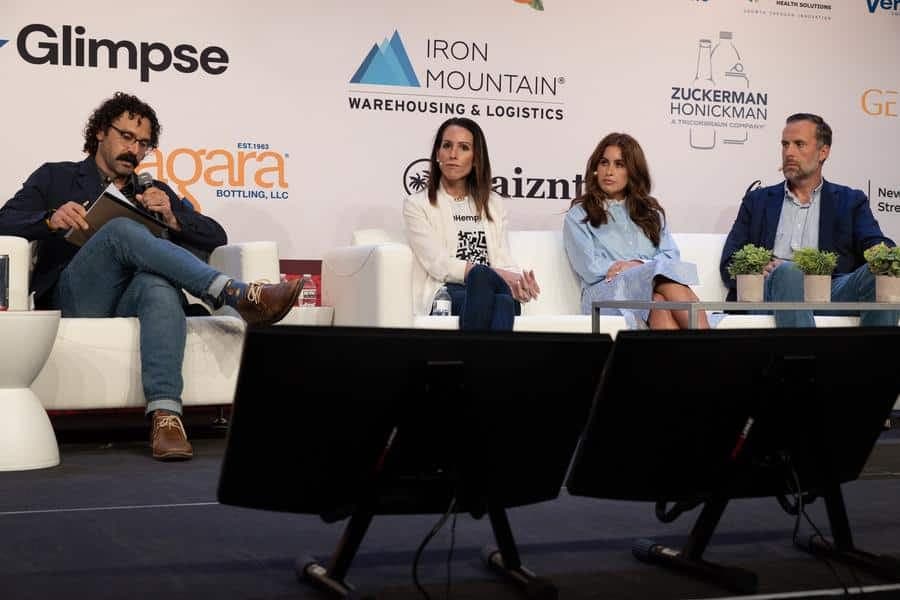
With federal regulations about to put this fast-growing industry into a time-out, we look through the lens of brands, distributors, and lobbyists for potential futures for this fast-growing segment.
Speakers:
Justin Ashby, Chief Administrative Officer, Southern Crown PartnersDiana Eberlein, Chair, Coalition for Adult Beverage Alternatives
Jill Johnson, Founding Partner, Daizy's Social Soda
Transcript
Note: Transcripts are automatically generated and may contain inaccuracies and spelling errors.
Lucas Southard [00:27] Hello, I'm Lucas Southard. I'm a senior reporter at Bevnet. So this next panel covers the only beverage category facing an existential crisis. Now I know that might be hyperbolic, but it in fact is true. In the last 3 years, intoxicating hemp drinks have become one of the fastest growing but also the most contentious beverage categories in the country. In December when our Bevnet community last met in Los Angeles, we were a mere weeks removed from Congress passing a spending bill that scheduled a ban on hemp drinks containing more than 0.4 mg of THC. Having operated in the gray area since the passing of the 2018 Farm Bill, the current challenge that faces the category is nothing new for intoxicating hemp brands. That being said, The impending November deadline could cripple the $1 billion industry that has been created. So With all that said, how are various stakeholders in this high growth industry reacting to the storm, to the storm clouds swirling over the category? Already we've seen a few brands leave. Some are pivoting into other functional ingredients. But at the same time, there's more brands that seem to be showing up every day as demand grows. So enough from me. Let's hear from the true experts. I'd like to welcome to the stage Daisy's Social Soda founding partner Jill Johnson. Justin Ashby, who is the Chief Administration Officer at South Carolina and Georgia distributor, Southern Crown Partners. He is also the founding member of the Beverage Wholesalers for Responsible regulation. And Diana Eberlin, Chair of the Coalition for the Adult Beverage Alternatives. Coming up. Yeah, I don't know how I feel about these chairs, um. So, I gave a quick run-through of everything that's happened in the last 6 months or maybe just a little bit of what's happened, but to kick things off, uh, let's talk about what's happening on the legislative front. Diana, you are one of the most up to-date resources of what is happening in DC as well as state by state. There's a lot of noise coming out of DC, um, from delays with Rand Paul's. Proposed bill to codify states choosing their own regulatory paths to Representative Andy Barr's Lawful Hemp Protection Act, I think is the current name that we're going with on that. Um, that might have hit a roadblock with the House Rules Committee. Walk us through the two or three most likely outcomes that we might see as we move through the summer and close in on November.
Speaker 2 [03:41] Absolutely, there are some absolutes. For example, the CMS program that President Trump and the White House would like to see continue to exist, where they've defined therapeutics as anything under 3 mg of THC per serving. In order for that program to continue to exist beyond November 12th. The definition of hemp has to change. It needs products that are higher than that 0.4 mg per container. So we know a change needs to happen. The how is the real question. And the timeline. The biggest obstacle we have right now is really time and the fact that we are in the middle of an election year where focus is on top of all the other distractions, if you will, there's other priorities on the Hill right now. We are still top of mind and constantly being brought up, and I think what we've seen over the last few months. In terms of all of the attempts to either delay or correct the language shows that there is interest in Congress to make an adjustment and create a sustainable, safe pathway for not only beverages but other therapeutic products in terms of what we could see there's a lot of different pathways that this could. be adjusted. We've had a lot of conversations. Barr's Bill will likely be introduced. He's obviously dedicated a lot of time and energy into that, and he's been very vocal about the fact that that will be introduced in a variety of ways. What they're trying to do is keep momentum going, showing that there is interest in regulating this category. Because of the election and of course appropriations, what we will likely see, you know, there's a lot of different ways this could go, and I don't think anyone wants to say this is what's going to happen, but what I do want to make clear is whether or not there is a fix by November 12th, beverage will be back. The consumer wants this product. Wholesalers want this product, retailers want this product. The underlying narrative is very clear that they want to create a pathway. It's whether or not it happens by November 12th. We could see a definition change that allows for these products. We could see a deadline change that goes beyond that November 12th date because when you have an election November 3rd, there isn't a lot of time for change to happen between then. So there's a lot of different pathways that could. I wish I could give a clearer answer, but I also want to make it clear for the audience we are not single threaded with our strategy or approach. There's multiple ways that we are looking at finding a solution, and it's coming down to education and working with our partners, which the wholesalers, the retailers are really getting engaged at the federal level, and that's been incredibly impactful.
Lucas Southard [06:21] Definitely, and I mean, uh, as you said, that there's, it's very unlikely that this category will go away completely forever. Um, for reference, Nielsen IQ reported in April that more than 1 in 4 US adults have tried cannabis infused beverages, but more importantly, 50% of US adults that they surveyed were interested in trying ATHC drink. Um, the category hit 239 million in retail sales during the 52 week period, which was up 135%. So, you know, hearing all those numbers and also hearing what Diana, you just kind of laid out in terms of all this uncertainty. Jill, I'd love to hear how you have been positioning your brand and as a company, how, how do you, you know, plan for future growth when there's so much uncertainty and things seem to be changing every day?
Speaker 3 [07:11] Thank you. And before I answer that, I just want to say thank you to Lucas and the whole Bevnet team for putting this panel together. Bevnet is not a cannabis or hemp beverage uh media company. It is a total beverage and food media company and so at a time when we need the continual coverage it's incredibly important. I think I would speak for any operator in the space that we appreciate it so thank you. But as for the yeah thank you. As for the, you know, continual regulatory change and how do we manage that, I mean, that has been every brand's operating reality since inception. I think what we do at Daisy's is we, we react quicker. We don't predict what's going to happen and we just have to make decisions in real time. It's not perfect. Uh, flexibility is a requirement in this industry though, and And we don't make decisions in isolation. We are bringing it through the lens of all tiers of our business, our hemp providers, our network of distributors, our strong retail partners, and it's not always that they align on how they interpret the law, but that is rare and it's what we've found to be the best solution to move forward.
Lucas Southard [08:34] Yeah. Justin, so Southern Crown operates in one of these states that has been trying to pass its own regulatory guidelines, some good, some less, um, good. Uh, how has Southern Crown made decisions in where you sit in the supply chain in terms of how much inventory to bring in this summer, you know, when to take new brands in the portfolio, uh, in a similar to what I just asked Jill, like how as a. Mostly beverage alcohol, but also a major player in hemp beverages distributor, you know, target future growth. How do you forecast in this environment?
Speaker 4 [09:13] Well, forecasting, uh, in this is almost impossible, um, you know, we don't know if it's gonna. I, I, I like to say the only thing we know for certain is that November 12th is coming. And unfortunately that's the only real certainty that we have right now. So in a lot of ways we're really planning for that. But if I back up and think about this, this whole thing for us really started with consumer demand, which led into retail demand. And at this point, even with all these looming bans, even with pending legislation in certain states. The retail demand hasn't stopped because the consumer demand hasn't stopped. And so back to what Diana was saying, if the category goes away or has a has a period of prohibition, it's going to come back. The demand is so strong and I think the biggest sort of single thing that we can do right now as we, as we think through how to, how to sort of save this thing is make sure that folks know that it's going to go away or potentially go away. A lot of people don't follow politics and don't really understand the mechanics of how this thing happened and so it's really key for us to educate not only our consumers and the end users of the products, but even our fellow distributors around the country, our retail partners, even our supplier partners, we all have a role in this right now to make sure that we're educating folks on what's about to happen and what you can do to help, help save this. Uh, so for, for now, for us, as we just kind of look at this and say, as long as the consumer demand is there and the retail demand is there, let's, let's push this as much as we can, as hard as we can. But of course, we are facing that deadline and that's something that, that looms over us, and we're definitely gonna start making some internal decisions here pretty quickly because the the unfortunate reality having a federal license to sell alcohol. If November 12th rolls around and nothing changes, I can't have something that now definitionally all of a sudden is marijuana in the same warehouse. So as we as we approach that, we're going to have to slow down a little bit, but again, it's this balance of what consumers and retailers are asking for, and so far no signs of slowing down.
Lucas Southard [11:19] Yeah, and as we've noticed, uh, even in the last few months, it, it doesn't feel like the category is slowing down. Yes, there have been some brands that have pivoted out, but we've also seen retailers double down, um, you know, recently Target just added Texas and Florida and most of Illinois into, uh, bringing hemp beverages to their stores. I'm wondering how the distributor and retailer class can play an even bigger role than they might already have in helping push this regulation forward and what's been done so far and maybe Diana you can start us off because you're in contact with them.
Speaker 2 [11:57] Yeah, the wholesalers and the retailers are our strongest allies federally on the hill. I mean they've been incredibly engaged and the education is critical. They have political capital that the hemp industry doesn't have. They've been lobbying for regulations for their industries for 93 years. Justin's the expert on that, but they had the credibility that we are trying to bring to our space, and they know how to work within a regulated marketplace. So that credibility has been absolutely critical to Justin's point. The awareness is key. When you see Target expand into 3 states, you see the Navy Pier in Chicago bring on an official THC beverage. The consumer doesn't think these products are going away because they're still on the shelves. So we need to get that awareness up. So what we've seen wholesalers as well as retailers do, and you guys can all scan my QR code on my t-shirt to send your letter to Congress, but they're starting to put Displays at their retail locations so that the consumer knows that these products could go away because no one and our target consumer for the most part is the 30 to 45 year old female. You guys ever try to take away something from a 30 to 45 year old female? It usually doesn't go well. So ultimately bringing that awareness to the consumer and making sure that people are aware that their products that they enjoy could go away. That is a huge problem and so ultimately the consumer, you know, getting them engaged is going to be a critical piece because at the end of the day. Constituents get what they want. They might not get it right away. It takes time. Politics takes time, um, but it is critical to get them engaged, and that is something that we need to really drive because the more we hear from the consumer, the more likely we are to see change at the federal level.
Speaker 4 [13:41] Hm Can I, can I piggyback on that real quick? So I mean, the good thing is we've already seen this movie. Go back to prohibition. Alcohol is the only category out there that's the subject of two constitutional amendments. We saw what happened that led up to prohibition, why it happened. We saw what happened during prohibition. It didn't work. That's why we repealed it with the 21st Amendment. And so there's a lot of analogies that we can that we can look at in terms of the political capital that alcohol has in this space. Almost 100 years of lobbying now to keep this, to keep the alcohol category alive. There's so many things that we can borrow and so many relationships that have been made, especially at the local wholesale tier. If you think about the thousands of wholesalers around the country that have sponsored T-ball leagues and Rotary Clubs and whatnot over over this 100 years since the repeal of prohibition. We really have a unique position here, uh, especially when we're faced with a declining alcohol category for a ton of reasons that, that we've been discussing over the last couple of days. It, it, it really sort of shifts the focus, I think, to the wholesale tier to start looking for creative solutions for our businesses and, and, you know, these into low-dose intoxicating hemp products have certainly, have certainly helped us fill that void. But the interesting thing for me is that it really sits nicely, specifically in the beverage format and what we already do with alcohol, especially when we're talking about low dose. These beverages often taste fantastic, but you also have to balance this with some social responsibility. There's a difference in a 5 mg beverage and a difference in a 100 mg beverage. There's a difference when you show up in DC and you know you smell like. Weed and you're trying to lobby your congressman on whatever and you show them a 100 mg beverage. I had a senator say, Hey, I've got this 50 mg drink and I'm going to try it, and I said, Please don't do that. You're going to have a terrible experience. If you want to try one, let's start with something lower. Here's 2.5 3 5 mg. I think that's really important for the industry as a whole when we think about how, how we can save this as well. We have to be responsible with it. And a big piece of that is low dose beverages in a safe, regulated way, just like alcohol.
Lucas Southard [15:53] Yeah, and, you know, as we've talked about, there's, there's a lot of different outcomes that could happen between now and November or even post November. Um, There's the idea that it could be a delay at the last minute in October, and they kick the can, and we get another year or, you know, stakeholders get another year to try to figure it out. Um, one thing I've been hearing a lot recently is that there is the possibility that this, the November ban goes into effect and States like Texas, Florida, Minnesota that have, you know, really succeeded in making this category work for them, uh, or for the states might just keep selling it. Um, now that's not to say there wouldn't be some institutional challenges, but this state by state approach would kind of. I guess put the category more in the same framework as what recreational marijuana MSOs operate in, um, having to source within state, deal with interstate commerce laws, um, even credit card sales operate uh authorizations, how. How would this maybe change, uh, Jill, for you, how would this maybe change the strategy that you've, you all have been doing at Daisy's having to be even more state by state than you already have been?
Speaker 3 [17:19] Yeah, it definitely changes things overnight. So we've already been operating in a way any multi-state brand operates in a way that's pretty fragmented, depending on the state. You have different formulas packaging, labeling, testing guidelines, labs that you have to use, other state-specific compliance laws that Need to meet. So from a production standpoint we're kind of set up there, but what does it look like from a distribution standpoint? Do the existing national scale businesses like the retailers, like certain distributors and other tiers continue to operate in that same way? It's a path. It's not the preferred path. It's not the deserved path for a category that truly there's a consumer demand for, and we've never really had an opportunity to have that federal recognition to really show what it can do. So it's a path forward, but definitely not the
Speaker 2 [18:18] preferred. It's important for brands in the room who are looking at like, is this an option to understand. How complicated this actually would be to execute. It doesn't mean like, oh, the states are going to keep their regulations the way they are and you're still going to be able to sell in Totaline and Circle K and these places. You're going to have to source your material and manufacture within the state. Does your retailer want to sell a product that technically qualifies now as marijuana? How is it taxed? Is it 280% penalty, which makes your product then is taxed at a 70% or 80% rate? Um, our credit cards, you can't purchase Schedule One products using your credit card. So like, how does that work? Is Total Wine going to open up a separate cash rap and take cash? Those are questions that we don't know what retailers would opt in and how would they operate? Will they have to get state licenses for marijuana in order to move these products? There's a lot of questions to execute that. So it's important that everyone knows while it's a path, and to your point, it's not the deserved path for our category. It's whether it's executable, and it's going to be complicated, and all of the partners need to be collaborating and working together to make that work because it's going to be very difficult to execute.
Lucas Southard [19:28] Justin's, is this changed, would that change anything from the wholesaler perspective?
Speaker 4 [19:32] Yeah, I mean, to their point, it's definitely not the preferred path. Um, I, I would say it's not preferred, not deserved any of that. It's just also not feasible. I mean, any, any business who, who's who the bulk of their business relies on something that you have, you hold a federal license for, you know, at this point. Even though the president, I think in December of last year, rescheduled or issued an executive order to reschedule cannabis, it's still a Schedule One narcotic, so Like if you have a federal basic wholesale permit or you have a state liquor license and you're in the South, for example, in some fairly conservative states, like you're not going to risk it. You just, you can't risk it, so. The route to market for brands looks way different, which probably goes to impact the demand in a negative way, or at least the availability in a negative way. Wholesalers run a very capital intensive business. It's one of the main reasons that brands seek seek out a distribution network, because it's so expensive to move big, heavy liquids from point A to point B. And so asking a brand to now take on that responsibility just to survive is going to be really hard. The further and further you get away from sort of their headquarters. And I, I, I, I just don't believe that many alcohol wholesalers or even retailers would want to continue to carry the risk uh without some type of clarity one way or the other. And, and maybe that's Schedule 3, but we're still waiting on that.
Lucas Southard [20:57] Yeah, and I, I guess that's uh kind of part and parcel for this. It's, it's just the lack of clarity that this whole category has operated in for so long. Jill, is there a way that you and your team at Daisy's are preparing for the worst case scenario? Is there a pivot that you can do? Is it, you know, stopping production for a while and just hoping that something gets cleared up in the next 6 months to a year? Luckily, there's other arms of your business that you can. lean on, but from the point of view of Daisy Soto, like, you know, what do you do if the worst case scenario happens?
Speaker 3 [21:38] Yeah, we're kind of balancing all scenarios. I mean, there's multiple to consider through November and so it's not just a simple Plan B pivot. It's, it's looking at all different scenarios and what makes daisies a little bit different from the space is we built our business inverted. We did not, we don't focus on D2C. That's not a big portion or really any portion of our business. We pre-sold our retail network, our distributor network. Work the brand and so the reason I say that is that's central to our point of thinking of what's our pivot. We want to continue that mutual business as best as we can with the teams and the tiers that really built the brand from the start, but we're very, we're looking at various different plans and it's not any one single solution right now
Speaker 2 [22:29] and I can tell you that there's a number of brands that have started to pivot. They've created uninfused lines to kind of sustain and maintain during that period because we have prepared people that we might hit a stutter step in November and have to have a temporary ban where these products aren't on shelves, so people are looking at alternatives, looking at ways to maintain their business, and I think people have have already looked at, OK, maybe I just focus on these states and try instead of trying to expand right now and I think that's Brands being conservative and forward thinking of I might need to wait out 6 months, but I think, you know, like I said in the beginning, We might have that stutter step, but we will be back. We will be back at Bevnet. We will be back serving samples. That will absolutely happen in the future.
Lucas Southard [23:17] Uh Um, I, I, I wanna, I want to end on a positive note, uh, because I don't want it to just be doom and gloom all the time, and, uh, I'll repeat
Speaker 2 [23:26] that at the end. Yeah,
Lucas Southard [23:27] I mean, uh, there's enough of that going around, but, uh, we have about 2 minutes left. Is there any positive things that, that we've seen, whether things that are happening in Congress, uh, things that brands are doing, or I don't know, just the kind of wholesaler perspective, like how much product is going in that, that retail partners are asking for? Like, is there? Is there, is there some, some blue sky there?
Speaker 2 [23:49] The product is selling well. The demand is there. I mean, everything, if you didn't know about November 12th, you would think we were killing it, you know, the industry is still thriving as of right now. Um, I will say we have more champions federally that are starting to become very vocal on hemp beverage in particular. As you can imagine, intoxicating beverage in DC is very popular. They can wrap their mind around an intoxicating THC beverage. It's our category in particular has more support and more understanding than probably others, so we have more champions that are willing to become vocal on this issue, and we need to continue that momentum federally, particularly given the time restraint that we have. But the fact that we have Congressman Free out of South Carolina coming in with an amendment, he's someone that wasn't talking about this issue before, and there's some things I can't share about our strategy and what we're working on federally, but we have more lines in the water and You know, Plan B, C, and D, and we didn't have that a year ago because we didn't have those champions, but now we have a lot more people coming to the table willing to help us, and I think that really sets the tone and shows how much progress we've made in the last couple of years. And I think that's really important for everyone in this room to know, like, yes, November 12th is ahead of us, but the fact that we are brought up almost every time there is a vote at hemp is like we need to fix hemp, we need to fix hemp. There's always someone yelling that. And coming at it from our corner, that's a huge jump that wasn't there two years ago. So we have done probably some of the best lobbying and if you talk to groups like I'm not going to put words in WSWA's mouth, but I know that they feel the fact that we were part of why they almost didn't fund the government back in October and November, that's shocking that hemp was up there, that we were an issue. So the fact that we are constantly being brought up and talked about on the Hill. That is an amazing achievement and we will continue to be talked about for decades to come because once we get over this challenge, we're going to continue working on improving our regulations. This isn't done come November, come 6 months from now. We just need to keep building and keep moving the momentum forward.
Speaker 4 [25:59] Last week, 3 Republicans and 1 Democrat submitted an amendment to fix this. None of that was found in order, but that shows leadership that, hey, you've got a bipartisan effort and people screaming that this has to be fixed. Congress moves really slow. It's probably going to come down to the deadline, but all we can do is, is keep putting the pressure on, keep lobbying. So that's a piece of good news and like, look, one last thing for me, I mean, one of Larger, higher, high-end grocery store chains, 20% of our sales to that store or to that chain here today are hemp-based beverages. Think about that. We sell them alcohol, we sell them beer, wine, non-alcoholic products, and 20% of our sales are consumers saying these are the things that we want. So the demand is real. It's there now. We just have to mobilize and continue to put the effort to save the category.
Lucas Southard [26:48] Great. Well, I think we'll leave it at that, uh, tap any of these people up here as you see them out on the floor and, um, ask them more questions. Thank you.
Related Videos
AI and Online Retail: Brand Building Meets Agentic Commerce
In a special tactical presentation, sales, marketing, and tech experts share a concrete playbook for making your brand legible to AI agents — without gutting what makes it human.
Retailer Profile: Launching and Maturing with Whole Foods
A rare founder–buyer conversation on what makes a pitch resonate, how brands can build productive retailer relationships, and what growth actually looks like once you’re on shelf.
Exit Interview: How Dirty Shirley Cleaned Up
Longtime beverage marketing veteran Adam Kost discusses his lean startup, proof-of-concept strategy, the key insight that gave Dirty Shirley the oxygen it needed to grow.
Disruption at Scale: A Conversation with Athletic Brewing CEO Bill Shufelt
Athletic’s rise has reshuffled the deck of beverage categories. Shufelt shares how he's navigated explosive growth and what he’s learned about raising capital, brand positioning and category creation.