Search across the BevNET CPG Media network including BevNET, Nosh, Brewbound, Taste Radio, Nombase and CPG Jobs.
Retailer Profile: Launching and Maturing with Whole Foods
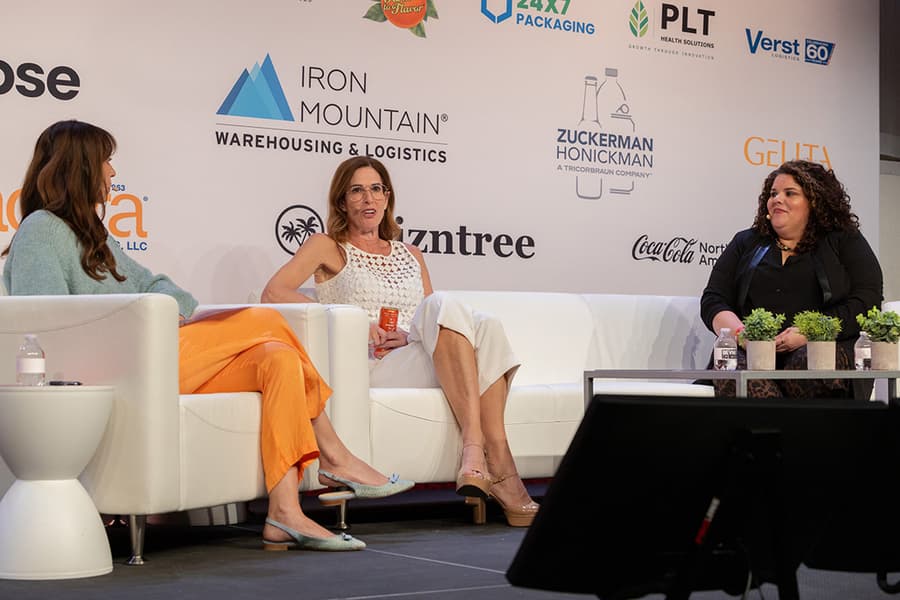
Laura Taylor, founder of Mingle, joins Samantha Fletcher, senior category merchant at Whole Foods Market, for a rare founder–buyer conversation on what makes a pitch resonate, how brands can build productive retailer relationships, and what growth actually looks like once you’re on shelf.
Speakers:
Laura Taylor, Founder, MingleSamantha Fletcher, Senior Category Manager, Adult Non-Alcohol, Whole Foods Market
Transcript
Note: Transcripts are automatically generated and may contain inaccuracies and spelling errors.
Speaker 1 [00:28] Leading non-alk brands brand mingle mocktails is sold nationwide at Amazon, Target, Walmart, Total Wine, and Whole Foods. But when founder Laura Taylor got her start, like many of you, she had to send numerous emails before getting the attention of a buyer. Today, Laura joins Samantha Fletcher, senior category merchant at Whole Foods Market, for a rare founder-buyer conversation on what makes a pitch resonate, how brands can build productive retailer relationships, and what growth actually looks like once you're on the shelf. Welcome, Laura and Samantha. Hey ladies. Welcome.
Speaker 2 [01:19] Thank you. All
Speaker 1 [01:20] right, let's kick it off. So, uh, Laura, I wanna talk to you about your persistence, um, and how it was tested when first approaching Whole Foods. Tell us how you managed to get in. And Samantha, walk us through what Laura's experience can teach others about pitching a buyer.
Speaker 2 [01:40] Um, well, I think managed to get in is an understatement. Um, so I launched the brand in 2017 and with my first batch of mangled mocktails, like within a week I went into my local Whole Foods, went to that customer service desk and was like, I'm here, I have this product you need, and they're like, go to the portal. So, um, I learned about the Whole Foods portal, uh. Found out who the buyers were, uh, Mary Guyver and Candace Price. Started emailing them quarterly in 2018, learned about the forger program, and in 2019, I had the opportunity to meet John Lawson, who was on the stage earlier today. And he agreed to make an introduction to my local forager in mid-Atlantic, which is Philadelphia, which is where I'm based, and I actually looked at that email last night. So he made the intro to Bill Gwyn and me. And from there, I got into the forager program locally to like 50 stores, and I was delivering Mingle locally direct as a direct vendor driving my car around with my Mingle mocktails. Then we got into North Atlantic, so we got 100 stores total, and then uh I continued to email the buyers, Mary and Candace Quarterly, and they finally responded in mid-2020. Mid 2022 and uh I got a call. So we set up a call and they said, Laura, we've been watching you, we've been getting your emails and after many discussions, we went national. Uh but it wasn't overnight. I had to do those quarterly emails, keep it tight and value add.
Speaker 1 [03:39] Samantha, uh, how does that mirror other, um, pitches?
Speaker 3 [03:45] It is very reflective of what actually happens. So the quick takeaways was it took years, and that's, that's a very, it's, it's difficult to say and it's difficult to, to accept sometimes, but that really is the reality. Retailers, we all have different timelines, but the timelines are very long. So even once you get that meeting where you get an offer to have your item brought in. 6 months minimum reality, probably 12 to 18 months before you can actually see your product on the shelf. So, the timeline is very accurate of what we typically see. And what's also very accurate, she mentioned about 4 different merchants that she experienced before she ever got an offer to bring her item into the store. So shout out to Mary, shout out to Candace, shout out to Taylor, um, shout out to John Taylor, and it's very reflective of she had to work with several other merchants before it got to me. And when I was now on the Whole Foods team and when I was looking at making an assortment. I would go back and look at the notes left by those merchants to say I haven't worked with this brand called Mingle. I don't know who they are. What do you know about them? What can you tell me? So I think that that's a really key important piece is you never know how long you're going to be with your merchant. It's a very small industry. You never know who's going to be your merchant, when you're going to see them again. So, thankfully, Laura did not say anything um undesirable towards any other merchants because when I asked for advice, it was all very positive and, and that's a very real piece of advice is Merchants, we talk whether it's internal or whatnot, so very, very reflective of the timeline and the persistence required.
Speaker 1 [05:30] Great. And then let's talk about undesirable and desirable communication. So when a brand is communicating with a buyer, what's the most important thing to get across in the beginning and then also as that relationship develops? Um,
Speaker 3 [05:46] yep, so the most important thing, it sounds very obvious. The 32nd elevator spiel is a real thing. I have had so many brands try to spiel me where I'm scrolling through this email and I'm scrolling and I'm scrolling, and I love a good brand story, but I've read through. Grandpa this and it's grown on this hill and X Y. I don't even know what kind of product it is, to tell you the truth. So, um, it's very important that when you are doing any kind of pitch, solicited or not, you have to be concise, you have to have data, and you have to let your merchant know. What is it going to do for the category? Just defining it as this is the best drink you've ever had, I guarantee you I've gotten 10 emails today that says that it's the best one I've ever had. I don't doubt that the product is delicious, but I need to very quickly look through the data and say, oh, Here's some data. Here's something that's quantifiable that is going to catch my attention very quickly. We have very short attention spans, and it has to be something that's very easy and digestible as a merchant.
Speaker 1 [06:50] I would say, say the same thing goes when you're pitching journalists as well. Um, Laura, what did that look like for you?
Speaker 2 [06:57] Yeah, well, I, I think if I looked at my first pitch emails in 2017, they were probably. I know they were way too long. I was telling my,
Speaker 3 [07:07] you have to scroll through them.
Speaker 2 [07:08] Yeah, no, she didn't see them, but from 2019, I think I took a few key tacts. One is I put myself in the buyer's shoes. I put myself in Samantha's shoes, and I thought, I don't know. Are they getting 100 emails a day? How many emails do you get a day?
Speaker 3 [07:26] Um, externally, well, now that we've had Bevnet today, it'll be, um, incrementally higher, but I would say pitches, we get at least 12 a week, and that's just a cold call. That's not even a follow-up. That's not even an extension of a, of a previous one, so we, we get a lot of communication.
Speaker 2 [07:46] So with that in mind, I know I get a lot of spam mail. So I always think about how can I add value, what can I share with them that's beneficial from a buyer mindset standpoint. So when I first started communicating with the original buyers Mary and Candace, I did it as briefly as possible, but I'm like this is the category because the category was unknown. Adult non-alk was certainly not a thing in 2017. So I was like, this is the type of buyer who would purchase Mingle, and this is why Whole Foods is a great place to showcase that. Um, and so I continued to update them on wins quarterly. Mind you, I never got email responses until I got that, hey, we want to talk to you email, but the advice I would have is put yourself in the buyer's shoes, be concise, see if you can get your email to fit on a phone screen. And provide value add nuggets that you think will be helpful to them.
Speaker 1 [08:48] Right. And then as you continue these conversations, I remember both of you saying something important about, um, providing data, understanding who you're talking to, um, and how that data is gonna serve them, um, even once you're on the shelf, right,
Speaker 3 [09:06] yeah. Yeah, absolutely. I, again, a, every retailer is gonna be different. That's also a very key piece. You need to find out how does your retailer want to receive information. Some retailers maybe won't even accept an email at all. We all have our version of a supplier portal. Um, please make sure that you use whatever method of, um, just because you get a merchant's email doesn't mean that's the right way to do it, um. We, we will always see the communication. So even though you never got an answer, I promise you we read it. Um, unfortunately I have seen other brands kind of implode through this, um, the more emails they send that go unanswered, their next email just becomes a little more angry and aggressive, and unfortunately it, it doesn't work in, in their favor sometimes. Um, just be very mindful of that. We, we read all of the emails, we see all the communication just because we don't respond. Doesn't mean that we're not paying attention to the brand when we're reading it, we're looking for again a quantifiable reason to bring it on. I, I will not accept a brand just based off of the one line. I know it will sell well in your store. I know people will think it's really good. I need to know that you have, number one, tailored your email to the. Retailer that I work for, it cannot be an AI generated general blanket statement. I need to because I, I have a different, um, customer base than other retailers, so I need to know, and that's what Laura did a great job of was she was able to say with numbers, this is what the whole food consumer is. This is the age bracket. This is what we're looking at an average spend, and here's where Mingle will fall in. It was very tailored. It was very intentional, and it read that way. Absolutely, yeah,
Speaker 2 [10:57] and just thinking about like one statistic was 93% of people who buy adult non-alcohol also buy alcohol, so this is an incremental. Purchase for a Whole Foods customer and it's better for you and our brand is compliant with your label requirements. So all those things,
Speaker 3 [11:16] her recognizing where and again this was several years ago already and the industry within mocktails, it is just now beginning to really see its true potential. So even a couple of years ago. It was not past her ego as a CEO to say, hey, I know people aren't coming into your store to look for mingle. They are now, but they're not doing it back then. So she knew very well that this was going to be an add-on purchase, and she was very willing to say it X, Y, Z, down, down the, um, down the line of communication. So the fact that you were very open with that definitely worked in your favor. Absolutely
Speaker 1 [11:53] great. OK, let's talk about, um. Later on down in the relationship, staying on the shelf, um, as your relationship develops, how are you approaching innovation? So Laura, how much are you asking for feedback or, um, sharing about your pipeline and then Samantha, what's Whole Foods buying strategy for innovation?
Speaker 2 [12:14] Well, I would start by saying it's an absolute privilege to have access to Samantha and Whole Foods to even have that conversation. One advice I got from a piece of advice from one of our mentors was present to Whole Foods the opportunity to create a flavor that they'd like to create. So this is a couple of years ago. I approached Taylor Cathala at the time, who was a huge champion for this category, saying, Would your team be interested in curating a flavor together? And to me that felt a little risky because I'm very protective of our flavor profiles and sure enough he engaged his leadership and we started doing conference calls and shared flavor profiles and they landed on a paloma because they saw a white space and they're like, we don't have a paloma yet and I'm like, I don't know if I'm ready for that, but I trusted them, and we came up with the pineapple paloma together, and it worked, and it, it, it, it, it was, it went gangbusters. It rose to one of our top selling SKUs. So that's sheer payoff of opening up your innovation pipeline truly and developing, developing it together. And then on Mingle Mood, I remember meeting with Samantha and Mary. I actually brought the, the can. Left it out on the table and Mary was pushing it away because she wasn't ready for functional yet, but I'm like, here's the can. I'd love for you, you know, to take a look at this functional line and please let me know if this label is compliant, what do you think? And, and you know, what was your response to that, Samantha?
Speaker 3 [13:54] I don't remember. Um, you were
Speaker 2 [13:56] there.
Speaker 3 [13:57] I was there. I, I don't remember. I have too many one-liners and zingers to, to quote myself on them, but, um, I will say hopefully a takeaway from this is, yes, we have a great, um, communication channel, but that was something. That was attained after several years, so we are able to have this level of back and forth with innovation items because they have already established themselves as a brand. They mingle has decided what their brand identity is. They did not come to us asking, um, you just tell us what items and we'll just do whatever. We wanted to know that there was a very solid. Um, proven consistent brand identity, brand strategy which leans into the innovation. So the innovation piece on that, now that we know that they know who they are, I can now work innovation around that. So, um, at Whole Foods we do like to use innovation as a way to liven up the shelves, keep, um, keep the consumer interested right now. It is the most or it's the least amount of brand loyalty that we have seen in general from a customer, which is great for new items coming into the category or for a brand to figure out what what new flavors are really, um, really trending with the customer. People are more willing to try different things, so it's a very fast moving time right now in the mock. Tail scene we are um very proud of the fact at Whole Foods that we are leading the charge on what's out there. We have, while our sets are small and mocktails, they're still, they're small but mighty. They're very diverse. We try to, um, we try to include as many of the flavor profiles that we see out there as, as being something that the customer wants, um, but when we do that with innovation, a long answer to your short question, it's great with innovation. We also need to have restraint behind it. Laura and I bond on the fact that we are easily distracted by shiny things, and she, what about this flavor? What about this flavor? It is our instinct to say yes, let's just do all of it. However, that does not work on a retail level, so we are willing to do innovation, but it has to be with restraint, and brands in general have to have the patience and the restraint to only launch one innovation. You may have a recipe book of 30 items. It is not a smart business move to do 5 innovation items in a year. You're going to put everything on the table. You're going to run out of flavors in 2 years, and the customer's going to get bored with your brand.
Speaker 2 [16:35] You called it innovation fatigue, and I take that to heart. So that's another thing. You've got to listen, take the feedback. You've got to be open to the feedback even if you don't like it.
Speaker 1 [16:45] Absolutely. OK, so talking about mocktails. Let's zoom out a little bit. What's the overall state of non-AC, adult non-AC, um, how are people shopping the category, and how are people shopping the, your brand?
Speaker 3 [17:00] Um, yep, so right now mocktails are doing fantastic. It's the, um, number one growing category within the non-alk sector. Um, right now at Whole Foods, our number one mocktail brand is Mingle, so congratulations to that. Um, we are seeing that the reason why Mingle does so well right now is because they have their core items, so they have their items that everybody knows they can go for, but we're really starting. To rotate that innovation through, so that mingle mood item, it is a functional item. It does, it's not alk, but it still has those functional elements to it. That's definitely a very, very high trending piece. Each retailer is going to have their own standards for is this non-alk functional beverage, is it a grocery item or is it an adult beverage item. So that's key if your brand falls into that category. It's very important for you to know by retailer what category does it fall into and who is it going to be on the shelf next to.
Speaker 2 [17:57] Yeah, and then from a brand standpoint, I think anybody who's been at this a bit, you know, you have to, once you get it on the shelves, you got to get it moving off the shelves. So Whole Foods does an incredible job of sharing the promotional calendar and timeline in advance so that we can. In our own calendar define our moments and our key points and our programming and our promotions and we vet those with you and make sure that the timing is right and we supplement that with all the things, you know, experiential sampling, digital, social media, uh, but it's something where we do align on that calendar to make sure that the products line up with the seasonality and The cultural moments,
Speaker 3 [18:43] yeah, and the customer, again, the customer is interested in the category. They are interested in what's out there. They want to try what's new. They are very open to each time they come in and shop, look for a different flavor, look for a different brand. So the, the brands that already have an established base, they have to be willing to have just as much energy as the brands who just got their spot, and it is a, a very common mistake for one. Your brand gets on the shelves, people just try to set it and forget it, and that is quite the opposite of what you need to do. Um, so that's why Mingle has been able to maintain being the number one mocktail brand because they still have that same energy as those brand new to the set. So they do lots of, um, lots of marketing, lots of demos, etc.
Speaker 2 [19:25] Yeah, I think that's my biggest nightmare. So we do everything we can,
Speaker 3 [19:29] not the demo part, the
Speaker 2 [19:30] demo. We love demos. Keeps us close to the customers, but really I think um if anybody's been in that situation where you get the call where you've been delisted, it happened to me once many years ago. I'm like I, I can't have this again, but you have to support that product consistently throughout, you know, once you're on the shelf, you gotta keep at it.
Speaker 3 [19:55] And for the record, I've cut some of Laura's products, so it's not like everything I just give, give, give. If there is a store that is a low performing store, I have cut items from from that set, and it's taken with grace, with the understanding of I completely understand it didn't meet the benchmark. We've removed it. And next step we're gonna go at it again and it's a great relationship
Speaker 2 [20:18] because you shared your strategy too that was very helpful for sure,
Speaker 1 [20:22] yeah, we have just a little bit more time but I um wanna kind of piggyback on that as um you know we're soon to exit and you will be networking, um, Samantha, what's the best way for people to get input from you on store positioning formulation brand.
Speaker 3 [20:42] Yep, so use the supplier portal. Shout out to our supplier portal. Make sure that that's where all of the communication goes through. I will do my best to answer in general outside of this event. I will do my best to give feedback, but it's really important that you already have your brand strategy, and the question that you ask is, here is my plan. Where does that fit in with Whole Foods? It is Whole Foods. As a retailer is not in the position to tell you what you need to do and where your strategy should be. I will tell you what our plan is, and you will see where that fits into, into your plan.
Speaker 1 [21:16] Beautiful. Well, thank you ladies so much. This went by so fast. I'm sure there's many more questions, um, but thank you for your time and your thoughtful answers. Thank you. We have a round of applause. Thank you.
Related Videos
The State of Cannabevs: Strategy on Deadline
With federal regulations about to put this fast-growing industry into a time-out, we look through the lens of brands, distributors, and lobbyists for potential futures for this fast-growing segment.
AI and Online Retail: Brand Building Meets Agentic Commerce
In a special tactical presentation, sales, marketing, and tech experts share a concrete playbook for making your brand legible to AI agents — without gutting what makes it human.
Exit Interview: How Dirty Shirley Cleaned Up
Longtime beverage marketing veteran Adam Kost discusses his lean startup, proof-of-concept strategy, the key insight that gave Dirty Shirley the oxygen it needed to grow.
Disruption at Scale: A Conversation with Athletic Brewing CEO Bill Shufelt
Athletic’s rise has reshuffled the deck of beverage categories. Shufelt shares how he's navigated explosive growth and what he’s learned about raising capital, brand positioning and category creation.