Search across the BevNET CPG Media network including BevNET, Nosh, Brewbound, Taste Radio, Nombase and CPG Jobs.
Exit Interview: How Dirty Shirley Cleaned Up
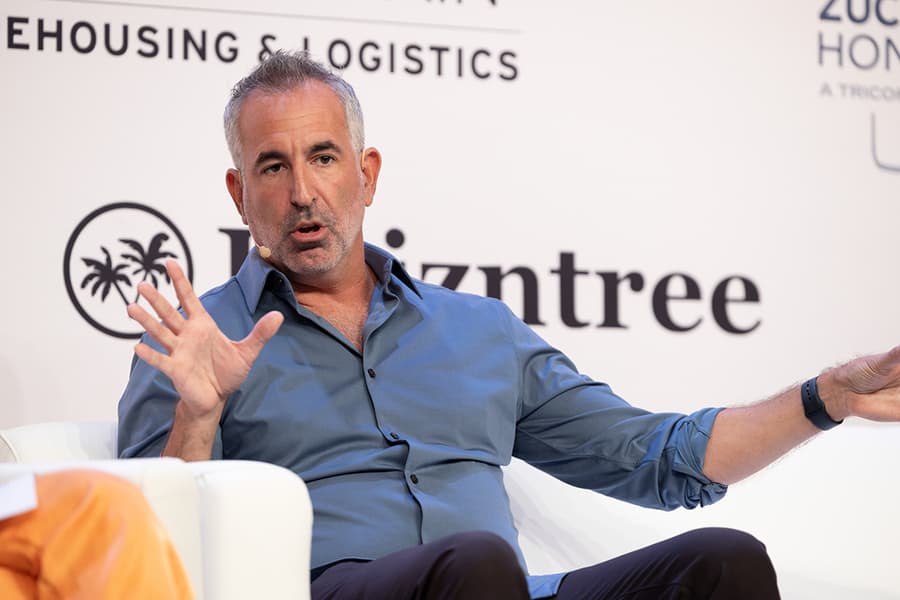
Longtime beverage marketing veteran Adam Kost discusses his lean startup, proof-of-concept strategy, the key insight that gave Dirty Shirley the oxygen it needed to grow, and the branding ideas that created Dirty Shirley’s emotional connection to its audience.
Speaker:
Adam Kost, Founder, Dirty ShirleyTranscript
Note: Transcripts are automatically generated and may contain inaccuracies and spelling errors.
Speaker 1 [00:27] Hi everyone, I'm the spirits editor at Bevnet. It's nice to see you all. Uh Ready to drink brand Dirty Shirley has had a unique journey, and it's now in a new chapter after spirits giant Sazerac brought it into its growing RTD portfolio. Today, founder Adam Cost will discuss his lean startup, proof of concept strategy, the key insight that gave Dirty Dirty Shirley the oxygen it needed to grow, and how he engineered the brand to go from startup to exit in 2 years. Welcome, Adam. Thanks for joining us. Thanks for having me. Of course, um, all right, so the first time I interviewed you, you had just made a pivot from your line of RTDs, Country Luau to Dirty Shirley. So let's talk about that. So, for so many entrepreneurs, stopping a struggling brand is like the hardest decision. So what was the critical moment or data point that gave you the conviction to abandon modest growth and pivot, and what advice do you have for others?
Speaker 2 [01:47] Yeah, the Country Layout was a great brand and You know, really doing well in markets like Texas and Tennessee. We were trying to scale it to other geographies, and it just wasn't kind of sticking or or resonating with distributors or retailers broadly. And at the same time, we were testing Dirty Shirley as kind of a line extension of Country Luau. And you know, I was still in the phase of the business where I was doing a lot of physical demos. And we kind of lined up the two products in front of the consumer, kind of marketed them as separate brands, and AB tested our own portfolio. And the emotional response we got from Dirty Shirley just destroyed Country Luau, and so it really forced me to take a step back and say, hey, if it comes down to limited resources and where I think we could be successful, you know, I had to kind of take my original baby. And put it out to pasture, which wasn't an interest, you know, it wasn't an easy decision and my investors were also super confused because obviously you took their cash to build Country luau and now you're ditching it midstream. So tough conversations with both distributors and investors and um but the The intensity of the emotional reaction I saw around Dirty Shirley was something I couldn't ignore. Yeah,
Speaker 1 [03:09] OK, let's talk about that intensity. How did you identify the childhood? Shirley Temple Link is like this core value proposition. What does that teach entrepreneurs about finding a brand's like deepest conviction? Yeah,
Speaker 2 [03:25] we did significant research, um, around nostalgic beverages, and by research, I mean, I just kept seeing it on TikTok. So, you know, at some point when you start seeing something kind of become part of the cultural zeitgeist of the US with a very defined consumer target. The brand positioning was already done for us. Like it was really crystal clear and Then we started, you know, pulling further data around of the female shopper in RTD, and we realized that there was actually a significant amount of leakage, especially in grocery, um, where female shoppers were not choosing to purchase RTDs, and that kind of highlighted a bigger consumer problem for not only the consumer, but also for retailers. And so the, the storyline, the trade-focused storyline. was really cauterized around providing A better shopper or introducing an incremental shopper to the category with a really great lifetime value for our retailers again solving problems for your customers through your products and so that storyline worked really really well.
Speaker 1 [04:39] Very cool. And you had an interesting way of conveying that storyline to buyers, retailers. Um, how did you have that conversation with them? How did you get feedback from them?
Speaker 2 [04:53] So, so your buyers always inundated with tons of brands, right? And they kind of have tunnel vision to an extent. Like it's hard to get them excited about anything, especially kind of new stuff. And so we played off the emotional connection that I think everybody in this room or in the US has with the Shirley Temple, and we asked them to tell their Shirley Temple story. When did you have your first one and how did it make you feel? And everybody, every buyer had that story, and if they didn't have that story, I would say text your daughter. And show her the brand and ask her what she thinks of this. And so we had buyers from Albertson literally text their kid the brand, and we're like, oh yeah, we already ran those in college and she's underage. So we were like, oops, but again, this is like a buyer telling us, so I guess it's fine so.
Speaker 1 [05:45] Um, it's so funny because I realized I haven't told you my dirty, my Shirley Temple story. I was 5 in a Chinese restaurant, had a Shirley Temple, um, was very enraged for some reason about it, and I followed the waiter back into the kitchen, threw open the kitchen doors, and yelled, the cherries are sour, the whole kitchen.
Speaker 2 [06:06] Well, we have, we have a, a common thing. Mine was also a Chinese restaurant on New Year's Eve, and it was the first time I felt like I was included with the adults, and I was walking around with my cocktail, and I felt like a big boy. It was really fun. I remember that experience.
Speaker 1 [06:24] Amazing. OK, so that kind of got you in with buyers, um, clearly. Uh, your packaging, um, got you in with your consumer base, like me. I loved it. It's nostalgic, it's femme, like I got it immediately. So, one thing you said in our prep call was that you focused on having the packaging overdeliver at the shelf to kind of mitigate service level issues, human error in the distributor network. Tell us about what specific packaging design ensured it was recognizable, discoverable, error-proof in that sense.
Speaker 2 [07:03] Yeah, we, we took an intentional focus that less is more strategy on packaging and It just needs to communicate clearly what it is again dirty Shirley, self-explanatory for most consumers. The brand name was doing a lot of the work, so the tertiary communication, the secondary communication just needed to be about ABB and ingredient. We knew the consumer cared about all those things with the elimination of red dye and then the aesthetic of it, you know, I have a corporate marketing background, and you wouldn't believe how many times. I sat in a room and they were like, don't use red and white. That's Coca-Colas. And I was like, but why not? There's so much equity built around red and white already. And again, that nostalgic emotional connection that we all have with Coca-Cola. I said, well, it's kind of bullshit that that's off limits. Like why don't I borrow that? And so between the color scheme. And the packaging format, you know, we use this inspiration. My my cousin Anson did all the creative design. We did all of our creative in-house, you know, it was just two guys in their mid-40s designing feminine packaging, and we got it done in two rounds, and we used this inspiration around, you know, Lana Del Rey and Marilyn Monroe. What if they had a baby and how do we create kind of a font and style that that was timeless?
Speaker 1 [08:28] Yeah, beautiful. So, um, I was at an alcohol conference yesterday and a consultant was up doing a presentation and he mentioned this number one rule that um you should go deep first when you're launching a new product instead of wide. You kind of did the opposite. Like, why did you believe the market was the best indicator of product success and how did the strategy mitigate risk for the brand?
Speaker 2 [09:01] I don't think it mitigated. I think it increased risk. Like it definitely was like. A wild thing. I think we were, we were kind of pushed that direction. From a few ways. One, you just don't, this is my philosophy on brand building. You just don't know where you're going to hit it really well across the US, right? There's this idea around Let's focus on your backyard. Well, what if you've got a shitty backyard? I mean, like, like, well, find another backyard, like is that the next, you know, ladder of the advice. So, um, You know, in a lot of activities when everyone's like go deep in your background, well, you're going to start doing things strategically and tactically that may not scale. Right? And when I think about how do I scale, things need to be wildly efficient and have a good ROI. And if I can't do it from my couch, I don't want to do it. And so we took an approach that was wildly focused on customers, right? Like I can overdeliver service to customers, um, on a national basis. And so when we got Walmart. You know, they launched us on two coasts, and we took that information to Southern Wine and Spirits and we were like, hey, we would love to launch California and Florida with you guys and then Southern came back and said, Well, what about these other 20 states? And we were like, OK, so what I believed we could do is deliver outstanding service not to not only those retailers, but to also our distributors in the way of great marketing. The way of great pricing and programming, variable cost on incentives and things of that nature, we could do all that from home at scale and just work our butts off and And get it over the line. How
Speaker 1 [10:51] much was this part of a strategy for like a fast sale? Would you recommend it for other brands or product types?
Speaker 2 [11:00] I, I mean, it's, it's choose your own adventure like. Um We had a fortunate situation where when we launched the brand, we went viral immediately on social media. And I don't know if you guys have ever had thousands of 21-year-old females screaming at you and saying mean things to you about not having the product available everywhere they lived, but it was an uncomfortable feeling from a business operators standpoint where you want to serve your customer like you're like, Oh, I need to get you what you want and need. And so there was a lot of tension there and it, it kind of forced us to go super wide as well. Um, I think what it showed a strategic or showed many of the strategics that we spoke to is that we were, while we were small, we were well beyond the market validation phase. And when you looked at the performance of the brand on a regional basis, it was working everywhere, right? And overdelivering against, you know, velocity targets everywhere. And so what I think a strategic would like about buying something younger versus larger, which is where most of the acquisitions are. Is the uncertainty of something small, but I think we had enough uh proof to share with both retailers and eventually a strategic that, hey, this is a very real thing. It just, you know, we, we just haven't thrown all those great resources at it that, you know, most companies who've raised a lot of cash. You know, could do
Speaker 1 [12:31] right, right, right. Speaking of cash, um, your approach prioritized avoiding fixed costs and running a really lean operation with minimal staff. So can you explain how your philosophy on investing in variable costs like distributor incentives, um, instead of hiring, say, a fixed cost sales force worked? How did that discipline fuel your growth?
Speaker 2 [12:58] Well, it was a reality. So when you look at your, your cash pile that you have for your brand, and you start playing with your financial model, and I encourage, you know, any young entrepreneur to get really good at financial modeling and Excel so you can see what happens with different triggers and do it from a standpoint of being really conservative, you know, probably play the worst-case scenario in everything you do. And you start plugging in fixed costs like employees, it gets real nasty and fixed costs unfortunately take a long time to get an ROI on. It could be 6 to 12 months, and then at 12 months that talented person you've hired may go somewhere else and you've got to reset the typewriter again and start all over. So it can be extremely expensive and dangerous to go down that path. And when I looked at gross profit. I know exactly how much money I could invest from a marketing and sales standpoint on a consistent basis or a variable cost basis against things like incentives. And again, I can scale incentives. I can scale distributor engagement, that I can do, right? I can't hire a national sales force, like, and don't want to. Yeah, um, and then I can prioritize other things like innovation and operations and marketing and spend more time, you know, less time managing people, more time with customers, um, but the discipline came from necessity and that every time I would run a model with more fixed costs it break and it would show us hitting a wall fast and so it was saying no to. You know, a lot of events. We had a no sampling event policy unless you threw a nice display on the floor. Like, so everything was based on this mentality of how do we invest things that get us to break even or better from a gross margin standpoint and then scale or volume will eventually cover the back end cost of the business, and then the model will become, uh, you know, profitable or break even and it just, again, someone mentioned it earlier, it just You got, it's the art of saying no to almost everything and then just investing in the things that you find that work for your brand, your brand,
Speaker 1 [15:10] yeah, yeah, OK, um. We've seen other brands like yours say Long Drink, Lone River Ranch Water that have kind of built themselves around this very specific, um, drink that hasn't really maybe hit the mainstream and then becoming the call brand. So what did you take away from other brands like that and kind of how are you different?
Speaker 2 [15:37] Yeah, I mean we I, I learned it through country luau, to be honest with you. Country luau was pretty much a fast follow vodka, seltzer, tequila seltzer, rum seltzer, um, and, and it, it, I learned a hard lesson there. I thought I could out-market the competition. Um, a little bit of arrogance from my, my corporate background. And then I realized you can't be a fast follow brand. You can't be a fast follow product. You only win that game unless you have a mountain of resources to go attack. And that's why companies like Anheuser-Busch and Sam Adams are so good at doing that, is that they look at approved market and then they enter it vigorously and they see if it works or not. Small brands, we can't do that because eventually the market or that segment will shake out into an oligarchy. Um, more, more often than not it'll be a two-bra show, right? You'll have kind of two products with a little bit of different positioning like right now neutral and High Noon is a good example of kind of the vodka seltzer segment. And so we needed to create a product that was really distinct and ownable that we could build a brand moat around it and with a very focused product portfolio around a singular concept which was the dirty Shirley. Long Drin did that with, you know, their. Their products so clearly. So from a product design strategy, it's very kind of almost Red Bull-esque or Coca-Cola-esque, if you will, and I love the focus on that because that would also keep us disciplined on innovation moving forward and set the guardrails on what we can't do or shouldn't do, which is all things to everyone.
Speaker 1 [17:21] Yeah, yeah, absolutely. As a reminder, you guys can text um Adam your questions and we have, if we have time, we'll get to them. 213-354-8859. Um. All right, let's talk about the exit a little bit. So, you established proof of concept and data for a strategic partner over operating the business for like 7 to 10 years. So, tell us about that logic, and how did that objective define your um execution strategy from day one.
Speaker 2 [17:55] Yeah, we, I assumed that we're going to run this thing as long as we could, so I didn't have a time horizon for exiting the business. It was kind of a, if you remember the The Field of Dreams movie from years ago is kind of if you build it they will come, um, and I just assumed that this is a this is an iconic brand. It's got a lot of culture involved in it. It's a very emotional product line, very distinct, and I knew someone would buy it. I didn't know when. So to the day that we sold the business, we're still operating it like we'd be there a while, but You know, when you, when, when an offer comes, you got to really look at the marketplace around you. And as if you're an alcohol entrepreneur or if you're an entrepreneur in, in beverage in general, you know, the capital markets are so challenging right now. It's probably the worst they've ever been. And so I had real concerns about our ability to continue to resource the business plus with Really significant challenges and headwinds on larger brands within our strategic within our distributor networks. I was very concerned about how much focus we would also get from those pro those companies because they have a tendency to focus on the core when large brands get, you know, you know, declining kind of numbers because a company like Southern Wine and Spirits, it's not going to be able to make up. You know, declines on a major flagship portfolio brand by developing a lot of innovation. Like it is not apples to apples. Like Jack Daniel's gets a cold. I mean, that's a lot of money. You can't make that up on dirty, surely. So there were some real concerns, um, you know, external factors that I couldn't manage around that kind of Told me maybe, maybe this is the time.
Speaker 1 [19:55] Yeah, yeah, OK, great. um. We have one more minute. Tell us a little bit about the emotional arc of being a solo entrepreneur. How are you feeling now and, um, Yeah, you mentioned it's like a You're constantly climbing and what does it feel like now that you've made a sale?
Speaker 2 [20:19] Yeah, I was, I was explaining it to my, my dad who was a huge, huge part of running this business, and he's a, an entrepreneur and a guy who's sold and built a few companies, and I said it feels like a false plateau or a false summit. I'm sorry, um. And you know as you build these things, it's a pretty lonely journey, a lot of sacrifice, and I think the mission was at some point to make the lows not feel super low and the highs not super high, and so you try to get as numb as possible along the way, which is a strange feeling, but yeah, once it's all said and done, I don't know, it's like it's not done. Because you're looking for your next summit in like a strange way, so I don't have the next idea, but I'm definitely looking to start climbing again at some point. So, um, yeah,
Speaker 1 [21:14] you're consulting in the meantime,
Speaker 2 [21:16] yeah, so I'm, you know, again, I saw a big opportunity in the market, um, having worked with consultants through the journey and You know, I love helping smaller brands and things like that, so I'm going to focus on Uh, you know, helping smaller companies, you know, from the standpoint of a founder that went through all the things, because I think there's just, uh, a lot of folks offering advice or consulting services in the industry, that may not have done it from the altitude that a lot of the founders, you know, starting brands have done it, but they have great experience from maybe larger companies. And the only thing I learned from my experience at a larger company starting Dirty Shirley is get rid of everything I did for a larger company and erase all that experience because it doesn't work. The things that I was doing there don't work for an emerging brand in a lot of
Speaker 1 [22:06] ways. Well, thank you for starting to share that advice here on this stage. Let's have a round of applause. Thanks.
Related Videos
The State of Cannabevs: Strategy on Deadline
With federal regulations about to put this fast-growing industry into a time-out, we look through the lens of brands, distributors, and lobbyists for potential futures for this fast-growing segment.
AI and Online Retail: Brand Building Meets Agentic Commerce
In a special tactical presentation, sales, marketing, and tech experts share a concrete playbook for making your brand legible to AI agents — without gutting what makes it human.
Retailer Profile: Launching and Maturing with Whole Foods
A rare founder–buyer conversation on what makes a pitch resonate, how brands can build productive retailer relationships, and what growth actually looks like once you’re on shelf.
Disruption at Scale: A Conversation with Athletic Brewing CEO Bill Shufelt
Athletic’s rise has reshuffled the deck of beverage categories. Shufelt shares how he's navigated explosive growth and what he’s learned about raising capital, brand positioning and category creation.