Search across the BevNET CPG Media network including BevNET, Nosh, Brewbound, Taste Radio, Nombase and CPG Jobs.
AI and Online Retail: Brand Building Meets Agentic Commerce
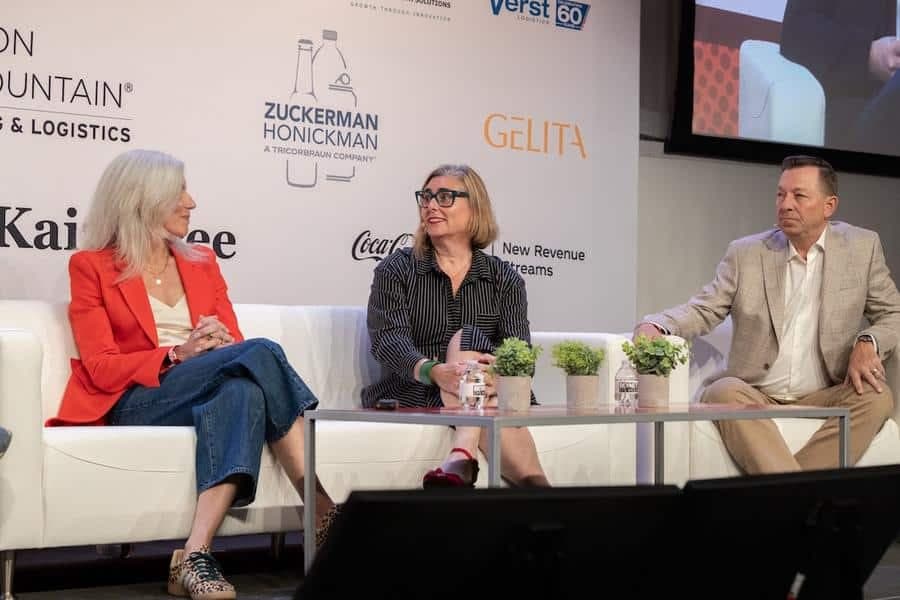
In a special tactical presentation, sales, marketing, and tech experts Lynn Altman (Brand Now), Jess Graham (Banquet), and Kevin Senn (Aisle AI) share a concrete playbook for making your brand legible to AI agents — without gutting what makes it human.
Speakers:
Jess Graham, Principal, BANQUETLynn Altman, CEO, Brand Now
Kevin Senn, CEO, Aisle AI
Transcript
Note: Transcripts are automatically generated and may contain inaccuracies and spelling errors.
Brad Avery [00:25] I'm Brad Avery, senior reporter with Bevnet. So, marketing to consumers is a challenging, ever evolving art, but it's also well tread territory. And though the details may change over the years, there are still foundational, tried and true best practices that were built over a century of research into advertising, merchandizing, and human psychology. But it's not just humans that you have to sell to anymore. Ready for it or not, AI is increasingly driving purchasing decisions and whether it is determining the recommended products at the top of a search query, or it's chat GPT or cloud directly answering a consumer's question for best vegan, non-GMO FODMA, GLP1 friendly, RTD non-coffee lattes, under $4. So, how do you get Claude to recommend your brand? Our next 3 speakers are here to walk us through marketing to the machines. They are Kevin Sen, CEO of ILAI, a data and AI platform seeking to help CPG brands win in retail. Jess Graham, principal at Banquet, a consultancy she founded to help brands navigate a world where AI agents are the ones doing the shopping, and Lynn Altman, CEO of Brand Now, a brand strategy and innovation firm tackling the rapid shifts in culture head on. Please join me in welcoming them to the stage.
Speaker 2 [02:16] Good morning. Kevin Sen, co-founder, CEO of AAI, uh, we are the AI platform that delivers the data and analytics that power the brands in this room and all the way up to Heineken. And lately we've been really focusing on what we call the AI shelf. So let me ask you a question. Raise your hands. I asked this of a CMO yesterday morning at breakfast. How many people in this room in the last, let's say 30 days have bought something on Amazon, Instacart, from Walmart, or any other of the platforms? I look around. At least 50% in this room are doing that now. Everybody who is a brand or is associated with a brand, raise your hand if you have an AI discoverability strategy for cloud, Gemini, chat, GPT, Instacart, Amazon, etc. Now look around. Nobody. 11. That's what this panel's about. I'm going to provide a framework of how to think about this when you go home on Monday morning, what you should do. I'm accompanied by Lynn and Jess, who are the real experts on marketing and branding, all the things you guys are used to talking about. They're the best at that. I am not. What I'm really good at is understanding data and understanding how to make your data discoverable by a machine and not by a human. In the old days, You know, what, 16 months ago, what you guys all worried about was discoverability and the ability of somebody to go into a shop from the branding, from your marketing and and discover pick your brand off the shelf. That has changed now. The AI shelf makes your brand invisible for all the other reasons that you previously thought were important, and there's really three lanes that are that define the framework of that query. The first is where you don't want to be. It's generic query. That means somebody comes into one of these platforms, say it's Instacart, say it's Amazon, say it's Walmart. There's an AI engine behind that query, and if somebody comes in and says give me the best. You know, better for you functional soda. Your name's not going to appear unless you're one of the top 3, unless you've done the things that we're going to talk about today to make sure you're discoverable. You don't want to be there, and everything, frankly, that Jess and Lynn do is what helps you get out of that and get to where you want to be, which is the named query. In between that is the paid and the sponsored. Everybody can do this. It's a great way to get discovered. It's a great way to launch a brand. There's brands in this room that have come through Bevnet that use this strategy. I will say, obviously it's expensive. It takes budget, and if you don't have that budget, what you want to get to is the named query. When somebody says instead of functional soda, I want my spin drift. You've taken yourself out of the algorithm and you've made the choice not chooseable. They have to deliver you. And the last piece is, and I know you've all seen this Instacart, you've bought it before. Whether you want to call it reorder, subscription or just buy it again, that's where you want to get to where it's just an automatic. Choice by the consumer that takes the algorithm out of it. If you are in the first spot in the generic query, how does it work? What is the framework? What is the scorecard? The scorecard is not flat, and it's really important how this is structured. Again, all the things that Jess and Lynn do at the very top, you know what drives your typical score conversion rate, repeat purchase, sales velocity. But here's the really important part. There's a gating function now of the structured data, which means is when I say a gate, there's a, there's a solid wall between your data on one side and the discoverability engine on the other side. And if you don't have the parts that are visible to the AI machine to get you into the discoverability piece, then these other parts don't matter. So as an example with Walmart, if you don't hit their relevancy score, and you'd think that there'd be like 10 things and they're all 10%. If you don't hit the relevancy score, you get 0 and you're not considered, so you have to get the data right to get into the machine to be asked about. And then the other parts we just talked about are the most important conversion rate, repeat purchase, and sales velocity. And then modulating that without as much value but still important as reviews, ratings, price competitiveness. And substitution rate. Summing it up, you know, what's stayed the same, what's changed, and what's new? The things you're familiar with, the fundamentals, they all still matter. You have to have product quality, you have to have a pricing strategy, you have to have brand strength. If you don't have a good product, none of this matters anyway. What did change is the surface. Typically old days go to the shelf, pick it out. What's the packaging look like? The packaging now for AI is your structured data. That's what it's reading. You've got to relate to a machine that's looking at did it fill the elements that I think the consumer is asking for? And remember these LLMs or frontier models, whatever you want to call them. They aren't human, they are driven by math, and so they're looking for certain checkboxes to make sure you get into the discoverability piece. That's the most important part. And the last piece is the agent legibility, you know, making, again, making your product readable to a machine in a way that makes sense to it, to put you in where you want to be chosen. And I think If you think about it, this is a lot like SEO in 2008, and Google really led that path. I don't know if you saw, but two weeks ago, It's convenient for us. You can't make this up. Google just announced, I mean, you all know your Google Sheet for your SEO and all your, they just announced your AI discoverability score and have now posted it in your commercial page. What does your AI surface look like? What does it look like to be discoverable? So we all know if you think this is the future, if Google is publishing this, which means they're then going to monetize it, it's not the future, it's now. And with that, I want to hand it over to the smart people, Jess Graham. We'll come back later for Monday
Speaker 3 [08:42] morning. So, um, I want to bring the consumer into the room. We've talked about the bots. They're here. Um, if you didn't know, they are very much here, um, but the consumers are still in control, hopefully, at least for the moment. And, um, when I was at Visa, we talked a lot about people's mental models for purchasing, and I think mental models for purchasing are actually really relevant as we enter the agentic age. The way that I'm thinking about it is in 4 quadrants. There are going to be commodity purchases that are all about price and availability. There's no shame in this game, but you really have to go after your cost per unit, and there's a very clear strategy if you want to be a commodity brand to make that work. Most of the people in this room want to be in the prized conviction category. These are brand loyal purchases where you're naming the brand that you want to buy, you're naming the soda that you want to enjoy, and there's not much that's going to move you, certainly not probably an agent. It's not going to much that's going to move you away from that conviction of purchase. Those are prized positions and there aren't very many of them. There are also consequential purchases in the AI landscapes that we aren't going to, as consumers trust the agents to do on our behalf for the next little while. Think about that as your wedding dress, your, um, expensive watch, your, um, your car. Something that has enough risk or enough dollar signs attributed to it that you're not going to trust an agent to do the shopping. And then there is this serendipitous bucket, which is the one that really keeps me up at night. It is the one in which many of the brands in this room use for discovery. Serendipitous purchases are this beautiful combination of value, surprise, and agency. It's, it's, it's the combination that we're going to have a really hard time engineering when the bots are doing the shopping. Um, in addition to sort of thinking about the consumer and how they're thinking about spend and how they're thinking about making their purchases, um, there's a lot that's changing in the industry as well. One of the reasons why you want to get to that conviction purchase is not only the importance of product data that has to be very well structured, and Kevin just talked about it. But you also have to know your customer. So for years, the last 20 years, we have been in an, in an environment where platforms are really in control of consumers and data. Um, a couple of weeks ago, for reasons that have to do with 25-year-olds, um, i.e. a lot of chaos in my household, I made two purchases from the same restaurant within 15 minutes of each other. On one side, I got a receipt, and the restaurant got from which I ordered my phone number, my actual email address, and my actual address. Three pieces of information that are literal gold for anybody who owns a brand. The other one was from DoorDash. Look at what they gave the restaurant. Not my number, not even my full name, not my address, and not my email address. Zero data versus rich data. So when we talk about all the work that you have to do for your products to make them visible to agents, please, please, please don't forget that consumers are still in the room. And that you want as much of their data as possible. If you don't have their data, are they really your customers? Um, now I'm going to hand it over to my friend Lynn, who's going to talk about the amazing, beautiful stuff you can do to ensure you get into that conviction category.
Speaker 4 [12:40] Thank you. Now, a lot of. What Jess and Kevin were talking about was the kind of going into an Instacart, going into Sparky, and saying I want a probiotic soda, but I want to do a little demonstration of what's next. So again, in the far future, maybe 3 or 4 months from now. Uh, so I went in to chat GPT. I created a shopping agent, and I said, I live with my husband and 17 year old. I'm a pescatarian. I want snacks, beverages, food for a week, and my budget is $350. And there's a video that shows what happens. So it shows within a few minutes, this is sped up, it chose the store, not the store I normally shop at. It chose all the products for me, had me sign in, and at the end, all I had to do, and it told me why it was deciding different brands, and at the end, all I had to do was manually sign into my Fresh Direct account, hit confirm, and delivery was scheduled. Not usually a fresh direct shopper. It chose, uh, Fage yogurt. I normally take Chobani. I normally choose Chobani. Uh, it gave me unflavored seltzer, OK, whatever, but it did get about 60% of what I wanted, right, which is really, really interesting because there were some things, even if it wasn't my brand, I thought like, well, maybe I'll try Fage, you know, it's not my normal yogurt, but hey, maybe I'll like it. And what I saved in effort, I was willing to give up in choice, and it, it's exactly what we're talking about, about why your brand matters. The other part, as Jess pointed out, which is whether you're the, the brand that didn't get chosen or the one that did, they still don't know they got chosen by me. So all of that data is still lost. So what can brands do to Buffer themselves and put themselves at the top of the list, which is possible, and a lot of it is about earning the ask, and we can get back to ask generation if we have more time. But what we want to do is earn the ask in 3 different ways. So there's 3 different ways that brands can get to that prized, uh, that prized spot. The one is being the name that people use. So for example, there's flavored seltzers, LaCroix, Waterloo, Clearly Canadian, but there's only one Topo Chico. So how do you have a proposition that makes you irreplaceable in the cart? You can own the category. I mean, Dirty Shirley, they presented yesterday. Their name is the category, and it's very, very hard to find another like it. Which is also where innovation comes in. There is something about discovery that is still so important and having a product that's truly innovative. Again, Spindrift, there's only one, so even though they don't have the generic name for the category, they created something that is so unique that that innovation makes people want that and drive that preference. So the, the more unique you are, the more ownable you are, the more innovation can come in. And also, the other thing with innovation is I can see a world where someone just types in, find me something new. I like this brand, find me a new flavor. And so the more you can bring newness to your consumers and delight them, the better you are. And also from what Kevin tells me, it does help your data a little bit and discoverability. And then lastly, packaging. The packaging is interesting because I think it does two things. You know, we all saw from liquid death what could happen when you put something that was always in a plastic bottle into an aluminum can. We've seen from Graza, I call that the Graza is like the squeezy squeeze bottle of this millennium, that just one simple packaging innovation can really, really drive loyalty. But the other thing packaging does that the others don't do is it gives you an opportunity to reconnect or connect directly with the consumer who's been, who's, whose, whose product you've, your brand has ended up in their shelf because of it, or in your home because of AI and it's this magical thing called a QR code. Most QR codes today, you, you scan them in, they might go to a website, your website, but it's such room for innovation to collect data from your consumer, to offer them something that will have them give you their address, your phone number, your email address. How you create that value for people is really a landscape waiting to be explored. The other thing, and I hate to be the one to say this, is that AI isn't everything and humans still matter. And so, the last way to really reconnect with consumers is um to be human. So, I gave this talk a week ago at the Wall Street Journal Global Food Forum and I asked people about AI shopping and this woman told me a story that she and her husband were looking to buy a TV for their home. And they as a test used two different LLMs, put in their specs, and both LLMs gave them the exact same store, the exact same model. So they went to Best Buy to get the Sony feeling confident in their decision. They had done their research, and the salesperson said, OK, we know you want the Sony, but do you like watching horror movies? And they said, Well, yeah, we love watching horror movies. And they said, Well, this TV is horrible for that. And so they did a side by side demo versus the Sony versus the Samsung, and it was actually they could see for themselves that the Lalums got it wrong and that the associate got it right. And while that's in retail, it's still important to continually demonstrate your expertise and your reason why a consumer wants what you have, whether that be through sampling, again, something unpack on your website that really educates consumers and demonstrates your expertise in their lives. Retail. There's something I keep saying like Trader Joe's isn't worried about any of this. And so how do we learn from what they're doing in terms of discovery, in terms of making the store experience, uh, more exciting, more engaging. Again, not to ignore AI but to find another area of opportunity within it. And the last one is to create community. I'm somewhere in there at a Ragnar relay. I've done 11 of them. And Athletic Brewing showed up in 2020, has been at all of them. They're at tons of events. I'm their consumer, and they do not know me at all. So I did talk to Bill Shult yesterday and I said, hey, listen, if you wanna start, I'll be the, the, the Ragnar Run Club. I will be your inaugural member. Uh, I will lead. Charge. Give me a QR code on your can to sign up for it to create regional communities that will create loyalty, community, and then I will be asking for you by name because I am a representative. So finding ways to create these communities to connect with consumers is incredibly, incredibly important in this world where we're giving up so much to AI. Now, I'm gonna pass it back to Kevin for his Monday morning. Things we should think about and know.
Speaker 2 [20:07] Thanks, Lynn. So we wanted to give you a concrete playbook to walk away from today what you can actually do with this. And you know, as we saw earlier, there's people, you need a strategy and you need a strategy soon. Some people, you know, they're stratify it by budget. If you have no budget at all, none. Go to your product page, whether it's in Walmart, whether it's Amazon, wherever you are, and read the title and the first line out loud to another person who doesn't know your brand. And if they can't tell you what it means, rewrite it. It's the cheapest thing you can do. You can do it right now. If you've got a couple $1000 go clean up your structured data. It's so important. Everything that Lynn and Jess talked about are the parts that matter to get to name query. But the gating function of that data is super important, and it's, I will guarantee you that you have different descriptions across retailers right now that is, that is gating you out of the discovery that you want to be in. And then if you have a real budget and you want to actually measure the things we talked about today like repeatability rate. Things like, you know, AI assistants describe you when you're asked. Tools like ours and others are already surfacing in that, and again, it's kind of like SEO was in 2008. If you do have a budget and you do want to show up in these searches, then you want to have an actual way to measure it and understand how to optimize for, for Monday morning. Yes,
Speaker 3 [21:26] um, I can give you these sitting down. Um, own your customer. If you can't email them, text them, talk to them. Do you really own them? And, and ownership of the customer is critical, um, more than ever now. And, um, understand your customers' mental models. How are they using technology to make purchases and where do they find you? How do they find you? How do they think about you? Take a really clear-eyed look about whether or not you're a conviction purchase that you want to be or whether you're a commodity purchase, um, and, and figure out your strategy against that because that's where the real strategy is.
Speaker 4 [22:05] And again, branding, innovation and packaging, you know, be the name, win that second moment and never forget to stay human. And good thing the Knicks won yesterday or else I wouldn't be able to wear this blazer.
Brad Avery [22:22] All right, well, we have a couple of minutes left for Q&A. You know, it sounds like the big takeaway I got from there was have name recognition and be the name seems easier said than done. It's, it gets, it's pretty hard to get to the level of give me a spin drift. Um, you know, when you factor that in, you know, could you go a little deeper into how are the methods for, you know, ensuring name recognition evolving?
Speaker 4 [22:53] Well, some of it is making sure you use your name as much as possible, so Sindrift, you know, they talk about it as a category. Of course a lot of companies have the benefit of, you know, millions of marketing dollars to do so, but also the more descriptive your name can be, we We heard from Kabu before and their name didn't mean anything to me until they said it stood for cacao butter, and all of a sudden something clicked in my head. So again, the more your name can be descriptive, can telegraph what you do or becomes a part of your communication, the better.
Brad Avery [23:27] Um, in terms of traditional online channels for marketing outreach, you know, what is, how does social media play into this and, and other kind of models of marketing that I think people in the audience are probably at this point well familiar with? Yeah,
Speaker 3 [23:42] um, so I spent part of my career at Instagram, um, and at Visa, so I've worked for a lot of platforms, and what I will say is that Um, it feels right now like a lot of the platforms that we have used to create discovery for our products are collapsing kind of all at once. People are on social media, they're present, but they're not available. They're not really engaged. Doom scrolling is a real thing and it's going to have impact on brands, um, influencers. Have less trust now than they used to. So brands that have traditionally relied on those kinds of channels to generate interest and awareness may end up in a bit of a pickle. So I think some of the stuff that Lynn was talking about in terms of building community, in terms of owning the data, in terms of having a direct connection, those are all ways to really, um, ensure that you can have a direct connect. And I would say, you know, the rent's just going up on those other platforms. So you better, you better own your own customer.
Brad Avery [24:40] Well, I wish we had more time to chat, but I think we got to uh move to break, is that right? We are moving to a break and uh thank you guys so much for being here. There's so much more. Um, they can all find you, pick your brains, and you know.
Speaker 2 [24:58] Thank you very much.
Related Videos
The State of Cannabevs: Strategy on Deadline
With federal regulations about to put this fast-growing industry into a time-out, we look through the lens of brands, distributors, and lobbyists for potential futures for this fast-growing segment.
Retailer Profile: Launching and Maturing with Whole Foods
A rare founder–buyer conversation on what makes a pitch resonate, how brands can build productive retailer relationships, and what growth actually looks like once you’re on shelf.
Exit Interview: How Dirty Shirley Cleaned Up
Longtime beverage marketing veteran Adam Kost discusses his lean startup, proof-of-concept strategy, the key insight that gave Dirty Shirley the oxygen it needed to grow.
Disruption at Scale: A Conversation with Athletic Brewing CEO Bill Shufelt
Athletic’s rise has reshuffled the deck of beverage categories. Shufelt shares how he's navigated explosive growth and what he’s learned about raising capital, brand positioning and category creation.