Search across the BevNET CPG Media network including BevNET, Nosh, Brewbound, Taste Radio, Nombase and CPG Jobs.
Trip Planning: Inside Breakout Brand Channel Strategy
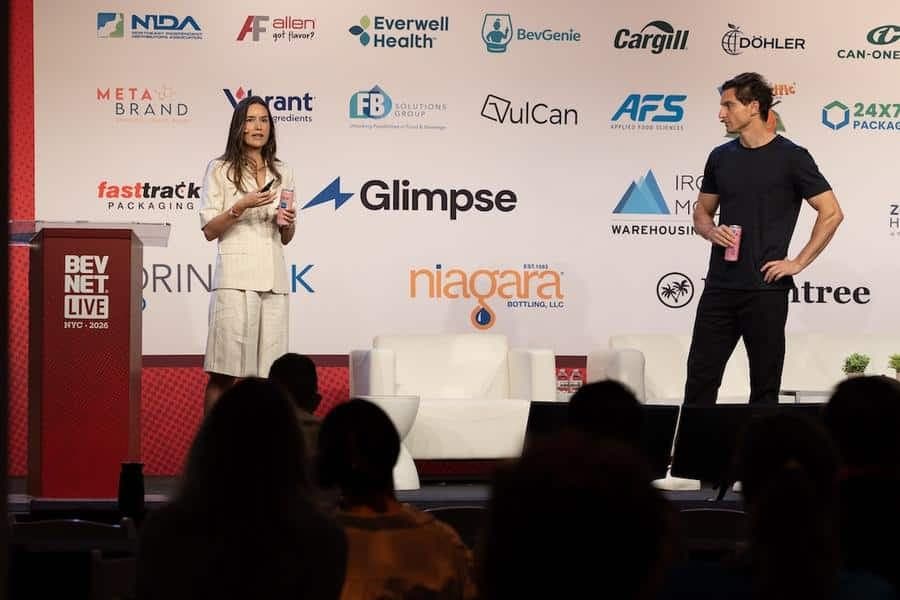
Trip's got quite an itinerary for its U.S. retail endeavors; its founders take us through their channel calculations and the hard choices they've made on where to focus for momentum.
Speakers:
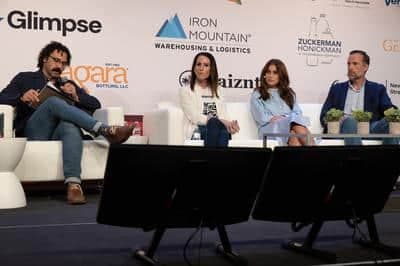
Olivia Ferdi, Co-CEO & Founder, TripDaniel Khoury, Founder & Co-CEO, Trip
Transcript
Note: Transcripts are automatically generated and may contain inaccuracies and spelling errors.
Speaker 1 [00:27] Good morning. I see that many of you had a few drinks last night for that long game, but if you're like my wife, the lovely and brilliant Emily Kleinman, or like any number of an increasing number of consumers who are turning to something functional for their pre-dinner refresher, you might have had a trip or a recess or a functional mocktail like mingle. After years of brands featuring ingredients like melatonin or CBD or GABA, it's taken magnesium along with a few other added adaptogens and the increasing permissibility around hemp-based THC drinks for the calming beverage category to finally find a toehold in stores and with consumers. Still, it's very early days. And it's a pretty basic principle. that break out categories. Can't grow without a breakout brand and its founders are now betting that if they get their rollout light, I'm sorry. Um, Trip, now in the UK so far, Trip has been that breakout brand and its founders are now betting that if they get their rollout right, they'll be able to do the same thing in the US. Now it's still early for them and for the category, but if they're going to pull it off, a lot of it's going to be dependent on the channels they enter and their ability to create pull when they're there. I thought that they sounded like folks that we could pull in for a nice case study. So I convinced them to come and talk about the channels they plan to activate as they work to build Trip into a breakout brand. Please welcome the co-founders of Trip as well as the co-founders of their family, Olivia Ferdi and Daniel Khoury. Come on up.
Speaker 2 [02:49] very much. Yes. Thank you for that kind intro. We are very excited to be here today, catch up with everyone in the industry. There's really nothing like getting together in the room with beverage nuts. I think for those that don't know, Trip, we launched, my husband and I launched in the UK in 2019, and since then really grown to become more of a global wellness brand, positioning ourselves kind of as a lifestyle brand. Obviously, a functional drink with tons of benefits, tons of amazing ingredients. But for those that don't know, we've got a beautiful fridge out there, beautiful, beautiful fridge, which I highly recommend you try a sample, but we'd love a chance to tell you a bit more about the brand and as Jeff mentioned, some of our channel strategy in terms of the hypergrowth we're seeing, not just for the breakout brand being Trip, but the wider category of calm.
Speaker 3 [03:44] Definitely. So we're going to tell you about how it all started. It all started on a rainy Sunday morning a few weeks before our wedding, and I decided to play hungover football as you do. Unfortunately, I tore my ACL and had to have knee surgery. As you can imagine, my lovely wife-to be was thrilled, so we really dove into every single possible way to speed up my recovery, and that's when we really got into all types of supplements from magnesium to ashragandha, you name it. I literally tried everything and luckily for me I had a miraculous recovery. So I was supposed to be on crutches, walking down the aisle, you know, every bride's dream. But instead I had a miraculous recovery and was swinging the crutches, so I believe my wife eventually forgave me after that, and happy days, but
Speaker 2 [04:46] we never worked together before, so I think this is a question that comes up a lot. How do you work together as a married couple? The truth is it was completely unexpected. I was an attorney. Dan was in finance, and this miraculous experience led us on this journey of discovery, understanding more and more about the research of some of these ingredients which have actually been around for hundreds of. Thousands of years in ancient therapies and we got very excited, you know, why couldn't these incredible ingredients be available in a format that was easy to understand on the go, something aspirational, something you could celebrate and socialize with as opposed to, you know, a big box of pills or whatever. So we decided a couple of months after that wedding to quit our jobs as newlyweds, put all our savings together, and tell our parents we were launching a brand. That was 2019 that we launched just seven months after we quit our jobs, and actually the journey to now has been incredible, and it's moments like these with that kind of intro from Jeff and hearing some of the amazing speakers today where you actually take stock and reflect. It's not just the brand growth, but what we're seeing from a category perspective. I'm sure we'll be talking a lot today and you heard yesterday about the rise of alcohol moderation, non-AC, Gen Z in particular, their drinking habits, people are drinking differently and I think it really takes the right retail partners as well as the right brands to connect and make the most of that momentum. We know that better for you is the most incredible wider beverage category, and what we're seeing is basically the shift from not only better for you, but that broadening of drilling down into these additional need states. As I mentioned, Gen Z in particular, which is a big customer base for Trip, they cite mental health as their number one health concern. And for Americans, the three of the top 5 health concerns are related to stress and anxiety, so the need state is very, very clear. And when you think that weight loss, as I'm sure we have heard a lot about in terms of GLP-1s and the impact that's having on the retail landscape, is very impactful. But if 3 of the top 5 relate to stress and everyday well-being and things like gut health actually rank below the top 10, The total addressable market in terms of what we're seeing and the momentum both on the customer side and the retail side is something that we really feel to Geoff's point, the time is now. For those that don't know, so we launched in the UK in 2019. This financial year we'll hit $200 million of revenue. That graph is there to show you that that's been fast. And while Geoff kept saying, It's the beginning of the breakout for this brand. We're like, we're knackered. We've been here six years and it's felt very, very fast. And I think the exciting thing about this graph is just to touch on, when you're creating a category, there's a lot of things that go into the mix, but some iconic category creators, whether it was diet drinks in the 70s. 80s followed by energy drinks, coconut water. A lot of these categories require education and we're so excited that the US landscape in particular, that customer is primed. They love to self-educate. They're very savvy. They're very excited about ingredients, formulations, product quality, as well as flavor. And I think for us to be building this global calming brand. It's doubling down on listening in to those customer needs states. I mean for anyone in the room, can you name anyone in your personal or professional life that doesn't need a moment of calm in the everyday chaos, like whether you're running around New York City, you're on a Zoom back to back, you're picking up the kids from school. There are so many micro moments where this sort of product and this sort of brand comes into play. And actually there was a report on Bevnet a couple of months ago about how, you know, calm as a category within functional drinks is the fastest growing category now outpacing protein soda 3 to 1. And I think we sort of formally entered the states, um, about 18 months ago. We're at 50,000 doors globally plus, but in the US, really exciting to be working with all of the major retail partners as of the beginning of last year. And I think when you're thinking about the fast growth, to Jeff's point, it really does take a breakup brand.
Speaker 3 [08:54] Definitely. I think we see calm as big as energy, to be honest, big words from a brand that's selling calm. But I think it's important to understand the tailwinds that are driving calm to become a very mainstream proposition in a canned format. On the one side you have the better for you. Everyone's replacing their sugary sodas with like alternatives that have less sugar, more natural ingredients, functionality, functionality fit for modern life, whether that's gut health, calm, hydration. You name it. And on the other hand you have the reduction in alcohol. Now there's two sides of that. There's a moderation movement happening, but at the same time there's also Gen Z are consuming less. Now there's a lot of growth in products that taste like alcohol. Now beer is definitely seeing amazing growth in the US, but there's a big portion of that reduction in alcohol that is going to people that don't particularly want the taste of alcohol. Right, and they want a product that sort of takes the edge off, has functionality, and it doesn't taste like alcohol. Now, often they don't shop the non-archyle to discover that product. They discover it on TikTok, on Instagram. It's a very different way of building categories than 20 years ago. And and for a brand to really nail calm and make calm as big as energy, it really requires us to play alongside those blurred lines in a way that is an aspirational brand really taking on these tailwinds into a mainstream proposition.
Speaker 2 [10:36] I think what we're gonna be talking about with Jeff, in particular, is how do you create and cement that category of calm. I think the more we can explain the micro moments, it's not just a professional athlete that needs to hydrate or something that's quite specific to a lifestyle. It's really about empowering people in their individual moments. And for us, that is having one range and a simple product. That speaks to what we think an exceptional quality and, and liquid, but ultimately multi-occasion. I'm not here to sit down and tell you this is only for a certain type of person who's done a headstand and had a green juice. No, this is something you can enjoy in the morning alongside coffee. If you've had too much coffee, absolutely grab one instead of your 2:30, 3rd coffee of the day, that social piece, you know, if you think about feeling your best self socially with friends or colleagues. It's the stress or worries of the to do list that can affect how confident you feel, how present you feel, um, how productive you feel if you're distracted. And I think inevitably the evening moment is, um, kind of perhaps more obvious when you think about non-arc. For us, it's about building that usage occasion, really leaning on our community and then telling us when and where they're doing that. So, we have positioned the brand in a way with our channel strategy that doesn't preach the availability amongst, Multiple different types of online and offline players is really important for the customer to feel this is part of their lifestyle. This isn't only something that exists in your home when you open your fridge and you're looking for something instead of a glass of wine. It's at your local coffee shop. It's in your gym. It's in your office canteen. It's in the biggest retailers in the country, and some of our incredible customers are actually. Celebrities. So having that authentic connection with people who are experts in their own field to explain that if you are a high performance pop star, businesswoman, actor, you can use this as part of your everyday, and that has been very interesting when we're thinking about global brand building, which I'm sure we'll get more into. Whistle stop tour, we're done. I'll put that there.
Speaker 1 [12:48] Should we sit?
Speaker 2 [12:49] I think we'll go here. You go here,
Speaker 1 [12:51] yeah. How about you guys hang out on the chair, on the couch, and I'm just gonna angle this chair a little bit. You know, it's, it takes a lot of precision. Unlike you guys, takes a lot of precision to frame this properly. You guys are you guys are an easy shot, um. So thank you for the presentation. You're in 50,000 doors. They're about 220,000 doors in the US, um, so that's a lot. How did you formulate the channel strategy of Every retailer everywhere at once.
Speaker 2 [13:37] Should I answer that? I feel like. People see that slide and they're scratching their heads like, you know, I think the playbook is perhaps to go more, more narrow first, but having come from a personal experience like ours when building the brand, you know, the mission is to help a billion people find a moment of calm that's not restricted in our sort of hearts and minds to one. Type of environment. And so it's pretty ambitious to be going everywhere all at once, but I think from a mission perspective and then kind of customer feedback, it's, it works in all these places. And I think the momentum is that we really don't wanna slow down in terms of one specific environment. Like inevitably, this is brilliant in, um, QSRs or natural specialty, but it's also brilliant in Total Wine and. You know, Costco and things like that, so I think it's really about Accelerating the breadth of distribution to play into that education piece on the category. If it's too slowly available, I do fear the momentum of the need state would be diluted.
Speaker 3 [14:42] Definitely it's like we, we threw a bunch of darts and they all stuck, so we thought let's go for it.
Speaker 1 [14:49] Investors love that.
Speaker 3 [14:51] If it
Speaker 2 [14:52] sticks, if it sticks, if it sticks, they love it. They like you to normally,
Speaker 3 [14:57] definitely, but I think it's a testament to the modern way of how consumers are thinking of beverages, and it's changing very quickly. Much quicker than we've seen before, I think the information and misinformation as well you're getting on TikTok and Instagram is really speeding things up and whether that's a fad, getting behind a fad that like explodes and then falls down, or Making a trend really become the next household consumer product that will be in people's homes, we're really seeing a big, big change in the way consumers are acting, and I think it's very similar in channels we didn't expect to. Do what we're definitely quite naive in our approach, whether it's in Europe or in the US and like, you know what, it should work here, so we're going to go there and if it works you double down and I think calm is such a versatile proposition. It's like, as Liv said earlier, who doesn't need calm. And who doesn't need calm all day, right? And you have other than the tailwinds I mentioned, you also have the boom in the energy drinks market, right? Like the energy drinks market is the best trend of the calm category because at the end of the day, what's the best way to get The best energy in the day is a good night's sleep. I'm addicted to coffee. Trust me, I have more coffee than probably anyone in this room in the morning. I have to stop. The more coffee I have in the morning, the more trip and magnesium and focus on my sleep I need to have in the evening. And so there's all these elements that are combining into something that means that it hasn't been catered for in a way before, and consumers are realizing
Speaker 1 [16:44] that. What's the biggest pushback you guys hear from retailers?
Speaker 2 [16:51] They really get me.
Speaker 1 [16:53] None you're able to.
Speaker 3 [16:58] I wouldn't say pushback. I would say there's still a lot of work to do. Uh, there's a lot of fragmentation in different like where, where calm should sit, right? And I think it's often the case with multi-use cases like where do you sit? And a very good example is A lot of brands tend to sit in the non-alcohol like I said before. The reality is consumers are asking or retailers are asking, doesn't that pigeonhole your occasion if you're a multi-use occasion brand, where do you sit? It's like when Red Bull had vodka Red. And they had the energy drink. Like, do they only sit in the mixer's aisle? Not really. So I think there's a lot
Speaker 1 [17:43] of I think they were doing most of that on premise. Yeah, you know, so there was actually two points of introduction. There was in the store. And there was, there was, you know, as a mixer, now you, you guys don't have a mixer strategy, right? Your, your mixer, your pre-mix chamomile in a can, um. I I'm just wondering why it's a sort of everything all at once at one strategy like when there are I, I mean how How much of it is we've been successful in England in these classes of trade. So we're going to project that into into the US because it doesn't cost the retailers much to To try it, yeah, um, but how are you gonna generate the pull through? What are those, what are those markers, uh, that, that, yeah, that the two of you have established that, that makes you believe that. This is going to be worth that real heavy upfront investment into all these doors.
Speaker 2 [19:01] Yeah, well, I think we can touch on kind of the UK strategy and how that's worked, but I think ultimately from the customer perspective, which is what the retailer does care about, how, what is the customer sentiment, what is the brand positioning. We've been building a global brand, I think, from day one, whether we realized or not. I think this generation being perpetually online. The influence of the US in terms of media, ultimately we're so connected we can feel more connected with people on the other side of the world sometimes than people in our own country, which is crazy, and I think we're really just
Speaker 1 [19:31] reacting. We, we're extremely connected to Greenland right now.
Speaker 2 [19:37] Um, yeah, it's following that kind of customer sentiment and customer demand. I think in the UK as you say, it sounds maybe quite bold to be going everywhere and having this strategy, but I think in general, there's a lot of talk of overnight success and that kind of thing. But don't forget, this is 6 years of nonstop working hard, playing hard, growing, living, breathing, and watching this category grow. I mean, do you want to touch on the UK in terms of kind of,
Speaker 3 [20:03] Yeah, I think, and also on the on-premise point, so on-premise has been a, a great brand builder for us, right, as a use case, uh, whether that's non-alk, as you said with Red Bull Mixer. The reality is TikTok and Instagram are much faster at brand building than that if you get it right as well. Absolutely. And so that's why it's very different to 20 years ago or 30 years ago when Red Bull built that category. There are things that are just moving a lot faster, and the adaptation of modern life is being reflected in that, I think. And a good example is, as you mentioned, Europe, the UK, so. Typically, the US is much more advanced than Europe from a consumer point of view in terms of reception to functional beverages, like way ahead. So the fact that calm in a can is so mainstream in the UK, I mean just to give people in the room context, uh, in retail sales, Trip overtook Sprite and 7 Up. In retail sales to just show you how mainstream calm is now. If that was if Tripp did that in the US, I wouldn't be sitting here. I'd be at the beach right now, by the way, but we haven't done that yet, yet, so it just shows you the, the opportunity, the potential that you have here. The US, where as we touched on earlier, it is a much more complex system, and I think you touched on that it's much more fragmented and not as straightforward, even if in Europe consumers are less willing to try functional beverages. I
Speaker 1 [21:50] guess I'm just trying to understand and for the audience here what your thought process was with regard to applying the Heavy resource allocation that it takes to go all at once. Yeah,
Speaker 2 [22:09] right, yeah, I think again it comes down to, you know, we had, you know, conservative corporate careers before this. We absolutely did not need to go and make a beverage in a space no one's heard of for a need state that's very much evolving, let alone the investment it takes to come and play over here. I think ultimately the mission of helping people find that moment of calm is something that I hope you can tell we're extremely passionate about, and we won't stop until we've helped as many people as possible. And to think, you know, tens and tens of millions of people have had relief or that moment of exhale in a busy day is something that drives us and gets us up every day. In terms of the ambition over here as well is just. The ability, well, we're actually very profitable in the UK as well, and I think that's important because we spend it all on the US and loads
Speaker 3 [22:56] of money in Europe and spend it all here. Yeah, yeah, yeah,
Speaker 1 [23:00] we call that a growth engine.
Speaker 2 [23:02] Yeah, uh, yeah, it's meeting demand, to be honest, you know, with your question of pushback, you know, one of our biggest challenges is just keeping up with demand. We're getting incredible requests from whether it's retail partners, different channel strategies, and it's, I want everyone to be able to benefit from something. Accessible, convenient, delicious, and looks after your daily mental well-being. So yeah, going, going all in. What's
Speaker 1 [23:26] going to be the proof point for you that this is working and that, you know, that sort of, uh, that hockey hockey stick
Speaker 2 [23:37] continues. It's already, I feel
Speaker 3 [23:41] like we're, we're at the hockey stick, um, to be honest, without being too, we're so
Speaker 2 [23:46] excited, yeah, we, we've had those proofs, whether it's velocities at shelf. This is before even I think we spoke. One of the things we're doing yesterday was filming this television commercial, you know, we haven't even done the above the line advertising yet. This is all proof points from pure product market fit, and when I say product-market fit, I mean. You know, someone walking into a retail environment, there's shelves of single beverages and someone picking it up, finding it intriguing. They may have familiarity online with the brand, maybe not before they reach that retail moment in Target or whatever, but it's having an incredible experience. It's beverage, right? An incredible experience at the right price, in the right moment that really creates something emotional.
Speaker 3 [24:28] And and I think there's been a lot of brand building uh in the US in different spaces in sparkling water, in mocktails, in soda for this calm, and I think that that's not necessarily a bad thing, but it could make it just take a bit more time. For the category to really take off, and I think that's why it's only been in the last year that it's really taking off like you said, the sort of for the category.
Speaker 1 [24:54] You feel like you're sort of joining all these strands of functionality into one. Product.
Speaker 2 [25:02] I think it takes people buy from people and I think we've been so lucky to meet incredible retail partners, different channel leads, and I think it's, it's not just someone who's stressed or looking for focus at work. It's really illuminating, which we actually do through. Customers tell that story. So our big social media strategy is really relying on organic coverage, where if someone has this when they're out with friends instead of a glass of wine or they have it at their work desk and it makes them feel less stressed, more productive, more confident in a meeting, they're going to go tell 10 people, and a personal recommendation to 10 people is a lot more powerful than maybe even television at this point, and I think that has been a huge factor in driving it
Speaker 1 [25:42] forward. Is there a Plan B?
Speaker 2 [25:46] No, we did. Yeah, we
Speaker 3 [25:49] will work.
Speaker 1 [25:51] Plan B is NBA. JD. Thank you guys very much. We gotta get going. I really appreciate it. Um, thank you and best of luck. Amazing. Thanks so
Speaker 2 [26:03] much. Super. Thanks. Thank you.
Related Videos
The State of Cannabevs: Strategy on Deadline
With federal regulations about to put this fast-growing industry into a time-out, we look through the lens of brands, distributors, and lobbyists for potential futures for this fast-growing segment.
AI and Online Retail: Brand Building Meets Agentic Commerce
In a special tactical presentation, sales, marketing, and tech experts share a concrete playbook for making your brand legible to AI agents — without gutting what makes it human.
Retailer Profile: Launching and Maturing with Whole Foods
A rare founder–buyer conversation on what makes a pitch resonate, how brands can build productive retailer relationships, and what growth actually looks like once you’re on shelf.
Exit Interview: How Dirty Shirley Cleaned Up
Longtime beverage marketing veteran Adam Kost discusses his lean startup, proof-of-concept strategy, the key insight that gave Dirty Shirley the oxygen it needed to grow.
Disruption at Scale: A Conversation with Athletic Brewing CEO Bill Shufelt
Athletic’s rise has reshuffled the deck of beverage categories. Shufelt shares how he's navigated explosive growth and what he’s learned about raising capital, brand positioning and category creation.