Search across the BevNET CPG Media network including BevNET, Nosh, Brewbound, Taste Radio, Nombase and CPG Jobs.
The Long Run: Lessons from the Founders Who Stay (And One Who Came Back)
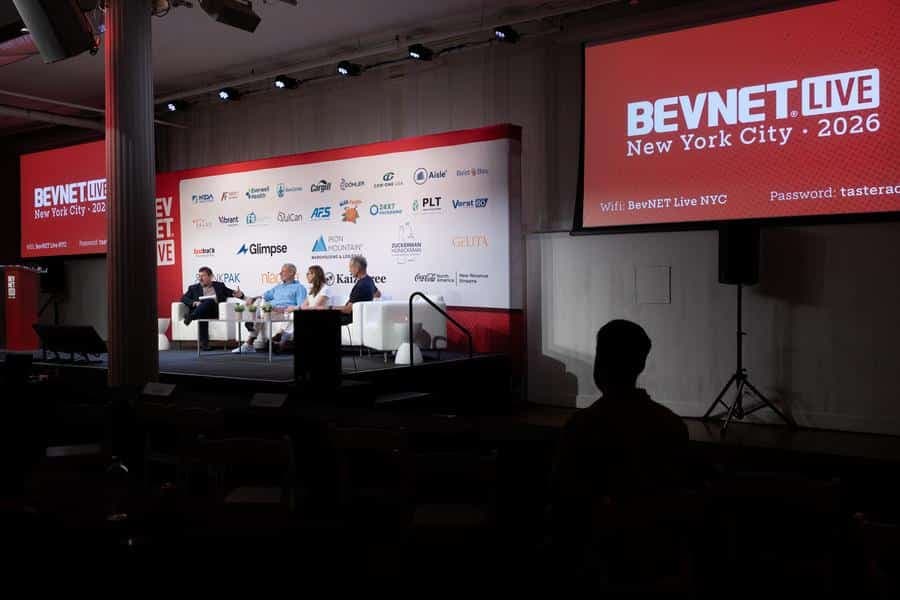
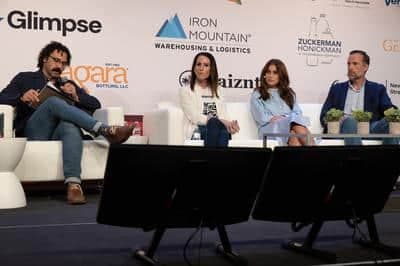
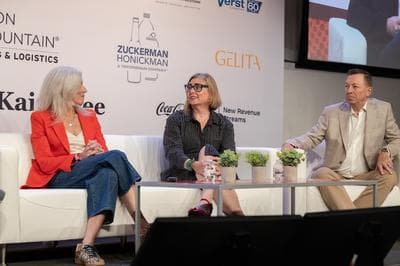
At least 10 years after first launching, these founders are still leading notable companies, growing, pivoting, racking up wins, absorbing setbacks, finding investors, adding retailers, spending money and moving forward. They share what they've learned over the long haul about the business, the brands, and themselves.
Speakers:
Jennie Ripps, Co-Founder & CEO, Owl's BrewHenry Kasindorf, Co-Founder & CEO , Remedy Organics
Mark Rampolla, Co-Managing Partner, Groundforce Capital
Transcript
Note: Transcripts are automatically generated and may contain inaccuracies and spelling errors.
Speaker 1 [00:28] Our founders in this next panel have each spent a decade or more building uh beverage brands through changing consumer trends, through shifting retail environments, investor cycles, and personal evolutions as founders. Now, what I think is really striking is that none of the brands on this next panel have stayed frozen in time and And sort of kept to A stodgy positioning. It's evolved. Their products have evolved in some cases, even the format has evolved, but the brands have survived. They've kept moving forward and they've kept growing. So this panel is really about the future of founder-led brands, how they endure, how they reinvent, but how they stay founder-led. And I want to spend this conversation talking about sticking around, about how it constantly creates this opportunity for for renewal. Um, so I want to please welcome Henry Kasendorf, the CEO of Remedy Organics. Mark Rampola, the chairman of Zico, and Jenny Rips, the CEO of Owl's Brew. These are all three incredibly knowledgeable people who've been part of this community since it started, basically, and, and I couldn't be happier to have these three join us.
Speaker 2 [02:10] Welcome. Welcome.
Speaker 1 [02:13] Good to see you. Good to see you.
Speaker 2 [02:21] So I start with a request, Jeff.
Speaker 1 [02:23] Yes,
Speaker 2 [02:24] if you're actually interested in this, can you move forward? If you're not, it's OK, you stay in the back, but if you're interested, can you move forward? Because if any of you have been here or hope to be here someday, it's a little weird talking to chairs. So please, it's helpful for us. You'll get more out of us if you come forward. Thank you.
Speaker 3 [02:42] Can I say one thing also? Sure.
Speaker 2 [02:45] Yeah,
Speaker 3 [02:46] go next.
Speaker 2 [02:50] I, I would
Speaker 3 [02:51] save my voice last night and try to keep the screaming down so I'd be able to speak
Speaker 4 [02:56] today. And I, I have nothing to say.
Speaker 1 [03:00] I, I'd point out that Henry's so old, he just held up a Ewing jersey.
Speaker 2 [03:05] Old school.
Speaker 1 [03:06] Old
Speaker 3 [03:07] school baby. 1993.
Speaker 1 [03:10] Nice, nice. Where's the, where's the Anthony Masoner? Um, or he's not allowed in the garden or no, it's Oakley Oakley Oakley is not allowed. Um, working on that though. Aside from the Knicks, when you guys look at your brands today, how differently are, how different are they from what you originally, uh, from your original vision?
Speaker 3 [03:34] And for us, You know, the business started as a cold pressed juice company that my wife Cindy had founded, and Remedy was actually a pivot from the original business, so extremely different, uh, not even close.
Speaker 1 [03:50] Jenny,
Speaker 4 [03:51] yeah, so at Owl's Brew we make sort of Good, great beverages some amazing ingredients. Uh, the actual product lines have shifted tremendously over those years, but the, the thesis behind like why we make beverages has stayed the same. But if you looked at what we've made, you know, A decade ago, it's incredibly different than what our offerings are today. Mar.
Speaker 2 [04:16] Yeah, Zico's been through quite a journey, I think in many ways we're back even more to the OG product line. Any flavors that Coke launched after they bought the brand, we killed, we killed some other flavors. It's back to basically plain coconut water, but I would say that the core of the brand has remained intact, but the challenge is to make it relevant 20 years later. So that's been. That's been an interesting challenge.
Speaker 1 [04:44] That's an interesting word, relevant, right? So everyone goes into these companies thinking that the consumer, the world is going to move toward them, yeah, um. Over the 10 years for each of you. How have you, has that, has that sort of remained paramount, or is it that you're able to reach them better.
Speaker 3 [05:17] And for us, a, uh, you know, Our North Star, our North Star is our origin story and um it began with my wife, Cindy, who's a holistic nutritionist. Creating products in our kitchen because she couldn't find products out there that met her standards for flavor, ingredient integrity, and nutritional density, um, and. Those are table stakes for us today, and we've resisted a lot of opportunities to chase new segments. Because Of, of what our guardrails are and at the end of the day, although we've had to say no to a number of opportunities, the integrity of our brand and the halo that we have has stayed true to what our consumers expect from us.
Speaker 1 [06:12] But there have been pivots, right?
Speaker 3 [06:14] There's been pivots,
Speaker 1 [06:14] there's been different form factors, shots, different, you know, adjustments in protein that have benefited the brand, right? Um, I guess the question is. At what point, uh, Did you think that We have to evolve.
Speaker 3 [06:34] Protein mixing, right, we, our original products were 8 to 12 g of protein. We now have products today that are 35 g of protein, and we're, you know, it's, it's balancing. Right. Meeting the consumer where they want us to be and not chasing trends, but consumers want more protein. There's a lot of market dynamics that have fueled the demand for protein and, and more protein, um, and as long as we were able to produce products with higher protein that met Cindy's requirements for flavor, nutritional density, and ingredient integrity. We're going to do it and the shots met the same, the same standards as well.
Speaker 1 [07:19] Now, Jenny, as well, you thought you're going to where you think the consumer is. Um what was the eureka moment for you on that?
Speaker 4 [07:29] So, it's really interesting, uh, You know, my, my background is as a beverage developer. I'm a tea, and our first business, my first business before Owls Brew, we created, you know, beverages for places like Organic Avenue, Sweet Green Juice Press, and it was always about function and flavor. And when we saw this white space in Allk, really in Baal, where we were like, you know, people were sort of like throwing the baby out with the bathwater with elk, and we were sort of like, you know what, you People should have every single benefit that they that they deserve. Everyone deserves something exceptional. And then if you want gin, you can get gin, but the thesis used to be like, Oh, it's alcohol. Why like why even bother? Like just like throw some like green coloring in and call it a day and have fun. So I would say. Our evolution is, like, I think I was telling you this when we spoke about it, like I feel like our, our, what generation is this are we in right now? Is this the 25-year-olds? What is that? I think the, what's our generation now? No, Gen Z, Gen Z. I feel like the spirit animal of owls brew has always been Gen Z, and it's like the way the product has evolved was we tried so hard for so many years. To explain our thesis of like using better ingredients and you should know what's in your beverage and turn the label around, like why isn't vodka labeled and all of a sudden we have a generation of consumers who are saying that to us. So it's been incredible, but our product has changed because it was, we, it was so hard for us to explain it when we started, and now it's easy, so it's, it's, you know, so it took a long time.
Speaker 1 [09:07] Yeah, well, it's always fun when you're when the next generation repeats back to you the things you've always been saying, right?
Speaker 4 [09:14] Yeah, but we had to stay in it to get there, and I think that's, you know,
Speaker 1 [09:18] yeah, that's the
Speaker 2 [09:19] hard part, yeah,
Speaker 1 [09:20] exactly. Mark, you stripped it down to the studs, right? Um. What was the realization that said we can do this, but this is the way we need to go about doing it?
Speaker 2 [09:35] Yeah, it's been a fascinating journey, and I, I think a lot about relevance, right? How is a brand relevant? How's a product relevant? How do you get sort of something back into the zeitgeist? And, and what's been fascinating is, you know, when we launched Zico in 202004, right, coconut water was not a category, and And about, I, I remember training my team in demos to, if somebody has a bad reaction to escort them out with the comment, oh, it's an acquired taste, it's not for everyone, because so many people did not like coconut water, right? And even my daughters didn't really love it for years. What's different now is it's mainstream, it's a billion plus categories. It's the fastest growing category, but yet the brand is working, the product's working, the business is growing very nicely, but still we have a big opportunity on Relevance, and I realized this when I was in Erewhon a couple of weeks ago talking to a young guy stocking out the shelves, and I was Ask him about all the brands and and we had Zico in there and he's like, yeah, just the brand looks a little tired, you know, and so I, I, I, I take that it's a little humbling. It hurts in some ways, but I love the fact that this year will be bigger than we were the year before Coke bought bought us the first time and the brand is not nearly as relevant as it will be in a couple of years when we continue to do this work. So yes, relevance matters, but it's no substitute for building a great business.
Speaker 1 [11:05] So I want to, uh, there's, there's a lot in there, but the, the 2004 point is the one I really wanna, wanna talk about. A lot of brands fail, not because the, the founders are untalented and I, each of you has proven to be a really talented, flexible entrepreneur, but the timeline gets long and the road gets harder than you thought it was gonna be. Um, what have you each learned about sort of surviving? Pivoting that you maybe didn't realize in the first couple of years. Janet,
Speaker 4 [11:47] sure, I, I mean, I, in terms of what I've learned about surviving and pivoting, I think it's all about relationships and communication. I mean, of course you can have a great product, and I think, and we've always had a great product even through all of our iterations. Our product was great, but If the industry shifts or if you, you know, in one case we had A very early idea, a very early insight into Spike T, and we didn't have a big enough team to actually get it into market fast enough, and we sort of got the bigger guys railroaded us, and which was fine because we just, we learned, we learned that we need a big team in beverage, particularly in Bev Alk. But I think in terms of surviving again if we believe in the product, if we are at trade shows like Expo West and NRA. And we and someone like has our beverage for the first time and like smiles or if someone says, oh, I love this brand, I've seen it before, or like we have a community of social that's growing because people love it. I think what's responsible for what we need to do. is if we hit a tough moment, is to talk to our retailers, talk to our distributors, talk to our partners, and if there's a moment to pivot, not the brand thesis, not why we do what we do, but a product line or an insight into category that we get buy-in, and I think that like I mean most of what I do is. Is communication and relationships and working with partners which wouldn't work if the product didn't work, but we wouldn't survive if it weren't for for partners and relationships.
Speaker 1 [13:24] Those ties stay really true and I, I think I, I just want to stay on this for a minute because you just went through a big pivot where every single one of those partners received news and. You know they had to decide whether or not to support you in it, right?
Speaker 4 [13:43] Exactly.
Speaker 1 [13:44] So can you talk about that a
Speaker 4 [13:45] little bit? Of course. So we literally 3 months ago launched an entirely new product line. Of course still Owl's Brew, but our product line was spiked Pop, which is hard soda done clean. And not only do we launch an entirely new product line, we sunset the product line that I thought was no longer relevant, which was like an extraordinarily hard decision. But It was an idea that we had had for over a decade. Like I had, we, we were waiting for a moment. It was this idea of sort of if you think about soda, like root beer was originally made with like dandelion root and burdock root, and it was good for your stomach, right? And now it's not made with like, I don't know, caramel coloring and aspartame, so this idea of better for you soda, but then alcoholic was something we waited for because we. I knew that I'm going to get to your question, sorry, I don't want to take up the time, but we knew that the consumer wouldn't be ready for that alcoholic version until there were some non-alk, so as like poppy and lollipop and culturester Pop were happening, we were like, when will the consumer know when will there be enough? So we watched that category grow and we knew the consumer finally around the time Pepsi acquired Poppy, we were like, OK, maybe the consumer's educated and better for you soda. Let's spike it. But to your point, We didn't do it in a vacuum. I called. We're still at Whole Foods swapped swapped our sets and expanded us, which was amazing. HEB swapped our sets and expanded us. Yankee Stadium, TD Garden, SoFi Stadium. So like basically, and all of our distributors, not only I accepted it but like doubled or tripled, so it was a ton. My co-founders here, we put in so much work and effort into getting buy-in, and it probably would have tanked without that buy-in even though the product I've never been more excited about than anything we've made.
Speaker 1 [15:32] Mark, as you've done your rebuild and as Chris has worked on it with you and that whole team. Um Have those communications ties. Served you or have you had to build completely from scratch?
Speaker 2 [15:52] I, I'd say a little bit of both, you know, I, I'll own that in many ways, I thought not only was I done with coconut water, I was done with beverage. You know, it was a brutal, brutal 9 years. And so I didn't maintain many of those relationships for the next 7 years, right? I became an investor. I went on to different categories. And so, man, I didn't have a clue who are the distributors relevant, you know, today, the retailers, all of those things. So that became all the more important to build a great team. And so, you know, one of the things I think Jenny's mentioning that I'm hearing, and I hear this all the time is where I see founders get stuck. Is they can figure out what to do in the business in many cases, but it's the inner work, right? What, and I know we're gonna get into this, what does it take to be personally resilient because that's what ultimately conveys to the team. And so I think by me owning and knowing, hey, I'm not as relevant as I thought I used to be. I don't know all the decisions. It led me to both find and empower a team that is so fortunately I had the relationships to do that. And to get out of the way with most of the rest, yeah,
Speaker 1 [17:10] so Henry, you are a repeat entrepreneur, um. Do you think founders underestimate the emotional stamina required to do this for long enough?
Speaker 3 [17:25] Yes. It's the understatement of the year, but I, I think for us, staying founder-led over the long haul is, is not just about holding on tightly, um, It's about evolving our roles and, and from chasing growth to being the architects of a system that's sustainable long-term and um You know, a lot of companies can get big for a moment, but Staying there for the long haul as we have been and being completely data-driven and continuing to be, you know, have category leading growth. Velocities, um, period after period, year after year. It takes a lot of focus and discipline, and that's really what the priorities are for us.
Speaker 1 [18:18] What kind of advice do you have for our founders here for, you know, really. Going to bed happy that you've, you've been founder led for so long and waking up in the morning and saying, This is my company. I'm going to make the most of it every day.
Speaker 3 [18:41] I mean for us, um, back to the discipline, um, Growth without control is just complete unbridled chaos, and we've been through it, um, so for us it's putting, putting those systems in, staying really disciplined, and, and knowing when to say no as well, and that's, that's painful as an entrepreneur because our DNA is to say yes to everything and figure out how you're going to do it later. But for us, saying no, prioritizing certain partnerships with retailers has really been a lesson we've learned and one certainly to share with other entrepreneurs and founders in the industry.
Speaker 1 [19:25] Jenny,
Speaker 4 [19:28] So I think in terms of You're saying what makes people, what makes me still feel like energetic to,
Speaker 1 [19:35] yeah, I mean one thing I think about is you, you've had a partner this whole time, yep, and is that. A, you know, one of the ways that you recommend staying strong through all of this,
Speaker 4 [19:50] I do. I mean, I think, partner, I mean, there's a lot that goes into being a founder-led business, but just to stick to one theme for us like relationships. So my relationship with my co-founder, we've been, you know. Partners for over a decade across more than one company, you know, we exited a company together. Owl's Brew we built together, and then I think that that feeling goes across the team, so. Team culture, which I know sort of sounds like a throwaway, but just really having a team where you understand the people and you're aligned, your board of directors or investors, your advisors, your retailers, your distributors, like this is really a village. I mean, even you guys have been so incredibly supportive of our brand over the years. So I just think that you can't overemphasize. You need a great product, you need distribution, but I don't think you can overemphasize relationships.
Speaker 1 [20:46] Mark, you've been doing a lot of work, I think, on what it means to practice self-care as an entrepreneur, to think about the journey. Is there, uh, any advice that you have, uh, for folks who may be coming into your office as an investor or as someone who's still in the fight as an operator?
Speaker 2 [21:11] Yeah, a few things, a couple that come to mind. One is I was, I was talking to somebody yesterday, um, been at this for a while, um, still kind of an early-stage founder, and I said, look, are you Are you fully accepting reality as it is, which is, you're probably going to be at this for 7, 10, maybe 20 years. Your probability of a great outcome is a couple of percentage points. And along the way you'll probably make less than you would at a low, low level corporate job. And if you still want to do this, then great, you've got a shot, right? Because that's the reality. And so I think setting that reality and being very clear is helpful because then you know. And the other two pieces would be, you do have a choice, right? Every morning you wake up, we make a choice. Just because you have investors, just because you have commitments, doesn't mean anything. Right, you have a choice. There are ways. There's people that come in and take jobs. There's ways to do this. And the third would be get to know yourself really, really well and ask for feedback. What are you great at? What are you not great at? Get from your team, from other people, because I can tell you I spent, I spent 9 years in Zico trying to be somebody else, trying to be this founder or that founder or this kind of leader. And I am done with that, and it's a hell of a lot easier to be yourself, whatever you're great at, right? That as a founder, there's a lot you have to do. But how can you spend 60-70% of your time doing what you love? Maybe it's engaging with customers, maybe it's not. Maybe it's ops, finance, online, whatever it is. Find that, build that, and build a team around you that fills those gaps. It makes it a hell of a lot more fun and a hell of a lot more easy, a hell of a lot
Speaker 1 [23:05] easier. Well, I want to thank each of you for being yourselves and for contributing to this community. Thank you so much. I really appreciate your time. Um, we're gonna hear from the, uh, from the pan from the judging panel in just a second. Um, but before we do, I, I just wanna say thank you to all of you for contributing to this community as well, for contributing to each other and for helping fill in each other's gaps. I think that there is Just A sense of mutually assured success and care within the Bevnet community. That We can't replicate anywhere else, and so thank you from the bottom of my heart for your time, care, and
Speaker 2 [23:58] support.
Related Videos
The State of Cannabevs: Strategy on Deadline
With federal regulations about to put this fast-growing industry into a time-out, we look through the lens of brands, distributors, and lobbyists for potential futures for this fast-growing segment.
AI and Online Retail: Brand Building Meets Agentic Commerce
In a special tactical presentation, sales, marketing, and tech experts share a concrete playbook for making your brand legible to AI agents — without gutting what makes it human.
Retailer Profile: Launching and Maturing with Whole Foods
A rare founder–buyer conversation on what makes a pitch resonate, how brands can build productive retailer relationships, and what growth actually looks like once you’re on shelf.
Exit Interview: How Dirty Shirley Cleaned Up
Longtime beverage marketing veteran Adam Kost discusses his lean startup, proof-of-concept strategy, the key insight that gave Dirty Shirley the oxygen it needed to grow.
Disruption at Scale: A Conversation with Athletic Brewing CEO Bill Shufelt
Athletic’s rise has reshuffled the deck of beverage categories. Shufelt shares how he's navigated explosive growth and what he’s learned about raising capital, brand positioning and category creation.