Search across the BevNET CPG Media network including BevNET, Nosh, Brewbound, Taste Radio, Nombase and CPG Jobs.
Term Sheets in the Trenches: Finding the Right Capital Fit
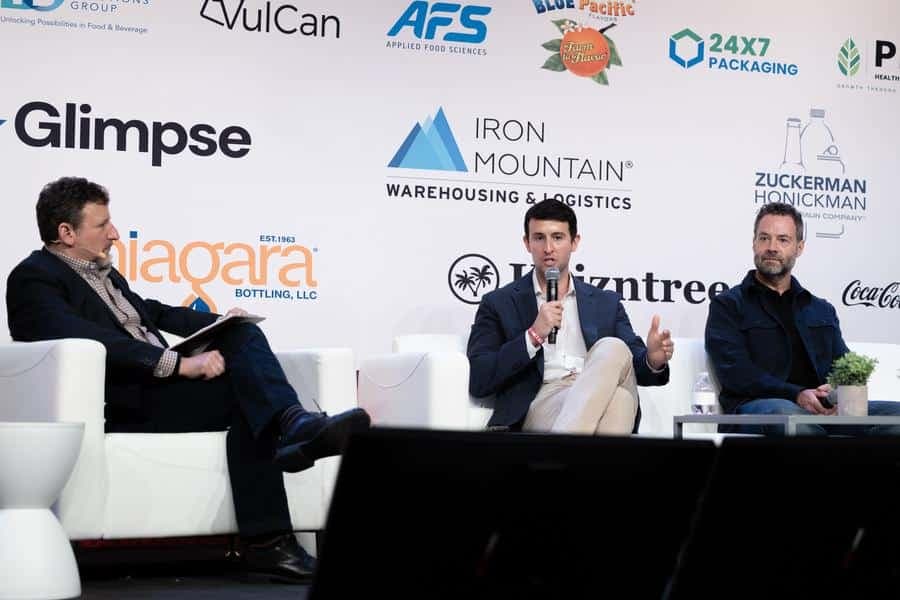
Capital remains selective, strategic, and highly relationship-driven. Chuck Cotter of Morrison & Foerster and Daniel Faierman of Habitat Partners evaluate the fundraising environment — from how investors are evaluating beverage opportunities in 2026 to the most common mistakes founders make when preparing to raise growth capital.
Speakers:
Chuck Cotter, Partner, Morrison Foerster LLPDaniel Faierman, General Partner, Habitat Partners
Transcript
Note: Transcripts are automatically generated and may contain inaccuracies and spelling errors.
Speaker 1 [00:25] A couple of years ago, this incredible resource started hitting my inbox, and I've become an avid reader of it. It's called Term Sheet Pitfalls, and it's the joint product of one of the most accomplished CPG deal lawyers in the business and a youthful early stage VC investor who was finding incredible deal flow. Um, in semi-regular fashion. These two fellows are bringing both strategic and tactical advice to founders on term sheets and fundraising. They're exploring everything from the etiquette of networking to potential investors to the actual value of terms like valuation. Now we've heard from 3 funds over the past few days about what what will get you to the table with them. And what I think is really important about this next, this, these two next speakers is we're going to hear about how to walk away from that table with a deal that you won't regret. So please welcome Chuck Cotter and Dan Fairman. So thank you guys so much. I know you're super busy um. You, the, the way I want to lay this out is you two approach this from really different angles, right? So Chuck, you're kind of advising clients on negotiating deals and acquisitions. Dan, you're evaluating investments that sometimes lead to negotiations and also getting stuck in a room with Chuck who's gonna Pull terms out of you. Um, but there's a common sense that founders needed this newsletter. Um, what were you seeing repeatedly that convinced you that there was this gap in founder education that you two could fill?
Speaker 2 [02:46] Yeah, thanks so much, chef. Um, I think first and foremost, like, I believe founders know their businesses better than anyone, I would hope, in the most part. Um, but when it comes to advocating for themselves, when it comes to actually structuring a deal within the context of a fundraise, that's not a default skill that a founder normally has as they're starting a business. Um, and Chuck has worked with tons of founders representing them as legal counsel. And I think he and I can both agree that those relationships really flourish when they're symbiotic and when a founder can be a sparring partner advocating for themselves based off their knowledge of their business when it comes time to close a transaction versus Chuck handholding um a founder through every single part of a. Process and negotiating on their behalf and doing more than obviously crowding, crossing T's and dotting I's. So, first and foremost, we wanted to give access to founders, um, this, you know, an educational resource that would empower them to advocate for themselves in a way where they could really be a strong partner with their lawyer. And then I think number 2 was, you know, when we looked at the resources out there, um, we saw boot camps and we saw accelerators that were charging founders for this kind of education and. Given founders are, are very capital constrained in the early days, we wanted to ensure that this content, of course, was super high quality and simple but also free, and so we're also very committed to never putting a paywall on any of our content, um, so I think those were the, the kind of motivating factors at the, at the beginning of the journey.
Speaker 1 [04:17] Cool, um. And, and on behalf of the founders, thank you for doing this. Um, to, to sort of underscore the need again, Chuck, I think without naming names or, you know, even going ahead and naming them, uh, what's an example of a situation you've seen where a founder got into trouble simply because they didn't understand how the process really worked?
Speaker 3 [04:45] Yeah, um, and by the way, thanks, uh, to Bevnet, good to see you guys and go Knicks, um, I, thanks. I, I, I would say the biggest, the biggest issues tend to be information asymmetry and then what happens is a founder doesn't know what they don't know. They go into a conversation with a VC. They agree to things, and then they come back and we have a discussion, and I say, why in the world would you have ever agreed to these things? And And now it's hard to unwind, right, because now a founder feels sort of ethically committed to what they agreed to with the VC. So the goal here is to avoid those mistakes. One I think we both have identified. I don't want to steal any of your thunder here, Daniel, but 2 or 3 years ago, the biggest problem when we got to a big Series A round that we were unwinding is that the valuations were too high in the prior rounds. Nowadays, the biggest issue we're unwinding is, um, in early stage founders stacked too many safes without fully understanding how diluted it would be and then the impact when a, a new investor would come in.
Speaker 2 [06:00] Yeah, I think that's right, and, and just to pontificate on that a little bit, um, you know, when you're signing this safe instrument, you're not technically giving away equity in your company immediately, so it doesn't, you don't feel the impact on the cap table yet. Um, but if you're raising multiple safes and then you're raising a Series A on top of that where you're giving away 15 to 20% of your company and then you're also throwing in a 5 to 10% option pool at the close of that financing, all of a sudden, you know, you've given away 40 to 50% of your company, um, and you still have years and years to go, and so then from a motivation perspective that, that can often be tough to swallow. Um, and then I think one more kind of qualitative thing, um. It's just the process of, of building urgency in a process while still sustaining honesty. Um, one thing I run to all the time is, is founders kind of trying to create a false pressure environment to close deals and push investors to decide more quickly than maybe is really needed, and I think like the, the main thing we want as investors is just honesty from day one. Like we're signing up on a 5 to 10 year journey with founders. We're going to be as honest as possible with them. We want them to be honest with us on day one. And so I think like another like fundamental thing we're just always trying to work through is, is seeing like true honesty in the founder and the way they run their process from day one because ultimately we want to work with honest people who have integrity all the way through the process as well.
Speaker 1 [07:24] Don't you think that the, uh, just putting myself in a founder's shoes, there's such an urgency, such a pressure to both raise and sell. Uh, you know, I mean, the entrepreneurial business is one of selling to the consumer, to the customer, to the investor. I mean, can't two truths be this, this, you know, exist in this realm?
Speaker 2 [07:51] Yeah, I just think it's the way you communicate. Um, there's nothing wrong with sharing that you've received a term sheet with other investors to, to, you know, tell them that they need to accelerate their process, but it's, it's the. The way that you communicate that information that shows kind of what kind of character you have and I think we've run into also situations where some of that information gets exaggerated and then as an investor we find out from the investor that they signed with that something they said isn't totally true and then we're 100% going to back out. So I think it's just the way you deliver it. It has to be honest and with integrity and honestly, probably unemotional, just like, hey, we received a term sheet, we're excited. We'd love to work with you in the future if you're interested, let us know what you're thinking, and that's all it has to be, um, and you'd be, you'd be surprised how rare that like kind of respectful communication sometimes is.
Speaker 1 [08:42] Yeah, and, and I think, look, the media environment adds to it. We write about raises all the time. We write about lack of raises all the time. And founders spend a lot of time reading about this stuff, um, about funding rounds and about acquisitions and headline valuations, um. They see the announcement, you guys see what happens before the announcement, and certainly we've written plenty of stories about exits that were in fact, you know, sort of wounded retreats rather than exits, um. What do founders misunderstand when they're reading about these things, about how these deals actually come together.
Speaker 3 [09:31] Yeah, so I would say two things I would take away. So we just did the Groons deal and after we did the Groons deal, 20 founders say, How do I replicate that? And my answer is you're not. Don't compare yourself to a sample size of one. There are plenty of other successful businesses out there that that are getting less PR, and that leads me to the second point which is Whether it's LinkedIn, whether it's press releases, this is still all social media effectively. No one's living their real life through social media, and because we see behind the curtains, we see deals get announced that were actually bad deals. We see financing rounds get announced that have diluted the founders down to 5% and it's celebrated as a victory because the valuation's high, but in fact it's not so great for the founder, right? See sales rollouts that we know are going to be unprofitable because it's that bad gross margin, so concentrate on your business. Take what you can learn from these things, but don't compare yourselves to them because it's just not reality, and there are lots of successful businesses you've never heard of or you've barely heard of.
Speaker 2 [10:41] Yeah, I would, I love that first point about not comparing yourself to end of one, and I think, um, of course, every entrepreneur's dream is, is to build to that big splashy exit, but I think the main thing to focus on is just building a business that has optionality at the end of the day, um, you know, optionality to me is scale and profitability. If you get yourself in that position, there still needs to be quite a bit of luck to exit in my opinion, and, and, you know, like you can have a. A $100 million dollar business spitting out $15 million in EBITDA a year, that doesn't guarantee that a strategic is gonna find a fit for you in your in their portfolio, but what that position does guarantee is that like you can potentially start taking dividends or do a dividend recap. So, if you position yourself to have optionality, optionality being scale and profitability, You'll be in great shape whether or not you immediately sell your business to a splashy strategic like you might see in a headline.
Speaker 1 [11:35] I can't believe it's taken us a day and a half to get to something that we usually say very early. Don't buy, don't build a house you wouldn't want to live in, right?
Speaker 3 [11:48] If I can riff on that for one second, because I have a, I won't say which, but a cool example, which is we had a founder whose beverage category was not sexy for a while, but it was spinning off 15 to 20 million of cash every year. Over 5 years, that founder still got rich, right? Um, and then eventually when it was a sexy category again. Sold without having to sell to your point, because they could live in the business until then.
Speaker 1 [12:16] Now what, what spins these founders out though when they, when they compare themselves to the companies they're reading about, where do they most often fool themselves?
Speaker 2 [12:27] And I, I'd say 90 and, and some of this has to do with confidentiality of information, so I understand that, but I have seen a headline in the last two weeks that talked about a company getting to 100 million in revenue. I won't say the name. I, I know for a fact this company is burning insane amounts of cash. They have terrible gross margins. That kind of stuff is never gonna be talked about in a headline. Um, people are gonna talk about distribution gains, people are gonna talk about which retailers are launching in, people are gonna talk about their sales forecast being huge, but you're never gonna actually know what we call the traction efficient efficiency ratio of a company, um. That's just not something that, that founders are gonna talk about. Whether, whether, you know, they may have actually strong gross margins and profitability, it's just too confidential, but I would say majority of the founders that are deliberately going out of their way to get as much press as possible about their sales momentum are probably more likely to not have the margins intact than the ones that are building quietly.
Speaker 1 [13:25] So, knowing what, you know, folks. should be looking out for. What do you see the raised environment look like looking like in the near term?
Speaker 3 [13:39] Uh, just because we're doing a lot of M&A now and, and recently, my perspective, not being able to control for macroeconomic and geopolitical chaos is really, really positive because what happens, and, and I don't know what percentage of your founders here right now, but here's the cycle strategics or bigger PE funds by businesses that. Turns money to investors and funds that allows funds to raise more money or deploy more capital into earlier stage businesses and so the beginning of that positive cycle is happening again, right? We're having a lot of great exits. It's going to return money to investors. It's going to give early stage investors more money to deploy and more confidence to deploy it because of the exits that are happening, so I'm feeling really good.
Speaker 2 [14:29] Yeah, um, I'll talk a little bit more about like the early-stage fundraising environment since Chuck kind of covered the M&A, um, cycle. I think what I've seen over the last 24 months, especially is just, I call it the seed to Series A Canyon. It's that timeline between after raising your pre-seed seed money. And getting to Series A, I think that that has widened more than I've ever seen in my life. Like I think the traction that you now have to have in order to raise a Series A has just really gone up. It used to be that if you were somewhere between maybe 3.5 to 5 million in revenue, that might be enough to get you a Series A. I think now it's probably more like 6 to 10 on pretty solid cash flow dynamics, profitability dynamics. So, I think the, the, the impact of that is it's much more pressure on founders to raise bigger preseed and seed rounds to have the capital to fuel into that Series A traction. I think if you're still raising the traditional pre-seed seed side round, then you have to be even more capital efficient during that canyon because it's gonna take longer for you to actually reach that traction point cause it's so much higher. I think a few brands that I've seen at um Bevnet that I think have navigated this wonderfully, one is Leisure Hydration. I think Alex is somewhere in the audience, um, but they have just been incredibly capital efficient. They've built a solid fundamental business that compared to most beverage companies has much higher gross margin, is burning less, they're rolling out in retailers very strategically and methodically. And that's allowed them now to be in a position of power where they were able to close a Series AS ground and, and now can pour a little bit more fuel on the, on the fire with the fundamentals in place. So those are the kind of businesses that, that I personally look to kind of fund. I think there's another kind of investor that's, hey, let's burn and go really quick, but I don't think that investor is as popular as it once was, um, years ago.
Speaker 1 [16:19] We've seen a lot of bigger seed rounds, you know, I, I mean some of them are larger than the A rounds that we used to see. What, what's causing that and, and sort of how should businesses ah think about deploying that capital and, and overall brand strategy.
Speaker 3 [16:38] I have thoughts, but I think you should hit it as an investor first, and then, yeah,
Speaker 2 [16:41] I mean, honestly, fundamentally what's happened, this is the other thing on the VC side, um, seed investors, a lot of them have become Series A investors, and I would say a lot of Series A investors are writing bigger checks with less frequency and really high conviction bets and, and less companies and concentrating around businesses that they have a lot of confidence in, which, I mean, it makes it harder, um, a lot of large numbers, which means less companies are, are kind of getting funding if there's fewer deals that are bigger. I think again, if you can build optionality and power, you don't have to worry as heavily on getting that huge check from the Series A investor. I, I think it used to be that, you know, I still don't think you have to be necessarily super profitable at Series A. I think that's crazy, but if you can be as close as possible to breakeven or maybe a few months. Months where you're generating EBITDA, then the pressure on that raise just goes down because you probably have a little bit more runway than you would have had if you were less capital efficient. So I think at the end of the day now it's like you need to be able to go into these Series A raises in a position of power and momentum versus really needing the capital to survive,
Speaker 1 [17:43] and you can spend more time thinking about your business. Than thinking about rape. Um, one of my favorite newsletters of yours has been, uh, do this, don't do that structure regarding like personal interactions with investors. Um. And, and one of the things that really it boiled down to is there are some investors who always have their, always seem to have their calls returned, always seem to be in contact with investors, and there's some founders who aren't. Um, what, what, what's the divide? What are the folks doing differently?
Speaker 3 [18:20] Uh, putting aside things you can't control for, like, do you have wealthy friends and parents? What's your personal network like from your prior job, right? The, the biggest differentiator tends to be the combination of an extremely strong founder point of view. With an open mindedness so that you, you can convince people of your point of view while an investor also feels confident you're going to listen to input and adjust your point of view and feel just as strong about it or maybe stronger um with with people's feedback where it makes sense, either extreme. Um, and we work with hundreds of founders, so you see every personality type. Either the I know everything, I don't want to listen to anyone, or my opinion is the last opinion I heard from somebody else. It's just not going to work.
Speaker 2 [19:09] Yeah, I think the, you know, the know, know your weaknesses piece is just a huge thing. I think like the founders we like to work with come to us with transparency surrounding where they think they need help and are excited to bring on a capital stock that can help them. Um, they're not afraid to admit that they don't know literally everything about every part of the business and that they, they need to cover those weaknesses with expertise around them. That's the point of building a team. Um, to be more tactical, one thing we, we recommend not doing, which I actually think some people disagree with, but it's just something that I believe is if you are running a process an investor rejects you. I don't believe asking that investor for intros to other investors is a good strategy because I think that investor is obviously passing on you because they see something they believe is either negative in, in your business or your ability as a founder, and when they go and you to other investors, the first question they're getting to those from those investors is, hey, why did you pass? And then that investor is immediately biasing these other new investors that they would be making perspective introductions to on something negative about the business before the process even starts with those new investors. So I always say try to get a warm intro from someone who hasn't passed on your business already. That's the worst source of an intro, and I think a lot of founders are like, Oh, you passed, but do you know anyone who would maybe invest in my business? That's a very natural thing to ask. It's the wrong, the wrong way to get in front of investors in my opinion.
Speaker 1 [20:33] What if, what if that investor volunteers the connection? I think
Speaker 2 [20:36] if the investor volunteers and is like, Hey, we loved your business. You were just a little too early for us. There's nothing wrong with your business fundamentally. We actually love it and want to track it. Here are a few investors who invest earlier than I do. That's totally fine. It's just if it's a, if it is a perfect fit for the investor and they pass for some kind of business reason that's kind of objective from their perspective, that's when you kind of want to avoid using them. Um, for interest, so I think the best, you know, the best interests come from existing investors or just trusted people in your network who have the relationships,
Speaker 1 [21:06] yeah, and we have slides are available for download. There's some really good information in here. Also, the QR code lets you sign up for term sheet pitfalls, um. One of the themes in your writing is that founders often solve. Uh, an immediate problem only to create problems down the road and certainly we hear this with like investments that involve blocking rights and stuff. One of the most common examples you guys have seen?
Speaker 3 [21:39] Yeah, the most obvious problem people are solving in creating new problems is I'm solving a cash problem and I'm agreeing to what I think I need to in order to solve that cash problem, but what they don't know is it creates a long term cash problem to agree to, you know, a big theme for us is early stage financing should be very simple and, and, and relatively straightforward, which doesn't make it not hard, but it should be simple. And you know, folks will say, well, I had to agree to a 3X preference, which means investors get at least 3 times their money back first in order to get this money, um, but they don't realize that means everyone subsequently is gonna ask for a minimum of 3 times their money back at least as a starting point, uh, and, and that creates a, a big problem or they take money from someone who doesn't invest in our space routinely early and give them a blocking right. And therefore that investor doesn't realize you never exercise that blocking right unless something absolutely nuts is happening.
Speaker 2 [22:38] Yeah, I think that's a good one. I mean, I've seen situations where investors have super pro rata rights, which is basically the ability as an investor to invest as much as you want in the next round. Um, and if a round gets really hot and a new investor wants to come into that round, that previous investor then has the right to block out that investor and investor super pro rata and disrupt the round, so that could be extremely problematic, um, but I think Chuck hit the nail on the head on the main point. Yeah,
Speaker 1 [23:05] blocking rights almost feel like Chekhov's gun. You know, if it's, if it's there, someone's gonna use it.
Speaker 3 [23:14] I, I represent a lot of funds and what I tell them almost all the time is you should never use that right and you definitely shouldn't use it to force, uh, an entrepreneur to take a better deal from you.
Speaker 1 [23:25] And it happens a lot. Um, how can our audience avoid it? I'd
Speaker 3 [23:36] say I often say simple, straightforward deals without giving away too many rights set you up for success. Sometimes founders overoptimize for valuation. And that's, that's when you start to get a lot of bells and whistles from the investors and in fact it's worse for you in the long term to try to squeeze out a few million more in valuation and agree to a bunch of bad stuff, yeah,
Speaker 2 [23:58] um, to basically just hone on the, the actual resources on the slide, there's, there's one post we did that got a lot of traction. It's called Usually reject these Terms. If you read through those terms and you're seeing any of those in a proposed term sheet that you're thinking about signing. If your lawyer hasn't already flagged that to you, that's definitely something that you, you probably would want to discuss and um circulate.
Speaker 1 [24:21] Now, we just have one more sec. I, I take it y'all are advocates for bringing in counsel early.
Speaker 2 [24:31] Yeah, I mean, I am. I think um you can get away with it in a really cheap way at the beginning stages just because these safes are so simple by nature and as long as everything is pretty standard, um, there's usually not a lot of legal work to be done, but I think having You know, we have a council do a quick check on everything that we're signing on our side and so I don't think there's ever a time that's too early to bring them in and it won't be that cost intensive really materially until there's a price around, so I, I think the, the benefit is is material and you might as well do it.
Speaker 3 [25:04] And extremely briefly, I know we're out of time. Couldn't be more biased, but I would say anyone who does a lot of this all the way through the life cycle and therefore does M&A is not looking to make money on their early stage brands. They're just looking to get the best early stage brands in their legal portfolio so they can sell them 5 or 6 years later.
Speaker 1 [25:21] Well, listen y'all, before we get charged another 6 minute increment. I gotta, I gotta put an end to this. Thank you so much. This was super informative. Really glad that you guys were able to spend the time with us.
Speaker 3 [25:34] Thank you.
Related Videos
The State of Cannabevs: Strategy on Deadline
With federal regulations about to put this fast-growing industry into a time-out, we look through the lens of brands, distributors, and lobbyists for potential futures for this fast-growing segment.
AI and Online Retail: Brand Building Meets Agentic Commerce
In a special tactical presentation, sales, marketing, and tech experts share a concrete playbook for making your brand legible to AI agents — without gutting what makes it human.
Retailer Profile: Launching and Maturing with Whole Foods
A rare founder–buyer conversation on what makes a pitch resonate, how brands can build productive retailer relationships, and what growth actually looks like once you’re on shelf.
Exit Interview: How Dirty Shirley Cleaned Up
Longtime beverage marketing veteran Adam Kost discusses his lean startup, proof-of-concept strategy, the key insight that gave Dirty Shirley the oxygen it needed to grow.
Disruption at Scale: A Conversation with Athletic Brewing CEO Bill Shufelt
Athletic’s rise has reshuffled the deck of beverage categories. Shufelt shares how he's navigated explosive growth and what he’s learned about raising capital, brand positioning and category creation.