Search across the BevNET CPG Media network including BevNET, Nosh, Brewbound, Taste Radio, Nombase and CPG Jobs.
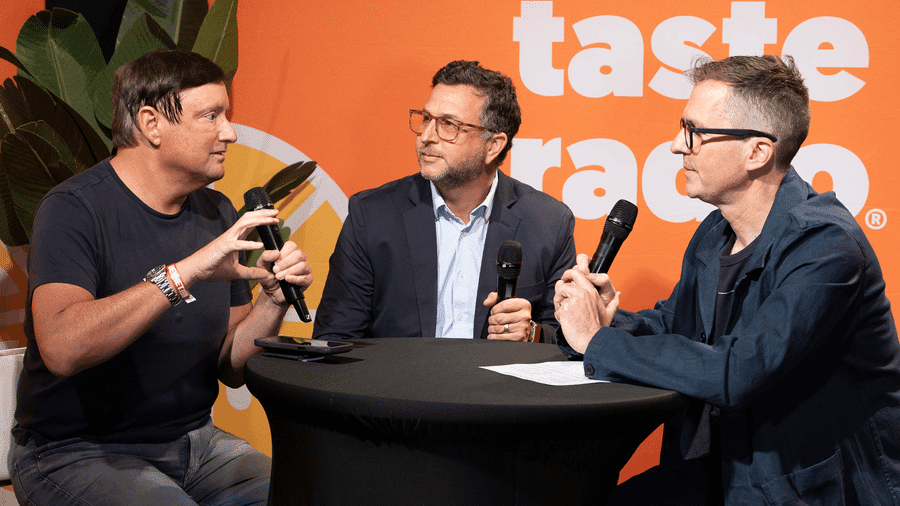
Taste Radio Studio Interview with Multiply
Transcript
Note: Transcripts are automatically generated and may contain inaccuracies and spelling errors.
Speaker 1 [00:25] Man, we're, we're starting off with like a powerhouse here. We've got, uh, Uh, ex-Coke exec Dan White and, uh, Dan Baum, who's the co-founder and CEO of Multiply, Industry legends. How, how did I get the, uh, How did I get this privilege to talk to you two?
Speaker 2 [00:41] Oh goodness, you're laying it on thick. It's good to see you.
Speaker 1 [00:45] Great to see you guys. So, um. I mean, let's just start right in, uh, and get right into it because you guys have seen so many rodeos. I mean, you've seen, uh, beverage from very different seats, you know, giant company, uh, uh, emerging brand advisor, you know, you, you guys have done so many different things. The, the cycle right now, does this feel like a normal innovation cycle or something more like generational?
Speaker 3 [01:10] Yeah, I mean, I, I think, I think, I think we're in a, we're maybe a little bit of a stuck cycle now. I know, I think because you got some big brands and put some big exits and so there's some big multiples that are either expected by founders, um, but they probably don't come because I think the shift's been from revenue to EBIT and, um, and so you gotta start to make money on the thing.
Speaker 1 [01:30] OK, so we're seeing what you, what you're saying here is top line shift down to, uh, moving things a little bit further down. So what is that doing for the industry then?
Speaker 2 [01:39] Well, like Dan said, there's, we're calling it a stuck cycle, which means you're kind of between cycles, but by definition, every, every generation is generational change, right? And change doesn't change over time. Time is gonna happen and so there's tremendous opportunity as we move forward based on what consumers demand.
Speaker 1 [02:00] Well. Before we talk a lot about the stuck zone, so these companies, you know, I think the stuck cycle you're talking about is these companies that are maybe between 5 and 20 million in revenue, and they can't, they can't seem to get above that. Um, What, what looks early today but maybe inevitable over the next 10 years?
Speaker 3 [02:20] I mean, I, what, what I'd go to is um. Let's just go back to the stuck piece because I think then that creates the opportunity. So like what's, what's stuck is, um, it's like it's call it muddy waters or, or it's messy, you know, so categories are messy. So if you look at the clarity behind the categories, say, of, of, uh, probiotic soda. And then protein sodas. And so, you know, I don't know that you could walk down the, the end caps of Target and not see protein all the way down. It didn't matter what it was, it could have been a bike with a, with protein added to it, you know, there was everything, everything had protein associated with it, but, but I think that blurs up the category of, of what probiotics and what modern soda looks like. So I think there's a, there's a modern soda clarity that has to, has to occur. So you look at it and say categories not. They haven't blurred, um, the functionality is overlapping and so that's the, the opportunity around that. And then you've got the distribution systems have really got mucky, you know, um, so the collapse, say, of, of, you know, many of the markets for RNDC and Reyes distribution and, and, um, and then you've got, um, the overall business of alcohol, say, not doing very well, you know, um, and so what I think what happens in that muddy water is, you know, if you're, if you're a small predator. Um, you make, you make a good opportunity out of it, and so I do think that it creates, creates an opportunity and a brand that goes in and provides category clarity, I think that's, that's one of the areas, um, a brand that makes sure that they can get the right level of distribution, you know, at the right time for them is, is probably a, a, a great opportunity as well,
Speaker 1 [03:54] and category clarity is something that Multiply has a lot of experience, uh, providing, so. You know, is it enough for a brand to create something and just toss protein on top of it and, and, you know, it, it, there's, there's so many protein products out there right now. Are they actually creating a protein category or are they just, as Dan said, muddying the waters?
Speaker 2 [04:15] Yeah, when we, we talk about category creation, I always like to say that consumer doesn't go to the store and say give me a modern soda, give me a functional beverage, it's just not the way people think it's not the way they go and buy stuff and ultimately for a business to grow really, really big, which you have to grow really big in beverage to have scale in order to really achieve profit, uh, you have to follow the consumer. The consumer is 100% the boss, so this idea of category. You know, creation is a little bit of a false premise when you call, you know, modern soda. I guess when the automobile came out it was modern transportation, but it's just innovation is gonna constantly occur over time in a loop, uh, and, uh, you know, part of the job is to find and spot and pick those innovators.
Speaker 1 [05:03] OK, so these brands, they get into the stuck zone. Is it, are there false positives that make a brand think it's ready to scale before it does? Is that, is that what, what happens?
Speaker 3 [05:15] Yeah, I mean, um, one of the false positives is money, right? So, you know, you, you, you get too much money and you create your own positives that become false because you, you probably invest in the wrong areas to be able to get it. So, um, that, that's just about when to invest and how to invest around, around the brand. But I think the, you know, the other, the other false positives. I, I think in, in traditional brands or brands that are starting up is, is chasing that functionality as you kind of alluded to is that it's not enough to say, you know, I can put protein on my brand too and I can appear in that aisle or I can put, you know, whatever the functional ingredient is, you know, behind that I think one of the one of the categories that I. That I like right now, um, is, um, is the area of calm or, or, you know, we, 10 years ago we used to call it anti-energy, right? It's like there's going to be something that, you know, what goes up must come down and there's a, there's probably an opportunity within that. And I think that those brands are, are probably doing it well, you see, you know, responsible fundraising, the right shelf space, um, not looking for the buyers to tell you where to, where I'm not, not telling the buyer where you want it to be, but, you know, having a sort of naturally evolve out of, out of the energy door.
Speaker 1 [06:22] I think one of the things that we see all the time is brands will say we have a lot of buzz, we have a great founder story, we've had early investor interest, they'll have a strong market and then they start to get into these conversations with retailers and I think they, they go into too many doors before they're ready or too many retailers before they're ready. Uh, what's, what's the advice that you have for a brand, you know, when, when should you start to think about moving beyond. You know, one big retailer or out of even out of your region.
Speaker 2 [06:53] Yeah, well, I mean, I think Dan mentioned this, that sometimes money can ruin brands. The other thing is that, you know, these brands are bought by buyers who decide they bring them into the grocery store, and that is a little bit of a false positive in that the ultimate boss is going to be the consumer. And so if you get into a place where you've leveraged all this capital in order to put your can on all these shelves at all these stores and consumers aren't coming to buy them. You run out of money really fast and those brands disappear and that's what we see and so you really, really have to pay attention to the consumer. So I think if you're a founder, if you're an executive, if you're an investor, if you're a buyer, the consumer is the boss, you need to be close to them. So
Speaker 1 [07:29] how do they, how do they do that? I mean for a brand that's stuck in the. This middle stage that may be uh ahead of their headlights. What are one or two moves for them to just unlock the stuck zone?
Speaker 3 [07:38] Yeah, I think, I think one of the, the ways that, you know, some people in the industry talk about it or some of the brands talk about, um, the way that, um, uh, they'd like to get themselves either unstuck or accelerated is through influencers, right? And I always think about influencers is, um. Is um efficient reach, you know, to target audiences and, and rather than. Um, you know, giving up equity or, you know, looking at it to say I've got this, this person. So, so what you're doing is now is this the, the cost of getting listed, the cost of promotion is so, is so high for small brands that you're having to be more efficient on the other side, but I would say that the hack of that is, is through social media, is through, you know, kind of the, the buzzworthiness of the brands, you know, at the smaller level.
Speaker 1 [08:26] But Dan, we just saw a brand. That had the most influential human on the planet behind it, Lionel Messi, Moss plus, it failed. Why? Why does it fail? You just said to get on board with influencers.
Speaker 2 [08:40] Yeah, well, I mean, I think ultimately it, uh, to, you can have a great brand, you can get people in the door, you can sell them once, maybe twice, but it's got to taste fantastic and it needs to solve a problem for the consumer. So, you know, it's, you have to get so many things right and if you get any of those things wrong. Uh, which is why Dan and I have been working in this space for a long time, are now talking about helping brands together. We've got not an announcement today, but maybe an announcement down the line, um, but I will say no matter what, if you call, we guarantee you can speak to a Dan.
Speaker 1 [09:12] Yeah, that's great. That's amazing. So talk to me a little bit more about this influencer strategy, and I think one of the things with Lionel Messi is like he was really not that involved in the brand. He was the face of it, but did he use it? Was there a cadence with him? What's, you know, how, how important is it to have. Influencers actually influence. I
Speaker 3 [09:29] mean, I think you, you, you know, you, you just recently had Ben Weiss on stage, right? And, um, and I, I don't know Ben that well. All I know is I could see that that guy is more passionate about the brands he works on than, than any influencer's ever going to be. And so you've got to get an, you know, influencer actually enlisted in the brands to be able to do the work, otherwise you're just buying media, you know, and you're buying media that is, um, you know, in some ways, um. You know, a bit more risky, you know, uh, depending on the reach and the coverage, you know, of that. But, but I would say is that the, the, the combination or the, this hack of I'm gonna go and, you know, find somebody to, to represent my brand and give them a little bit of equity and walk into that. Um, it's a, it's a formula that's worked. 2 out of 100 times, you know, it's not, it's not a, it's not a formula that works very well. I think when you look at, you know, the expectations of getting messy to work on something is that it's gonna go big really fast, um, and it better go big really fast because it's probably pretty expensive.
Speaker 2 [10:26] Yeah, yeah, you can't, you can't pay someone to love you, right? Divorce rates with celebrities are very high for a reason. All right,
Speaker 1 [10:31] we're, we're out of time, but I want to make sure that the listening audience knows how to contact you guys in case they have, uh, questions, comments, or ridicule because I know you take them all.
Speaker 2 [10:40] Uh, dan. Baum at multiply.us
Speaker 3 [10:43] and it's uh [email protected]. All
Speaker 1 [10:45] right, Dan and Dan, thanks so much for being on. We really appreciate having you and, uh, hopefully let's do this again.
Related Videos
The State of Cannabevs: Strategy on Deadline
With federal regulations about to put this fast-growing industry into a time-out, we look through the lens of brands, distributors, and lobbyists for potential futures for this fast-growing segment.
AI and Online Retail: Brand Building Meets Agentic Commerce
In a special tactical presentation, sales, marketing, and tech experts share a concrete playbook for making your brand legible to AI agents — without gutting what makes it human.
Retailer Profile: Launching and Maturing with Whole Foods
A rare founder–buyer conversation on what makes a pitch resonate, how brands can build productive retailer relationships, and what growth actually looks like once you’re on shelf.
Exit Interview: How Dirty Shirley Cleaned Up
Longtime beverage marketing veteran Adam Kost discusses his lean startup, proof-of-concept strategy, the key insight that gave Dirty Shirley the oxygen it needed to grow.
Disruption at Scale: A Conversation with Athletic Brewing CEO Bill Shufelt
Athletic’s rise has reshuffled the deck of beverage categories. Shufelt shares how he's navigated explosive growth and what he’s learned about raising capital, brand positioning and category creation.