Search across the BevNET CPG Media network including BevNET, Nosh, Brewbound, Taste Radio, Nombase and CPG Jobs.
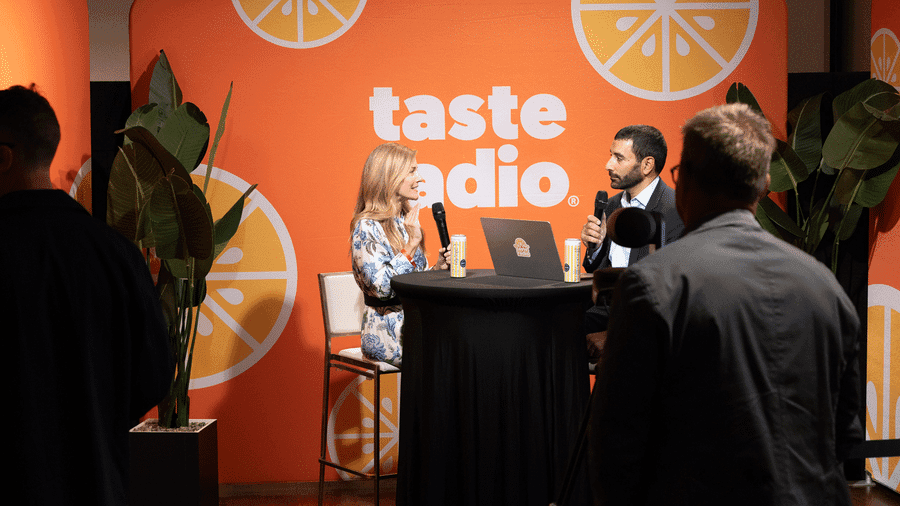
Taste Radio Studio Interview with Hapsy
Transcript
Note: Transcripts are automatically generated and may contain inaccuracies and spelling errors.
Speaker 1 [00:25] Now this is someone who I met yesterday at the bar convent Brooklyn event. Have a seat, Andrea. Good to see
Speaker 2 [00:31] you.
Speaker 1 [00:31] Good to see you again, Andrea. Whitewick, who is the founder and CEO of Hapsy, how are you? Good to see you.
Speaker 2 [00:38] Doing all right. How are
Speaker 1 [00:39] you? I'm doing fantastic. BevNET Live number 1 for you, I assume. Officially,
Speaker 2 [00:43] yes,
Speaker 1 [00:43] officially. What was there an unofficial,
Speaker 2 [00:45] um, so I spent 15 years at Nielsen, and so, uh, but I was dedicated to clients. I was not on business development, so I've been through the doors before.
Speaker 1 [00:53] You've been through the doors before and now you're through the doors with your own brand. That brand is Hapsy. What is Hapsy?
Speaker 2 [01:01] Hapsy is a bubble-free, non-alcoholic cocktail that's made to drink well with others,
Speaker 1 [01:06] OK. So, you know, there's a lot of skepticism around cocktails and RTDs and non-Aks and so on and so forth. So what makes yours different? What was your origin story, you know, and why did you want to come to market with a product like this?
Speaker 2 [01:19] Um, so like I said, my background is rooted in data and consumer innovation and white space, and what I really found was the consumer was being forced into a choice. And I was like, where's the and? Everything is an or. And so this is something that foundationally stands on its own, and you can feel like you're still enjoying something that has the sensorial occasion of a cocktail, but you can also put a little pony shot or a full shot into it as well if you choose. And so that zebra striping effect really isn't exist. in the market, we're being forced into much like in the NARTD category where you have zero calorie or full calorie in the adult non-alk space, we're being kind of forced into these specific pillars and there wasn't that blendability that I could find, so I made it.
Speaker 1 [02:04] Well, you made a really good looking product. I know we talked about how you're going to adjust some of the packaging, uh, down the line, but. When I look at this and when I think about Hapsy, I think about sort of a feminine tilt to the brand. Was that intentional? Yeah, yeah. So this is for, uh, women of a specific age or is it any age,
Speaker 2 [02:22] say, yeah, I mean, it's for the woman who we call her the wellish woman. She's the woman that maybe meal planned and like ran to Publix on Sunday and then like a friend. Calls on Tuesday and she's like, hey, meet me out for tacos instead. And she was like, Yeah, I'll put that chicken in the freezer and actually go and have a marg or or a salty seagull at night. And she's that person that really plans well but also doesn't just feel too rigid. She lends into the, the fabric of living her life
Speaker 1 [02:47] colorfully. That person sounds like you actually. Oh, it was very specific. All right, I got to taste this. I've been, I've been meaning to try it nice and
Speaker 2 [02:54] cold, crack it open and
Speaker 1 [02:56] you referenced, cheers, cheers, cheers. Thank you. You referenced salty seagull, which is that the name of this this flavor?
Speaker 2 [03:03] Yeah, so much like cocktails have a name. Like my favorite cocktail is a martini or a margarita, also non-carbonated, like salty seagull. I really wanted to call name. And so I was like, you know, our tasting notes are on the top, citrus, berry, and elderflower. But really, you want to call a name when you're drinking a cocktail. And so we thought about, well, what are the tasting notes? We've got sea salt naturally in there. And then we thought about the seagull who drinks out of salty water and fresh water. And that goes back to our end promise to the consumer. And so we, we landed on salty seagull.
Speaker 1 [03:37] It's also interestingly, it's not carbonated, which was clearly, uh, you know, very intentional. I mean, it, it wasn't, it wasn't accidentally non-carbonated. Why'd you choose it to be non-carbonated?
Speaker 2 [03:48] Because I want all five senses when I'm drinking, I drink. I'm from New Orleans. I was teased on bourbon. So when I drink, I want to feel like I'm still drinking a cocktail with or without alcohol. And so everything that I was looking for had bubbles in it, and I don't drink a ton of things that have bubbles when I'm drinking alcohol, so I still wanted that very important sensorial occasion to feel festive and bright and fun.
Speaker 1 [04:14] Oftentimes, non-alcoholic cocktails are great because you can merchandise them in different parts of the store. They don't necessarily need to be merchandis with alcohol, but, you know, early into the development of, of Hapsey, where do you see this brand really standing out on the shelf? Is it with other cocktail brands? Is it? Next to other refreshment products, I mean, how do you think that this brand would really stand out in
Speaker 2 [04:36] store? I mean, my ideal like co-promo shopper marketing opportunity would be next to liquor, honestly, in the liquor store next to a multi-serve bottle of tequila or vodka or gin or things like that because that's the way you can either bring it home and drink it with or without, right? But if you're talking about on the primary shelf. Frankly, a lot of retail shelf sets aren't there yet. And so we're not looking. That's not our emergency exit or emergency entrance into retail right now. We're not trying to go there because what we want to do is actually go where the shopper is already given traffic pattern, and that's actually in liquor stores. 94%, to quote a Nielsen stat, 94% of consumers walking into a liquor store are. Also purchasing non-alcoholic. Why not follow the traffic pattern that the shopper is naturally wanting you to be there? Just put you on the shelf
Speaker 1 [05:24] there. That is such a good point, and I would encourage retail merchandisers to think about non-alcoholic products as part of that liquor set because I go to Wegman's. Wiggins is one of my favorite retailers, retailer, um, but all their alcohol. It is separate from all their other beverages and the non-owl cocktails are in the dusty area of the store next to supplements and something else like just stuff that you don't buy more than once a month. And I'm thinking what a lost opportunity because people, I'm sure want, if you're buying for a party, you want to buy a little bit of both. And I think that, you know, there would be a really good opportunity for a brand like Hapsy to be in. That set, but first you have to get into that set. How are you talking to retailer buyers about this opportunity for your brand?
Speaker 2 [06:07] So right now we're actually saying like, give us a taste, give us feedback. We want all the feedback. We want to hear about it, and then we'll talk about if it's the right time for both of us. We're not gonna be rushing into retail if it's not the right fit. If we don't already have the units per store per week driving already in our main channels on Amazon, on D2C, in our independent. Grocery, we're not going to go to a specialty retailer until we're absolutely ready to make sure we're gonna kill it with them. It's easy to get in. It's hard to stay in, and we know that.
Speaker 1 [06:38] Yeah, always easy to get distribution, difficult to get turn on shelf. That is the real challenge. But it sounds like you are kind of a grizzled veteran of the industry already. You seem to know what you need to know to be successful in this business, um, but you've mentioned data a number of times. Obviously it's a big part of your background. Uh, the data's expensive. I don't know if you get a discount or not these days. I wish I had my login. I wish I had my login. Um, but how much do you think data matters to early-stage brands, especially at this point when you're not getting a lot of traction, you're not in a lot of stores, you know, in evaluating the cost benefit of getting that kind of data? How, how, how are you thinking about that and how would you advise early stage brands to consider data at this stage of their development? Well,
Speaker 2 [07:23] I think, I think they think that everything is behind a closed door. There's a lot of information that I personally. Worked at when I was at Nielsen that is open source just industry insights out there like you go straight on NIQ and there's industry stuff like the state of the consumer every year, the state of Bevel, the state of Pet, whatever industry vertical you're in. Circana and Nielsen are gonna put all that out there because they want those big numbers being quoted like I just quoted the 94% stat, right? And they want it properly sourced and things like that. So there's a lot of free data out there that is great. Gallup is another one. There's Harris poll is another one. There's a lot of information you can get for free if you're just willing to do the due diligence and research it and get the proper footnotes and things like that. When you need specific insights, yeah, go ahead and call up somebody and maybe 3 numbers are all you need. There might be a small enough team that's willing to give you that for pennies on the dollar.
Speaker 1 [08:18] One place where you're not gonna get a lot of data is the impact of the founder as the brand, and you and I have talked just now about the importance of aligning yourself and your vision for the brand with you as the founder. Um, are you comfortable being that person? Are you comfortable getting into that space where you're representing the brand not just as the founder but it's primary consumer?
Speaker 2 [08:42] Uh, so I did not know you would ask this, but I will tell you no, no, um, I. I was very comfortable being the hand in the puppet of a brand, you know, being the quiet person behind the scenes telling people at Coke like Vitamin Water 10 is not gonna work. The decision-making tree of the consumer is this, we need to think about building the zero trademark and let's go this way with Vitamar Zero and Powerade Zero, not Powerade option like. I was very comfortable being firm and rooted in data and art and science, but being the actual brand manager or the public-facing person was not my just bread and butter. So it's been a reluc I'm a reluctantly public face of the company. Um, but I, it's fine. It's getting easier. I'm clearly comfortable talking about data and CPG. I started as a receptionist at Pepsi in college, and I just ran into this career. And so I'm just not used to being the hand out of the puppet, and I'm getting there.
Speaker 1 [09:39] Yeah, well, you're, you're off to a great start, I would say. And you know, there was a time at Bevnet where I was behind. Camera. I was never in front of the camera and eventually you just get used to it and you get more comfortable with it and I think that's where authenticity really comes from. We were talking to Bianca earlier and how much of the connection to that consumer has to be real and I think when you talk to your consumers they know it's real. So I'm glad you're doing it, glad you're putting yourself out there. So glad that you took the time to be with us today, Andrea. Thank you so much really appreciate it. Thanks so much.
Speaker 2 [10:06] Thanks for having me.
Related Videos
The State of Cannabevs: Strategy on Deadline
With federal regulations about to put this fast-growing industry into a time-out, we look through the lens of brands, distributors, and lobbyists for potential futures for this fast-growing segment.
AI and Online Retail: Brand Building Meets Agentic Commerce
In a special tactical presentation, sales, marketing, and tech experts share a concrete playbook for making your brand legible to AI agents — without gutting what makes it human.
Retailer Profile: Launching and Maturing with Whole Foods
A rare founder–buyer conversation on what makes a pitch resonate, how brands can build productive retailer relationships, and what growth actually looks like once you’re on shelf.
Exit Interview: How Dirty Shirley Cleaned Up
Longtime beverage marketing veteran Adam Kost discusses his lean startup, proof-of-concept strategy, the key insight that gave Dirty Shirley the oxygen it needed to grow.
Disruption at Scale: A Conversation with Athletic Brewing CEO Bill Shufelt
Athletic’s rise has reshuffled the deck of beverage categories. Shufelt shares how he's navigated explosive growth and what he’s learned about raising capital, brand positioning and category creation.