Search across the BevNET CPG Media network including BevNET, Nosh, Brewbound, Taste Radio, Nombase and CPG Jobs.
Taste Radio Studio Interviews with Anjali's Cup, Pizza Wine & H2ALL
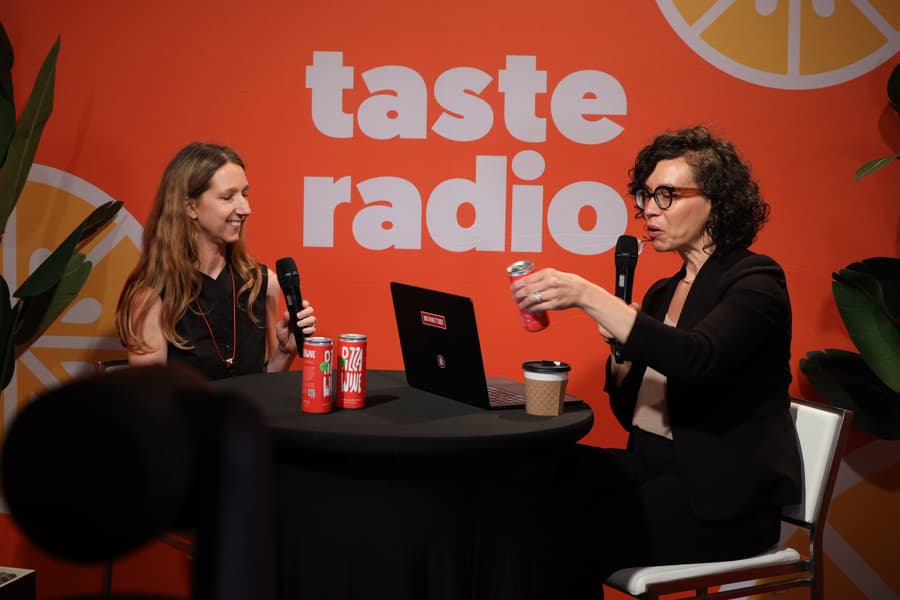
Recorded live at BevNET Live NYC 2026, the Taste Radio Studio features conversations with founders, marketers, expert consultants, and ingredient innovators discussing emerging trends, brand building, product development, and the future of consumer packaged goods.
Taste Radio Studio Guests:
Anjali Bhargava, Co-Founder. Anjali's CupLiz McDonnell, Co-Founder & CEO, Pizza Wine
Nick Cornwell, Founder & CEO, H2ALL
Transcript
Note: Transcripts are automatically generated and may contain inaccuracies and spelling errors.
Speaker 1 [00:26] So much for joining us today at BevNET Live Summer 2026 here in New York City. I'm here in the Taste Radio live stream studio with Nick Cornwell. You are the founder and CEO of H2ALL. Thank you so much for coming to BevNET Live and chatting with us
Speaker 2 [00:45] here. Hey, thanks. BevNET, thanks for having us. This is
Speaker 1 [00:48] awesome. I love your energy so much, um, and I really do want to just jump right into H2 all and find out what you guys are doing and why you're doing it. I had a chance to check out your website and you're doing some pretty big stuff.
Speaker 2 [01:02] Yeah, the why is important, right? The why is important. That's always kind of that North Star, as we like to say, right? Um, ultimately our goal here is to really create an opportunity and an avenue for the world to do good. And be a part of something bigger than themselves and We think we might have a Uh, maybe a cool avenue for that.
Speaker 1 [01:23] Well, I think so too. So, um, every bottle helps fund clean, reliable water for communities across Africa. Well,
Speaker 2 [01:32] uh, around the world, right? And the idea is that, um, yeah, not everybody has access to clean water, let alone water at all, and we're so fortunate to live here in this beautiful world in this little lovely country, uh, especially here in New York. Shout out to the Knicks. You know we live a really cool life, um, but that's not the same everywhere else. And when I think about ways that we can help and how we can improve humanity, um, it's simply giving the most treasured, precious thing we can give as a natural resource which ultimately changes people's lives and, you know, we, we want to do that at scale. We want to make a big difference in how better to do that than an everyday product.
Speaker 1 [02:14] It's such a great cause and you know the beverage industry has lots of opportunity. It's challenging, but there's certainly a lot you can do in this space. How did you decide to marry the cause with the product?
Speaker 2 [02:29] Beautiful question. So I started out as a, um, we stood up a nonprofit and we were out as a charity. Um, funding projects around the world, right? And so we're actually giving water to about 280,000 people right now doing that. However, it was like, wait a second, we need more help. We need more people to know about this problem, and we need everybody to feel like they can contribute so they could feel that good feeling of being able to do good. Yet that's difficult, right, when you think about you. To be a part of a charity, maybe you have to have donation funds, money that you can give. That's not always the case, right? What if you're a single mother or you're an 18 year old and you want to do good, what's your avenue to do that without having to, you know, break the bank or go volunteer time that you may not have? And so we came up with some, you know, real objections that we had to overcome, and those were time, money. Trust, right, being a massive one, right? And so because we were the ones doing the work, I was like we could tell this story. You can trust it because you can see it. And so that became the avenue of how do we deliver a trust and transparency platform and we looked into You know what scales, what goes into every household, even if you're, you know, you're lucky enough to have good water out of your faucet, you may be going to the lake, you may be packing a cooler, or you may be on a road trip, and you might come in contact with a bottle of water.
Speaker 1 [04:02] Trust is such an important part of it, I'm sure. Do you find that you have to combat any consumer skepticism when they see the bottle, you know, and they're being told that it's doing good? How do you use the label to explain to people who are going to buy this product that what they're investing their money in is actually going to make a difference?
Speaker 2 [04:24] Yeah, thank you, thank you, thank you. Really, what's the secret sauce, right? We're here at Bevnet where we're talking about a lot of incredible ingredients and these cool you know ways of going about formulating a secret sauce. The secret sauce for us lives in the QR code. The QR code is a redemption model where it actually shows true transparency, where is the work being done. And then you get to follow along. So people's lives are truly being changed and we actually have boots on the ground, um, content and stories that come from those places where we're doing the work. So actively right now you can scan the QR code after you buy a bottle. It will give you credit for being a contributor to the um to the project and then it will also let you follow along as the things change. In those people's lives. So you can go on now. We're working on a small village in Uganda right on the border of Kenya and Uganda on the eastern side, and they don't have water right now and you can see a video right in there where people are actually collecting water and what their life looks like today, and we'll get to follow along now as we continue to sell water and do our thing. You'll get to watch their lives change.
Speaker 1 [05:40] So you talked a little bit about this at the beginning, but how did you personally become interested in supporting this specific cause of providing water to communities that have trouble accessing it?
Speaker 2 [05:53] Yeah, um, I mean that's a long conversation, um, but I will summarize. Uh, I live a really incredible life. I live in Steamboat Springs, Colorado, and, um, I was on a baseball field coaching, uh, young athletes and, um. Good friend of mine and other coach was, you know, we were conversing about how blessed we were and lucky we were to live the life we were living and we were thinking about how we could gain or or create a way to give an example through leadership and through coaching and mentoring these young athletes about, you know. You, you want to be a good leader, you want to be accountable, you want to be, you know, disciplined and all these things and it was like, where do I apply that? How do I do that? And so we were talking about ways that we could, you know, create an avenue for athletes to apply the things that we were teaching on the, on the baseball field and football field and things like that. And so, um, he had had experience working in third world countries and we reached out to some people. we knew and said, hey, what is it that we could do? And as we started into that, it was like we could do a lot of things for a lot of people who need a lot of, you know, uh, things that we could possibly provide, but it was actually, um, I was in Africa after we drilled one well, after we fundraised through baseball camp and things like that. We stood up a charity and I was in Africa. And I realized that the reality was, was all of these ailments of the folks that I was, you know, interacting with all stemmed from really the same place, water. And it was, and it came through my head. I was like, where did you get the malaria? Same place you got the typhoid. Where did you get the typhoid? Same place the cholera came from, right? And I was like, wait a second, we could really do something about this. I'm no special human being. All I am is somebody that looks at really difficult challenges and that direction because that's likely the path that you need to be on so found ourselves doing that and it's been very successful, but I want to invite the world to be a part of it because it's a world global issue. It's not just a specific. You know, population or specific country, it is humanity,
Speaker 1 [08:11] right? Well, certainly I'm glad that you're starting to tell the world by telling our audience out there, how are you planning on getting this out into the world? Are you going to be what's your distribution strategy? Are you thinking retail on premise? Where you, where do you want to see this land?
Speaker 2 [08:28] We have actually launched in Georgia in the. Greater Atlanta metro area, um, we do have distribution through the Anheuser-Busch network right now, um, and we actually are in about 300 doors now, um, after a very quick start to include QuikTrip, so we're very excited about that. That will be sort of our early stage here, um, and so as I think about that, this is my favorite part. Is it while communities abroad who need access to clean water and who need the ability to live healthy lives, so that they raise their children and they stand on their own, we think about that, you and I need purpose. You and I need connection. You and I need to feel good about something all the time, right? So what about if you could walk into your convenience store and go in there and do something good for humanity on a regular basis with no extra cost, with no extra time? You're going there anyways and you walked out with a bottle of H2L in your hand, you may just bump the rudder in your entire community for your own benefit. And so we're not just trying to win abroad, we're winning right here at home.
Speaker 1 [09:44] Well, I feel better already. It's been such a pleasure having you here in the Taste Radio live stream studio, um, and last question for you, what are you, um, what are you looking for out here in the audience up on stage? What, what did you come to Bevnet Live for?
Speaker 2 [10:06] Um, I came here to listen as if I was wrong in my ideas, and, uh, thank you to Bevnet because, um, It challenged everything I kind of thought, and so kudos to those who have taken the stage and shared their stories because to be honest with you, um, I came here with an open mind to listen and learn and it proved everything that I thought, some right and some way wrong, so I'm excited. To go apply some of that, bring that back to the team and, and, and take off from there.
Speaker 1 [10:33] Well, I couldn't think of a better endorsement. Thank you so much, uh, Nick Cornwell, founder and CEO of H2A. Thank you so much for joining us here in the studio and at Bevnet Live, you can head right over here with your microphone. Thanks so much for joining us. That was great. All right, next up, I am very excited to be talking to Anjali Bargava, founder of Anjali's Cup. Um, you are certainly one of our, uh, favorite brands and people in the beverage community, and I'm so glad you're here. See,
Speaker 3 [11:06] this,
Speaker 1 [11:07] this is why, this is why, um, so this is this really for me?
Speaker 3 [11:11] It is, yeah, I just made it outside.
Speaker 1 [11:15] All right, tell me, tell me what I'm opening here and what I'm about to be drinking. So
Speaker 3 [11:18] this is my masala chai concentrate. We're about to launch a a brand refresh at Fancy Foods, so I brought a little sneak peek for everyone.
Speaker 1 [11:26] I just want to drink that all day long for the rest of the day.
Speaker 3 [11:30] And the beautiful thing about masala chai, I think this is like a big missed opportunity in the marketplace right now, is that people are serving chais that actually don't have a lot of caffeine. They're missing these functional. Spices like Ayurvedic spices are, it's not just about a flavor profile. It's actually about functionality and things that support your life. So masala chai is great to start the day with, but it's actually that it's, it's a safer afternoon caffeine fix, um, because it's not going to give you jitters, the jitters in the same way, um, but it is going to give you a real pick me up. Um, also great for doing a, Early evening cocktail. So instead of an espresso martini, you can do a chai martini or I actually love pairing it with rum or bourbon.
Speaker 1 [12:18] 00, a chai martini. I can, I, I really can picture it, picture drinking it from like morning till night. This is the perfect thing, especially at one of these shows, you know, you're talking, everybody's loud. It's like you feel like your voice is disappearing. It really is the perfect thing. You talked a little. You just mentioned Ayurvedic, which I probably butchered the pronunciation of, um, but how do you position that in the wellness category?
Speaker 3 [12:41] So I, you, you know, my brand has evolved a lot, and a lot of that is about really meeting customers where they are. Um, so I've always leaned into the fact that my products are. Ayurvedic, they're Ayurvedic. They are Ayurveda inspired but also third culture. So all of my products, my turmeric elixir has maple in it. That's not traditional Ayurveda. It's my innovation as someone who was born in Canada and grew up in New England. I feel like if we had maple trees in India, Ayurveda would have. Used maple so that's the opportunity I have as a third culture kid to bring something that is optimizing and it's actually, uh, taking this ancient wisdom and adapting it to modern lifestyles and making it something that's easier and more accessible.
Speaker 1 [13:35] So I've heard a little bit about Ayurveda and I, I've read a little bit about it. Can you explain the principle, the Ayurvedic principles that you use to guide the way that you, um, have put together Angel Jelly's Cup?
Speaker 3 [13:48] So that's, it's complicated and, and so interestingly, I'm also, I, I've, I've been thinking about. Even in terms of you saying like I'm not sure I'm saying Ayurveda correctly, um, I don't want that to be something that keeps people away from the brand, um, so I'm also leaning into another word for Ayurveda is functional. It's a, it's about balance, right? So, um, the ginger, the cardamom, the cinnamon. The cloves, the fennel that are in my chai masala, which is a spice blend that's in the chai concentrate. are all doing things to support your system. Actually, even the sugar in the chai concentrate in small amounts is reducing the acidity of the caffeine. So people who have acid problems when they're having caffeine should actually have a little bit of sugar, not 18 g of sugar, which is like a big problem we have with a lot of the chai products on the market. They, they make up for a lack of spices and caffeine or tea with a lot of sugar. It's so.
Speaker 1 [14:57] Interesting that you're talking about using a little bit of sugar for balance. That's something that we are seeing across beverages in every category. Maybe, you know, even if it's just like 4 g of sugar and maybe you're even using another, a non-nutritive sweetener or whatever, but using a little bit of sugar is something that we're seeing so much of functional that that makes perfect sense
Speaker 3 [15:17] and it's actually the right use. Like nature is full of so much wisdom. Sugar didn't appear on the planet by accident. It's not poison. Yeah, if it's used correctly,
Speaker 1 [15:27] folks,
Speaker 3 [15:30] it's, I mean, it is, it is not great for us. High fructose corn syrup is another thing, but that's, that's, that's, I've always tried to find the right sugar for the right product as well. Um, so it is all about balance. All of my products, my chai concentrate has a little bit of turmeric in there because turmeric supports all the other things. It's all very synergistic, right? Um, but it's also. An investment, so we said we're honoring our past, we're savoring the present, and we're nourishing the future. So all of this is you're getting those cumulative benefits with every cup. It's not just about functioning well in the next hour or two. Well,
Speaker 1 [16:10] I do feel like I'm already feeling the benefits. You know, I don't think we talked about the format that the product is offered in. So you have two bottles here. Tell me about those.
Speaker 3 [16:20] So this is the existing packaging. This is the exact same thing. It's just a little bit of a brand refresh. Um, so, um, so you can see I've tried to sort of clean it up, but as we've, as we've transitioned over time, I've tried to make sure my messaging. I tweaked. I have actually increased the sugar just a little bit to sort of meet. Most of the products on the market are between 10 and 21 g of sugar per serving. I was at 6, which was sort of that functional level. I bumped it up to 8. So the new product has 8 g of sugar. The other thing that's very different is I think most people would look at this and think that it makes 4 cups of chai based on industry standards. This makes 16, so it is an espresso strength chai, which is easier on the planet. It's a lower carbon footprint, and it gives it a crazy amount of versatility. So I don't know if you noticed that wasn't a chai latte that I made for you. It was mostly water and a splash of milk. I don't want to drink super milky drink to be really,
Speaker 1 [17:24] yeah,
Speaker 3 [17:25] it's just like an ounce of milk in there.
Speaker 1 [17:27] I am, I am your new biggest fan. And it is so smart that you put um make 16 cups right there on on your revised packaging.
Speaker 3 [17:36] I tried to make it really clear. It was, it was here, but people weren't seeing it the same way.
Speaker 1 [17:40] Yeah, no, you can see it better here and and so I can see the, the new sugar content is 8 g. The old sugar content was 6 g. What compelled you to add those 2 g? Was it consumer feedback? Was it your own tasting?
Speaker 3 [17:55] So I've really always tried to be true to. Integrity on, on, on these decisions, but it's also important to make it an easy yes for people. So my biggest customers are coffee shops, cafes, restaurants, bars. They're used to a certain sugar level. I want them to get the authentic flavor profile, the benefits to open this up to all the disenfranchised chai drinkers who can't find a cup of it anywhere. Um, but I also want it to be easy for those people who've only had the Starbucks and Starbucks derivative chai to actually embrace authentic chai and experience all the benefits they can get from it.
Speaker 1 [18:38] You know, I am so impressed with the amount of sweetness that you're able to get with the combination of the spices and with the amount of sugar that you use. It, it really, it's, it's a really nice harmony.
Speaker 3 [18:50] Yeah, I mean, can you imagine that the typical chai has double the amount of sugar?
Speaker 1 [18:54] Yeah, yeah, yeah, it's it really is fantastic. And so, so do you do a lot of food service?
Speaker 3 [18:59] I do, uh, food service is, is the largest part of, of the business, um. And I love that because it's getting it into people's hands that I would have a much harder time. It would be a lot more expensive for me to reach those customers. It doesn't build the brand in the same way, so I'm, I'm trying to keep the balance. I do have an 8 ounce size that I'll I'll be launching with the new brand, um, so that's a better sort of retail size. It makes 8 cups and. I, I sell on my website, um, but, uh, finding that balance of the D2C, the retail, and the food service is always, uh, it's always something that we're refining strategically.
Speaker 1 [19:46] Sure, and I'm sure when one blows up a little bit, you work with that and you see how far you can take that. It probably is a cyclical process.
Speaker 3 [19:55] It is and it's also we. Really, as a result of the tariffs, we had to really zero in on what was going to give us the economies of scale. It was going to allow us to produce the volumes that would allow us to be a bigger customer for our co-packer and get the production schedule that we need. So we really were focusing on volume and so that's why a big part of our focus right now is getting those food food service customers in. Um, but, uh, you know, of course, it's, it's a little bit of a, uh, It's, it's a, it's always a little bit of a game of balancing those things out,
Speaker 1 [20:35] yeah, um, well, it was such a pleasure to have you here in the Taste Radio live stream studio. I really am still getting over this product. Um, I get over it, you know, no, I, I, yeah, all day long I'm telling you, um, thank you so much for coming to BevNET Live. Anjali Bhargava, founder of Anjali's Cup, uh, it's been so great to have you here, and, um, you can head right this way with your microphone. Thank you so much. All right. Next up we have Liz McDonnell, co-founder and CEO of Pizza Wine. This is something that we actually had in the BevNET offices and had a really good time trying, so I'm glad that we get to have you here in the Taste Radio live stream studio at BevNET Live to tell us all about it.
Speaker 4 [21:20] Thank you so much for having me. It's so exciting, and I have a pizza wine for you. I know it's a little before noon.
Speaker 1 [21:25] But you know, I know it's a good day when I get a chai and a pizza wine just back to back. I don't think life gets any better than that.
Speaker 4 [21:32] I know. Happy Thursday.
Speaker 1 [21:33] Thank you. So, so this is, tell us a little bit about this product. It's pizza wine, so it's a sparkling red wine that you enjoy chilled. How did this come about? It's not, it's not typically the way that you would think to drink red wine. So where did this come from?
Speaker 4 [21:47] Uh, so not typically in the US, but it's actually a super common pairing in Italy. So if you go to any pizza shop in Italy. The house wine is going to be a sparkling red. So if you've heard of Lambrusco before, it's a little bit inspired by Lambrusco, but very much inspired by just the casual nature of drinking wine with friends over casual food in Europe that really just hasn't come to America. Yeah, so I'm obsessed with sparkling red wine. I used to own a wine bar where we had a sparkling red on tap. My co-founder is a pizza chef, um, also obsessed with wine, and so we put the two together in a way that meets people where they're at, which is eating pizza.
Speaker 1 [22:26] And so the, um, how did you, if you, so you ran a um a wine bar before, so you know you probably saw a few kind of trends and had a few favorite things. How did you decide to settle on the sparkling red wine and, you know, make turn turn that into the business?
Speaker 4 [22:44] Yeah, it's a great question. So, um, our wine bar always had a $6 glass of white and a $6 glass of red. Um, because we wanted to make wine really accessible. Sparkling red was one of those, one of the more accessible wines that we had, so we had it on tap, um, and in that first year I saw, um, most of our customers try it for the first time in their lives, so it's still very novel for them. Again, despite, you know, in many places in Europe being super common, and so that novelty was really exciting for me, and most of them loved it. And so what I saw over the next couple of years is that it became harder and harder for me to find. I had one producer from Umbria and Tremonti that we had sourced the sparkling red from, but then we couldn't find it again. And so this is the wine that or the style of wine that people ask. The most about and so when I wrapped up the wine bar in the very beginning of 2023 and I thought about how can I keep working in the space to make wine more fun, more casual, more accessible, a sparkling red, I knew people loved it because I saw it at the bar. It had that novelty factor and it has a really great story around pairing with food, which is sort of the space that I wanted to live in with wine.
Speaker 1 [23:58] And where do you source the um the the ingredients from? Where do you source the grape juice from? Yeah, so
Speaker 4 [24:04] fun. So I almost cried, um, as, uh, you know, about 8 months in, um, I just couldn't find anyone who, any winemaker who really understood what I was trying to do. In my mind, pizza Wine had a really, really specific flavor profile, and it's just not a flavor profile that sort of big wineries understand in the US, but 8 months in, I found an amazing producer in the Lake Erie AVA of New York State. So most people think of the Finger Lakes when they think of New York, but Lake Erie actually has amazing grape growing infrastructure and and so we're working with the oldest family owned winery in New York State, single winemaker, regeneratively farmed grapes, so local inspired by the Italian version.
Speaker 1 [24:53] Did the, did the current state of tariffs and the uncertainty that's still swirling around those sway you to go with the US producer, is that what you would have done anyways?
Speaker 4 [25:04] We would have done it anyways, um, so, uh, you know, at the bar we really care about, um, well-made ingredients and the stories of our producers. Um, for me when I sort of struck out to me. My own wine. It was really important that it be local and that it had the story of us who are here in New England sort of pairing wine with pizza, which is very much sort of a cultural thing here in New York, also in Connecticut, also in Providence where we're based.
Speaker 1 [25:32] I would think it would be a thing everywhere, right?
Speaker 4 [25:34] It's a thing everywhere. So for me it was really important that it be from where we are and my my Co-founder and fiance, a, a chef, he says what grows together goes together. Um, that's sort of like what he learned in fine dining, um, and that's our approach to pizza wine as well is that it has to be from here and it goes with pizza from here.
Speaker 1 [25:52] So I know that your target demographic is people who like wine and pizza, preferably together. How are you targeting your consumers outside of that?
Speaker 4 [26:03] Um, yeah, I think, um, I've learned so much over the last couple of years in terms of um In terms of really like branding and speaking to the consumer, I'd say, um, coming from a product background, um, my biggest learning moment was that I thought it would sell itself and actually things don't just sell themselves. You have to,
Speaker 1 [26:23] it's really disappointing, isn't it?
Speaker 4 [26:25] It's so sad, um, but it's also really fun and so sort of my, you know, my background and product, I build a thing and then, um, you know, some other team goes and sells it. I have had to learn over the last year how to sell it and I've become the sales team and so, um. You know what I've learned is, um, you know, how to talk to consumers about the thing that they do know, which is eating pizza, the thing that they want to know more about, which is how to pair wine with food, you know. There are about 20% of Americans are pretty solid wine drinkers, but a much larger percentage want to be, and they feel like wine culture is really stuffy or it's inaccessible. They're scared to make the wrong decision. And so the way that I'm reaching those people who are not wine plus pizza drinkers is talking about what the best pairing for pizza really is, which is this sparkling red, and we have a long cultural tradition around that. And so once I tell the story at a demo. Table people are like, oh my gosh, that makes so much sense, and they smile and light up, um, and so that's worked really well for us.
Speaker 1 [27:26] So this might be a dumb question, but are you, so are you, um, also targeting on premise with pizza shops? I mean, oh,
Speaker 4 [27:34] absolutely, yeah, so, um, pizza restaurants are, uh, like we love them, um, and it's just so fun to see, um, to, to walk into a pizza shop and we see the pizza. Cans out on the tables with you know, big like New Haven style rounds for example. So we're firmly on-prem, off-prem, and then the sleeper is actually grocery. So that's not what I expected at first, but what my hypothesis is, and it makes so much sense, is that when people are choosing to eat pizza, they want an easy decision. Like they know they love pizza. It's not complicated. They know wherever they're going, people are going to eat that pizza, and when they're already in that mindset. They want an easy decision with what they're drinking and so we see pizza wine moving pretty quickly in grocery stores where people are doing their weeknight shopping.
Speaker 1 [28:21] Yeah, no, absolutely, and it's a fun can. It's a fun occasion. I think you did such a nice job matching the branding and the packaging with the occasion and that it's not serious, it's fun.
Speaker 4 [28:33] Thank you. Yeah, yeah, we definitely want it to be fun, casual, disarming. Like I love that people smile when they see the can. Um, but also a little irreverent. So, um, on our 4 pack box we say, um, you know, pour it over ice, drink it with cola for all we care. You really can't mess this up. Um, you know, it's a different ethos than what wine culture tells most people, um, so it can be very judgmental, and we want to be the opposite of that. So you really can't go wrong.
Speaker 1 [28:59] Well, I, I certainly am not going to go wrong later when I drink this. And one last question for you. What brought you to Bed, Bevnet Live? What made you come?
Speaker 4 [29:07] Um, so actually one of my advisors is here, um, and it, uh, it's my first Bevnet. I'm so excited. Um, I, I think conferences in general, uh, they're sort of my worst fear because you have to walk in and just talk to people that you don't know all day, um, but there is so much to take in here. I texted him and I was like, oh my gosh, I'm so happy because you can see people in the same position and see how they made the decisions that you're currently struggling with. So, um, we'll definitely be back, um, next year.
Speaker 1 [29:36] Well, Liz McDonald, thank you so much for coming to Bevnet Live and hanging out in the Taste Radio live stream studio, co-founder and CEO of Pizza Wine, uh, thank you for joining us, and we're gonna say goodbye to our audience here. Thank you all for joining us here in the live stream studio.
Related Videos
The State of Cannabevs: Strategy on Deadline
With federal regulations about to put this fast-growing industry into a time-out, we look through the lens of brands, distributors, and lobbyists for potential futures for this fast-growing segment.
AI and Online Retail: Brand Building Meets Agentic Commerce
In a special tactical presentation, sales, marketing, and tech experts share a concrete playbook for making your brand legible to AI agents — without gutting what makes it human.
Retailer Profile: Launching and Maturing with Whole Foods
A rare founder–buyer conversation on what makes a pitch resonate, how brands can build productive retailer relationships, and what growth actually looks like once you’re on shelf.
Exit Interview: How Dirty Shirley Cleaned Up
Longtime beverage marketing veteran Adam Kost discusses his lean startup, proof-of-concept strategy, the key insight that gave Dirty Shirley the oxygen it needed to grow.
Disruption at Scale: A Conversation with Athletic Brewing CEO Bill Shufelt
Athletic’s rise has reshuffled the deck of beverage categories. Shufelt shares how he's navigated explosive growth and what he’s learned about raising capital, brand positioning and category creation.