Search across the BevNET CPG Media network including BevNET, Nosh, Brewbound, Taste Radio, Nombase and CPG Jobs.
Taste Radio Interview with Allen Flavors
Transcript
Note: Transcripts are automatically generated and may contain inaccuracies and spelling errors.
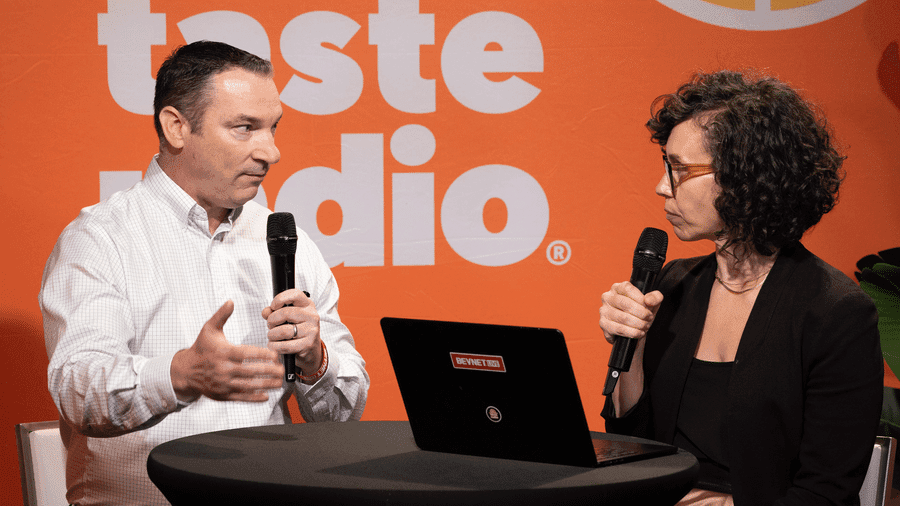
Melissa Travers [00:24] My name is Melissa Travers. I am director of community here at Bevnet CPG Media. So excited to be at Bevnet Live, and I'm so excited to be at Bevnet Live with Dan McDamas of, uh, Allen Flavors. You're the. VP of research and development, is that right?
Dan Machtemes [00:42] Yeah, thank you for having
Melissa Travers [00:43] me. It is totally our pleasure. So how has uh Bevnet Live been for you so far?
Dan Machtemes [00:48] Oh, it's great, a lot of great talks today, uh, meeting a lot of good people, uh, you know, networking is always good here at Bevnet.
Melissa Travers [00:55] And you've been to BevNET many times before.
Dan Machtemes [00:59] Yes, yes, uh, several, yeah, I've been here. We've been one of the sponsors since 25 years ago, uh, and we've been attending for the last 10 years, at least myself.
Melissa Travers [01:10] We love Allen Flavors so much and you all really are so knowledgeable about the beverage industry. Allen Flavors has evolved from a flavor company into a full service beverage R&D organization. How, how does that happen?
Dan Machtemes [01:27] So I'll, I'll go into a bit of the history of Allen Flavors. So, uh, we're a family owned company, 35+ years in the business. Uh, our first customer was, uh, a candy customer. And uh we have the purchase order on our wall to prove it and uh. That was one of our first flavor sales, and we're still, they're still one of our customers today and you'll see their candy in your Halloween trick or treat bags to, to, to this day, um, and then a couple of years after that, we, uh, put the first R uh iced tea RTD in a can, and it was processed at a brewery and then sold at bodegas in New York City. And that was the, the start of our, our beverage kits and that kind of, this was uh 19 early 90s, 9.
Melissa Travers [02:17] I would like to point out that was a very long time ago.
Dan Machtemes [02:20] Uh, that was the start of our beverage kits, which kind of separates us apart. It's more of a, a one-stop shop for Allen Flavors and our customers rather than going to, uh, Uh, another beverage, uh, development company where you're buying flavor from this flavor company, you're buying your pre-mix from there, your sweeteners from there, and all that kind of stuff. We're more of a one-stop shop. So these beverage kits, I'm going to explain what a beverage kit is. It's an all in one, everything you need except water and sugar. Uh, so there's a liquid portion which is your flavor, color, acid, uh, any juice, any high intensity sweeteners such as scralose and ACK. And then there's a dry premix, which is, let's say it's an energy drink, uh, caffeine, gluconolactone, your B vitamins, all your active ingredients, and we unitize that kit to 1000 gallons, so there's no leftover inventory at the co-packer. So you buy in increments of 1000 gallons, so 1 or 2 pails per 1000 gallons, 1 or 2 bags per 1000 gallons, and then there's enough, no leftover inventory. If you're buying the other business model where you're buying your sweetener from this company, your flavor from this company, your pre-mix from this company, you have leftover raw materials, and now you're paying money to inventory at the co-packer for your next production slot. So, um,
Melissa Travers [03:41] and I would have to believe there is, there is more harmony ingredient to ingredient to ingredient if you're selling it as a kit, right? That must be another big benefit.
Dan Machtemes [03:52] Yes, yes, yeah, and we got buying power because you don't want to buy if you're using, you only need 1 pound of uh B3 niacinamide and the minimum order quantity is 25 kg. Now you have all this excess material that you got to use up before it expires too.
Melissa Travers [04:08] So let me ask you this now that you are offering this full service offering, uh, what does it look like when a brand comes to you and they say I wanna make a hydration drink I wanna make the next energy drink, I wanna make a protein soda, you know, whatever it is they come to you and they say this is what I wanna make, then what happens? What happens from the idea to actually having a formulation?
Dan Machtemes [04:30] Oh, of course, uh, it's, it's definitely a sit down kind of like exactly what we're doing. Uh, what kind of beverage do you want? Hydration, energy, but there's more to that there. What kind of package? Uh, how are we're gonna process it? Do you have a co-packer? Because we have a strong relationships with different co-packers, so we can recommend, oh, you're gonna be in a can? Oh, here, here are some can co-packers and then, uh, a PET bottle. You can go to this, this company. Um, once we nail down what kind of beverage you wanna do, what kind of certifications do you wanna be organic? Do you, are you gonna be in the alcohol space, TTB, um. Then we go into more of more of the ingredients. What, what do you want in here? Uh, do you want, you know, this hydration drink that's on the market but more better for you and go through that the regulations where are you gonna sell it? Are you gonna sell it in the US? Are you gonna sell it in Mexico, Europe, because then there's different regulations for each, each beverage
Melissa Travers [05:27] uh so you guys help with that too? Yes. Amazing. And, and are you noticing an influx? I mean, we see so many energy drinks, of course, um, but lately I feel like I've been seeing more hydration. Obviously we're seeing more protein options. What are you guys seeing on your side?
Dan Machtemes [05:44] Same, we're protein's exploding. Uh, I mean collagen was for, you know, hair, skin and nails, and it's not a complete protein, but the GLP1 craze, everyone wants a complete protein and. Enter acidified whey protein and a lot of sparkling protein beverages, uh, we're doing a lot of development with it with that.
Melissa Travers [06:05] So let's talk about protein because everyone's talking about protein all the time. What are some of the biggest formulation challenges that brands have when they bring you this idea they. Wanna do something centered around protein. What are some of those big challenges that they have either with formulation or, you know, when it comes right down to
Dan Machtemes [06:24] manufacturing? Sure, uh, biggest one is. Um, we've brought in maybe 67 different, uh, vendors of acidified whey protein. Some are a lot cleaner than others. Um, the typical. Acidified whey protein has more of like a dairy, cheesy kind of note to it. So as a flavor company, that's a challenge, and You kind of pair the flavor system with what ingredients they, what gives you. So to, to go along with the cheesy dairy notes, vanilla, uh, creamy flavors. So think orange creams a really big flavor in that category, cherry vanilla. So think those types of flavor systems
Melissa Travers [07:06] that makes so much sense. You know, I never thought about the fact that those dairy flavors and those dairy notes, they pair well with some of the flavors we're seeing more and more of.
Dan Machtemes [07:15] And it's not just taste, it's mouth feel too. So with uh this acidified whey protein, as it gets warmer, you, you're supposed to drink it refrigerated. It's nice and smooth, good mouthfeel. Once you start getting into more room temperature, you get more of a chalky note and a film on your tongue, so. Uh, you know, marketing for the, our customers has some work to do, um, so, you know, like big brand, uh, beer has the color changing labels to drink it cold, you know, maybe some, something like that. Another challenge, not from a development, well, yeah, a co-packer. Uh, whey protein can gel, so you don't want a gel in your bottle. So when you're at a co-packer, they want to be efficient. They want to run a 4 + 1 or a 5 + 1 throw. Well, once you get to a certain concentration of whey protein, you start forming a gel. So you're gonna have, and it's gonna be a mess at the co-packer. So you might have to do a 2 + 12 + 1 throw so it doesn't gel. So there's challenges all throughout taste. Texture as well as beyond and that's kind of what service Allen Flavors brings. We don't just think about the beverage, we think about how you're gonna sell it and we want you to keep selling it and reselling it. So,
Melissa Travers [08:34] so well, if I was, you know, starting up a beverage, I would definitely want an organization like Allen Flavors in my court. When do you leave off in the brand journey? When do you say, you know, thanks so much for working with us, good luck. Like where, where, what is that point?
Dan Machtemes [08:49] We're there to. Till the end until they sell to a big, big large company. um, so like I, like we were talking before, it starts with that first initial talk and going through where you're gonna, where you're gonna sell and, you know, we, we, we wanna grow with you.
Melissa Travers [09:07] All right, here's another question for you for all the folks out there who are working on their own beverages. Where is one of the points where you see brands lose, whether it's time, money, momentum, what is that kind of stopping points that you see them kind of falter and as we all know, time is money like you really have to stay on schedule. What's, what's something that folks out there who are building brands could learn from everything that you've seen?
Dan Machtemes [09:35] Initially come in with a focus, uh. Come in with your why. Why are you launching this beverage? There's a reason why you're launching a beverage, you know, come in, talk to us, then we can help guide you. I would say 5 or 6 years ago we started a research and innovation team at Allen Flavors and that's why we brought it in to help guide some of our customers. What's so what my research and innovation team does is go out in the market, see what's what's out there is trending, bring it in, we break it down just and then they also look at new raw materials that are trending out there in the space too so we can offer tho those ideas too because when a customer comes in they're focused on this, um. So, hey, maybe this will work or what, you know, their idea might not work. So we try to rein them in before we start doing development anyway. A lot of times customers will come to us with a, a kitchen sink formula. Protein, hydration, energy, heart health. So if you wanna retail your product for 20 or 30 bucks a bottle, we kind of rein you in and kind of guide you that way. So,
Melissa Travers [10:36] well, Dan Mactamas from Allen Flavors, thank you so much for joining us here in the Taste Radio live stream studio and at Bevnet Live. How can brands and other folks in the industry get in touch with you if they need to?
Dan Machtemes [10:49] Uh, sales at Allen flavors.com or we're on, uh, Instagram or, or our website. So
Melissa Travers [10:55] Dan, thank you so much for joining us from Allen Flavors. You can head right down this way. Thank you so much.
Related Videos
The State of Cannabevs: Strategy on Deadline
With federal regulations about to put this fast-growing industry into a time-out, we look through the lens of brands, distributors, and lobbyists for potential futures for this fast-growing segment.
AI and Online Retail: Brand Building Meets Agentic Commerce
In a special tactical presentation, sales, marketing, and tech experts share a concrete playbook for making your brand legible to AI agents — without gutting what makes it human.
Retailer Profile: Launching and Maturing with Whole Foods
A rare founder–buyer conversation on what makes a pitch resonate, how brands can build productive retailer relationships, and what growth actually looks like once you’re on shelf.
Exit Interview: How Dirty Shirley Cleaned Up
Longtime beverage marketing veteran Adam Kost discusses his lean startup, proof-of-concept strategy, the key insight that gave Dirty Shirley the oxygen it needed to grow.
Disruption at Scale: A Conversation with Athletic Brewing CEO Bill Shufelt
Athletic’s rise has reshuffled the deck of beverage categories. Shufelt shares how he's navigated explosive growth and what he’s learned about raising capital, brand positioning and category creation.