Search across the BevNET CPG Media network including BevNET, Nosh, Brewbound, Taste Radio, Nombase and CPG Jobs.
Sponsored Workshop: From Idea to Shelf - Launch Your Beverage Brand Without Going Broke
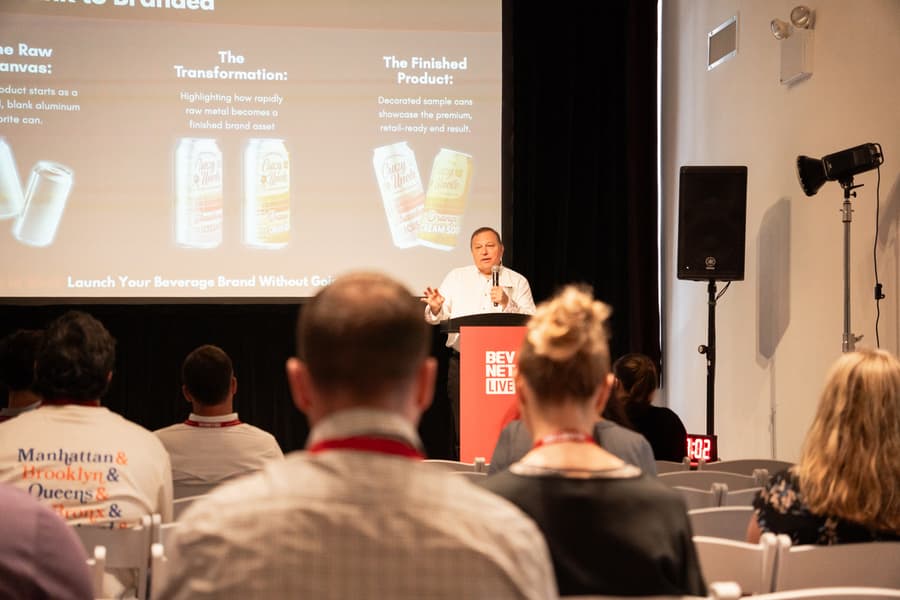
Launching a beverage brand doesn’t have to mean massive upfront costs or long timelines. This workshop explores how startups can move faster, test smarter, and reduce risk using flexible packaging strategies, small production runs, and modern go-to-market approaches to bring products from idea to shelf more efficiently.
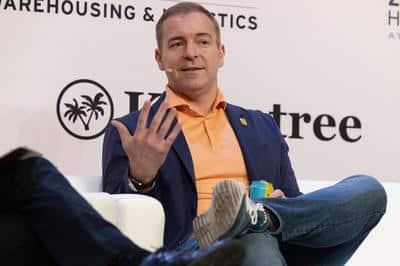
Mike Bedrosian, COO & Director of Sales, Fast Track Packaging
Transcript
Note: Transcripts are automatically generated and may contain inaccuracies and spelling errors.
Mike Pedrozian [00:27] My name's Mike Pedrozian and um I'm the COO and director of sales for a company called Fast Track. We do cans for the industry, so I'll go through our presentation on our thoughts and our experience on how to launch a brand and not going broke through that process. So we'll go through that and um we'll start off. So my background is I've been 40 years in the industry in printing and sustainable packaging with Flexible shrink sleeves and now direct to digital as well as offset. So with that, I still teach at universities, printing and printing technologies and innovation and uh This is my 3rd time speaking at um Bevnet Forums, which is the root of emerging brands and works out well that way. So, thank you again. And if there's any questions throughout the presentation, feel free to put up your hand or just um speak out and I'll address those uh questions and hopefully it's good for everybody to do that as well. So, launching a brand and it's not an easy task. So what we'll learn through this is how to launch it with MOQs. The MOQs have drastically changed from what it was 3 years ago, 5 years ago. Before you have to, you used to have to buy 5 truckloads per SKU or 1 truckload per SKU. Now with digital printing technology, you can Order 2 or 3 layers, half a skid, whatever you need, and that's important to do that because we have to print smarter, use our money wisely, don't get into large inventories and start it that way. Listen to the market and your test product and do it, but look professional in doing it with um With digitally printed cans, fill it with your product. Listen to the taste, and go out there and listen to the market. So avoiding all these large inventories, there's no need to do that now. You can grow into it and continue to grow, and yes, you'll reduce your cogs by bringing the larger inventories, but it's still. Start small, grow it, get your formulas right, your ingredients right, and continue to grow that way. While you're doing that too, you're building shelf presence. Oh, I want to tweak my can design. I wanna do this. That one really didn't work. Again, we can do that. You can do that through designs. We can print several different iterations of your can, try them in different markets. You're not stuck to one design right off the start. Oh my God, I just ordered 5 truckloads of cans and I made a mistake. Now, let's do smart, scale it sustainable, and do it that way. So, Why startups fail early. Everybody wants to be the next big Red Bull poppy ghost right off the start. They didn't do it right off the start like that. Um, with Ghost and Poppy, both of them started with us in cans. They started small, they tweaked their branding, they tweaked their formulas, they tweaked what they wanted on their can design, and then they, they built, they built, they built, and continue to do it. So, don't think about ordering that large one. Don't think about being perfect out of the gate. Build your brand. Money's hard to come by. Protect it, use it wisely, and tread lightly and do it that way. And nowadays too, instead of taking months and months to do can design and proofing and everything else, If you were to come to us and say, yeah, I have an idea for a can. This is what I'm looking to do, we can do it in days. So will we get it right? You'll probably want to tweak it later on, but then you can see what it looks like rather than, yeah, I worked with this designer overseas, this is what they said, go ahead and order 5 truckloads. You don't have to do that anymore. So why do they fail? People scale too big, too fast, too early, so. And the market. is bigger than it's ever been, continues to grow, and the whole key is There's a lot of emerging brands out there is how do you become different? And I'll say it, and I say this when I teach at universities and colleges, packaging sells, you may have the best product out there, but our packaging is what's going to get them to try it. So then they can taste your product and know that, hmm, this is one that I want to try again and try again. So, getting that. In front of the customer. I guess what I'm trying to say is don't skimp on your packaging. Take your time, do it right. Try it, listen, because the packaging is what's going to sell your brand and your product to customers off the start. And then the smartest way to launch is Test it, learn and scale. Listen to the feedback you get because it's not what you think, it's what the consumer thinks and perceives the product to be. So take your time and do it. Listen. Make those tweaks, feedback, and then scale and scale slowly. If you buy a skid or 2 or 3, great, half a truckload and then a full truckload and continue to do that. When you do that, your cogs are going to go down and your ingredients and in your packaging and everything else, you will get there. Don't worry about doing it all at the start from the very beginning. Sorry, just flipping. So here, here's a prime example of reaction learn. You're scalable, so take your concept and plan it out very carefully. Listen to people on design, do color trends, take a look at it. Too much ingredients and everything on the front. There's regulations in what you have to have on the back panels. I call it the back panels, ingredient panels, but there's certain things you have to have, but what's going to catch your eye? Yeah, you have a full 360 degrees to print on the can, but you only have that limited shelf space at the very front, and that's what's going to catch their attention. How the industry has changed, like we talked about before is The quantities have come down. There's more people in the marketplace that are doing smaller launches, and they're doing limited editions. They're doing collaborations with events, festivals, um, companies. Take your time and do it that way. You can change your cans more often. You can add flavors. You have your line, keep your brand consistent, add a flavor, add a different. Style to it. So, timeline, um, the big thing is speed to market and give you an example of what we do is when Anheuser-Busch or Molson Coors wants to launch a product, they know it's gonna take them months to get. Traditionally printed cans ready to go on the shelf. So what we do for them is we manage both. So we'll do digitally printed cans with their artwork, and they'll have them in days or weeks while they're working in the background with us on traditionally printed cans to bring their cogs down. So that way you can Speed the market, do it right, and then while you're in the background, you're working towards um getting those back. So, always listen to your customers, your distributors, and uh work with them on the feedback that you're getting. Is your test profile, uh, flavor profile proper, and you'll know from the feedback that you get. So bridging the gaps for startups, no MOQs is the biggest thing that has changed the industry to the digital side. If you're not sure, you have to do a presentation to investors or Walgreens, Walmart, Costco. You can go there with finished cans, the way it's going to look like on the store shelf with your product in it without a problem. And rapid turnaround, we say 2 to 4 weeks because the plant will kill me if I do everything in days, but really, if there's something you needed in days and you had your artwork, we can do it in days. And To run multiple SKUs is no problem. The other thing that we do, and I'll talk about it a little bit, is we can do variable print, so we can change, there's one customer that has a um uh a can of water for children. And we can move the dolphin around in every, every single can we can make different. We can do it where it's a contest. We can do it where it's a lottery, so you can change things on every single can while keeping your branding the same. Be different on the shelf. Your shelf presence is so important to get that purchase and sell through. Why Cans win? A lot of people have moved away to. Glass and PET to cans. Um, again, I'll pick on the one that I know is poppy. When we first started with Poppy, they were called mothers, and they were in a glass bottle. We converted them to cans. It's just, it's easier for transportation. There's a lot of co-packers that can fill it. There's so many benefits. It's more sustainable. It just has so many benefits to it, and it's the first impression. People like to hold a can. It's easy to dispose of and recycle. It's easier for the consumer, and that's why the trend in cans has changed drastically over the last 4 or 5 years. And this is the true story. From a blank can to your finished can, it's just, what do you want it to look like? I was talking earlier with somebody. Do you do vibrant colors? Do you do pastel colors? Do you do matte? Do you do gloss? What is the feel that you want your product to be? Is it a product that's I guess the easiest way to say it is, people don't just look. They pick up the can, they touch it, they feel it. So special effects on a can are important. Um, soft touch is important, matte's important, but maybe gloss is important because it's, it's brighter, it's bolder, so you have to know where your market is and do that, and then you can add all these special effects to the can and end up with a finished product that you're happy with, the market's happy with, and you can continue to grow with it. So, let's build something together. Everybody has a little packet there. If you want to do it now, we can do it now, but just think about this is, this is your little baby. You have a, oh sorry, there's somebody there that can um. Start with um your blank sheet, which is your blank can. And sketch out what you want it to look like. Sketch out, like, is it pitchers of fruit? Is it callouts for less sugar? Is it hydrate? Those are the things that are going to catch people's attention. So these are just tools that we use when we work with customers on coming up with different ideas. And then we can then make that into artwork for you. We can then put it on a can for you and finish that product so you can see from your act you can go right down the list and start from that blank canvas and go all the way through, sketch it out. There's all kinds of tools that can help you and help us make that can so we can print it for you and then you can. Continue your development work from there. So again, do callouts, do everything there. And then size of the can matters as well too. When I say that, it's, what market are you going after? Are you going after a single serve, you're going after um children's drinks? What are you going after? And then when you think of can size, don't also think about What you think works, it's also going to be on co-packers. Certain copackers can only fill certain sizes. Certain copackers. are located in different geographical areas, and then certain coal packers also have different equipment. Some of them are hot filled, cold filled, pasteurized. Um, so all those need to be taken into account when picking a coal packer. So if you could do that, um, that helps you greatly work through there. And again using the colors, using the tools. Because I said it over and over again, packaging sells, and just remember, you're competing against a large wide audience of individual products on shelf. How do you stand out? You want somebody to pick up your can. You want them to look at it. So just to be another me too isn't good enough anymore because there's so many different emerging brands out there. Be different. Don't be afraid to challenge that and put something out there, and it works. And again, shelf presence is important, and you can play with those, and if you want to, we can help you afterwards. If you want to send it to us later, we can take your concept, and we can have one of the artists in graphics work with you to come up with, hey, I like this design. I like pastel colors. I like something bright. Take your ideas and put them to work now. Um, it's easy to do nowadays compared to what it was. How you'd like to launch. The big thing there too is distribution is where do you want it. your product to go and how are you going to service it? Are you going to deliver to all the stores? Are you going to do e-commerce? What are you going to do and how do you manage that? Because the last thing you want is Somebody orders something, it's going to take you 3 weeks to get it there rather than start small, spread your geographical area out and work that way. It mitigates the risk and then you want to have that sell through. You want people to be confident with you and then continue to grow your distribution and work that way. OK, here's And again, just Start small, move fast, and adjust. And I can't tell you how many times, uh, and again, I'll pick on Poppy adjusted their formula, like it was, but they got it right. They didn't just say, oh, that's it, that's all we can do. They adjusted their formula, they tweaked their design, they added pastels in there, they changed their branding to make it work for everybody, and then just adjust it, repeat, listen. You, you don't have to buy truckloads of product anymore. You can do it. There's lots of co-packers that will do small, medium runs. There's lots of labs that will run pilot runs for you. I guess what I'm trying to start small and let's walk first before we run, and you will become successful because you'll listen to people. And how we can help, we have worked with Bevnet, I think, for about 10 years now. We love emerging brands. We love helping people use your suppliers, not only us, but other suppliers as a resource, because it's a large industry, but it's small, and we can help you with. Thoughts, ideas, co-packers, distribution, we can help with that along with many other suppliers. And with the way the market's changed on your no MOQs and everything, makes it a lot easier and smarter to use your money wisely and don't dump it into big runs and inventory that's not going to sell. So, let's build it together. We can help you, um, and there's packages there and if anybody needs anything, we're always available, um. We have a full customer service team, not 24/7, but almost, and uh we'll help out uh wherever you can and answer all the questions. Yes. OK, so the question was, what do you think about sleaze versus digitally printing on cancer? Great question, love it. My background started 40 plus years ago working for a company in Japan called Fuji. They're the ones who invented shrink sleeves and shrink sleeves printing. I love them. I think they're great, and um you can add a lot more texture to it, the colors pop more. There's more things you can do on a shrink sleeve. It's the perception that it's plastic. It's not really plastic. For the last 10+ years, all of ours are all biodegradable. I'll give you a prime example, um, Ghost, who we started with, uh, 89, 10 years ago. We started in the shrink sleeves with them. They added special effects. They had raised lettering. They had matte finish. They had gloss finish. They could have years ago went to traditional printed cans. They chose not to because Dan and Ryan, the owners, felt that that was part of their brand and that's why people picked up the product because It looked great, popped off the shelf, and it felt really nice, so that helped them become. The billion dollar sale that they did. I guess what I'm saying is, they're both good. Um, with shrink sleeves, they're a little bit less expensive, upfront plate costs, but your long term is there. I just love the feel of them, the look of them. I think they're great. Digital's come a long way. Digital is not quite there yet with the special effects and everything, so there's a little trade-off there, and it depends what market you're going to. If you're looking for more vibrant colors and some textures, I definitely do sleeves. Yeah. Yes, question. So when you, so the question is, what's my experience on costing between the I use 3 different ones. There's sleeves, digital printing, and then offset printing or traditional printing. Offset traditional printing is definitely less expensive. But there's a trade-off for it. It's 4 colors. The colors aren't as vibrant. You have to have what we call stayaways, so there's always that silver border around everything. There's no effects on that, but the cost is less, and you have to order by truckloads of um per SKU. Can you get there? Yes. Is that where you want to go? Depends on whether or not you believe packaging sells, and again, I'll use the ghost example. Ghosts could have saved hundreds of millions of dollars by doing it. Last year alone they bought 550 million sleeve cans. So it's, where, where's your market and where do you, are you trying to be just another me too and compete against the Cokes and Pepsis? OK, get your costs down and go that way. You want more. Uh, higher performing, uh, better brand, your shrink sleeve and your digital is the way to go. Any other questions? Digital is cheaper than sleeves, yes, because um You're not doing your plates and everything, but The offset there is, um, the ink cost right now on digital is expensive, so that's, you'll see digital pricing come down over years because there's more and more ink companies and digital presses coming into the market. So you'll see that come down. So, um, it's a little bit, they're almost in line, shrink sleeves and digital, but yeah. I'm going to say they're within. It's not worth talking about. The pricing is almost even there. Yeah Anything else? Well, if you have anything later on, we'll be here for a bit. Uh, feel free to come and talk to us. And again, thank you very much.
Related Videos
The State of Cannabevs: Strategy on Deadline
With federal regulations about to put this fast-growing industry into a time-out, we look through the lens of brands, distributors, and lobbyists for potential futures for this fast-growing segment.
AI and Online Retail: Brand Building Meets Agentic Commerce
In a special tactical presentation, sales, marketing, and tech experts share a concrete playbook for making your brand legible to AI agents — without gutting what makes it human.
Retailer Profile: Launching and Maturing with Whole Foods
A rare founder–buyer conversation on what makes a pitch resonate, how brands can build productive retailer relationships, and what growth actually looks like once you’re on shelf.
Exit Interview: How Dirty Shirley Cleaned Up
Longtime beverage marketing veteran Adam Kost discusses his lean startup, proof-of-concept strategy, the key insight that gave Dirty Shirley the oxygen it needed to grow.
Disruption at Scale: A Conversation with Athletic Brewing CEO Bill Shufelt
Athletic’s rise has reshuffled the deck of beverage categories. Shufelt shares how he's navigated explosive growth and what he’s learned about raising capital, brand positioning and category creation.