Search across the BevNET CPG Media network including BevNET, Nosh, Brewbound, Taste Radio, Nombase and CPG Jobs.
Sponsored Workshop: AI in Operations - How Leisure Hydration & Coaqua Scale with Automation
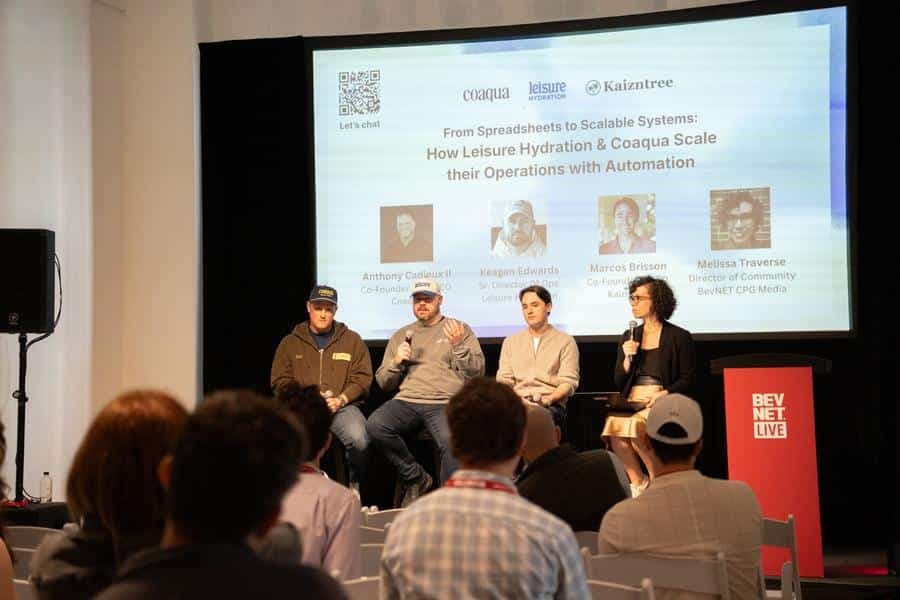
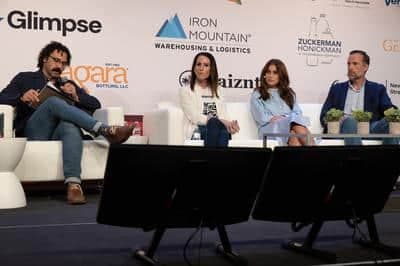
Marcos Brisson, Co-Founder & CEO , Kaizntree
Melissa Taverse, Director of Community, BevNET CPG Media
Keagen Edwards, Sr. Director of Operations, Leisure Hydration
Anthony Cadieux II, Co-Founder & Co-CEO,, Coaqua
Transcript
Note: Transcripts are automatically generated and may contain inaccuracies and spelling errors.
Speaker 1 [00:28] Hey, everybody. Thank you so much for coming to this workshop today. This is AI in Operations, How Leisure Hydration and Coaqua scale with Automation. So thank you all for joining us. We have a great conversation for you today. Um, you know, if you've been to BevNET before, you know that so much of the conversation that's happening out there on the floor is how do you run this? How do you even do this? You know, the inventory management, the order management, all sort of facets of the ops process or things that people are here to trade information on, to get information on, and that's exactly what we're here to talk about today. And today we have 3 people who are very, very deep in that process. We have Marcos Brisson, the co-founder of Kaizntree, right next to me here. That's, it's a platform that's built specifically for CPG brands who are scaling fast, and you know, Marcos didn't just build the tech platform, he's worked in consulting, helping organizations implement ERPs for a good amount of time, so he really does know what breaks, when it breaks, and how to fix it. We also have Keagen Edwards here today, senior director of operations at Leisure Hydration. That's a brand that has been growing rapidly, of course, and they are using Kaizntree's automation tools to help get ahead of the chaos. And then last but certainly not least, we have Anthony Cadieux II. He is the co-founder and co-CEO of Coaqua, a brand. It's already actually tried several, several ERPs, has had some issues, and they're now live on Kaizntree's full ERP system. So thank you all so much guys for joining this conversation. It's a pleasure to have you here. Why don't we start off with some introductions of you and your businesses so our audience can get to know you a little better. Marcos, let's start with you. Tell us a little bit about yourself and about Kaizntree.
Speaker 2 [02:30] Sure. Hi, everyone. I'm uh Marcos, co-founder and CEO of Kaizntree. And so we, so Kaizntree, what we do is we help brands scale through, through automation and so we help automate their, their end to end inventory management process. Um, And so we, we got into this first, um, as Melissa mentioned, working with brands from a consulting capacity. So we've done a lot of implementations of systems that everyone here would know, like, you know, your SI 7s, your NetSuite, uh, everything in between that. Um, and we've, you know, pretty much reached a point where, you know, we started to realize that we can't continue doing these implementations into our customers, given all the challenges that they were facing with scaling their brand. You know, they, they'd put everything into, into scaling the revenue, and then they'd have all of it unravel under ops, um, under problems that were entirely avoidable and, and largely system related. Um, and so we really just kind of went down the rabbit hole of seeing, first, you know, is, you know, can we actually build something that would be more effective than some of these lower level systems? And then now we have the full ERP solution, um, and we have a whole bunch of automations that, that can plug into other ERPs, um, and so everything on ops is, is really what we take care of. Yeah.
Speaker 1 [03:37] Thanks, Marcos. All right, next up we have Keagen. Keagen, you are the senior director of operations at Leisure Hydration, and I know we all know Leisure, but I don't know if everybody knows the story of Leisure Hydration and how you got to where you are now. So tell us a little bit about yourself and Leisure Hydration.
Speaker 3 [03:53] Yeah, absolutely. Uh, thanks, Melissa, and thanks for having me. This is great to be here. Um, yeah, Leisure Hydration, uh, better for you, uh, hydration beverage with benefits for mind and body. So if you haven't tried it, make sure you grab one on the way out. Um, in terms of the, how I came to be with Leisure Hydration in my time with the brand, uh, I spent some time in the venture capital, tech, finance world and decided that I wanted to get into something with some physical tangible products and, and, and, uh, I was lucky enough to be connected with one of the co-founders, Steve Michaelson, and, uh, as he was starting this brand, I saw the struggles that they were going through with scaling so quickly. And I decided, hey, uh, we'd love to talk about what we can do from an operations perspective, uh, coming from these, you know, more ethereal sort of, uh, tech finance side of things. And coming into the physical product world was a real eye opener for me. So it's been about 3 years that I've been with the brand. It's scaled very quickly. When I started, we were shipping to maybe 3 warehouses in 150 doors total, and now we're in over 6000 doors, which is great. We've got 50 key accounts including Whole Foods Market, Target, HEB, Ray's, King Super's. So we've scaled really quickly. Um, and I describe my time with Leisure as kind of a frog boiling process where when we were first getting started, it was all about figuring out what we needed and trying to solve problems as they came at us. And now as we scale, part of why we're here today is because we've identified where we need some help and have been able to work with a really great vendor partner to get us where we want to go.
Speaker 1 [05:27] Thanks, Keagen. All right, Anthony, certainly not last but not least, tell us a little bit about yourself in Coaqua. You were the co-CEO and co-founder.
Speaker 4 [05:36] So, uh, my name's Anthony. Um, everyone who knows me calls me Tony. I'm co-founder, co-CEO of Coaqua. We started, um, back in 2020 during COVID. My best friend, business partner went on a trip to Australia with his wife when they first met, discovered the brand in New Zealand. Um, they went over to New Zealand while they're in Australia. Um, he loved it so much. He wanted to bring it back for Caroline as a surprise, um, got it over here and I tried it like two weeks after that and It was just the most delicious coconut water I've ever had in my life. I drank a lot of coconut water playing hockey growing up because it's really good for recovery, and I didn't like the taste of it, um, you know, it kind of had a saliva taste in my opinion, and I'd actually mix it with grape juice, um, you know, I'm really, I love Diet Coke. I don't know why, but I would shake up Diet Coke, flatten it out, and mix it with coconut water. So that's kind of how I'd get it down. And when I tried Coaqua, I was like, wow, nothing like it. Um, so we kind of had the idea to start a company in America, um, started out just exclusively distributing it. And then at the end of 2024, we fully bought out the original founder, which was a New Zealand-based, um, company, and then we relaunched the brand, um, totally changed the packaging, launched six flavors, and since we've done that, it's really started to scale. So before the rebrand, we were in Sprouts, we're in stores like Wegmans. Um, since we rebranded, we got same store sales up close to 150% in some of those locations. We've added multiple new SKUs to the shelf and then from there, in addition to retail. Um, we are having a lot of success in the alternative channel like office campuses, um, bars, restaurants, and, you know, with that, Marcos and his team has really helped us out with ERP. Um, we had since 7, I don't, maybe, yeah, I can say who they are, I guess, but Um, they, they were good, um, you know, it worked, but part of the challenge was, is that there wasn't customer service. So anytime you need to add a new EDI or update it, you have to hire a fractional consultant, and that's part of what attracted me to Kaizntree is that their team, they actually worked as these implementation consultants, and you can kind of see it with the onboarding that we did a while ago is that. You know with these other ERP systems you're looking at a 6 to 9 month implementation and then you visit some of their websites and they say that 50% of those implementations fail, but the good news of that failure is that you have a better chance of succeeding the second time and our experience with Kaizntree is that it happened in 3 weeks they had all of our EDIs fully set up and It's just been really, really helpful, um, you know, selling to multiple different customers, distributors, we sell to customers direct. It's been really great to really help us with the visibility into our inventory.
Speaker 1 [08:32] Coaqua and Leisure Hydration, you know, you guys are certainly two brands that so many of the people attending this conference here today, they would love to be in your shoes as soon as possible, but we're going to talk a little bit about some of the challenges that come along with scaling that fast. Keagen, let's start with you. When you first started with Leisure Hydration, what were, what were your sort of daily responsibilities like, and what tools did you have to use to manage them? Yeah,
Speaker 3 [08:58] absolutely. So when I first started with the brand, We were at a point where we saw the scaling possibility. We understood that what was going to be asked of us from an operational perspective, both on the procurement and also manufacturing and also distribution side of things. Um, it was, it was going to be an incremental process, uh, to take on some, so much of these different asks, right? Taking on a new EDI system, like you mentioned, taking on, uh, warehouse requirements, taking on, uh, purchase orders from all sorts of different Platforms and formats. And so a lot of my first, I'd say 6 months with the brand was just drinking through the fire hose, trying to realize what are the problems that we need to uh to solve. And because I wasn't a CPG operator before, I kind of came in with a perspective of how do we do this in the most efficient way and what at, at first it was build it yourself. So The first couple of projects that we worked on from an operational perspective were implementing a lot of spreadsheets, a lot of, if you, if you're in operations, you'd spend a lot of time in spreadsheets. Um, and so we were able to kind of hack together a system that worked really well for us. And, uh, as we grew and took on more co-manufacturing capabilities, 3PL capabilities, and integrating all those systems, over the course of those next couple of years is when we realized If we wanted to get to where we knew that this brand could go, it was gonna require help from a systems perspective. Um, one thing that was unique for us was that, uh, we knew that we could do a lot of these operational tasks very quickly and efficiently. If you work in operations, you're probably pretty type A. You can do things efficiently and quickly. Um, one of the main things that Kaizntree has allowed us to do, uh, over the course of our implementation and now having it live and up and running. I allow myself, the founders, everybody on the team, but especially me on a day to day basis, I get to focus my attention more acutely to the projects or fires that I need to put out as a result of having the automation support with Kaizntree. So, uh, from a spinning up perspective, that was one of the main things that we focused on was how do we build what we need, but also identify the point at which we need some additional help and Luckily enough, we, we worked with the Kaizntree team for, I wanna say maybe 9 months or a year of, hey, let me know when you're ready, let me know when you're ready, right? And they, they were Great salespeople from a perspective of being patient with us. Um, I wanted to fully understand every little piece of what we were gonna ask this platform to do before I asked them to do it. Uh, and then as soon as we got to that point, that's when we brought them on board and so far, so good.
Speaker 1 [11:34] And was there a tipping point where you realized you needed something other than just the spreadsheets, you know, what can spreadsheets handle and what, what can't it, what, what can't they handle.
Speaker 3 [11:46] For me, I, I, it wasn't about, hey, we dropped the ball on this PO or we missed an invoice, those types of things, you know, they'll come up, this is the nature of the business, right? But It was more about potential. What, what could we be doing with this time and attention instead of manual data entry, and Meeting with the team discussing this is important for us to think about ahead of time and not when plates starts, you know, falling off the spinning. Um, that's when we were concerned is, is make sure that we're out in front of that and, and I would, uh, I would say that. Getting to know what the Kaizen Tree platform could do for us specifically and having, you know, an, an implementation that was very precise to our needs, uh, has helped a lot.
Speaker 1 [12:29] Fantastic. Uh, Anthony, Coawa has been at this a little bit longer, and you've actually had the time to use other ERPs included, I think you said since 7 DOS. Can you tell us a little bit about what that process and what the progress through the ERPs was like and how you wound up with Kaizenry?
Speaker 4 [12:50] Yeah, like the other platforms, it's a lot like being lost in an airport you've never been in before, at least that's how I felt, you know. They don't have customer service lines that you can call. You're not talking to real people usually. You got to send support tickets to get any support, and then, you know, ultimately it's the cost of the platform plus the consultant that you would need to hire to actually tie the wires together, so. The difference between that and Kaizen Tree has just been a complete 180. They answer their phone. Um, our ops team, you know, we, we think they're really good, of course, but they're very supportive. They have trainings to get everybody up to speed on how to use the software, so it's been, it's been really great.
Speaker 1 [13:38] And I think I heard a tipping point story from you guys. You guys had a $60,000 PO that, did you miss it with one of the ERPs you were using? Like what, what was the, one of the factors that helped you understand you needed something else?
Speaker 4 [13:53] Yeah, well, we didn't fully miss it, like, thank goodness, but you know it was definitely one of those deals where the PO comes in, falls through the cracks. It's going through all those emails, and we were in a lull period between ERP systems because we got sold to go to another provider that ultimately didn't work, so we were doing the spreadsheet thing. Um, you know, thank goodness, you know, from a data entry support standpoint we have good resources in the Philippines to help us out with all that, so you know that that's OK. We've got good processes. We have a good SOP manual, but when you have all those purchase orders just hitting a single email, things can fall through the cracks. So that was really the straw that broke the camel's back for me, saying like, hey, we need to get something quickly and You know, we can't be in a position where we're stressing our customers out to make deliveries, you know, at the end of the day, you know, buyers, you know, I've never been one, but I can understand you're dealing with a lot of brands and you don't want to have that brand that is late on POs that doesn't put you in a good column. So you know that's really important for us.
Speaker 1 [15:03] Marcos, you talked to brands like Leisure Hydration and Coaqua every single day. What are some of the patterns that you see across brands at these stages in terms of what they think they need for operations and what they might actually need?
Speaker 2 [15:18] Yeah, so, so we see a mix of things. A lot of it really depends on how many SKUs you have, you know, whether you're buying your own ingredients, whether you're making your products in-house or using a co-packer, and the brands that we see that are self-procuring, they definitely see more complexity at the earlier stages than brands that have a keychain agreement with their co-packer because they're only dealing with finished products. And so the interesting thing with how, you know, where we plug in is like, you know, in the case of leisure hydration here, you know, you guys are still running off of spreadsheets, right? And so our automations are just plugging into that and turning that into a live system. And in the case of Quakwell, you know, they're actually running on our ERP system, and, and a lot of it is based on kind of the, the founder preferences and also some of the business nuances. So there's no real like hard and fast rule, um, but usually we see brands that are, you know, self-manufacturing, with several SKUs start to outgrow their spreadsheets, you know, at that, you know, Pretty, I would say like, you know, at, at that around 500K mark, and then the ones that have, um that are using a co-packer, um they have several SKUs, you know, after about a million in revenues when they start to to want to like set something up. Um, also, because when you're at the early stages, you know, as Keegan said, like you want to understand. Kind of the ins and outs of your business processes before you implement anything for that matter to automate it. Um, so you kind of want to become an expert in your operations before you, you know, hire or, or automate it regardless. Um, so we, we definitely, you know, encourage people, uh, before they come to us to really kind of understand the ops, um, the ins and outs of their, of their supply chain and cause uh what we do is pretty much just, you know, give that visibility and automate those processes, but you really need to understand it intimately, uh, before coming to us, and, and we also, you know, provide some Um, some insights on the brands you work with and make, making some suggestions, you know, we used to be consultants, we don't do that anymore, but, you know, people still ask us things all the time. Um, But yeah, it's, it's a whole range of things, um, yeah.
Speaker 1 [17:13] So we have so many brands here today and tomorrow who are bootstrapping it, so they're doing everything themselves sales, marketing, ops, absolutely everything and you know, I've certainly heard a few folks saying that they're putting together their own AI systems, vibe coding. Uh, how much of that do you see?
Speaker 3 [17:32] Yeah, uh, I'm happy to put that one on, so. We have, uh, embraced the, this, uh, new wave of tools and, and capabilities that AI has presented to us. I think one of the things that when we were evaluating whether it made sense for us to make a switch to a full-fledged ERP or integrate an AI agent or an automation platform was for us to understand our own limitations about what we were going to ask any tool to do. Um, You know, I feel comfortable enough vibe coding my way through, you know, my own little dashboard that I can punch in things that I'm going to have to Google 10 times a day, but the concern that I had was what are my limitations around understanding if something goes wrong, and if you've worked with any of these AI platforms, you know, this is, especially if you're just kind of doing it on your own. It's tough to tell if something doesn't work why it's not working, and I am not an engineer, right? I'm somebody that knows how to put together a really clean spreadsheet and tie all that information together, and the concern that I have was that as we scale and my time gets pulled in all these different directions, if something on a vibe coded platform were to fail, I wouldn't understand why or how or how to fix it, and it could be. Longer than I would feel comfortable with to understand and identify that problem and then uh take advantage of how to fix it. So, in terms of trying to put something together ourselves, I know what our, my, my boundaries are, as an operator of um what I'm capable of and what I'm not capable of, and that was part of the conversation as we were going through the onboarding was to say, hey, I think I can do some of this myself and to you guys' credit, you, you, you met us where we were at, which is really important for our implementation process as to say, This is what I know works for sure and will work out in the future, more importantly, but this is what our limitations are and that cozantry has helped us bridge that gap more cleanly.
Speaker 1 [19:30] And Keegan, oh
Speaker 4 [19:31] please, yeah, I was just going to say too, so I was just in an argument maybe 3 weeks ago with my ops manager about this because she was like, because I was talking about, you know, the Kaizenry automation and you know we have the ERP and we really view that as the foundation and she's like, you know, Tony, I could I could really, you know, do all this, and she's super smart. Like she's a lean 6 Sigma black belt, um, you know, she, she told me she has like a 150 IQ. I don't, I don't know if I fully believe it, but, you know, she is, she is great, you know, she's really great. Um, you know, we, we say we got faith and we've got faith on the team, you know, so she's awesome and at the end of the day for me it was like, yeah, we could maybe have her go down the hallway and figure that out, but we're here to sell beverages and we're here to deliver things on time, you know, we're not a tech company, we're a beverage company. So at the end of the day when we're talking about vibe coding and creating our own systems, it's for what, right? You know our investors, our stakeholders, our customers, they're not going. Care how we're getting things to show up on time or what our ops are. We just need something that works. So that's a big driver of our, you know, position to pursue Kaisanry and go deeper with the relationship.
Speaker 3 [20:40] And to that point, I mean, part of how we try to set ourselves apart and how I try to set myself apart as somebody that's interfacing with these warehouses, these buyers, the suppliers that we work with is we're by nature high touch. Like if you email me, I get it, I read it, I respond as a human. Uh, and that I think is, as we were looking through some of the AI enabled solutions, I still wanted to have that level of high touch communication with the stakeholders of the brand, even as we started to scale from where we are to where we're going to be 5 years from now.
Speaker 1 [21:13] Yeah, absolutely, um, Anthony, so, uh, Coaqua is using the ERP, um, side of Kaizen Tree, and Key and Leisure Hydration is using the automation layer. Marcos, can you explain the difference between the two of those and how, how and why a brand might go from one to another?
Speaker 2 [21:34] Yes, I think, you know, I'll, I'll quickly just explain the origin of this. So we actually started. Um, when we kind of dove into the software side, we actually started as, as an organic, as a traceability system for organic certified self-manufacturing companies, um, because we went from we were, when we were consultants, we work with a lot of these, uh, a lot of these brands that would have auditors show up and say, you know, show me the trace back or the product recall of this order, right? And you have to show it like immediately or you risk losing your certifications, um. And so we started there and that kind of took us to build the full ERP platform, um, again, starting with, you know, these self-manufacturing traceability companies, um, and so that has set us up extremely well to work, um, with brands like Quaqua that are, that are, you know, using copackers, um, and, and, and other brands that are, you know, having different kinds of operations. Um, and then the other thing is, you know, what we noticed was like there's a lot of other brands that are already, um, Implemented on some ERP, right? We have a lot of NetSuite customers. There's a lot of brands using some 7 out there, you know, and, and what we saw was like we were having a lot of conversations with those companies that had the same pain points that we would solve for on our ERP side, but they just couldn't do a migration because you know very often when you set up an ERP you really never want to be changing it, you know, we're very efficient. At setting like going live with ours, but most other providers, you know, it takes, you know, it could take several years, a couple of years. I've heard of people getting stuck in 24 month implementations, right, so you really don't want to change that if it's working. And so that's where we got into the automation side where we work with brands like Van Leeuwen's ice cream. They're on a different ERP and our automations just plug into that. And so primarily what we're doing on that side is, you know, order to cache automation, which is what we're doing for Leisure, um, a lot of reporting automation and a lot of data sync, um, automation too, um, particularly on some of our larger clients, you know, they'll have An ERP set up and, and yet their entire operations team will be running on, on Google Sheets because they just hate touching NetSuite. And so we have an agent that will just sync the Google Sheet to NetSuite, right? Um, and so that's where, you know, we, as Keagen said, like we really meet brands where they are, right? If they're, you know, Kind of mid-market early stage, nothing in place yet, you know, they're looking to set up that foundation, that's where, you know, the ERP will be relevant. If they're, you know, high growth, just want to buy time quickly, um, that's where an automation will be relevant, or if they already have another ERP, that's where an automation will be relevant too. Um, so those are kind of the two spaces in which we operate. Um, and so yeah, having industry like system agnostic automation is, is we find to be very useful for companies.
Speaker 1 [24:13] So Anthony Marco Marcos was just talking about implementation. I don't know if you got a wave of PTSD or not, but um, what was implementation like with Kaizntree versus the other ERPs you would try, you had tried, and how was it to go from your current ERP to Kaizntree's?
Speaker 4 [24:31] So full disclosure, I wasn't like in the weeds on the implementation. Um, my team did that, but from what they told me it was. Very like stress-free. Um, so thank you. I mean, it's a, it's a huge thing for me when I don't have to like talk people off the ledge of pursuing, you know, going down to software further. So, you know, and I just know like when we did the other implementations like since 7 and then try to do DOS, like I was more in the weeds on that and it was super laborious. I mean tons of emails, tons of time, and I mean, I think it all just is proof in the amount of time it took. I mean, you look at since 7, which was like a 9-month process for us, and ultimately we sunset because the ongoing costs were just extreme and, you know, you guys did it in like 3 weeks. I, I was sort of like, I, I didn't even believe it when I got on the phone with him, you know, he's like, yeah, we're going to get this done in 3 weeks and all right, let's do it. And they did it. So nice job, Marcos.
Speaker 1 [25:28] Keagen, how about you? What was implementation like? Yeah, I mean,
Speaker 3 [25:31] I've, I've been through the SAS platform onboarding process in a lot of different contexts before. Uh, this is the first time that I have been the bottleneck on implementation and not the, the vendor, um, which, as anybody who's gone through this process knows, uh, sometimes you're waiting for, uh, a checkpoint, a data integration, an API key, it could be any number of things. Um, Peasantry's team has been so on it that Because of, I'm part of the reason we brought them on in the first place is because, uh, of, of the amount of different directions that I'm pulled on a day to day basis, and their team has been super patient. Uh, you guys have been, uh, again, meeting me where I'm at in terms of, hey, I will get this to you, you need for the implementation, I'll get it to you in 3 days, and then I turn around in 3 days. Um, so it, it's, I'd say 3 weeks is a reasonable timeline for anybody that, especially if you were where I was when we brought these guys on board, which was to say, OK, we're moving a million miles a minute, we're trying to get as many things done at one time as, as possible. Uh, they will not be the bottleneck on implementation. Uh, to the extent that you can dedicate your time to doing the testing and doing the, the, uh, implementation. It's gonna get done as quickly as you can expect. One thing that's also unique, uh, from that perspective of going from the sales process of a SAS platform to the implementation process, you're working with the same folks. Uh, that, that is totally unique. I mean, we, we went through the entire RFP process for various ERPs all the way from new entrants into the market to, uh, top of the class, uh, brand names, right? And what I've seen before in the process with last platform integrations is that you work with the sales team, everybody, you know, you sign the DocuSign, everybody gets excited, you shake hands. OK, great, here's your implementation manager, and you may not have talked to them at all, and you're, you're catching up. You're starting a lot of this process over. It's a lot of duplicative work, none of that with Kaizntree, so that has been a huge boon to my attention and time over the course of the last few months.
Speaker 2 [27:29] I was gonna ask, I think I wanted to ask a question to both of you. Um, I think maybe we might be getting to this later, but I think a question the audience might have is like, how, you know, how do you decide between when to like hire, so when you're expanding your operations, how do you decide when to like scale through hiring versus vibe coding versus like bringing on a vendor to automate, whether that's us or for a different part of your business, something else?
Speaker 4 [27:53] Yeah, I think. You know, you know, for us it is a tough decision because like my business partner and I, we actually own a staffing company in Asia that you know we have very good resources to bring on staff very quickly. Um, but really it's about the organization, right? You know, it's OK. We have so much going on like we added close to 2000 points of distribution in the last six months, you know, by the end of this year we'll hit like 8000 to 9000 points of distribution, so there's only so much stress you can put on the team when you're managing stuff through Google Sheets where You know, we can't have someone in our office calling up our warehouses to check what the stocks of those warehouses are on any, you know, daily basis and relying on the Friday stock report to see how much inventory we have. Like we're shipping out so much product right now that we need to know what the inventory is on a daily basis and you know that's what you guys are doing for us. I mean we actually know real-time inventory. They're paying our warehouses 3 times a day, like as soon as stuff comes out, goes in. Um, it's doing it and then, you know, with all the channels we're doing, like, you know, we have other facets of the business that we manage, different SKUs, different products that we really have to have the systems in place or it'll just cripple us.
Speaker 3 [29:08] Yeah, for us, you know, it was a decision to say, What would drive more value for the company, having a platform that could enhance my ability to deliver and execute on the things that I'm asked to do on a day to day basis, or to have like a second me, right? And I think as we're discussing as an executive team to say, this will make sense for the long term of the company, eventually, I know that I'm not going to be the only operations employee at leisure. This, there is a finite amount of time, attention, focus that you can dedicate. With that said, what we identified was that it was still valuable for us to stay lean and to stay focused and to stay efficient and again focus some of my time and attention on those high impact strategic deliverables, margin management, supplier relationship management, vendor relationship management, the things that when I need a favor, if something goes wrong, I can still pick up the phone and call this person that I've been interfacing with. Consistently on a week over week, month over month basis, and I've been in touch with that person because I haven't been spending my time manually entering purchase orders and invoices, and that is sort of an intangible value, but we've already started to see that play out where The amount of time that I was spending on some of these manual tasks, you know, I was explaining, we were talking earlier, I was saying, This was not a, we were on platform A and we switched to Kaizentree. Kaizentree integrated directly into our existing processes and enhanced them and made them more efficient and better. And I think that that has aligned very closely with our strategic scaling goals over the course of the next couple of months, maybe 1218 months. Uh, we did talk about, so the ERP platform and, and again, to their credit, you guys met us where we're at to say, What is going to deliver value for leisure right now is automating a lot of these manual tasks and data syncing, and that has freed up time and attention for us to focus on the things that matter.
Speaker 1 [31:00] This this may be a tough thing to quantify, but to follow up on Marcos's question about hiring, is there any way to help us understand how the positions maybe that Kaizen Tree is replacing or taking the place of?
Speaker 4 [31:16] Yeah, for us, you know, it's a lot of data entry, you know, it's, you know, in part it's freeing up time for our bookkeeper, right, and it's really putting our company more in a position to where it's a lot less entry and more verification, right? So instead of having people do these laborious tasks that, you know, frankly, when you go into the verification, there's a lot of issues, right? You know people fat finger things, you know, your eyes strain, you know, you're tired, you need another cup of coffee, whereas this system, it just gets it all in automatically and With these LLMs nowadays, it's just so incredible. The errors you see is just a lot less. I mean, I'm almost having to discipline myself to go back and actually make sure things are right, you know, because, um, it just seems to be right every time when you're using these systems, especially when it's just looking at simple entries like we're having to pay people to do it before.
Speaker 2 [32:14] I just want to touch on something there, like, so, so for, you know, all the automations that we do and all of the, you know, um all the things that we do on the ERP side, whenever we're syncing data, uh, we take responsibility for all of the data verification of that. Um, and so that's why we're able to achieve 100% accuracy on, you know, syncing like POs on pulling data from warehouses and all these things because you never want to be in a scenario where, where, you know, data's being like you're vibe coding some of these really mission critical things and, and there's errors in it. Um, you really just want to mitigate the, like, you know, and then this is actually a broader theme, which is usually when someone has a problem on ops, it's because they're making a decision on data that's inaccurate. And so I think at the core of Kaisan Tree, it's all about, you know, helping people make decisions on accurate data. I mean, it's also saving time is a piece of it, but, but for everyone here, like I, I would certainly encourage you to To make sure that whether you're running on spreadsheets or whatever it is that when you're doing your forecasting when you're pricing your products, to make sure that your cogs are actually accurate, we'll talk to a lot of brands that realize after the fact that their landed costs changed and they didn't update their BOM tracker on the spreadsheet and so they priced it at a price point that's not sustainable and now they already set it and so it's kind of hard to walk that back so we see that all the time we saw that a lot when we were consultants it's kind of what led us to go into the software side and yeah so on the data accuracy side we do a lot of work to make sure we keep 100% accuracy.
Speaker 3 [33:42] Yeah, and in terms of the, the role that it's looking to replace on our team, you know, like I said, you could bring in uh support, executive assistant, you could bring in somebody with an operations background. Um, what we've tried to do with Kaizen Tree is essentially teach the platform in the same order that I would teach somebody that we brought on board. So we're starting with very simple order to cash, uh, processes, PO, invoice, uh. Purchase order into the warehouse management systems. So these are things that we're not gonna throw everything at the platform all at once. And again, to you guys' credit, it's, it has been a very smooth implementation on those things that we've asked it to do. Uh, part of building that trust, like I would, I would consider myself, uh, you know, initially an AI skeptic again around, hey, I want to make sure this is 100% right. I want to verify it. And, uh, it has. Working with Kacentry has turned my opinion on that to say this is what it allows you to do, this is what it frees you up to do, and I, I still maintain that verification step to make sure, is this person that's at buyer, for example, is the buyer getting the information that they need back from me? Did, did they fat finger something? Did they enter it incorrectly on a PO? If so, I then maintain the control to give them a call, shoot them an email and say, hey, I need you to fix this as a result of a MOQ mismatch or something along those lines. So, Uh, having that tool to free up that attention and, and focus has been the most important thing for us.
Speaker 1 [35:08] Anthony, you talked a little bit about needing to remember to actually check what Kaizen Try is doing because it usually does everything right. How do you think about the manual review process? What functions do you need to go back and look at and how do you, how do you manage all of that?
Speaker 4 [35:26] Um, again, you know, it's, uh, it's something the team is definitely doing more of nowadays, but, you know, I, I do go back and audit things and, you know, to me, it's, it's really replacing the need to go back and check over work in a traditional sense. And, you know, I think it's really just that paranoia that you got to keep doing it. Um, you know, my, my, my fractional CFO is in the room right now. Um, you know, that's, that's typically, you know, your job, right, brother? Um, but, you know, from what I've been hearing, you know, the data quality and entry has just been superb, um, and to me, that's going to give our team more confidence to actually do higher velocity activities, which is pretty exciting.
Speaker 1 [36:06] How about you, Keagen?
Speaker 3 [36:09] Yeah, I I think paranoia is a great word for it, where you're like, these are the things that keep me up at night is, uh Did a due date on a PO get entered, entered correctly from purchase order, which may be from any number of formats, PDF, EDI, maybe it's in the body of an email from a buyer who was distracted and texted you from the side of the road, oh, I need a couple of pallets. Um, That, that concern of, I want to make sure it's right every time. Again, if you're an officer, probably a little perfectionist, a little type A, um, I take that verification seriously, but like I said, I mean, the ability to have that as an option and spot check and go through the processes of what automation is spitting back out at you, uh, has built confidence in the platform to say, yeah, this is, this is working how we intended to. This is allowing us to do what we want to do.
Speaker 4 [36:59] And it's critical too, like, um, you know, younger brands, you know, we were in a position one time where I was looking at some of our broadliner chargebacks and Like why are they digging me for this, and it's because we delivered one less case than the actual purchase order. So having a system like this in place gives you the confidence that when you are, you know, maybe not in a short stock position, but you know, if something gets damaged in your warehouse, you know, you're dealing with warehouses at the end of the day, right? You know they're they're just going to get it out the door, but if they say like, hey, there's 49 cases on here instead of 50 and you can let your customer know that it's not going to cost you a large percentage of the order. So like having those processes in place to where we can be more communicative is really, really essential for us to keep driving profitability.
Speaker 1 [37:51] Are there any processes that you thought needed a human touch, but now you don't really check that much anymore? And I do want to let everybody know we'll do a Q&A at the end, but if you have questions as we're talking, feel free to throw your hand up. We'd be happy to answer those while we're talking.
Speaker 3 [38:09] Yeah, I mean, it's, we're in a unique position where we trusted Kaizen Tree with this order to cash process to start, and, and I don't anticipate that's where the partnership is going to end. Um, so far, it's been confidence, like I said, building confidence to say this is what we're asking you to do. It is performing on time correctly, and it's, uh, Meeting a business need, right? Um, the first time I saw the data go from a PDF to the Kaizentree workflow to the warehouse management system and into an invoice, the light bulb kind of came on, I was like, ah, nice, I don't have to do this 1000 times a month, right? Like, you know, however many times. And it, it, it, it's uh Having the ability to say, all right, I can, the part of my brain that was spending time and focus and attention on that, I can set to rest and then put into action on the things that drive profitability and and that's really been valuable for us.
Speaker 1 [39:08] Marcos, what do you tell your partners about manual review, because I do think that's something that a lot of people have in the back of their heads. Like, what do you, what do you need to double check and what don't you? What do you tell your partners?
Speaker 2 [39:19] Yes, so depending on Um, so on, on our automation side, particularly on the order to cash side, you know, we'll set up approval steps, um, so that, you know, no POs are being necessarily invoiced that, that the brand hasn't like ticked. So, you know, all the data entry is automated and when you tick it, the invoice is sent and all the, all the triggers happen, but you know, you are the one to like approve things, um, and we. That for all the other workflows that we do. I'd say the one exception is reporting because in that case it's an internal kind of audit workflow. It's not going out to any external partners, so there doesn't really need to be as many approval steps, but certainly on the order to cash side we'll set up like human in the loop approval steps on the brand side.
Speaker 3 [40:00] I mean, I don't think I would have. As a team, I don't think we would have chosen KaizenTree if it didn't have that capability. I mean, these, these platforms that were, are selling you, hey, we're gonna take care of everything. Don't worry about it. It's gonna be just fine. If you're in operations on a day to day basis, fulfilling orders and managing the financial side of uh order to cash invoicing, the idea of handing that entire process off to a platform and assuming it's going to work out correctly is terrifying. So to have some of that. Human input and to say, OK, yes, I do trust that it works, trust but verify, trust but verify.
Speaker 2 [40:35] And the other thing there is like, you know, when we're doing this order to cash process, whenever orders come in that are, you know, below MOQ or don't meet requirements, or an order comes in that doesn't match anything and maybe isn't scanned or processed correctly, all that triggers like immediate notifications to to our to the brand side so that you know in our system we're not making any decisions or assumptions for anyone that we work with and so that's where we're able to really give full transparency and so that's where it's like, hey Keegan, you know this order had Didn't get scanned or it was below MOQ. Like I got
Speaker 3 [41:06] a great example for you. So just had a PO come in the other day. We had a food service PO that was outside of MOQ or increment requirements, but there was a reason for it. And for the system to flag and say, hey, this is outside of your normal expectations. You set these parameters. It worked properly. The system did its job. It told us what it needed to do. But I knew that there was a sales business function reason why that was out of spec. And for me to just say, hey, calm down, guys and Tree. Don't worry about it. This is, let's go ahead and let's let this one through, click the box, off it went into the warehouse management system. Everybody was happy.
Speaker 2 [41:40] Yeah, that's like a critical step, uh, for anything, yeah, absolutely. And,
Speaker 3 [41:44] and again, 99% of the time, you're, you're just, you know, third base coach waving him around, but every once in a while, you gotta throw up that stop sign and say, hey, wait, hang on, there's a reason why this is not matching with the parameters that I gave you.
Speaker 1 [41:57] Keegan, you said something when we were getting ready to have this conversation that is just sticking in my head. It's, it was that inventory and forecasting is the first thing you think about when you wake up in the morning and the last thing you think about before you go to bed at night. Is that? Is that still true? Yeah,
Speaker 3 [42:10] I mean, uh, the number one thing for a brand that's scaling at the rate that we are is don't go out of stock. Don't go out of stock. Uh, you know, uh, I'm sure some of the sales and marketing team will say, yeah, let's create some FOMO. Let's create some hype. No, if somebody sends me an order, I want that product to get there on time. And I, I take that responsibility very seriously, and the integration, the platform that Kaizen Tree has allowed us to enhance our business process to make sure that remains the case, uh, has, has helped me sleep a little better. So,
Speaker 1 [42:40] and it's probably allowed you to work on higher value projects and, you know, it
Speaker 3 [42:48] it solved questions again, like the long term strategic operational side of the business around margin management. Uh, dealing with suppliers, RFPing out for co-manufacturers and 3PLs. These are the high-touch project type work that I, because I'm no longer spending 20% of my time manually entering purchase orders and invoice data, uh, that is, that it's freed that up. And again, I, I would mention that it's not just about the time. Like you're, you're, you're an operator, you're efficient, you can do things quickly. It's more about the attention and the focus. You have more of a capacity to deeply think through these problems that you're faced with as an operator when you're not spending so much time on things that can be automated.
Speaker 1 [43:31] Anthea, I know you wear so many different hats. What has this allowed you to focus on and spend more time figuring out with your brand?
Speaker 4 [43:41] The, the, the big thing is just having less problems, right? Like I'm kind of the problem solver on the team and it it doesn't matter what it is, but they tap me in. Um, so, you know, just more focused on, you know, customer management. Um, you know, I'm still in the weeds on the forecasting. Um, you know, unfortunately, at least maybe someone could tell me differently. It doesn't seem like there's a huge science to it when you're adding a lot of doors. It's very qualitative and you kind of just have to. It's like, hey, we're adding this distribution and you got to place more orders, but having the visibility of what's in our warehouses at any given time, um, you know, being able to see those purchase orders come through on a live basis and you know, if you add a customer that comes in and takes like 25 pallets from you, you say, OK, I got to place another order with my factory. So, it's been really good to just have like more information at my fingertips to make decisions faster.
Speaker 3 [44:36] Yeah, it just reminded me of something as well as it's not just about, oh I have all this attention to focus to spend on project-based work. You also have more time to spend with your team, right? The amount of times that I've had to throw up my hands and tell sales, marketing, executive team, hey, guys, leave me alone. I have 10 amount of POs to process, 10 amount of invoices to send. I'll get back to you in some amount of time. Those conversations, which as somebody that wants to do everything all at once, they're the least fun conversations to have. These people need information from me and I want to be there to give it to them.
Speaker 1 [45:09] Marcos, I'm sure you've seen this many times. What is the downstream effect you've seen from the partners that you work with when a brand, especially a fast-growing brand, takes on an op system that really does work?
Speaker 2 [45:24] I think, um, I think to Tony's point, a lot of it is about avoiding problems that would otherwise slow you down. So I think for, you know, being in a position where you're able to operate as a very lean and highly efficient team, you know, it is, it is certainly a competitive advantage, um, to be able to stay on top of like fewer stock outs and to just have, you know, all, all the information about your ops at your fingertips, you can make quicker decisions, you can pivot in different ways as needed, um. And so I would say, yeah, downstream effects are certainly just like fewer problems that distract you or take away from, from fulfilling orders. And then to Keagen's point, you know, absolutely, it, it, it is certainly, you know, as much as it, as, as it saves time, it's also about freeing up your mental space to focus on other things, um, and, and to really focus on, you know, the forecasting piece of it or, or other things that, that are more like high level instead of just being in the weeds of moving data across systems or trying to chase, you know, Uh, like inventory levels of different warehouses, which is things that, you know, you know, from a competitors standpoint, you know, if you're competing against brands that are doing that, great, you know, they're going to be a lot less capital efficient than you will if you're able to run with a super lean team.
Speaker 1 [46:29] And what's one of the biggest hesitations brands have when they're considering working with you? Is it that trust issue? What do I need to review? What is it?
Speaker 2 [46:37] I think for us, you know, on the ERP side, it's really a space, mostly with legacy systems, um, so, you know, we certainly run up. Against, you know, all the ones that, that were mentioned here before. Um, and so oftentimes it's kind of that push and pull between do we go stick with something that, that we're, that, you know, our, our talents, some of our partners are familiar with, or do we go towards something that, that is a newer system. Um, and so certainly at the beginning, that was on our side, one of the bigger challenges, but, but now we're, we're in a position where we're fortunate enough to work with, you know, I'd say industry leading brands and every single CPG or like food and beverage vertical. Um, and so that trust factor is certainly there. um, but at the beginning, that was, you know, for sure, a challenge, um, on the automation side, it's, um, Yeah, we don't face a lot of, it's more a timing thing, you know, like to Keagen's point, it's really about, you know, OK, we know we want to do this, we know we're going to have, we know we're scaling and this is going to have to either be hired or automated or vibe coded, so I think sometimes brands want to figure out what's the actual spec of what they want to automate and then and then just figure out you know when is the right time to set that in. Place, um, so as Keagen mentioned, we've, you know, we've known each other for some time and, you know, it's kind of this back and forth between when, you know, we were patient on both sides here, um, but yeah, certainly a lot of our customers, you know, we'll chat to them and then when the timing's right, you know, they'll come around and say, hey, look, you know, our order to cash is now becoming a problem because we're scaling into all these new, new accounts and so, you know, let's, let's kick off that. Um, and yeah, on the ERP side, it's certainly that, you know, push and pull between familiarity and something new, but, but at this point, you know, I think. all the brands you work with see that, you know, this is a platform that, you know, we're very, we're working very closely with all of our, with all of our brands.
Speaker 1 [48:21] Well, Marcos, when we were getting ready to have this conversation, you were talking about how these are two brands that you've admired for so long and, uh, you know, now you get to work directly with them, which I think is great. Uh, I just wanna hear a few closing words from each brand. Tell us what's coming up next, what are we gonna see in the headlines of BevNET in the next year or so. Anthony, do you wanna take that one first?
Speaker 4 [48:44] Yes, um, I'm not going to tell you guys. Um, we don't release information until we're on the shelf, um, but yeah, we got some big authorizations coming, um, which is really exciting. Brand has been on fire, um, you know, same store sales continue to grow, so, you know, praise God. Um, you know, I, I got a great wife at home who supports me, um, and yeah, it's kind of cool because my wife is actually the operations director for a pretty large accounting firm, and She is really good at Microsoft Excel. So anytime I have any questions, she helps me. Um, so that's great. And then I will say one thing, Marcos, um, because I was thinking about like what the system's really done for the team is it's increased morale, right? Like I feel like the morale of the ops team is just way better. I mean, I had to get on a plane and fly to the Philippines last year and take everybody out to a buffet, um, just pump everyone up, you know, so. Um, that to me has been huge, right, like having that confidence that the team is less stressed out and spending less of their time actually doing all this data entry stuff and things are just happening more automatically. So thank you, really appreciate it.
Speaker 3 [49:54] Yeah, on the leisure side, uh, we're in the process of, a lot of innovation. Uh, this, over the course of the last 6 months, we launched our first new SKU since I've been with the business, this strawberry here in front of me, uh, which as an operator threw a lot of different curveballs and challenges, sourcing, manufacturing, uh, but again, having the, the time and the attention to free up, uh, to focus on that has been great. So again, kudos to Kaizntree. Yeah, I'm with Tony on that in terms of, uh, stay tuned in terms of the growth and the, uh the next things that are coming up, but, uh, no, we're, we're on a great path right now. I think we are a very balanced team, uh, and, and I'm able to deliver from an operations perspective when we get into those team meetings to say, how are things going on sales? We're adding a lot of new doors, how are things going on marketing? We're adding a lot of new content, a lot of new partnerships, a lot of new Uh, facings, influencer partnerships, these are the types of things that when I come to the table, I say, guess what guys, I didn't spend 8 hours typing in numbers onto POs and invoices. They say, Great, what'd you do with those 8 hours? And I can come back with, Hey, I built this new report. You know, the types of things that I'm able to come to the table with were directly enabled by Kaizntree's support. So yeah, it's been great to be here and I appreciate everything that you guys doing on our side. So stay tuned on the leisure front.
Speaker 1 [51:08] Very exciting, Marcos. What's, uh, coming up for Kaizntree, and what are some final words you'd like to leave our audience with?
Speaker 2 [51:14] Yeah, I mean, I think, um, well, I mean, today we're doing a dinner tonight, so feel free to come chat later if, if you're interested to come join that. I think we're at capacity, but we can probably squeeze in a few more people, and, um, we'll be at, you know, fancy food show later this month. We'll be at a whole bunch more of these things and Yeah, you know, for us, it's really, we spend most of our time and attention on working with, with our, with the customers, with the brands that we work with, and so, you know, that's certainly the core focus that we have as a business is just to continue delivering as much value to our brand partners as possible, um, and that's really how We grow, you know, we get great referrals. That's the bulk of our business. We're starting to do more of these things, but I think you should see us pop up in a lot more places now. And yes, certainly it was a pleasure to be here today.
Speaker 3 [51:59] If you're considering Kaizntree, feel free to email me directly. Come up and talk to me after the show. I'll give you the full rundown.
Speaker 1 [52:05] Well, thanks guys. Do we have any questions from out there in the audience at all? You can also just, oh yes. city. So was the question, when is it beneficial to start using the system, especially as an early-stage company?
Speaker 2 [52:29] Yeah,
Speaker 4 [52:32] I, I think earlier the better, um, you know, and I think for the cost that these guys put out there, having those systems in place before you really start to grow, you're going to save yourself a lot of headaches, so. You know, if you're confident in your business, and I'm sure you are, that's the way to be, right? I would just get it done and out of the way, and then when you actually start really scaling, you won't have to worry about it.
Speaker 3 [52:55] Yeah, and if you're early stage and you can see the value of what even just the automation agent can do for you. Get on board. Like this is the time to do it when you're not distracted with a million other things.
Speaker 1 [53:08] Anybody else? Well, you can certainly, uh, come and chat with these folks afterwards. We'll stick around a little bit. Thank you all so much for joining our workshop and thank you so much to our three guests. It was such a pleasure to have you here. Thanks.
Related Videos
The State of Cannabevs: Strategy on Deadline
With federal regulations about to put this fast-growing industry into a time-out, we look through the lens of brands, distributors, and lobbyists for potential futures for this fast-growing segment.
AI and Online Retail: Brand Building Meets Agentic Commerce
In a special tactical presentation, sales, marketing, and tech experts share a concrete playbook for making your brand legible to AI agents — without gutting what makes it human.
Retailer Profile: Launching and Maturing with Whole Foods
A rare founder–buyer conversation on what makes a pitch resonate, how brands can build productive retailer relationships, and what growth actually looks like once you’re on shelf.
Exit Interview: How Dirty Shirley Cleaned Up
Longtime beverage marketing veteran Adam Kost discusses his lean startup, proof-of-concept strategy, the key insight that gave Dirty Shirley the oxygen it needed to grow.
Disruption at Scale: A Conversation with Athletic Brewing CEO Bill Shufelt
Athletic’s rise has reshuffled the deck of beverage categories. Shufelt shares how he's navigated explosive growth and what he’s learned about raising capital, brand positioning and category creation.