Search across the BevNET CPG Media network including BevNET, Nosh, Brewbound, Taste Radio, Nombase and CPG Jobs.
Retailer Profile: Walmart and the Next Generation
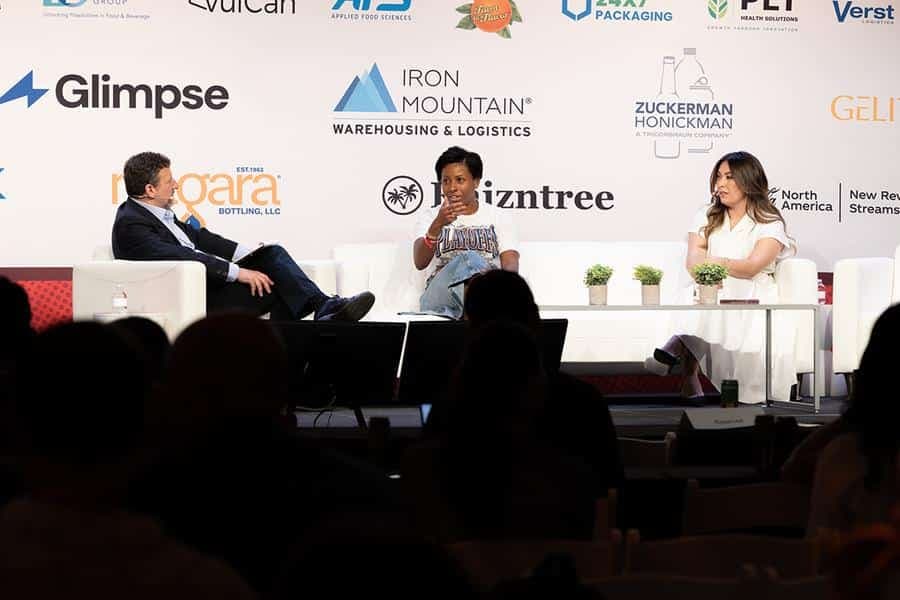
How is the world's largest grocer adjusting to meet the next generation of world-changing beverage brands?
Speakers:
Dee Charlemagne, Senior Director, Emerging Brands, WalmartLesley Osorio, Senior Merchant, Walmart
Transcript
Note: Transcripts are automatically generated and may contain inaccuracies and spelling errors.
Speaker 1 [00:28] Walmart has been something of a two-edged sword. It is an incredible scale opportunity, but you also have to really honestly assess what your brand is capable of and what its resources are. Now, there is something new under the uh the Bentonville roof, and that's an approach that we think has some promise because it's designed to give founders a little bit more of an advocate and a Sherpa on the inside. Um, with someone who's come from their ranks. So we're gonna hear about the emerging brand program and in and in turn the way that beverage buyers are looking at innovation. And ultimately how emerging beverage brands like you can judge your opportunities with Walmart with De Charlemagne, who's the senior director of emerging brand partnerships. And Leslie Osorio, a senior beverage category merchant at Walmart, please give them a very warm welcome. Thank you so much for coming. Everyone is really thrilled to hear from you. They're, they're thrilled to understand how you're closing the chasm for brands. Um, so tell us about the, tell us about your role as senior director of emerging brand partnerships.
Dee Charlemagne [02:15] Yeah, my name is Dee Charlemagne. I'm senior director of emerging brands. I actually was a beverage founder, uh, so I've worked with some people in the crowd. Uh, I had a beverage business called Avec from 2020 to 2023. Uh, started freelancing for Walmart and marketing, uh, really thinking about changing the perception of Walmart. I'm a native New Yorker, obviously Knick's, let's go, uh, but Yeah, we give a round of applause for that. Uh, see you all tonight. But, uh, really did not have a relationship with Walmart growing up. And so my job before was really changing the perception of Walmart and putting Walmart into culture. And because of my founder background, my marketing background, and an MBA. This new team is really built to help emerging brands grow at Walmart. Obviously you have a great merchant relationship, but there are many aspects that you need to figure out whether that's marketing, whether that's marketplace, whether that's just having an ear at Walmart. And so that's what this team is really here to do, is to discover brands early, really help them grow at Walmart, and do things like this where we get to humanize Walmart a little bit.
Speaker 1 [03:21] Is there a specific aspect of your experience running avec that you're really, uh, that's really affecting the way you approach your work with Walmart?
Dee Charlemagne [03:33] Yeah, we were talking about this backstage. I mean, I, I think most merchants and most investors who are the people I'm trying to influence have not built a beverage company, right? Like I've been in Harlem where my apartment was and have Yuzuju show up that's supposed to be at my co-packer in Vermont, right? I've had onboarding struggles at other retailers. So I kind of come with that founder empathy a bit more, uh, and that's what I'm trying to infuse in all of our processes. It's a beautiful process and we're super excited to help brands grow, but really thinking about that human
Speaker 1 [04:05] touch. How far is empathy going in Bentonville right now?
Dee Charlemagne [04:11] Well, I haven't moved to Bentonville yet, but I feel like still, still here rooting for the Knicks, um. How far does empathy go in Bentonville? I mean, we're, we're a people-led company. Like I actually truly feel that our merchants, the save money, live better mantra is like truly strong in our culture. If you just think about the scale of Walmart, like, and have a moment to take it in, it's why I stayed, right? You're able to impact what everyday Americans are doing. I think a lot of us sit in New York and have empathy for the coast, but maybe not empathy for everyone, kind of in between. And so it's really great to get that scale and have impact that way.
Speaker 1 [04:48] Lesley, tell us a little bit about how you and Walmart think about the beverage category right now.
Speaker 3 [04:55] How we think about, sorry, the beverage,
Speaker 1 [04:57] the beverage overall.
Speaker 3 [04:59] So, hi everyone. Uh, Leslie Osorio been with Walmart for 14 years. Um, so I have some experience working for Walmart, um, just a little, just a little. I started as a cashier and kind of kind of worked my way up into buying now um. Zero intentions to ever be in buying. I had no idea what it was, and it just kinda led me to, this is where my career has led me. So, how are we thinking about overall beverage? It's the beverage industry right now, it is just fascinating. I mean, there are so many changes. We see it every day with new functions being added to beverages, different benefits, and so, the way we think about Overall beverage is always starting with the customer. So what is the customer telling us? What do they want? And then from there we start building the strategy of what that category needs to look like.
Speaker 1 [05:59] Do you see the company's role changing with regard to uh merging brands? So say from being a retailer to more of a growth platform.
Speaker 3 [06:10] I, yes. Um, Walmart has always had a focus and emphasis on supplier partnership and emerging brands, but I would say throughout my career, I've definitely seen Walmart be more intentional of working with these emerging brands, so much so that we have, um, events like Made in America, right? And once you're part of that program, we have processes and frameworks in place to help these brands succeed at Walmart. And so I will say Walmart has definitely invested in helping these brands, um, really succeed at Walmart.
Speaker 1 [06:48] Now you've been on both sides of the desk, um. What knowing that Walmart is trying, yeah, right, where is the the biggest disconnect that that can be bridged.
Dee Charlemagne [07:04] Yeah, I mean, I think it's moments like this. It's understanding that Walmart is truly a human-led company. I think we live in a world of technology and more AI, and yes, we're automating many things at Walmart, but I think my favorite part of working at Walmart is the people I get to meet and the passion that they have for all kinds of crazy things. My favorite story is the fish merchant who gets to source salmon essentially for everyone. That's an insane. Story. I think founders just think of Walmart as like a PO system, right, of like, let's really grow our PO and get the receipts, but are you looking at Walmart in totality and are you up to speed with everything that's happening, right? So, A majority of America lives within 10 miles of a Walmart. I moved to Jersey City like a year and a half ago, and Walmart delivery has changed my life. I can order from this stage like pasta sauce, my prescription, a Pilates ball, and workout shorts, and it's at my door before I'm on the path on the way home, right? So really thinking about the way Walmart's innovating and not thinking about Walmart, maybe the Walmart you knew or maybe the Walmart you don't know. Um, our whole marketing campaign is right now is Walmart, who knew, and so trying to, trying to keep people on their toes about Walmart. Like we still have surprises. It's not necessarily changing the narrative. It's just we're more innovative than most people know
Speaker 1 [08:25] now in terms of supporting suppliers, um, what, what, what does it actually mean for Walmart to start reaching out more? I, I mean. Aside from coming to this, like, are there programs internally? What, what is the work that you're doing?
Dee Charlemagne [08:42] Yeah, so I'll do a PSA to start out with, which is open call. If you're made in the USA, our applications are open. Uh, consider it like Willy Wonka meets American-made products. You get to come to Bentonville. You get to pitch. By the way, Bentonville is on the New York Times must travel list this year, as well as Conde Nash Traveler. So, uh, when I moved,
Speaker 1 [09:04] Jeff Kleinman's super fascinated by Bentonville
Dee Charlemagne [09:09] list. Yeah, so I, I think that the place where it is, is starting to have the energy of what the company town is, but. Uh, generally, I would say supporting brands like the fact that this role exists, right? This is a role that was pitched internally that is being made, the fact that a team is being built to support that. So we're looking at things like our onboarding process, right? Back to that founder empathy. We were talking backstage, like, as a founder, sometimes you don't have an onboarding team, you don't have a broker. How do we make that easier, more intuitive? How do we use technology to do that? So things like onboarding, things like helping people understand what it takes to scale. I think a lot of founders again think PO in 180 days, but don't think 5 year plan, right? So how can I network you with other founders that know this? or how do I educate your investors about what you might need to scale? So really building it out, no formal, formal programs I can announce yet. I'm what, 4 months in. But we are working on it and thinking about that full founder journey in a different way.
Speaker 1 [10:07] But I think about things like Walmart's purchase order landing um program where. A lot of brands might not even know about that when they're going into, you know, their first few accounts. If Walmart is one of those first few accounts, knowing that that's available, knowing that at that scale, you, you know, you can, you can find that internally is really a benefit, and I don't know how well it's made that clear in the past.
Dee Charlemagne [10:41] I mean, I think that narrative again, thinking about it, thinking about our supplier site, thinking about how other founders communicate with other founders, it's not just on us, you guys all talk, um, and so yeah, that's, that's what we're working on.
Speaker 1 [10:54] Um, any other specific areas?
Dee Charlemagne [10:57] Like what,
Speaker 1 [10:59] um, well, you know, if, uh, beyond new pathways to market, uh, any other areas of, of internal support,
Dee Charlemagne [11:08] uh, we're looking at marketing, we're looking at marketplace, we're looking at fulfillment, like I said, end to end founder journey. Like when I go back to my computer, I'm like, OK, here's the founder journey A, B, C, D. Here's how we're educating our merchants about what that journey looks like and also how are we educating founders to know if you're ready for Walmart. Like there's still an element of Not just napkins to shelf, uh, I don't think we're, we're promoting that. Like there's still an element of like operations, customer clarity, things that you need to figure out before you're scaling that and learning at the same time. Yeah,
Speaker 1 [11:41] no, that, and that's important. And then do you outline the areas where Walmart can help on that or where it's sort of like you gotta do that on your own, come back?
Dee Charlemagne [11:50] Yeah, we have. I mean, a lot of our programs are from some founders in this room who I won't mention. Speaking directly, like doing listening sessions with our leadership team, and so we're listening and learning and growing, um, and I think the way emerging brands are growing is also changing because the way people are shopping is changing and so we kind of have to adapt to that too.
Speaker 1 [12:10] Absolutely. So one of the things that's been really a big support, I think, for at least a couple of the really hot categories in beverage are modern soda and modern tea. A lot of folks here are talking about that. Um, what kind of customer problem are those sets designed to solve?
Speaker 3 [12:32] So I think, I mean, there are a lot of experts here in the audience. Um, we, I mean, we know that customers are wanting better for you products and so when this trend came up, um, I'm gonna speak a little bit more on like the merchandizing and strategy side of it, right, and how we want to align to the market. So we definitely saw that modern tea and modern soda were taking care of this customer solution. Um, and as you all know, space is really tight in the aisle, right? And so the leader at that time of Total Beverage had to make a tough decision of where do we make space for this. And so the way Walmart leaned in was they essentially scrapped an entire category that was already matured. and had productivity and they invested and said we're gonna give this entire section to what we're gonna call modern soda, right? And so, that, I, I, I think like the learnings of, again, staying customer-focused, we knew that that was something that was emerging and was trending, and Walmart leaned in. Um, and it's something that we're always continuing to do. It might not always be a 4-foot, eight-foot, whatever section. Um, but we're always looking for ways of how do we stay on top of trends. The other thing too is, um, and you'll see it across different categories, they create new and emerging, um, aisles, right? So you'll see it in Um, global foods or, uh, when gluten-free became a thing, right? It first started off as a section, but as the productivity became improved and the brands matured, they've now start including them in the bigger aisle. So, I think the way we merchants are thinking about these brands is we want to make sure they don't get lost on the shelf. Um, the other thing to think about is, don't just think about getting placement on the shelf, but how can I grow my business online. Um, we know that a lot of these brands do start online with other retailers and so that Uh, structure framework is so probably already built on your end, so it's a very easy copy paste. Let's add these items online, um, and so that's kind of what we think about when we, uh, when we think about these trending brands. So it's like how are they doing online? How do we make sure we also as a retailer make them succeed in store?
Speaker 1 [14:56] Yeah, and it's, I think one of the remarkable things I've, I've found when, when looking at how these sets get put together is y'all are much More capable of putting them together quickly now like the data makes it apparent where you wanna go and then you can start recruiting for them,
Speaker 3 [15:15] right, right, I mean. I love that you said quickly because I feel like internally sometimes we do move very, very slow. I mean, it's a, a really big company, so doing one small change usually will take many teams to sign off on something, but we do try our very best to make sure we stay on trends and we're on, we're on top of it and just. Making sure again customer focus. If the customer is telling us they want something off of the data, we try, we go and build strategies to make sure that we're winning there.
Speaker 1 [15:46] Is there a time limit for how long something can be modern soda like, will there be a,
Speaker 3 [15:52] I don't know. That's a great question.
Speaker 1 [15:54] I would like, I would like a postmodern soda. Um, For founders in the room, uh, what should they understand about the way that Walmart evaluates innovation for those new structures?
Speaker 3 [16:11] I can, I can take this one. So, for the founders in the room, um, I think Jeff, you started off the meeting with, oh, Walmart, you know, kind of, um, what's been thrown around and I just, I just want to share that. The way we merchants think about it, again, I, I feel like I'm like a record tape, but it's customer first. Does your product solve for a customer need? The other thing that we talk about all the time is experience. Trust price, right? So not only does it solve for a customer need, but are you delivering on the value? Are you, is there anything about experience and does that help build that trust with the customer? So make sure that when um. You meet with Walmart, if you ever meet with Walmart, that the product delivers on all those four things. The other thing too, to kind of call out is no one's perfect. We're not perfect. We don't expect you guys to be perfect. I think what we expect is just accountability and partnership, and I just want. I wanted to reemphasize that is that if you guys ever do see, and you may ask this later down, I'm going off script, you may ask this later, but um, is when we have it when we work with emerging brands and founders. Again, we're not expecting for perfection, but we do expect accountability. So for instance, if you guys see there's an issue, address the issue, communicate clearly and share some solutions with the Walmart merchant. It's not all about your items selling like the Coke and Pepsis of the world, but it's a whole 360 of how do we make sure we're great partners and we can truly take this brand from being this size to X size.
Dee Charlemagne [18:05] Yeah, I would say the other thing as a founder who has pitched other retailers, like, know your data. And when I say data, don't just say like, protein is growing, fiber is growing. I'm like, but why yours? What do you know about your customer, right? Like where are they? What are they? Like, have you spoken to one recently? Like, don't just say, oh, my, my broker is doing that. Like, really know your business, uh, really know your customer because I think the best meetings I've sat in is where a founder is actually educating a merchant about something new in their category that they might not know because they're not, you know, at the co-packers all day and in the category all day. And so I think if you have a unique piece of data or unique insight into your customer, it's more helpful than kind of sticking with these very broad. Trends, um, I feel like people really focus on like, I have fiber, I have protein, here's the product, like think about the human story behind it.
Speaker 1 [18:56] Now that, that's an interesting point, and I guess that, you know, at what scale is that kind of insight really effective when you're moving into Walmart? I, I mean, is it something that you've proven out in a couple of channels, or is it something that you've proven out in one region? I, I mean, I guess in your experience. There are different, uh, sort of definitions of, of emerging brand, right? So what's the right scale for an emerging brand to make that step into Walmart? Yeah,
Dee Charlemagne [19:34] I mean, maybe I'm a jaded founder, so I'm gonna speak from, the founder perspective, but I think beverage is, you need capital or you need some sort of competitive mode to compete, right? So, and beverage particularly, I'm like, what is your infrastructure? Because yes, you can communicate with the merchants, but for you to grow sustainably, like, what does that look like, right? Like I, I kind of stopped my beverage business, pre-printed cans, right? And I was like, man, if we could have gotten them printed cans, maybe the price would have changed. But like, think about all those conversations and not just getting that first PO like I said, but like all the different steps that you need to take to grow this, whether that's marketing, whether that's like. Having someone just go touch your cans once a week, uh, really thinking about all the levers you need to pull to stand out on the shelf, like the merchant can only do so much to help you stand out. You can't get 50 secondary placements all the time. There's many brands,
Speaker 3 [20:25] so yeah, I agree. If I can add on to that is the supply chain. I mean, the amount of times I've met with founders and, and. Sales people of this brand does this, it hits on all these metrics. Awesome, great, let's add them to stores and once we get into stores, they weren't clear about their capabilities, their capacity, and so sometimes we grow them too fast and then the brand fails and it's like, well, maybe we were in too many stores, but always communicate. that to your merchant. And one thing that we are very clear from day one is you don't have to be in all 4000 stores. I mean, great, but you don't have to. If we need to do 200 stores, like that's, that's the beauty of Walmart and we can be very region-specific, that if we want to start small and then start expanding, we're happy to do that. Um, so, and I, and I just wanted to share that because I know a lot of times emerging brands don't want to talk to Walmart because they're afraid of the big store count, but happy to have that conversation because again, we can start small and then from there expand, but always make sure your, your, your sales pitch could be amazing, but we gotta make sure that we have the infrastructure like De said to make sure you're ready to grow. Um, so we need the inventory in stores. That's how we sell.
Speaker 1 [21:47] You can't get caught between in a cash flow cycle where the money's not coming back or where the, where the cans aren't coming back into the store. Is that the biggest place brands trip up is not having that manufacture the, the cash to support the manufacturing cycle, or?
Dee Charlemagne [22:05] I don't think it's necessarily the biggest place. It's one of the places, but I think there are many other, like again, understanding the full infrastructure of what it takes to grow a business when to your point on emerging brands like what is emerging, right, you have some proof of repeatability, right? Like I see Walmart as a A nice in-between discovery and routine product, right? People are coming to us week on week. And so I love brands where I can be like, wow, this is going to become part of the American routine, right? What is a postmodern soda? I don't know yet because I don't know what the American routine looks like in 5 years, right? Um, and so I really think about some of these products. I just want to be a flash in the pan and like get the VC dollar now and then not think about how they're integrating into a customer's life 5 years from now.
Speaker 1 [22:51] Absolutely. So. A lot of brands in the audience. What's one thing that they should start doing tomorrow? If they really want to maximize their chance of success in Walmart down the road.
Dee Charlemagne [23:05] I mean, we said customer like 2000 times, probably. But I would say, understand your customer data and know where your demand's going to come from. Like if you physically need to talk to your like most beverage founders are like, what did you do? I'm like, I literally talked to everyone who wasn't my mom who bought a can, and I looked at every piece of data because that's gonna help a Leslie figure out what stores you should be in out of the 4600. Don't just say, Oh, I'm like regional in this area. It's like, no, I want to be in these, like some founders come in like, Here's my store list. You validate it, right? And I think that's a very strong. You feel in control of your business a bit more.
Speaker 1 [23:42] Just one last really quick question. So a lot of stores are happy with a product because it's gonna bring customers into stores. Everyone goes to Walmart. So what is the thing that, that you, that Walmart's looking for?
Speaker 3 [24:01] What is the thing that Walmart is doing for no,
Speaker 1 [24:04] is looking
Dee Charlemagne [24:05] for, oh, we have so many customers. What new customers can we get basically, yeah, thank you, we can still get new customers.
Speaker 3 [24:10] Oh, what is Walmart looking for? Wait,
Dee Charlemagne [24:15] what? Like if we're not looking for new customers, what are the new, like, I actually think there are new customers to come to Walmart if you think of top 10 markets, the New York cities of the world. Do you think of some people who are not coming to Walmart for Discovery. Like driving people, maybe they're coming to Walmart for Coke, but they don't know that we have the latest coconut water,
Speaker 1 [24:34] right? So, so it's a bad, so you're saying it's a bad question, right, because there are still, you can still bring customers into Walmart, I think, is what you're getting at. Yeah, you
Dee Charlemagne [24:45] can increase their frequency. You can change the categories they're considering us for. There's many different ways, but again, if you can tell us that we can.
Speaker 1 [24:53] Validated. You can all make money together. Yes. All right, well, listen, thank you so much for taking the time for coming in. Good luck with the move, um, and Leslie, thank you for, for coming in, and you. these guys will be around for a little while, so please say hello. Thank you. Yes.
Related Videos
The State of Cannabevs: Strategy on Deadline
With federal regulations about to put this fast-growing industry into a time-out, we look through the lens of brands, distributors, and lobbyists for potential futures for this fast-growing segment.
AI and Online Retail: Brand Building Meets Agentic Commerce
In a special tactical presentation, sales, marketing, and tech experts share a concrete playbook for making your brand legible to AI agents — without gutting what makes it human.
Retailer Profile: Launching and Maturing with Whole Foods
A rare founder–buyer conversation on what makes a pitch resonate, how brands can build productive retailer relationships, and what growth actually looks like once you’re on shelf.
Exit Interview: How Dirty Shirley Cleaned Up
Longtime beverage marketing veteran Adam Kost discusses his lean startup, proof-of-concept strategy, the key insight that gave Dirty Shirley the oxygen it needed to grow.
Disruption at Scale: A Conversation with Athletic Brewing CEO Bill Shufelt
Athletic’s rise has reshuffled the deck of beverage categories. Shufelt shares how he's navigated explosive growth and what he’s learned about raising capital, brand positioning and category creation.