Search across the BevNET CPG Media network including BevNET, Nosh, Brewbound, Taste Radio, Nombase and CPG Jobs.
Retailer Profile: Vitamin Shoppe
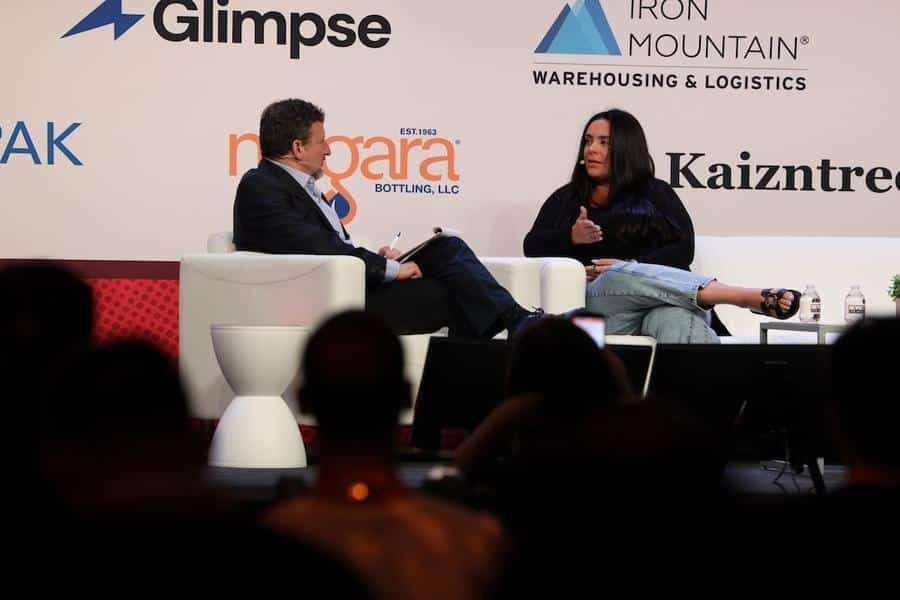
Vitamin Shoppe is one of the key stops for functional brands establishing a national footprint. Nicolletta Payne heads beverage decisions for this nutrition and supplement retailer.
Speaker:
Nicolletta Payne, Senior Director of Merchandising, The Vitamin ShoppeTranscript
Note: Transcripts are automatically generated and may contain inaccuracies and spelling errors.
Speaker 1 [00:27] I think we all know that functional has really started eating beverage, protein, fiber, electrolytes, adaptogens, stacks of all the above, the lines between a drink and a supplement have basically dissolved, and that means the retailers who actually understand those supplement categories are suddenly the most important brands that as a beverage brand. You can walk through, which is why I wanted to talk to our next speaker. Nicoletta Payne is senior director of merchandizing at the vitamin shop where she runs on the go and protein ready to drink, ready to eat protein powders across more than 640 stores as well as a serious ecom business. Uh, the portfolio she owns comprises two of the store's biggest categories. So when we talk about who decides what functional beverage gets a shot at a national footprint. And at all the other national stores that are looking at vitamin shop, you're talking to Nicoletta Payne. She's been at the vitamin shop for 8 years. She's launched a lot of the brands you already know, many of which are here right now. She's helped the set evolve from vanilla or chocolate to strawberry lemonade sparkling protein soda in real time. The vitamin shop is in this industry a launch pad. And in the time that we've got, we're going to talk about how to get in, how to stay in, what Nicoletta is seeing right now, and where she thinks this is all going. I'm so thrilled to welcome to Bevnet Nicoletta Payne. We got to have that. Speakers mind the step. So
Speaker 2 [02:52] welcome. Thank you
Speaker 1 [02:53] for having me. Are you having fun? I am. That's great. You're responsible for on the go, for ready to drink and protein. Um, I know you're taking meetings here, but for a founder who hasn't pitched you yet, what does that actually mean? And where does beverage fit?
Speaker 2 [03:12] Yes, so I oversee two of our biggest categories at the vitamin shop. So protein encompasses all protein powders, and then on the go nutrition is essentially all food and drink. So any ready to drink beverage, any bar, any snack all lives under me. They make up a significant portion of our business and give me a really great perspective on the trends in our industry today.
Speaker 1 [03:36] Now how have, how's your set changed in the eight years that you've been there?
Speaker 2 [03:42] I mean, the main thing that's changed, I would say is that the customer is much less willing to compromise now. So a few years ago, if the customer wanted a protein shake, they could get one, but they're going to sacrifice on a few different things right flavor, texture, any of those things. Now the consumer wants everything, so they want the great macros, they want the fun flavors, they want the great taste, so they're much less willing to give up on these things. And as a result, the space is much more competitive.
Speaker 1 [04:12] OK, um, when you say competitive. How does that shake out?
Speaker 2 [04:18] It, I mean, the influx of, of, of, of increase a buyer is getting, and, and, I mean, it's nonstop and the hurdles just get higher and higher and the space is, is limited, so more and more brands are competing for the same space, um, so it makes the buyer job, you, you have to be a lot more discerning about what you're launching.
Speaker 1 [04:37] Um, when we were talking about this and when I was introducing you, we were talking about vitamin Shop as a launch pad. Um, brands get their data with you and then they, they may go to the Walmarts of the world or the Kroger's of the world. Um, do you embrace that story or do you want to be. More of the destination and the proving ground.
Speaker 2 [05:02] So I would say we're, we're both right. So we definitely are a launch pad for many brands that we're many times we're their first stop on their retail journey, and that's something we're, we're very proud of because we ultimately, we know brands want to expand. We expect them to, so we get that. But at the same time we're also a destination, right? Customers come to the vitamin shop for things they innovation that they may not find everywhere else, and also for our health enthusiasts. Our health enthusiast. Have a wealth of knowledge and educate our customers coming in every day, which for emerging brands that could be incredibly helpful when you're launching a new product in a new market. So we definitely embrace being a launchpad, but we're also a destination.
Speaker 1 [05:38] When you, when you talk about these health enthusiasts, these are people in your stores. They're basically sort of like your Trader Joe's employees. Yes, is that an opportunity for a brand to get its messaging right? Almost to a friendly buyer to really uh earn its, it's brand story.
Speaker 2 [05:59] I mean, the health enthusiasts are what sets us apart as a retailer from, from the brand perspective and how we're launching things. We're always going to be looking for high quality, innovative products like our brand pillars are quality, expertise and innovation, so that wouldn't change. Where the health enthusiasts really help the brands is in terms of their interaction with the customers. So our health enthusiasts who are in our stores are interacting with our customers every day, and they really Like they're personal helpers on their wellness journeys, whatever that may be. So they all have an incredible source of knowledge. They're passionate about the industry. As an organization we focus a lot on education so that when we launch these brands they can speak to them. They know what's trending in the industry, what ingredients are hot right now. So that type of customer interaction is what really sets us apart.
Speaker 1 [06:47] Will you have brands sample? Your stores as well, or do you leave that in the hands of your enthusiasts?
Speaker 2 [06:53] We have, we have sampling events and things like that. We encourage our partners to come to stores, do takeover events, things like that. It all just depends on the product and what we're working with.
Speaker 1 [07:02] So let's talk about how a brand grows right in your store when they use it as a launch pad. They don't burn the partnership. They build things with you and beyond you. What does that look like?
Speaker 2 [07:15] Understanding channel strategy. So the best brands understand that what works in one channel isn't going to work necessarily everywhere else, and they make sure that they have a plan in place when they are going to go to other points of distribution, which we expect. They have a plan in place to make sure they don't burn the partnership in the process because not every retailer or channel needs a. Assortment, same pack size, same promotional strategy. So the ones that get it right understand you have to still keep your previous partners and the channels you're in special while you're expanding. The ones who get that wrong really they underestimate the importance of that.
Speaker 1 [07:49] So what's it look like in your channel? What's it, what's the right pack size? What's your consumer like? How do I, how do I win with my A product in vitamin shop and feel free even to use a live example.
Speaker 2 [08:05] Yeah, I mean, our customers incredibly savvy and is always looking for newness. So what always works in my channel and what you'll always see brands going after are specialty exclusives first to markets, things like that, because once you launch to another. Channel my customer needs to keep coming back to me. So that's when I expect new flavor launches, things like that to keep it exciting. And this category particularly, you can get away with doing a lot of that because typically it's a low AUR on single cans. So there's a lot of sampling always going on in that case.
Speaker 1 [08:32] Um, and what does it, what does it unlock for a brand and, and what, what do y'all get out of it?
Speaker 2 [08:41] It's, it's continued differentiation, right? So once you're in our stores, you need to continue driving traffic, and that's for any retailer that you're in, right? So that continued differentiation and making the channels that you're in special allows everyone to win.
Speaker 1 [08:53] What's the next concentric channel ring out from you?
Speaker 2 [08:59] In terms of once they launch with us where they usually go, yeah, I mean, usually it's a mass play, right? I mean, Target, Walmart, um, you know, the Natural Channel as well as typically we launch similar timings as that, but it really all depends.
Speaker 1 [09:12] Um. Every buyer has their own style. Um, what's yours?
Speaker 2 [09:21] So I base everything I do based on speed, relationships, and instinct. The category moves fast, so I have to move fast. It's not negotiable, so I operate at a really fast pace in that sense. Relationships are something I pretty, I very much prioritize because at the end of the day it's a people business. So you have to, you know, make great relationships with the brands you're working with, the sales teams, every new partnership I build, every new brand I launch is a new partner. I built and I take that very seriously and then instinct. I think all merchants need to operate with that because all the answers you're going to make aren't necessarily on a spreadsheet. So you have to know your business and have a gut instinct about what's going to work for me particularly, I have a lot of oversight and I get a lot of inquiries on a daily basis, so that instinct helps me filter through what actually would be a fit for me or not.
Speaker 1 [10:10] When I send you a deck, what's the first thing you're looking at?
Speaker 2 [10:13] So the deck, a lot of brands, sometimes I don't like to send them. They want to get you on a call first, which I can respect and I understand some buyers operate like that. I don't. I want the deck first because that's your first pitch to me. So the brand should really be operating in that sense that this is the first pitch to the buyer, so. What do you want them to know about you? Who are you? Who's your customer? What's working for you? Um, what channels are you in? Do you have any data that you can share with me to quantify what this opportunity would be worth and why are you a fit for me?
Speaker 1 [10:44] What's a, what's a winning data sci citation and what's an instant no?
Speaker 2 [10:50] So from a data perspective, if you're like, let's say in DC, I'd want to understand how you're doing, right? So any numbers you can share, um, type out who's your customer, um, how your launchers are doing, what are they buying repetitively. If you're in another channel already, what are you doing on a units per store per week basis? Um, the, the brand should have a way, it should be able to speak to their numbers so that the buyer can quantify what the launch would be worth.
Speaker 1 [11:14] Now you have this incredible level of instinct about products as a buyer, um, but you do have to balance it against financials um. What numbers should a brand walk in knowing about itself?
Speaker 2 [11:31] Always, I mean if you mean prior to being launched or once they're on the shelf,
Speaker 1 [11:35] prior to being launched in your store,
Speaker 2 [11:37] prior to being launched, you really want to have an understanding of how your business is doing, right? So like I said earlier, your sales, your benchmarks, what are you doing on your D2C, what are your average repeat purchases, and then if you aren't. Another retailer already. What are your, what are your velocities? Everything fundamentally always comes down to sales, but you want to show that you have a track record of proof of of of sustainable business.
Speaker 1 [11:58] What are the functions and product types that are really progressing right now in Vitamin Shoppe?
Speaker 2 [12:06] So, I mean, fiber's hot right now, um, which I think is a lot to do with GLP-1 impacts. Creatine is something that we're really seeing a lot of, which I don't even think we've touched the surface in RTD yet. Um, a lot of these multi-stacked products are doing really well because I think the customer wants to simplify the routine quite a bit, right? If you're taking a protein, a collagen, Whatever else you're taking throughout your routine, you want to simplify that. So a lot of these other types of businesses are doing really well too, where brands are capitalizing on multiple different trends at once.
Speaker 1 [12:36] What's something that is on the horizon that you would love to get pitched?
Speaker 2 [12:43] I mean, I definitely, like I said, the creatine piece I think is something that's going to be hard to
Speaker 1 [12:47] suspension, hard to work with in a,
Speaker 2 [12:51] yeah, I mean, I think creatine is one particularly protein or protein plus, right? Everyone's doing protein right now, so how can you make it more differentiated.
Speaker 1 [13:01] Um, and this is all ready to drink. Is there some stuff that you think, well, this is working well in food, but beverage isn't the best format for it?
Speaker 2 [13:11] I mean, the protein is, is what's really driving everything right now, right? And but it's also also getting very oversaturated, I would say, um, but yeah, I would say protein is one thing in particular.
Speaker 1 [13:22] OK. Once you're on the shelf, what's a healthy 1st 90 days look like?
Speaker 2 [13:28] So it's easier to get, it's easier to get on the shelf than it is to stay on it. So everything comes down to sales, and before a brand even launches with any retailer, you should know what your, what your benchmarks are and what the expectations are. So hitting those sales hurdles is incredibly important. And then beyond that, also driving new customers into the stores and proving to the retailer that you're driving sustainable business.
Speaker 1 [13:49] Is there a benchmark hurdle rate in Vitamin Shoppe?
Speaker 2 [13:53] Yes.
Speaker 1 [13:55] Can you share it? No, OK. Can you share what the panic hurdle rate is?
Speaker 2 [14:02] Brands will know it pretty quickly, OK,
Speaker 1 [14:04] so you hear, they hear from you quickly. Is there, is there a feedback mechanism? Is there a data portal?
Speaker 2 [14:10] Brands typically will sign up through spins, but I mean, most buyers are always going to share some type of data to be able to say, Hey, you're doing well. You'll also know it yourself if you're not getting reorders right away.
Speaker 1 [14:20] How do you like to see brands, uh, delivered to your store? And also, um, how do you like to see them support the brand in store?
Speaker 2 [14:32] Driving traffic is always paramount, right? So once you're on the shelf, you need to make sure you stay there. So, how are you going to drive awareness to the launch? Promotions are incredibly important, but beyond that, right, you want to make sure that you have sustainable business even when you're off promotion, right? So it really all comes down to driving. Awareness.
Speaker 1 [14:49] So is that social now we're in Vitamin Shoppe,
Speaker 2 [14:53] social, um, driving traffic on their ends. Maybe they get creative if they have, you know, a, a long email list of subscribers, but honestly, we expect the brand to have that figured out.
Speaker 1 [15:05] We're seeing protein in every conceivable brand type. Is that something you like? Would you like to see some categories win more than others?
Speaker 2 [15:19] I don't like the cost implications of it because you don't like the cost implications of it, because so many brands now are getting into protein and it's affecting the entire industry as a whole, but I don't think it's going away. But it makes it a lot harder for brands to compete as a result because now you're getting so many more brands doing protein that never did before, like Starbucks, Doritos, things like that.
Speaker 1 [15:38] How long do you think it takes before we start to get real signal about where consumer preferences are? In terms of protein as in terms of the delivery system for protein
Speaker 2 [15:51] in terms of
Speaker 1 [15:51] what in terms of different beverage categories as opposed to just beverage overall as the delivery system.
Speaker 2 [16:01] So like protein sodas, protein, I, I mean that's going to continue to grow. I don't think that's changing anytime soon. I think a lot of smaller brands are probably going to get priced out though with the cost of whey and the potential whey shortages, but I don't think that's changing anytime soon because now the customer is over just a vanilla and chocolate shake. They know that they can get other types of things.
Speaker 1 [16:20] OK, um, so what's going to With that kind of saturation, um, If you've, if you're pitching a new protein RTD, uh, what do they need to do to even get a meeting?
Speaker 2 [16:36] So they should have a clear understanding of how they're going to offer the value, right? And at this point because it is so competitive, I'd want to know why someone would buy your products in addition to what's already in my fridge, right, because what's already in my fridge is doing well. So a clear understanding who are you, right? Who's your customer all comes down to everything I've said, right, about that differentiation piece. I want to understand why would the customer want to put this into their routine.
Speaker 1 [17:00] So when you're dealing with a really established category, it's a one in, one out.
Speaker 2 [17:05] Sometimes for the most part I mean you're playing with the the same space relatively. Sometimes you can get more space as a retailer, but for the most part you're working with your set
Speaker 1 [17:14] now in in something like fiber which is growing right it's hot. It's not as much of a one in and one out, right? It's like, how do we broaden this set a little
Speaker 2 [17:25] bit more technically though, no, as a retailer, your entire planogram is one in and one out, so you do have to balance it between, OK, is something else not doing as well that I can swap this for, and that's where you measure your total benchmarks to see what makes sense.
Speaker 1 [17:39] You talked about stacked benefits. Where's that going and how would I compete if I'm a single function brand against a stacked brand?
Speaker 2 [17:48] So I think the stack thing comes back to what I said, right, about people simplifying their routines. So if you have a product that makes sense that can consolidate a few different things that they're taking. Like protein plus fiber or, you know, pre-workout plus creatine, whatever the case may be, then there's a real need case for that. But brands don't need to chase every trend. So if you're authentic to who you are as a, as a, as a brand and you're solving a true need for your customer based on what you a single ingredient that you're using, then by all means, there's still value for
Speaker 1 [18:15] that. Who are some retailers that you watch?
Speaker 2 [18:20] Well, I live in Florida, so I go to Sprouts quite a bit. Um, I think their forager section's great, um, Whole Foods for sure. I mean, as a merchant, I, I'm always competitively shopping. That's being a student of your business. You, you're supposed to be doing that. So Walmarts, Targets, I'm always in stores to see what's going on.
Speaker 1 [18:37] Will you try and pull in a brand from those other stores, or do you want to be the, the debut for most of them?
Speaker 2 [18:45] I, I, I'm not as concerned when like the natural channel has a brand necessarily because, you know, we're not necessarily direct competitors, um, and the more distribution points, more awareness, sometimes brands launch too early, like they need, they need to get their footing out there. So, um, there's Definitely times I take a peek and I say, OK, that could be something that could work for me. Sometimes I also look at the set and I say that's a great brand for those channels, not necessarily my channel. It's a lot different when someone's going grocery shopping versus my customer who's most likely coming from the gym or something like that.
Speaker 1 [19:16] Um, we've seen a growing number of functional brands start to move out of beverage and into broader. Category to, you know, to, to platforms like gummies or uh pills or powders. It, I get the feeling that that's something that your store may like. Um, what are some rules about doing it right?
Speaker 2 [19:44] I mean, flavor foremost, right? So if you're getting into a gummy or something like that, it, you know, it, that needs to be there, efficacy, um, but everything comes down to really the same things, right? The differentiation. If you're launching into something like that, maybe that's now a differentiator that makes sense from a channel strategy to have as a first to market or exclusive, um, but also how are you going to drive awareness and education to now that you went from an RTD to a chew.
Speaker 1 [20:09] Yeah, so it should be something that you can clearly argue is going to be accretive. Exactly who does the tasting? We know flavor's king. Is it just you? Is it a team?
Speaker 2 [20:21] I have, I have a great team who tries some samples too, but for the most part, I mean, I'm, I'm deciding and I'm trying everything. Um, I am buying for my customer, not me, so flavor is subjective, but for the most part, you can, after doing it long enough, you have an idea of what's going to work and what's not,
Speaker 1 [20:36] um. There, I'm sure there are a good number of founders in this audience who were thinking like, I want to be in vitamin shop quarter number 1. what should they do tomorrow, this month, the next couple of quarters to put themselves in real contention with you?
Speaker 2 [20:53] Yeah, I mean, I would say get clear on who you are, get clear on who your customer is, have those data points to be able to make that case for why that you'd be a compelling fit, um, and understand the importance of the channel strategy. You should know that going into it before even asking for a meeting.
Speaker 1 [21:07] OK, um, what, where do you see your set, uh, In a year, and what do you hope to see more of from the founders in this room?
Speaker 2 [21:22] So from my set, I'd say continuing to find high quality innovative products, right, leaving no stone unturned in terms of what's out there. And for founders, I would say I'd want to see a continued focus on the customer, the brands that do really well, they're not. Necessarily chasing every trend, they operate with authenticity. They know who they are. They know who their customer is, and they plan to solve the need. And those are the brands that ultimately earn their place in the customer's routine and on the shelf.
Speaker 1 [21:49] We see with functional brands. That they often lead with that function or ingredient. Is that advisable in vitamin shop, or do they still need to be thinking brand?
Speaker 2 [22:04] It's a mix of both, I would say. I mean, the ingredient piece is great from an education perspective, but that's not everything either. It's definitely a mix of everything.
Speaker 1 [22:15] Well, I think we got to get off stage before I get branded. Yeah, I see, um, but thank you very much.
Speaker 2 [22:22] Thank you for having me.
Related Videos
The State of Cannabevs: Strategy on Deadline
With federal regulations about to put this fast-growing industry into a time-out, we look through the lens of brands, distributors, and lobbyists for potential futures for this fast-growing segment.
AI and Online Retail: Brand Building Meets Agentic Commerce
In a special tactical presentation, sales, marketing, and tech experts share a concrete playbook for making your brand legible to AI agents — without gutting what makes it human.
Retailer Profile: Launching and Maturing with Whole Foods
A rare founder–buyer conversation on what makes a pitch resonate, how brands can build productive retailer relationships, and what growth actually looks like once you’re on shelf.
Exit Interview: How Dirty Shirley Cleaned Up
Longtime beverage marketing veteran Adam Kost discusses his lean startup, proof-of-concept strategy, the key insight that gave Dirty Shirley the oxygen it needed to grow.
Disruption at Scale: A Conversation with Athletic Brewing CEO Bill Shufelt
Athletic’s rise has reshuffled the deck of beverage categories. Shufelt shares how he's navigated explosive growth and what he’s learned about raising capital, brand positioning and category creation.