Search across the BevNET CPG Media network including BevNET, Nosh, Brewbound, Taste Radio, Nombase and CPG Jobs.
New Beverage Showdown Semifinals
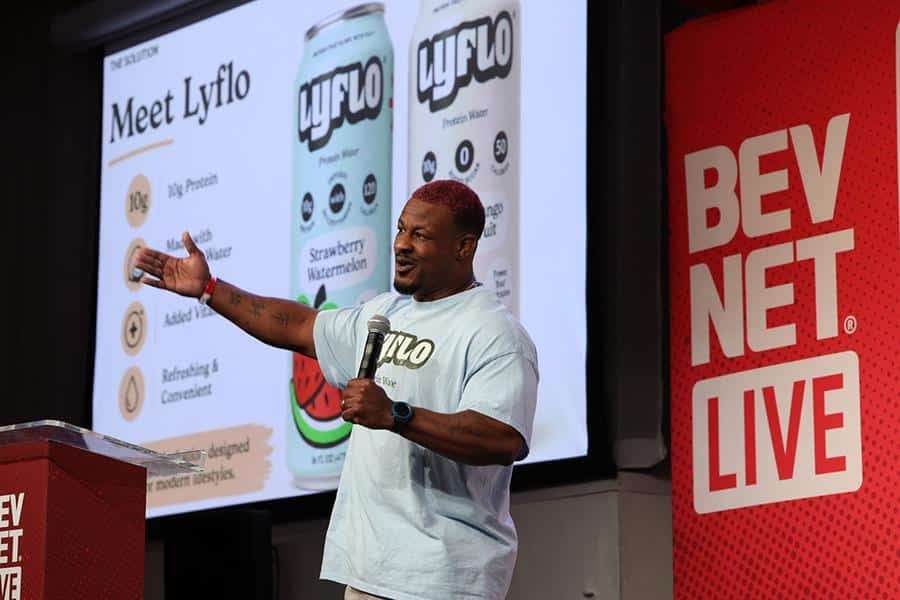
The New Beverage Showdown, Presented by Coca-Cola North America’s New Revenue Streams, is the beverage industry’s premier beverage brand pitch competition. The 28th edition took place during BevNET Live NYC 2026 on June 10-11 in New York, NY.
12 emerging beverage brands pitched in the semifinal round, including Shinzo, Lyflo, Disco Fizz, Purple Drop, BRAUSE, Cabu Latte, Gingerbug, Umma Juice, Flying Ostrich, Lemonday, Dirty Virgo, and Dad Grass.
Transcript
Note: Transcripts are automatically generated and may contain inaccuracies and spelling errors.
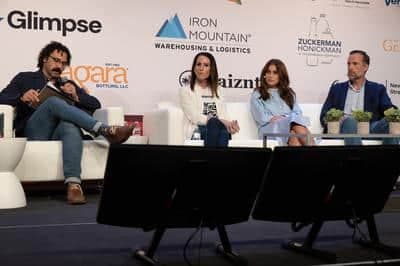
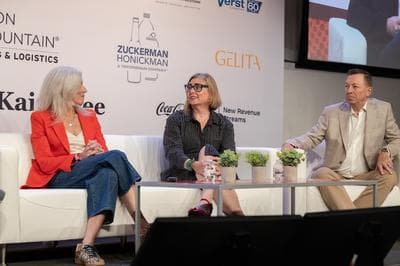
Ray Latif [00:27] Good to see everyone today. My name is Ray Latif. I'm the editor, producer and host of BevNET's Taste Radio podcast, the number one podcast for the food and beverage industry. So amazing to see so many incredible people here, the beverage industry, founders, operators, consultants, investors, retailers, and this is my favorite part of the show. This is the New Beverage Showdown. This is the semi-final round of the showdown, which is BevNET Live's signature beverage brand competition. The competition is presented by Coca-Cola North America's new revenue streams unit. The showdown gives 12 early stage and promising brands the opportunity to present their businesses and products to a panel of expert judges and the audience here at BevNET Live. The winner of the two day competition will receive $10,000 in prizes and join an impressive list of past champions, including Poppy, Health Aid, Can, and Malk. Before we begin, let's review the rules. Each semifinal, excuse me, each semi-finalist will have 2 minutes to present, followed by 2 minutes of immediate feedback from our judging panel. The judges have already sampled the products earlier today. If one of the contestants attempts to go over the 2 minute time limit, they'll hear the dreaded gong, Ed. Folks, you don't want to hear that. Once all 12 brands have presented, the judges will select 5 companies to advance to tomorrow's final round. The 6th finalists will be chosen by audience vote. At the conclusion of today's presentations, we'll show a list of all the participating participating brands, each paired with a voting number. Audience members here in the room and those watching on the live stream can vote by texting the number corresponding to their favorite brand to the phone number that we'll provide. We're going to show that number at the end of the semifinal round. And voting will continue and remain open until 5 p.m. Eastern time. Before I introduce our distinguished panel of judges, I just want to ask all of our 12 semi-finalists to please stand up. Folks, these are the founders that are helping to shape the future of the beverage industry. They're entrepreneurs that are following a path forged by innovators like Alison Ellsworth of Poppy, Mike Cesario of Liquid Death, and Dinah Trout of Health Aid, founders who once stood exactly where these competitors are standing today. Building a brand takes vision. It takes resilience, an incredible amount of hard work. These founders have invested their time, their energy, their passion into bringing their ideas to life, and today they're sharing those ideas with us. Let's give them a round of applause one more time for these incredible founders. All right, onto our amazing judging panel beginning all the way to my left. That's Mike Schneider. Mike is BevNET's CRMO and the co-host of the Taste Radio podcast. Mike has over 20 years of experience building products and brands, which is quite a coincidence given that it took his favorite soccer team, Arsenal, over 20 years to win a Premier League title. Mike Schneider, how about that? We are the champions. There's that. And next we have Nicoletta Payne, who is a senior director of merchandizing at the Vitamin Shop where she leads the on the go and protein categories and specialty retail channel driving growth across ready to eat, ready to drink, and protein businesses. Since joining the company in 2018, she has focused on identifying emerging trends, building strong brand partnerships, and bringing innovative high performing products to the vitamin shop customers. Nicoletta Payne, all right. Kyle Fitzpatrick is the founder and CEO of Paperboy Ventures, a venture media platform fueling the next wave of emerging consumer brands. What began as a newsletter and podcast sharing stories of early-stage CPG founders has evolved into a venture fund, the aptly named Paperboy Fund One, which targets early-stage food, beverage, and personal care brands. South of $10 million in net sales in Series A and C raises. Beyond the fund, he's an active investor to a growing roster of emerging brands, and he's also a heck of a hooper. Kyle, Knicks or Spurs? K Nixon 5. I have the socks back it up. And if any of our emerging brands have an extra ticket to tonight's game. Wow, you're gonna win. Here you go. Anyone have an extra ticket to tonight's game? All right. OK, finally we have the amazing Madeleine Hayden, who is the founder of Nutpods, one of the leading brands of better for you coffee creamers. Initially launched as a Kickstarter project, Nutods debuted at number 13 on Inc.s 5000 list of fastest growing companies and was crowned Amazon's Small Business of the Year both in 2019. The company was acquired in 2024 by M. Pearl Rock. Madeleine is a proud Seattleite and currently serves on several private boards is a frequent public speaker. We are so lucky to have Madeleine Hayden. Thank you. All right, the moment we've all been waiting for the first pitch for the new Beverage showdown semi-finals. Let's bring up to the stage, Ben Zumsteg, who is the founder of Disco Fizz. Come on up. How's it going? Good to see you. Here's a microphone. Please keep an eye on your timer. It's interesting. Thank you. OK. When I quit drinking 3 years ago, I was bothered by the sad, sad non-alk shelves of LGBT bars and clubs, some Gatorade, some Red Bulls, maybe an NA beer, and it turns out that I wasn't alone. We ran proprietary research that represents the 30 million queer consumers in the US and found that 75% of them buying on elk when they socialize, but 80% of them aren't excited by any of it. They influence culture and have $1.4 trillion in spending power and there's no non elk that starts with them. So what do they want? We found a gap when they socialize, they buy caffeinated drinks the most, but what they crave the most is refreshment, and no one is filling that gap. So that's why we created Disco Fizz. Disco Fizz is all boogie, no bullshit. Your choice of three moderate energy levels from organic green tea, caffeine, hydration from sea salt electrolytes, lightly sweet sensory flavors, 20 calories, nothing artificial for $4 to $5 a shelf, around $8 to $12 at a bar in New York. Six months in, we are being embraced by this community. Strong pickup in queer venues and parties in New York with regular reorders we're being pulled in by DJs, party promoters, drag performers, and more, and iconic ally Paris Hilton just personally selected us to be in her first ever Pride guide online shop this month. But this community is our engine, not our TA, and they will power our growth as we launch in DTC very soon and in big retail placements later this year. So again, 30 million consumers with no non-elk brand that really starts with them and meets their needs, where they're building it, and that's disco fizz, so let's boogie. Well done. Well done. Great start to the show, Michael. Let's start with you. All boogie, no bullshit, Disco Fizz. What do you think of the premise? I mean, the concept is fantastic. All boogie, no bullshit. I, you know, you love to hear, uh, something clever like that. Um, the packaging is fantastic. Uh, the metallic nature of it. It's like a drag show in a can. I really like this product. Um, one thing I'd say is there's some inconsistencies in some of the liquid. Like I'd I'd I'd like to see it all have the same function across the board, so when you grab it, you know exactly what you're getting, and then you can just go for different flavors instead of like different functions. Yeah, let's talk about the functionality. Nicoletta, is this a type of brand that is going to appeal to a lot of different consumers, do you think? I think it's a great concept, and I can totally understand how well it's doing in bars, clubs, things of that nature. I would say in terms of retail readiness, I'd love to see some improvements in the packaging. I think it's great in that nightclub essence, but I think when you're on shelf. To educate the consumer who's picking it up. Like he said, I think the inconsistencies in the different formulas, which makes sense, the intention behind it, um, but I think on shelf there's a little bit of room for some improvement there and to, you know, speak about all the great callouts, the electrolytes, the functionality, make the font a little bit bigger, because when the customer's shopping on the shelf, that's the education that they're going to be looking at. Kyle, let's talk about the flavor of the product. What do you think of the two products that you tasted? The Yuzu has some serious bite to it, and I, I love that as a flavor you're seeing it pop up more and more in the beverage world. I like that you didn't take the traditional approach to, you know, regular cocktails and then just putting the NA spin on it. I think that this is a, has a real lane in the on-premise bars, nightclubs. I would question how big this can get in the off-premise if you're looking at convenience stores. I think to your points on packaging, I think there's some work that can be done there. Love the disco ball, and conversely, we were talking about this in the judge's judge's room. How much are people going and discoing and partying, and you were asking me when was the last time you went out dancing. It's been a long time, so I don't know, maybe I'm not the right consumer for it, but I think that there, there can be a play in the on-premise if you do it right. I'll dance if there's 80s music for sure. Well, maybe you'll be dancing tonight after the next win. I don't know. I will be if they win, yeah. Madeleine, uh, as you know, the story is really important in convincing investors, retail buyers that this is a product that they should invest in, that they should have on their shelves is really important. That being said, what do you think of Ben's presentation? Did that sway you in any way in terms of what you tasted versus what you're hearing on stage? Actually, what I liked about it is that he has a clear affinity brand that he's going to help target. And in a non-alcoholic energy drink, it's really important that you find your early adopters. and who you're targeting, I think queer community, I think the allies are really important. 30 million is a special number for me because 30 million Americans are lactose intolerant, so it's a big number, but it's not big enough to go mainstream. And so start from that affinity group and then be able to find a way to have broad mass appeal. See, I told you these judges were amazing. That's great feedback. Thank you very much. All right. All right, on to our next semi-finalists, it's Amna Bettmann from BRAUSE. Come on up. Hello, good to see you. Here is your microphone. Please keep an eye on your timer. Hi everybody. Um, my name is Amna Bettmann, and together with my husband and my almost 4 year old, we own and operate BRAUSE German Craft Beverages. Now you're probably wondering what German craft beverages are. Unlike you all, we don't really grow up with the same drinks in Germany. I've never in my life had a root beer. I've never had a Mountain Dew. I've now lived here actually for 10 years. I should probably try them, and I will at some point. But the drinks that we grow up with and we really that are omnipresent in Germany and Northern Europe. For centuries are drinks that incorporate ingredients like roasted barley and Bavarian wheat malt, and we basically combine those with sweet ingredients. In our case, in BRAUSE's case, these are dates as well as organic apples, and what comes out are these beautiful craft beverages that are truly omnipresent. Now, here's my hot take for you all today. Personally, I believe that the non-alcoholic category is not here to stay. I think it's a bridge category that'll eventually evolve to becoming a craft beverage category. And why is that? There's either non-de alcoholized beers or wines, and I kind of hope Bill Schfeld is not around right now, but, or there are, um, super expensive mocktails, and there's a huge white space in between. And that's where BRAUSE is playing, and don't take my word for it. There's over 750 doors that we're in today after one year of hustling with me and my husband. Almost half of those are independent retailers, and what they're starting to see is they're building these craft beverage categories and aisles, and these are consumer magnets. People are going, they see great velocity, and it's the evolution of the non-alcoholic category that we're trying to usher in with BRAUSE. Pro Outstanding. Well done. All right, Nicoletta, let's start with you. Uh, soda's got to taste great. What do you think of BRAUSE? Uh, I really enjoyed it. I thought this was fun, elevated, enjoyable. Um, if I didn't want to drink an alcoholic beverage, this would be definitely something I picked up. Similar feedback though, as previous in terms of retail readiness, I think. Probably could give yourself more credit here on the functionality and you know the purely natural sweetness, the impacts of the ingredients that you're using. Again, when you're on the shelf in the retailer, that's your educational piece. The consumer is going to be learning when they're picking it up on the shelf. So I think there's some more things that could be spoken about on the can to really give credit for a great product. Kyle, I saw you nodding, maybe raising an eyebrow when, uh, Amna was talking about the evolution of NA into craft. What do you think about her, her comments on that? Yeah, I mean, fighting words in this room to say the not now category is not here to stay. So I love, I love the boldness, but I, I really like the, the dirty craft soda, dirty beverages. You're seeing it explode across the United States. What's interesting about this one is that it doesn't look like that, or it looks like one that was born in Burgheim in Berlin. And I'm not sure if that can reach the mainstream, but I do appreciate the approach here, and I think the products did taste great as well. Yeah, let's talk about the packaging for a sec, Madeleine, you know, your thoughts on the label design and Uh, the approach to sort of minimalism for BRAUSE. It's definitely disruptive. I, I think the feedback that I would have is I'd like to understand a little bit more about the relevance of German because if we're talking about nature-inspired, could you close your eyes and say this is Scandinavian or Norwegian? Is this European-inspired craft soda? You know, we know Germans are great with autos. We know Das Sound Machine is great with a cappella. And so, but I want a little bit more of a tie-in with, with German and what does that translate to me as the consumer? Yeah, let's stay on that for a sec, Mike, BRAUSE German craft beverages, that positioning, is that something? What, what's going on? Well, first, Ray, it's, it's BRAUSE. Think Chrome or Safari with a Boston accent, OK, and And I, I think the positioning, I think the positioning is a little too unique. I would, I definitely love the fact that she's trying to lean into German heritage, and I love the minimalism of it, but the mill, the minimalism of it might not play as well in this market. So I agree with the other judges that lean a little bit more into the German heritage. There needs to be a little bit more explanation here because I feel that the packaging is unbefitting of the majesty of the liquid because it tastes awesome. This is one of the best things we tasted. That's high praise and uh it's great praise and great feedback. Thank you very much. All right, yes. On to our 3rd semi-finalist for the New Beverage Showdown, we have Justin Bohannon from Lyflo. How's it going? Good to see you. Here is your microphone. Please keep an eye on your timer.
Speaker 2 [17:10] Good afternoon, judges and BevNET attendees. My name is Justin Bowflex Bohannon. Uh, before, uh, I'm the CEO and founder of Lyflo. Before Lyflo, I served in the military for 10 years with two combat deployments. When I got out of the military, I got into the fitness industry in 2015. By 2019, I started my own fitness business, Team Bowflex, where I trained lifestyle and bodybuilding competitors. Throughout my time in the fitness industry, I noticed two big problems. One, people are struggling to get enough water in. 2 people are having a hard time consuming enough protein. Oftentimes, water can be a little bit inconvenient to drink and lack meaningful nutrition. Protein shakes can be a little bit heavy, hard to consume. So, Lyflo is a unique combination of refreshing hydration, protein, and vitamins. Uh, with Lyflo, we have two proteins. We have whey protein and collagen protein. The idea was we'll cut the whey in half and add collagen, so it's a light refreshing beverage. We added coconut concentrate. And multivitamins so that not only are you getting a nice light beverage, you're getting vitamins and amplified hydration hydration. We have two flavors. We have a strawberry watermelon flavor. It is 120 calories. It does have 19 g of sugar, and then I have a zero sugar coconut, mango passion fruit. That is 50 calories, also 10 g of protein. Both of our drinks have 10 g of protein. Our goal is to bring to market something easy to digest, fun to consume. And to flow with you Lyflo.
Ray Latif [19:18] OK. Kyle, let's start with you. Uh, we've seen other protein waters come to market. Uh, what do you think about Lyflo's approach to the concept? Yeah, I, I really like the positioning of the products or, or the brand, I should say. I think the product is a little bit inconsistent with the sugar content and and one of them has 19 g of sugar, the other has 1 g of sugar. So I think that might be a challenge when you are going after, um, you know, the, the bodybuilding community that, that you mentioned. Uh, and also 10 g of protein. I don't know if that's enough. Um, I know whe whey protein prices are through the roof, uh, so that's probably a consideration. But if you are going after that gym crowd, is 10 the right, the right number, Madeleine, uh, there's a couple of functions in this product. You got hydration and you got protein. Um, do you think that Lyflo should be leaning toward one or the other, or do you think it's a good harmony between the two? Do you know what it's like to be a 50-year-old woman, right? I do not know. You're supposed to have all the fiber, all the protein. You're supposed to drink 8 g. You're supposed to have DHEA. It's like we're constantly consuming, so I like the combination. I agree. One of them, you know, has 50 calories. Another one has 120 calories. I'd like it to be a little bit more harmonious. I, I was actually just listening to him and I was thinking, you know, all of the, the CrossFits, all of the, um, he was Bowflex, it's like I, I think there's definitely a community there that he can target and go out with and so, but I think he has a little bit of work to do on the formulation. I will say I didn't know what to expect as a protein collagen, and it exceeded my expectations, right on. Mike, uh, what do you think of the name in the packages then? Can I just give my time to Madeleine? She's one of my favorite humans. Keep, keep speaking. No, um, I love the name. I think it's, I think it's, you know, it's hard to pick a name for something. I think this is a good name. Um, I also really love the family here and just like when you, when you peel back the onion of who's building Lyflo, it's a family that I want to win. I think I agree with some of the inconsistencies in the product. I think I would market it as collagen if it's collagen, not as just generic protein, because it has a different function for someone, and I think 10 g of collagen might be OK versus like you might want 20 g of whey protein. Or 30 g of protein as we've seen with like remedy organics and some of the fantastic shakes that are coming out these days, but um and I also want a little more consistency between the two flavors, but I think this has, I think it has legs and it's worth, you know, leaning into one of these and then trying to make it more consistent. Nicoletta, it would seem that retail buyers are looking for a brand like Lyflo, but, but are they? Are you? Yeah, I mean, so I spoke earlier about protein becoming very saturated, right, and I think this is a product that has great potential, you know, I thought it was refreshing. I thought the packaging popped. I thought the coconut water was not too overpowering because that could be a polarizing flavor profile to some people, but similar to what the other judges said, I think there's some inconsistencies here, right? So 10 g of protein for 120 calories versus 50 automatically. I understand the reasoning behind it based on the Fruit flavoring and what the ingredients, it's a good, it's the intentions are good on on shelf as a retailer, I think you're automatically going to alienate some consumers because 10 g of protein is not necessarily a lot. Um, and then with the collagen piece, most consumers are going to are going to want to know of that 10 g, what is collagen, what's whey protein, um, that's really important distinction for sure to have called out on packaging. All right, great insights. All right, let's keep the New Beverage Showdown semi-final round going. Oh yeah, we can clap. That's, I like that. All right, let's bring up to the stage Ari Susswine from Lemonday. Come on up. You've got some woos. Well done. Here is your microphone. And oops sorry, please keep an eye on your timer.
Speaker 3 [23:23] Who's ready to get hydrated? My name is Ari, and I'm the CEO and co-founder of Lemonday. Together with Jake and Courtney, we created Lemonday because all three of us wanted healthy hydration with added benefits that we could enjoy anytime, every day. Lemonday is lemon water with electrolytes and prebiotics, and most importantly, we're low calorie. Our electrolytes come from natural sources, potassium from coconut water, magnesium from seaweed, and sodium from sea salt, no added sugar. Our sweetness is from real fruit juice and our coconut water, nothing artificial. The result is hydration that tastes light, refreshing, and balanced, not overly sweet, with nothing artificial lingering in your mouth. Just clean and healthy hydration for consumers looking for a boost during the workday or in between workouts. We're here for you every day. We launched a year and a half ago in cold chain, and that allowed us to build a strong foundation at an affordable price of $2.50 a unit. We first launched on the East Coast and quickly expanded to more than 14 states, including Southern California and most recently, the Midwest. About 8 weeks ago, we made our biggest move yet. We transitioned to Cannes and are now shelf stable, and you'll hear more about that journey tomorrow. We can now ship nationwide and expand our distribution. Today, Lemonday six at the intersection of water, sports drinks, and functional beverages. We are built around simplicity, natural ingredients, and everyday drinkability. We're making healthy hydration an easy habit, so you can make every day a better day with Lemonday. Thank you so much and let's go next.
Ray Latif [25:24] Thank you. Right. Ari's got a cheering section. I love it. Madeleine, I'm looking at this product and I'm thinking I want this to taste amazing. Does it? I think it is refreshing. I like the packaging. I like the colors. I would say, you know, with the statistics we know about 90% of startups uh will fail in the first years. I'm nervous because launching with 6 SKUs eats up a lot of working capital and 80% of your volumes. Come from 20% of your SKUs. And so even if you split a production run, it's still a lot of packaging to lay out, production costs, you're going to have inventory that turns at different turns. And so I would say just from the business side, I would just reconsider launching with 6, OK. Mike, uh, you are well known for having some thoughts on vertical. I knew your logos on the front of pack. Uh, what do you think of the pack? Of course, it's the first thing I was thinking of. I, you don't want it like John Craven, CEO and top Bevnet hand model, to have to hold it like this to be able to see, uh, the, you know, logo horizontally. I, I guess with this one I like the flavor. It's, it's very light, um, if you know it's a lemon water in advance, I think. When you drink a beverage, you want to know exactly what it's going to taste like before you put it in your mouth, and you want like to get the exact experience or better, like surprised in a good way. And I think what's going to happen here is that The human brain has preconceived notions about lemonade, and lemonade looks an awful lot like lemonade, and I, I think it needs a little more education before you open it so you don't get like that, oh, this is lighter than I thought it was feeling. I really like the product. I just, I think a few tweaks would make it, uh, would make it easier for the consumer. Nicoletta, how much do the electrolytes and prebiotics move the needle for you? How much will they move the needle for consumers? I mean, it's definitely a trending business, right, that functionality, the reason for the consumer to buy, um, so I like the concept. Similar feedback, I would say automatically. you know, no sweetener, it's going to make it a little bit tougher because some consumers, they want some type of a sweetness. So going into it as a consumer, I'm not sure am I getting a lemon water or because there's some inconsistencies with the flavor names, right? Like one's lemon peach versus strawberry lemonade. So I would tweak that up a little bit. Um, I like the $2.50 price point. I think that's fair, but similar feedback also, most retailers are not going to start with 6 skews off the bat. So I would probably trim that assortment down so that way you're already not going into it that some skews need to be rationalized. And Kyle, uh, we had a, or we know of a lemon water brand that's been out for a few years, a lot of hype around that brand, but what do you think about Lemonade's opportunity in the context of that brand? This looks like a big brand to me. It looks, doesn't really look like a startup. I think they've done an excellent job with the repositioning of the packaging. The 6 scares, the 6 skews, that's scary to launch with. The strawberry lemonade is amazing, so do not get rid of that one if you are having to get rid of some of these, but I, I like the, uh, the lighter taste. I think consumers are, if you, you know, think of a spin drift or these, uh, these, these products who are very sessionable products where people can have 6 of them uh when they're, when they're sitting. Down at night, I think that could be in the future for this brand. So nicely done. All right, good stuff, Ray. There is a lot of education on this. It's just on the side, I think we need to move to the front. That was my point. Sorry, no, good stuff, good stuff. All right, up next we have Angie Max from Umajuice. Come on up. I'm sorry, it's Ummajuice. I keep getting that wrong. My apologies. How are you? Good to see you. Microphone, please keep an eye on your timer.
Speaker 4 [29:08] So Omojuice started from a memory of my mom peeling fresh fruit for us for every moment and every day. She was her quiet way of showing care and intention. And so when I had a son, I wanted to reflect that same level of care. What I realized very quickly is that I wasn't very good at peeling fruit, um, and I'm not that quiet. And so I went to the grocery store instead to find something that could nourish us and something that could delight us as a family. We didn't find anything that could meet the moment, so we built it. I'm Angie, mother, daughter of Korean immigrants, and a global maternal and child health advocate for over a decade. What that Tommy early, what we feed the people we love is not just food, it's traditions and care passed down. Oma juice is that care bottled. We have three flavors Jeju Island Punch, mango, pineapple, pear with an excellent source of vitamin C inspired by the legendary Heo divers off Jeju Island. We have K-pop medley, persimmon peach, blueberry with postbiotics from kimchi, and my mom on every bottle and a nod to the cultural wave of. And music and then Subox Splash, that's our watermelon, sweet potato, raspberry with electrolytes and magnesium, all with real fruit purees, um, prebiotic fiber and fiber, and 60% less sugar than your average juice. As a family juice brand, community is super important to us, so we've sampled to over 7000 people so far, including serving as a beverage brand partner to Laneige, one of the most iconic skincare brands in the US and globally. Uh, we have an 85%, uh, trial to purchase rate in retail. So our, in our retailers, our orders are increasing in both size and cadence. We're available nationwide at Misfits Market, and as I speak, we're launching in all 10 central markets, and we're with Kay to deepen our presence in South Central region. I'm Angie, and we're bringing the joy of Juice back to your home. Thank you.
Ray Latif [31:13] Great job. Well done. Mike, this is not your first time trying Alma juice, but what you hear in the presentation that made you think differently in any shape, shape or form? I mean, the word joy is an understatement here when you drink this juice. I mean, because you, you look at this package and you're, it's very understated, and when you open it up and you just get, you get the nose and then you start to drink it, and then you look at the bottle and you look at the ingredients, there's just a lot of great things that just keep coming at you. And it's not even all stated like right on front of pack or on the back. I mean, I, I think she does a good job of trying to, you know, lure you in with the flavor cues and things like that. And it's great that you can see, see the liquid. I worry about the, you know, The salad bottle, I guess, and, and cogs on that and everybody, I think all the other contestants are in cans right now so you just wonder if, if that's the right move for Uma juice, but like I can't say enough great things about this brand and I really like that it has lactobacillus from kimchi. Real fruit, Korean roots, mom crafted Nicoletta, does that all speak to you? Is that something that is attractive to modern day consumers? I mean, I think the story is great, right? The tradition, care passed down, I think that definitely resonates with the consumer, especially the mom shopping for her family. Like I definitely think that would resonate. So I really like the concept, similar feedback about the packaging, worried about the cost of the glass and things like that. So that would be something to keep in mind, and I would say just being conscious of consistency on packaging. Like I noticed on one flavor there was a callout about the probiotics versus another flavor had callouts about vitamin C. So as a consumer, if I was on the shelf looking at the shelf picking one up, I wouldn't know if that meant both have something or am I trading off one benefit for a flavor. So that would just be something I'd recommend taking another peek at. Kyle, it feels like Oma Juice has an opportunity to be a, a modern juice brand, uh, an evolution in a category that hasn't seen a lot of evolution. What do you think about that opportunity? I actually like the glass bottle and the investors in the room are probably going to hate that I said that because the cost of goods, yeah, it, it sucks to ship glass bottles long distances, but The juice category does need something new. We consume loads of juice in my household, and it's much higher sugar content than something like this. I have to cut it with water. My kids ask for it straight up, and I'm like, No, it's got to get cut. So I think that a product like this would actually do really well, and I even think you might be able to put this in like a juice box. I don't know who exactly the market if if this is more adult focused or kid focused, but you could eventually roll, roll that out as well, so. Madeleine, we've heard a lot about the bottle, but what do you think about the label? Actually, I want to talk about the bottle. Let's talk about the bottle, OK. I really like the potential for this to have a lot of field activation. I can see this going at night markets. I can see this going to K-pop, you know, festivals and concerts. The only way that I think that works is plastic bottles. You can still see the juice. You don't have to worry about breakage, you know. It also helps her accelerate her. Growth via eCom as well. And so and then in terms of the, I just would like to see more differentiation on the flavor variety because the brand is very strong and then especially the splash and the medley look very similar. I'd want to see, make sure that that's a little bit bigger. All right, good stuff. Let's keep things going with our next semi yes, OK. So much love for I saw my finalists. Fantastic stuff. Thank you. All right, up next, we have Shrey Gupta from Shinzo Macha. How's it going? Good to see you. Grab one of your microphones. Please keep an eye on your timer.
Speaker 5 [35:13] Hey everybody, I'm Shrei, one of the founders of Shinzou. Before diving into how our product tastes so great, let me set up the stage for why you should care. 1st, 85%. That's the percent of the population that drinks caffeine daily. Most of you probably had caffeine today. 2nd, 36%. This one's kind of crazy to me. More than 1 in 3 coffee drinkers gets the jitters, so a huge chunk of the population drinks something daily that clearly doesn't work for them. OK, so alongside this 2 years ago this thing called matcha exploded. This vibrant green drink took over social media. Every coffee shop added it. Matcha cafes popped up left and right so fast that production couldn't even keep up. And this wasn't just a trend. People realized that matcha's natural L-theanine gives you calm and focused energy. Matcha so far is here to stay. The one problem people see it as hard to make. Shinzo changes that. 6 weeks ago we launched a first of its kind matcha soda, fun, fizzy sodas with natural caffeine for matcha and two delicious flavors, yuzu mint and coconut mango. These ready to drink beverages make matcha effortless. We launched here in New York, one of the most brutal beverage markets in the country, and around 40 stores and no marketing spend. We checked our baseline aggressively. Is it organically moving? Does it stand out? The answer was a definitive yes, with a strong reorder rate. People want better caffeine. People are switching to matcha. Shinzo is making it fun, fizzy, and effortless. Thank
Ray Latif [36:44] you. Great job. OK. Nicolette, uh, uh, matcha's been trending for a while. Better for you soda's been trending for a while. What do you think about a matcha soda? So very interesting, unique. I don't think I've ever seen a matcha soda, so definitely could be a white space opportunity. Matcha though is typically polarizing, so I would love to be able to quantify what that opportunity would be worth. Um, so I would love to understand some data of how it's doing in that sense to be able to really get a gauge on how big this business could be. Other feedback I'd have is, you know, I thought the can was great. I love the artwork on it. I thought that was fantastic. In looking at the packaging, there were some things that stood out to me. 10 g of sugar for an 8 ounce can a bit high. I would love to see the matcha come before the cane sugar on the ingredient panel for sure. Kyle, what do you think about the scalability of Shenzhou, Shenzhou, excuse me. Yeah, the scalability is the big question here because we don't know if matcha soda is a real category that can support exits on the investment front yet. We haven't seen many other players here. I love how this is put together. I think the artwork is amazing and I really like the brand name. And as far as the coffee jitters, I drink way too much coffee and I'm looking for a product like this, and I'm glad I got to try it today because I did enjoy it. As an investor though, I do question how big can something like this get and what, what is the path to, uh, serious market scale because it can do well, I think, in coffee shops and, and on-premise venues like that, but, uh, retail like convenience or bodegas, I'm not sure if it can fit in there. Mhm. We haven't talked about taste yet, have we, Evelyn? What are your thoughts on I'll take taste for 200. Uh, who's the new host, Ken Jennings. I am not a Ken Jennings kind of guy. What I would say about this one is there's, there's an oxidation issue. I think that's partly why we haven't seen the sodas is because when we all think about matcha, we think about this beautiful, vibrant chlorophyll, you know, green color. When you pour it out, it is not green. It's actually kind of an amber fluid, so there's a visual disconnect. And then I think for me like Nicola said, it actually I understand I have more of an unsweetened palate, but it was, it was sweet to the point that I actually couldn't pick out the matcha flavor. There's no green on the front of the pack. Uh, that's, this is only one of their skews. But Mike, what do you think about the packaging, uh, and the label design? I just think it might be positioned in an interesting way because, uh, as Kyle pointed out, it's put together in a really nice way, and you're going to look at this can and it's going to draw you in. But maybe calling it matcha soda is You know, an issue here and maybe it should be more of an energy positioning or something along those lines that, you know, or just a soda that has caffeine in it because like it feels like it's hiding the matcha on front. Matcha's small and even in the liquid, the matcha flavor isn't really showing through, so it feels like a matcha soda for people who don't like matcha. And I think that it would be, it's great soda if you, if you guys haven't tried it yet. Try to get, try to get some. It has a very unique and excellent flavor. I think you're right. It tastes more like a soda, but you want to, oh, a matcha soda. I haven't seen that before. I want to try that, right. All right, well, folks here at Bevnet Live, you can go try some, you can try all the different brands that we have in the coolers and certainly all the semi-finalists, I believe we have samples of their products in all the coolers as well. But round of applause for Shinjo, good job. Up next we have Maria Velasquez from Purple Drop. Come on up. Hello, good to see you. Thank you so much. Please keep an eye on your timer, but you're good to go. Hi everyone. Hello, I'm Maria, founder of Purple Drop. Purple Drop is the most iconic Peruvian super drink. This drink is everywhere in Peru. Chichamorada is brewed by abuelitas at home. It's served at restaurants daily, and my husband Roger grew up drinking it from a recipe passed down through his grandmother and now to us. But when we set out to look for it here in the US, we were very surprised. We didn't find a clean, modern version of this iconic drink that actually stayed true to its roots, to the OG. Everything that we found was either overly sugary, artificially colored, and completely disconnected from the culture behind it. So we built Purple Drop, a modern, ready to drink, clean chicha morada. We are trying to honor my mother-in-law's recipe, so we would be in big trouble if we didn't, and we did a lot of sampling over the last year building this, and the feedback has been incredible. People stop for the color and then they take their first sip. And immediately say, whoa, how come I've never had this before and that's the opportunity consumers today are craving discovery. They want global flavors. They want authenticity. They want drinks that actually makes them excited again. So we set out to build something that felt like us and something that represented us in Peru right now, the culinary scene is having a major global boom, and yet its most iconic drink has yet to and barely enter US retail, and that's the opportunity here. Purple Drop is not just another drink. We are introducing America to its next cultural drink obsession. Thank you. Excellent. OK, Kyle, I am sure that everyone in the room. It's asking the same question. What does this taste like? Oh, I've never had a corn drink to compare it to, so it's really hard to, to put it in, in perspective here. I actually want to talk about the, the label for a minute before we get the taste because I know you, you could take taste for 300 next. There is so much going on with this, and I think it's a really unique, cool idea and we're seeing these other crops like banana water is, is starting to blow up and I was thinking that like what's next? It could be corn, it could be corn, corn water, but there's like Peruvian super drink. I'm I'm not sure I know what that means. I don't know what craft brewed purple corn is, and there's purple twice. Uh, I don't, it's, it's confusing to me, though it has potential. So I think there's some messaging work that, that needs, needs to be thought through a little bit more before this can get out to a larger scale. All right, you get a taste for 300. I think I'm more familiar with corn taste because there are Asian desserts that are around sweet corn and so it has a very earthy, pleasant sweetness if you think about canned corn, but more elevated. I like a lot of things about the packaging, you know, typically purple is a luxury color, and I agree that there needs to be some more education or definement about what is a super drink. Actually, I actually scoured their. Site and the purple corn actually has antioxidants, but it's not called out easily on the packaging and we want a reason to try it other than the fact that it's Peruvian and it looks really great and either the llamas or the alpacas are so darling on it, so there's a lot of things to like about it. I just think we need to refine the positioning a little bit. Yeah, I mean, part of the positioning is described as a super drink. Mike, uh, you know, we've seen other brands that have called themselves super drinks come to market. Um, you know, what do you think about that? Have we? Here's what I know, Ray. I went through an eight-step emotional experience when I tasted this. It, it's like, it's like nothing I've tasted, and it really grabs onto your soul in a fantastic way that I I want, I want what Maria said to be correct about, you know, people seeking cultural experiences and that Chicha and think to think that Chicha Morata could become a mainstream thing, but I think that's going to be the challenge to figure out the when and the where for this brand and to explain that. And, you know, because what you want is for this to be for them to figure out what the occasion is and for this to be an everyday brand, not a once a week brand like Manchester United. That's, you know, when it comes to soccer, everyone knows that, uh, you should. Arsenal has this many Champions League. Well done, Ray, United has this many anyway, Nicoletta, um, you know, the, it, it feels like there's some functionality here, but would you lead with functionality? Would you lead with refreshment? Would you lead with story? I mean, how would you advise Maria to think about education in this, in this regard? So coming back to the packaging, right, I think there's a great story here. A lot of education and marketing would be needed to make this successful to scale in retail. Um, I enjoyed it, right, but I went into it not really knowing what I was getting into. I've never tried corn purple corn before, and I think there's a lot that still needs to be done with the packaging place to make this successful, right? One, I don't know on the packaging the benefit of purple corn. Why should I be drinking this? I think that should go back there to that. The taste was actually fruity based on the other ingredients in it. I would encourage probably instead of it being craft brewed purple corn, like give a flavor name of some sort that way the customer has an idea of what they're getting into. Um, but yeah, I, I think it's a great concept, but I think that if there's some tweaks made with the packaging, I think you could tell the story better on the shelf. One more thing I would add, just because it's corn and we're hypersensitive in the US about GMOs, I might consider doing non-GMO Project verified. Good point. All right, good stuff. Well done, Maria. All right, he's raring to go. His name is John Maloney. He is one of the founders of Dirty Virgo. Come on up. Yeah. Wait a minute, wait. That was a pretty tepid applause after the screamer. Well done. Let's go. Dirty Virgo. Please keep an eye on your timer. Perfect, yep. Hello, uh, my name is John Maloney, and I am the co-founder of Dirty Virgo, where we make virgin cocktails with electrolytes for if thou knowest thou knowest virgins have more fun. So my co-founder and I started this brand because we were both college athletes, and that meant that we partied a lot, and that meant that we drank a lot. But after we graduated, we started to ask life's big questions like, is it weird that we pregamed a wine tasting? And what does it mean about me that I have a martini tattoo? But instead of asking these questions to a professional, we quit our jobs to found a virgin cocktail company, and our products are simple. We make virgin versions of the nation's favorite cocktails that are low calorie, low sugar, sweetened with organic agave, and fortified with an electrolyte blend. They're light, they're refreshing, and they are actively hydrating, making them the perfect non-alcoholic companion for whatever your night has in store. And they are adaptogen and nootropic-free, meaning that they are perfectly safe to mix with alcohol or THC. We are building for the everyday mainstream moderator, not necessarily the sobriety wellness guru. And our brand is a big joke about what it means to drink virgin. So for example, when we do events, we have a confessional booth where people can confess their drunken sins and earn back their VCard. Um, we are on a mission to prove that you do not need alcohol to live an uninhibited life, and we in fact believe that virgins have more fun. So we launched Dirty Virgo last year and in our initial proof of concept we outsold Athletic Brewing in our on-premise accounts and we had above a 50% conversion rate at grocery store sampling events. And today we're in a little bit over 100 retail stores around New York and we are in the process of closing our first chain authorizations up and down the East Coast. So thank you for the time and consideration, and I hope to share more of our story tomorrow. Thank you. Thank you very much. Great job. Well done. Right. Dirty Virgo. Virgins have more fun. That's the tagline. The name is Dirty Virgo. Madeleine, what do you think of both? I really like the packaging. I like that it's a fun brand. It's tongue in cheek humor. I think for me, there's a lot of things that um I like the positioning as well. And so, it's, it took me a second to recalibrate because you hear a lot about new tropics and about adaptogens and then this one is actually, no, we don't have any of that and it's a good thing. And so, but I do like the positioning. I think the packaging is very strong and catchy. Yeah. Mike is someone who's been super curious for a bit, you know, does this fit the bill for you? Thanks for not asking me about my drunken confessional. What? This is great. I mean, previously, for me, it was unfathomable that I could like have an adult drinking experience and have it be better for you at the same time. Like, I really like the Italian spritz because it gives you kind of like this, I don't know, it's almost like Smarties sweetness in the beginning and then all of a sudden it just goes full adult on you with bitters and it, it hangs with you for a while and I could see myself like really enjoying that over time. Um, I guess my only The thing is like, the ingredients are pretty clean, so dirty Virgo, uh, does it work? I, I think it works for the joke. Yeah, well, taste, Nicoletta, I, I don't think I've asked you too much about taste today, but you tasted a couple of these cues. What are your thoughts? I, I loved it. I thought they did a really great job of creating that cocktail experience without the alcohol. Sometimes you see a lot of these mocktails, um, they go a different spin on it with more fruity. Like this was a true genuine experience, so I enjoyed that. Um, my call-outs in terms of, you know, market readiness outside of, you know, the bar or club scene like that. Um, now that I understand the presentation, why there were no adaptogens, I think that should be called out somewhere because my immediate reaction as a retailer was that the electrolyte blend is very unique, but it's not a lot, right? So I'd want to have an understanding a bit more of what type of magnesium you're using and see if you can get that content up. um, and if not, call out why it's adaptogen-free because that could also help a consumer when they're picking it up. Carol, uh, do you think that Dirty Virgo has the legs to be in bars, be in clubs, be the kind of drink that people want to have in their head? Very much so. I think my biggest question with this entire category of, of non-alk ready to drink cocktails is, is the consumption rate high enough to support serious winners on the investment front? I love how they've differentiated this brand in a number of ways. They're building a world around it, which I think of, of anything that we've seen this, this might be the best job of that, of just creating their own universe and owning it. It was a great pitch and the product differentiation of just leaving the adaptogens at the door. I applaud that because you can get into the alcohol mixing part of the equation and become maybe a go to. A mixer for every bar in the country. So nicely, nicely done with the brand universe creation and all of that. I would just say I'd like to see them lean to me, it reminds me a lot of um of Liquid Death, where it's not just, it's, it's also the fear. Feel of the brand, not just the look of the brand. And so I think some of their skews, Italian spritz, ginger meal is too literal. I think they can have more fun. That would be more on brand, even in their skew names as well. Yeah, great feedback. All right, good stuff. Well done, Dirty Virgo. All right. Up next, we have Megan Silk from Ginger Bug. Come on up. Hello. You're not the first person to do that today. Well, here you go. Uh, keep an eye on your timer, please. So there are certain food and drinks that we enjoyed in our childhood that seem to get a free pass into our diets today, um, even as adults. Not because they're good for us, but because they've just always been there. Think about it. Take ginger ale for example. We don't drink ginger ale because it's good for us. We drink it because it tastes good, it feels familiar, and we grew up with it. Hello everybody, I am Megan Silk, co-founder of Gingerbug. So here at Gingerbug, we are disrupting a category that has run on nostalgia for quite some time with very little health benefits. We produce a lineup of ginger-based sodas, ginger beers, ginger ales that are certified organic, not. Non-GMO verified and made with only real food. Every single skew that we produce is a 100% clean label, and we are really proud of this. So we don't even use the ingredient natural flavors, just real food. Gingerbug was born on a mission to produce and protect real food ingredients, and quite frankly, we like we stumbled into CPG totally by accident. We were living on an off-grid farm with our 5 young children, and we took on that project as a way to show them where real food comes from. And one week we had a low harvest of vegetables, and I brought some jars of our ginger beer to the farmers' market just to fill up my table. It sold really well. Now there's a lot more to the story than this, but we decided to pivot, start a beverage brand, and we said if we're going to do this, we're going to go all in and give it everything we've got. And that's what we did. So we're in about 700 retailers across Canada and launching into Thrive Market in the US next month, which we're super excited about. Um, thank you so much for having us. We're really confident on the positioning and the timing of Gingerbug, and we're really just happy to be here. Thanks very much. Great work. Well done. Way to own the stage. All right. Michael, Michael, Michael, yes, why not, you know, uh, a modern day ginger beer, essentially. What do you think of the approach? I think, well, first it's taste radio DNS level of ginger does not suck. That's the highest level like the ginger is fantastic in in the spicy in particular um. And I, I like, you know, I like the, the call-outs. I like, you can definitely tell that it's ginger. I like the spicy, the smooth. I, I, I just think it, when you drink it, it, it gives you a good indication of what it is. I just, um, we have the spicy, which is a Ginger beer and the cranberry, which says it's a ginger ale, but I question whether it's a ginger soda or a ginger ale. It's like not classic ginger ale. Like when you drink ginger ale, it's ginger ale, and that I just, I don't want somebody to drink it and be like, oh, I don't think that's ginger ale. Um, but I, I think it's, I think it's a great product. Yeah, Nicoletta, uh, obviously with a product like this, you want to turn quite a bit. Are consumers going to be drinking a lot of ginger bug, do you think? I think it depends what channel they're in, right? I would say here I really enjoyed the experience here. Like he said, spicy and cranberry, I, and I love the fiber, the apple cider vinegar, so I think there's, and the fact there's no natural flavors, I think that's great. I think there's a little bit more. I'd want to understand, is it a ginger beer? Is it a ginger ale? Is it a ginger soda? There's a little bit of that identity that I'm not quite sure I understand. I think the key to success here is going to be sampling in stores because that's going to be really what for maybe an existing customer who already grew up on this type of a drink, that's great, but for a new consumer, you really need to get this in people's hands to try before they're going to purchase. Kyle, uh, Megan talked about this being the right timing, the right positioning for a brand like Gingerbug. Do you agree? Yeah, I'm, I'm wondering what type of consumer is going to drink this. Is this the traditional uh Canada Dry soda drinker or is this more the, the new age soda, uh, beverage drinker? And I think they can pull from both of those groups. The, the cranberry tastes amazing. It was really one of the best products that I, I've tasted today. I just don't, I don't know if it's a soda or not. It's almost like a refresher. It's like a lighter taste to it, so I do agree with it's all about driving trial here, and I think sampling would do wonders in what Gingerbug could learn from consumers and how they're reacting and what notes are really hitting for them. I actually see Fever Tree when I look at this. I'd like it to be in a smaller can, then it could be a mixer. It could also go on airlines. That's your. Channel for driving trial is the airlines because don't we want something new than Canada Dry and then she also uh has it similar then she can go via bartenders and be able to go in the hot new places in New York and be able to get dry all there I think there's a lot of movement in Ginger. We also saw Rachel's ginger bear do really well too, so I like the position here. I probably would size down the can. All right, good stuff. Well done, Megan. Well done, Ginger Frog. All right. Up next we have Ben Starmer with Dad grass. Come on up. How's it going? You got a microphone. Please keep it on your timer, all right.
Speaker 6 [59:00] Hi all. My name is Ben Starmer and I am one of the co-founders of Dagrass. We believe That today's weed gets you too damn high. Not that there's anything wrong with that. We just couldn't find a dosage and a beverage that we loved enough to come back to on a regular basis, so we created our own. We have two potencies, a 3 mg and a 10 mg, and they have a handful of other functional ingredients CBD, lion's mane, and L-theanine. But dose and functionals don't alone make a great beverage brand. So from day one we obsessively focused on flavor. For us, that means fresh juice, natural extracts with the intent to create layered and complex flavors that are craveable, refreshing, and really crushable. We believe that An enduring beverage brand isn't based on intoxication alone. They're built on taste. They're built on ritual. Excuse me. Um, and they're built on the emotional connection people have with their favorite product. That's been our philosophy since the beginning. We recently received the award for best infused RTD beverage at the High Spirits Awards, and to us that's real validation of something we've believed in since the beginning. If you make a drink that people genuinely love. And they keep coming back for it. Ultimately that's the foundation of a really enduring beverage brand, and that's what we're trying to build at Dagrass. Thank you.
Ray Latif [1:00:50] All right, well done. On that slide there, there's an example of what we at Bevnet call a CFD. If you want to find out exact, talk to me later. All right, Nicoletta, it feels like we've seen, I don't know how many THC beverages, beverage brands come to market. What do you think about the differentiation that Dad grass is bringing to the category? I, I, I really enjoyed it. I mean, flavor was great. I loved that the flavor profiles were complex and it ultimately it tasted good, right? Because you never know what these types of beverages, how they're going to taste. So I really enjoyed it. Um, I think though, even in the presentation and on can can give yourself a lot more credit for the functionality, right? The L-theanine, um, the great ingredients that it has, how it stands out from other THC type beverages. So that's what I would encourage them to lean in a bit more with. Kyle, leisure drinks, it feels like it would appeal to a lot of folks, uh, but THC beverages hasn't really cracked the mainstream as much as it has in certain places. But, you know, what do you think about that opportunity for Dad Grass as a brand of leisure drinks ala beer? I think there's a lot that this brand can do and similar to Dirty Virgo, I think they've done a good job with the brand universe here. I love the name Dad Grass. I think that it, it emits, there's really two brands that come to mind that have made it a, a very successful runway, Garage Beer and Happy Dad, and I think that Dad Grass is positioning themselves to be that player in the THC space. There is no taste of cannabis when you sip these products, so, uh, give it a try. I don't know if they'll be at the happy hour, but the, the taste is phenomenal as well. So despite all of the chaos that's coming in November, I, I like what they've done here, and I think this one has potential. Yeah, Natalie, what do you think of the name Dad Grass? Kyle said he liked it, uh, but it's in terms of appealing to different genders. I, I do like the name. I think it's catchy. I think it's memorable. I think they've done a great job with the packaging. I think that they also have, uh, a customization option because you can choose, you can choose micro, mild, and high in terms of the dosage, so you get a chance to like choose your own adventure. And so, but I think Dad Grass, it's kind of the names where it's like you know how to spell it, you know the URL is available, it's good instead of the ones where it's like, oh, but you know, then there's like a different way to spell it, and then you're all like I can't remember the URL. So I like Dad Grass as a name. I think leisure drinks is a good position to describe where they're playing. Mike, do you see yourself mowing the lawn on a Saturday with a can of Dad Grass in your hand? Absolutely, Ray. And as someone who uh Took too much weed and went to the sunken place at the Roast Cafe and scared the bejesus out of our very own Brad Avery in the front row. Um, you took too much weed, yeah, way too much. Um, I, I was trip, tripping balls. You can ask Brad about it later. Uh, I really appreciate Dad Grass, man. It's, it's It tastes great. I disagree with Kyle on the, uh, you can't taste the cannabis. Like I felt like the terpenes were right there on the nose, and I was loving every second. Smell it. You could smell it, and you, and you got like some of the essence there, and I think that's fantastic. The thing I'm worried about right now is that. Uh, the half-life of, uh, cannabis beverages, hemp-derived cannabis beverages right now is known. So if you guys have a minute, maybe email or call your congressman or woman and ask them to fight for hemp-derived cannabis because I want to see if Dad grass can go far because damn, is it a good option for me, and I think it's a good option for a lot of people who want something that isn't alcohol, but they want an adult experience. All right, well done. Great job. All right, up next we have Azel Agalarova from Flying Ostrich. Come on up. Hello. Do that first. Your microphone, please keep an eye on your timer. Hi. I'm Azel, founder of Flying Ostrich. When people see our cans, they stop and smile. The name is unexpected. The colors are bright. They're curious, and within seconds we've, we've captured something every emerging brand is fighting for the attention. But flying ostrich was not meant to be just another pretty can on the shelf. Most people think dehydration only happens to athletes, but the truth is dehydration, low grade daily dehydration is all around us. We spend most of our days in dry offices with the AC or heat running. We eat processed meals. We drink coffee. We commute, and all of this slowly depletes our bodies of essential minerals. Leaving us unwell and sometimes dizzy like in my case and this was me working a demanding job as a corporate attorney in New York. I would often reach for sports drinks to feel better and they helped, but they were not designed for my actual use case. I did not just finish a marathon. I was just an office warrior trying to get through my day. And I decided to create flying ostrich, sparkling hydration for daily life. This was to solve my own problem. I was not trying to fill another gap on the shelf, and it turns out a lot of people felt the same. We've seen incredible success in a corporate setting. So flying ostriches made with low sugar, low calories by design. Um, approximately 600 to 700 mg of essential electrolytes and powered by aquamine, which is a marine source magnesium with naturally occurring trace minerals that comes in a more bioavailable form. So what's our category? We're not a sports drink. We're not a sparkling water. We're not a soda, but we are at an intersection of, of, of it all because hydration isn't just for athletes. Don't let your body dry out. Thank you. Great job. Well done. All right, Kyle. Have you ever seen an ostrich fly? This could be the first, could it? I don't think so. Maybe after some dad grass. But no, I, I, I have a lot of questions on that. It definitely drives curiosity, I think, um, like why flying ostriches, is the thing on my mind, and I like the, the format of electrolytes, ocean minerals could be flying fish, um, but, uh, the other question on my mind is really what, what's the consumption occasion because it's very broad, and I know this is a, a, it's meant to be a daily drink, but, um. I don't know exactly. Like, where does it fit? Is this a drink I'm going to have at my office? I'm not sure. Am I going to feed this or or share this with my kids? I don't, I don't really know. So I think there's some definition around how, how to market it and where it shows up in day to day life. Yeah. Why does Starbucks mermaid have two tails, you know, it just asks questions. And so damn good question. Yeah, when snow melts, where does the white go? Oh, OK. Um, you know, so Madeleine, and you know, Kyle brought up a good point, which is, you know, how does this fit into people's lives? Do you see flying ostriches sort of fitting into your life, into your daily case. I really, so number one, I like the taste. I think she delivered on the taste. I really want her to succeed. I worry about how do you go to market, how do you differentiate who is. Your initial target audience is it male, is it female? What age gap are we going for? and so I think if you're gonna go into sparkling electrolytes, she needs to find her early adopters and so we've seen other brands kind of pick out their affinity groups or um and so I'd like to, I think that's more of a go to market strategy question but in terms of the taste, I thought it tasted great and I like that she took some risks on. Like, what the heck is flyberry, but it's something related to blueberry and it piques my interest. Yeah, well, I mean, that was gonna be my question for Mike. I mean, you, you tasted two products. You tasted the fly berry, the mango go, um, you know, did you have a favorite? And what do you think of the flavors overall? My favorite one is the one in my hand. So I mean, I think they're both great. Uh, I don't know what a flyberry is either, but it, it's definitely a blueberry. I, I think like, look, there was a genius on the stage called Mike Cesario who didn't make the second round because Uh, you know, we didn't understand his pitch, um, but then once he executed, we understood. I, I wonder if like over some dad grass, we could contemplate why is that ostrich running and not flying. I mean, it's, uh, but I think like I've had a fair bit of this beverage and it definitely pays off what she wants it to pay off. Like it, it makes you feel better than you did before you, before you drank it and you can, you can drink it all day. You can drink quite a bit of this and And it doesn't like weigh you down, it just makes you feel better. Nicoletta, do you think that the functionality you've got electrolytes, ocean minerals, vitamin C, and D, do you think that is something that needs to be promoted, communicated a bit more for flying hydration? Yeah, I mean, so this category is incredibly saturated, right? So there has to be a reason why, why is the customer going to buy this, right? So sparkling is a differentiator, but we have a lot of sparkling hydration drinks out there, right, like Element, things like that, right? So. Um, I'd want to understand who's the customer. I think that needs to be dove in a little bit more. And then I think in terms of the things that make flying ostrich special, what are they, right? So it's the electrolytes and the ocean minerals. I think there needs to be a little bit more work there to educate what that means exactly and why should the customer pick up this one versus something else on the shelf. Why an ostrich? Because it's flying. Hazel, good job. Well done. Well, we're down to our final semi-finalists for the round. That person who's going to be speaking is Nicholas Maxfield from Kabu Latte. Come on up. How are you? Good to see you. Thank you, Ray. Please keep an eye on your timer. All right. Excited to be here. Hello, BevNET. Uh, I am so excited to share. A little bit about Cabu latte. So Cabu is different. Most lattes use dairy or oat milk, and we use cacao. It's the same bean that chocolate comes from. And it has a naturally creamy component which we blend with cold brew coffee. People respond differently to Cabu. Three days after we launched in Google's Pacific Northwest campuses, we got a phone call. It's flying. They can't keep it on the shelf. We were told that Google would consume 80 cases a week. They're going through 200 a week. Why? Well, if you've had a chance to stop by our funky little tricycle out there, you've probably seen for yourself the way that people just light up when they try Kabu. Light up. It's Delight, it's curiosity, it's, it's almost like somebody's being let in on a secret, and it's, it's special and it's our reason for existing. I started this 10 years ago from a tricycle, that same tricycle, selling it around town on taps. And Now we're here. We're, we're RTD Coffee. We've been here for a year and we're growing fast. We're growing fast in food service, growing fast in retail. Just launched in the fresh market. Um, it's exciting. It's a blessing, but The motivation is the same. It's to hand people something and just watch them light up. Thank you to everybody who stopped by today. Uh, if you haven't yet, come see us at our trike, and, uh, thank you, judges. Thank you so much. Well done. All right, before we go any further, I gotta, uh, give a lot of praise to the semi-finalists. I think this is only the 2nd time that we've ever done this competition where no one got gonged. Well done. All right, Madeleine, you know a thing or two about creamy coffee drinks. What do you think of Kabu latte? It's a great cadence to end with me on this one. Yeah so. I, I really loved this drink and it's not just because of the coffee. I wasn't, I wasn't sure what to expect because I hadn't heard about cacao and creaminess, and it is delicious hands down. I love the packaging. It reminds me a lot of Patagonia. It's very luxurious, which marries perfectly with the creaminess of it. The coffee is great. The creaminess from the cacao is great. I hope the supply chain for cacao is great, but. caution there. And so, I really have high hopes for this brand. Interestingly, we've had a cacao beverage brand win this competition. We've also had coffee brands win this competition. Now we have the two merge together, not necessarily champions, but we have coffee and cacao in one drink. What do you think of the concept, Mike? It's like a Reese's frigging peanut butter cup, right? Sure, chocolate, my peanut butter, cacao in my look, right, usually I'm the one who is like. Oh, coffee innovation, because coffee is like the perfect beverage for me. Like, I like it, I like black and I like it with milk and, you know, nut milk and whatnot, and you will swear if you drink this that it is dairy. It's that creamy. It's that just like. It's that spot on and like the dark chocolate is, it's indulgent enough, but you can continue to drink it, and I think and it's not like going, it just, it doesn't overpower you and the vanilla is fantastic and so is the original and I mean, I think the only thing I'd say is that there's some inconsistency in the, in the calories of the different skews, so the chocolate one's uh a bit more indulgent than the others, but yeah, I think you would expect that. So, I don't know, I just love this brand. It feels like when you bring the coffee and cacao together, it says it right there, a single sensory experience. Nicoletta, I mean, when you think about consumers and how they consume coffee, are they looking for that sensory experience or is it something where You know, they want coffee. They want that indulgence with a creamy coffee. I mean, I think this brand was fantastic. I mean, I love the product, um, the fact that it was so creamy and it wasn't dairy or plant at all. I mean, there's a really great potential here. The, the only thing I would say is, um, just maybe some further education. Is there a functional benefit of the cacala? Can you give yourself a little bit more credit for that? Um, but overall, I mean, I love this one. All right, Kyle, you get the last word on cabu latte. Wow, it is a Kabu Love Fest up here. Uh, this, I, I haven't tried a product like this, honestly. I thought it was super unique and it's really hard to do that in 2026 when, um, you know, you can spin up new products all day. This is, this stands alone. I, I really like this as well as somebody who drinks a ton of coffee. I usually hate canned coffee. The taste is what really put this over the edge for me. So well done to the cappucine. Yeah, and well done to all our 12 semifinalists. You know, as I mentioned at the top of the competition, we are very lucky and humbled and honored to be with such amazing folks who are changing the face of beverage. I really feel like the 2 minutes that we give our contestants is really not fair because they have a lot more to say and hopefully a lot of them will say more tomorrow. But in the meantime, I just want to say thank you once again to all the semifinalists for an incredible job today. Thank you very much. All right, just quickly, 60 seconds. I want to go back to the judges, and I want to ask, for the 6 brands that are going to move on to the finals tomorrow, what advice do you have for them if they want to win this competition and win over the judges? What do they need to do? Mike, let's start with you. Define that opportunity space and how you're gonna overtake and execute like a machine. I mean, that's, that's what I would do. Nicoletta, tell me who your customer is and how you're gonna drive trial and sales and retail, Kyle. Differentiation, scalability, Knicks tickets. OK, Madeleine, I would say route to market and then how are you gonna come out of the gates from a marketing standpoint? Outstanding. Out one of the best judging panels we ever had. Fantastic stuff. Thank you so much.
Related Videos
The State of Cannabevs: Strategy on Deadline
With federal regulations about to put this fast-growing industry into a time-out, we look through the lens of brands, distributors, and lobbyists for potential futures for this fast-growing segment.
AI and Online Retail: Brand Building Meets Agentic Commerce
In a special tactical presentation, sales, marketing, and tech experts share a concrete playbook for making your brand legible to AI agents — without gutting what makes it human.
Retailer Profile: Launching and Maturing with Whole Foods
A rare founder–buyer conversation on what makes a pitch resonate, how brands can build productive retailer relationships, and what growth actually looks like once you’re on shelf.
Exit Interview: How Dirty Shirley Cleaned Up
Longtime beverage marketing veteran Adam Kost discusses his lean startup, proof-of-concept strategy, the key insight that gave Dirty Shirley the oxygen it needed to grow.
Disruption at Scale: A Conversation with Athletic Brewing CEO Bill Shufelt
Athletic’s rise has reshuffled the deck of beverage categories. Shufelt shares how he's navigated explosive growth and what he’s learned about raising capital, brand positioning and category creation.