Search across the BevNET CPG Media network including BevNET, Nosh, Brewbound, Taste Radio, Nombase and CPG Jobs.
New Beverage Showdown Finals, Part 1
Transcript
Note: Transcripts are automatically generated and may contain inaccuracies and spelling errors.
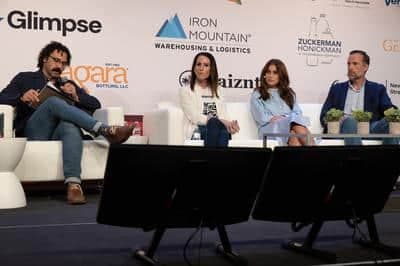
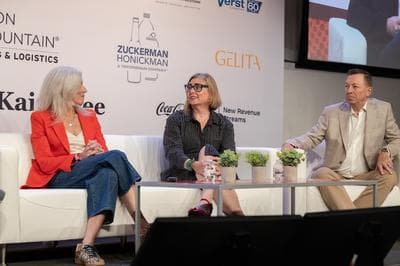
Ray Latif [00:27] All right. Welcome to day two of BevNET Live NYC 2026. We meet again. My name is Ray Latif. I'm the editor, producer and host of the Taste Radio podcast, which is the number one podcast for the food and beverage industry. I'm also the host of the New Beverage Showdown, BevNET Live's signature beverage brand competition. We've reached the final round of the showdown, which is presented by the new revenue streams unit of Coca-Cola North America, and gives early stage in promising brands the opportunity to present their business plans and products to a panel of expert judges and the audience here at BevNET Live. The winner of the two-day competition will receive an industry awareness package worth $10,000. And join a short list of brands that have triumphed in the showdown. You've heard of them. It includes Poppy, Health Aid, Malk, and Can. Out of the 12 semi-finalists who presented yesterday, 6 have made it to the final round. Let's talk about the rules for the finals. Each of the 6 brands will have 4 minutes to present and receive 4 to 5 minutes of immediate feedback from the judging panel. The final round is split up into a morning session and a later morning session. With three brands presenting in each. After all the brands are presented, the judges will convene, pick a winner, and we'll announce that winner here on stage at 12:45 p.m. Eastern time. Just to note, there's no audience voting in the final round. We have an incredible judging panel for this round of the showdown. Let's introduce them, beginning with Samantha Fletcher. Who is the senior category merchant for the newly established adult beverage non-alcoholic category at Whole Foods Market. Samantha is helping to shape what this new category means for both the company and the broader alcohol and beverage industry. One of my favorite people in the industry, bar none, Samantha Fletcher. And of course, another one of my favorite people, Dan White. Dan White is a seasoned consumer products executive with a track record of building and scaling new growth platforms for some of the world's most recognized food, beverage, and lifestyle brands. As the former chief of new revenue. at Coca-Cola North America, he led a diverse portfolio spanning beverage, alcohol, coffee, premium water, ready to drink mixers, home equipment, and emerging business models with end to end P&L responsibility. Dan White, thanks for joining us again. Quickly becoming one of my favorite people in the industry is Lynn Altman, who's the CEO of BrandNow, a boutique brand strategy and innovation consultancy that has spent 18 years turning cultural shifts into products that actually move. Her client roster spans Fortune 500 and emerging brands alike. She also brings the rare perspective of both consultant and operator. She founded and sold two of her brands, Mama Bear and Parentgiving.com, and is the author of Brand It Yourself, The Fast, Focused Way to Marketplace Magic, Lynn Altman. And I'd be remiss if I didn't say that John Craven was also one of my favorite people in the industry. He is the founder and CEO of BevNET. John's a widely recognized authority on the beverage industry and is frequently cited in mainstream media. His vision shapes the editorial, publishing, and positioning of all BevNET properties, including BevNET.com, TasteRadio, Nosh.com, BevNET Magazine, Brewbound, and our associated events. John Craven. All right, I am very excited for all the founders that are going to be presenting today. It's going to be a great competition. Let's get right to it with our first founder. His name is Nicholas Maxfield. He is the founder of Kabu Latte. Come on out, Max, uh, excuse me, Nicholas. Welcome back. Good to see you. All right, you got. Your microphone. You've got a clicker, and please keep an eye on your timer.
Speaker 2 [04:42] Thank you, Ray. Good morning. Great to see everybody again. It, it's uh Everybody's in such a good mood, it's almost like something amazing happened in New York last night. Uh, I'm excited to share this stage with 5 awesome brands, and I'm excited to talk a little bit more about Kabu. So Kabu is different. Most lattes use dairy or alt milk. We use cacao. So same bean that chocolate comes from. It has a naturally creamy component, and we blend that creamy component with cold brew coffee. Ready to drink consumption has more than doubled since 2023. And we are at a moment where the consumer is trading up. The category is premiumizing. But the latte remains fundamentally unchanged. Kabu is a structural change to a mature latte category. And we know that historically, the consumer has rewarded brands that have brought about structural change in their respective categories. Now, we're in the early stages of experiencing those consumer rewards. We're seeing strong velocities of natural and specialty retail. We're seeing even stronger velocities in offices. 3 days after we landed on Google's Pacific Northwest campuses, we got a phone call. They can't keep us in stock. We're flying off the shelves. We were told to expect orders of 80 cases a week from Google. They're going through 200. Now, this is something I started in my kitchen in a blender, and I knew right away I had something special, something that I had to share it with as many people as possible. So I rented a commercial kitchen space. I made Cabu by the 4 gallon keg. I bought a tricycle. Loaded it up, peddled around Denver, and served it on the streets. This new flavor profile. And this velvety smooth mouthfeel from the pairing of these two beautiful ingredients. It just makes people light up. And if you've stopped by our trike, that very same trike, by the way, I pedaled around Denver. I've probably had the privilege of watching you light up when you try copy. Now, these responses are almost universal, and they're really our purpose, our reason for being. So now we're here, we're We're Ready to drink. We've been on the market for less than one year. We're seeing strong velocities. We're seeing repeats. And we're experiencing overwhelmingly positive consumer response. We're growing fast. It's Such a privilege. To be The first brand to share this beautiful combination of ingredients with people. But the motivation remains the same. It's to Share something with people that Really causes them to have that special response of just surprise and delight. Thank you so much. Thank you, judges.
Ray Latif [08:42] You can hang on to that because you're gonna hang up hang out with me up on stage here, yeah, yeah, well done. Yeah, perfect. All right, let's start with Samantha. Uh, you know, the semifinal judges roundly praise the taste of cabu latte. What do you think? Do you have any questions for Nicholas? Um, no questions, just congratulations on a great product. Thank you. As a non-dairy person, I actually very much appreciate this. Um, one thing that I did not catch though was the actual brand name. What was the inspiration behind that and if that ties any into the ingredient portion of your drink?
Speaker 2 [09:17] I love that question. We were about to print all of our materials, and I needed a name. In an hour or so I said call it kabu. Ka is for cacao. Boo is for butter.
Ray Latif [09:28] There you go. There you go indeed. Thank you. Thank you, Dan. Nicholas talked about consumers wanting to trade up in coffee. Are they trading up to kabu?
Speaker 3 [09:37] Yeah, I mean, I, but I think, um, What I, I tasted the product yesterday, uh, out at the kiosk there, um, I thought it was delicious, and I thought this idea, and, and then you explained it really well on this idea around um the new standard for creammius. I, I would love to see, I mean, I see the frame of reference of what you have on the slide here of um how hard they're leaning into the structural change, and, and I do think that the brand itself can dial up the idea that it is the first to drive structural change through the cacao, and it's, and it's a bit hidden, it's, it's recessed. I think you'd be more proud of that, that piece of it because that, that. Taste profile of the creaminess really, really delivers on that. Um, it's a beautiful brand with like a great, great taste. I think just needs a little bit more work on that positioning piece of it.
Speaker 2 [10:25] Thank you so much.
Ray Latif [10:26] Yeah, not a lot of time for consumers to understand what you're selling. Does Kabu, does it speak intuitive to you, Lynn?
Speaker 4 [10:34] Um, it doesn't, well, as a name now that I know that Kabu stands for cacao butter, like, I wish I knew that the whole time. I had that as one of my questions because I felt like it should be called like. Cala for like cacao latte or something that really signaled what it was, so making that distinction more clear, uh, I think would be really helpful that that is the magic ingredient. I think it also helps tell the story of the creaminess and where that comes from.
Ray Latif [11:02] Yeah, a lot of people drink coffee for caffeine, and after that Knicks game, we probably need a little bit more caffeine this morning. John, what do you think about the functional benefit and the taste of the product?
Speaker 3 [11:10] Yeah, I mean, I think the taste is really, really good. Um, I think, you know, my, I don't know, just gut reaction to this is I would just caution trying to be too much of like an educator on cacao, um, because I feel like we've seen a lot of Beverage brands in the past that have tried to champion cacao, cacao juice, etc. and it, it kind of just goes over to the consumer's head. Um, and I think the more you can just dial this in on like, it's super tasty, it's familiar, but a little elevated, you know, obviously these nuances are like super hard to actually execute, but um I mean, you have great liquid, um, I think the brand is fun, um, you know, it seems like something that it's just a modern brand and solid liquid, like it could be that simple. So, um, and obviously like the plant-based side of it is, is huge too, so. Thank you. All
Ray Latif [12:08] right, Nicholas, well done. Thank you so much. Thank you. Yeah, round of applause for Nicholas Maxfield. Keep cheering. All right, whoever was cheering like that, keep more, more of that. That's good stuff. Thank you. All right, up next we have Ben Starmer from Dadgrass. Come on up. Good to see you again. How are things? You know the microphone? And you got your clicker. Please keep an eye on your timer.
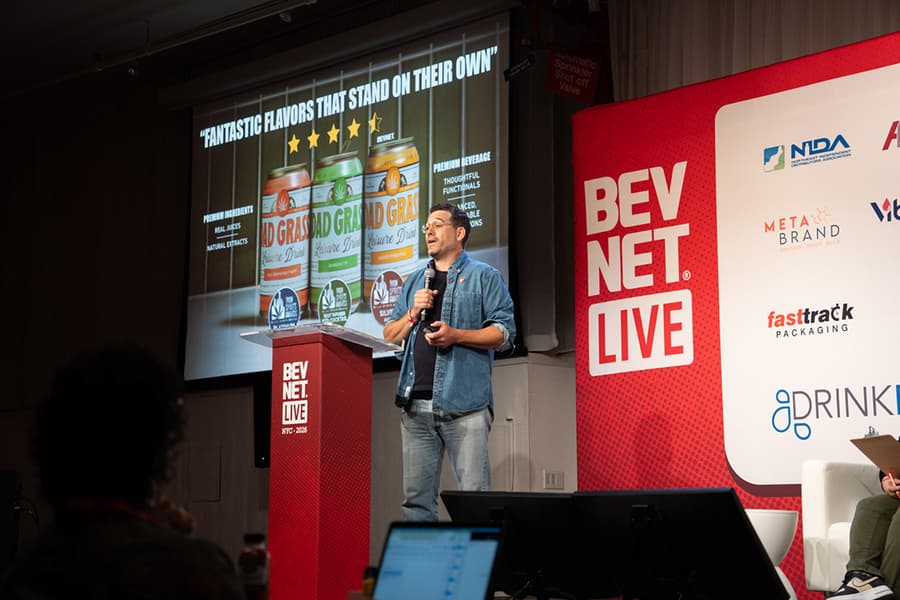
Speaker 5 [12:51] Hi y'all. My name is Ben Starmer, and I am one of the co-founders of Dadgrass. Um, I said this yesterday, but I'm gonna say it again. We believe that today's weed gets you too damn high. Not that there's anything wrong with that. We just couldn't find a dose or a beverage that we truly, truly loved, so we created our own, introducing Dagrass leisure drinks. They're available in both 3 and 10 mg and are made with a thoughtfully selected blend of other functional ingredients including CBD, lion's mane, and L-theanine for a well rounded, balanced, and elevated experience that prevents the paranoia and anxiety that a lot of people experience when they consume THC. But the defining feature of Dagrass isn't the dose or the functionals, it's the flavor, because we believe enduring beverage brands are built on taste. Because if it's just a product that's just going to get you high, that's a means to an end. But if you've built something that people come back for again and again, you're building the foundation of a real brand, and that's what we're trying to do. We've crafted these beverages with real juice, natural extracts, with the intention of creating something layered, complex, crushable, craveable, and worth coming back to. That approach has earned us recognition from our lovely host. Thank you so much, Bevnet. Um, and most recently, the best-infused RTD cocktail at the High Spirits Awards. But taste isn't all that matters, and we believe that creating a deep emotional connection with your customers is essential to building an enduring brand. And building a brand with a capital B is exactly what we've been doing for the last 6 years. For us, that means going beyond just advertising. Instead creating an immersive world that you can step into, from a rich fan community, national press, and partnerships ranging from retailers to cultural figures. We're honored to have just announced our collaboration with the Miles Davis Estate, Bitches Brew by Dad Grass. And it's all working. Our audience spans generations. More than 50% of our fans are women, despite the name Dad Grass, and nearly half of our beverage consumers on D2C come back for at least one more order, but usually 5 to 10. There's someone in the crowd that's had over 20 orders in the last year. Because at the end of the day people build relationships with brands, not products. We're still early on our distribution journey outside of DTC, but we're seeing very positive signals. We chose to partner with top DSD beer networks, or wholesalers, excuse me, largely within the Molson Coors network. We believe in going deep before going wide. And we're learning the business along some of the best distribution networks in the country, one market, one distributor, and one account at a time. We recently launched Connecticut, a market with a 3 mg potency cap, because we believe it offers valuable insight into what a more standardized future for the category will look like. And with that, I'd like to address the elephant in the room. While there is certainly some uncertainty in the air, we're incredibly confident in the long term future of THC beverages. Whatever happens in the near term, one thing is clear the consumer demand is undeniable, and we don't believe that regulatory regulatory uncertainty changes the long term opportunity. Today thousands of retailers across grocery, convenience, and liquor are already participating meaningfully. And major retailers like Target, Sprouts, and Circle K continue to. route.
Ray Latif [17:02] Well done. Uh, Dan, let's start with you. Low dose THC leisure drinks. What do you think of the concept?
Speaker 3 [17:08] Yeah, I, I love it. I, you got everything in before the gong anyway, so it was really great. Um thanks. I, I, you know, um, we're, oh, I'm excited about this, about this brand. I, I think it's a really fun brand. Um, that links the past with the future, um, and kind of ignores all the sciencey pieces and the kind of the gummy pieces of the, of the brand. I, I also see a brand just in, in regulation that if, you know, something was to happen either which way, that, you know, like from a recess to a trip that it still has legs. I mean, I love your graphics and the positioning. You know, of, of the brand overall, and I love the idea that um every distributor, every retailer is gonna be looking for sustainability. So this idea of like the, the high amounts versus the low amounts, um it's really good positioning.
Speaker 5 [17:54] Thank you so much. I appreciate that,
Ray Latif [17:56] Lynn. In the sampling room, there's some discussion about the name Dad Grass. What do you think of the name and its appeal to a broad range of consumers?
Speaker 4 [18:02] I love it. I mean, I think it's such a nod. It's so lighthearted, unlike something like Man cereal where it's polarizing. Like there's really nothing polarizing about Dad Grass. So as a woman, you almost feel like I'm just drinking a Bud or a Miller. It has that beer, that general, that general beer quality to it. I do have a comment on the flavors. One is a yuzu grapefruit, and they're delicious, but then the other one is margarita, so I would say like choose an ingredient lane and keep it consistent and don't confuse it with a cocktail because I think that muddies the waters. Yeah,
Ray Latif [18:38] thank you so much. Yeah, John, do you see Dad Grass is pulling from beer drinkers or the beer industry as, as an alternative?
Speaker 3 [18:44] I mean, it definitely looks like a beer for sure. Um, I think also, obviously there's another. A dad brand and happy dad that's out there kind of like, you know, helping to build that concept just in mainstream culture, I think that's kind of a smart thing to latch onto. And yeah, I don't know. I mean, I, it does kind of like the other judges said, I feel like it just has a brand that feels, I don't know, it feels kind of comfortable, approachable, which is not something I'd say about every, you know, cannabis beverage we've seen out there. So, well done. Thank you so much,
Ray Latif [19:21] Samantha, no THC drinks in Whole Foods yet, but as I asked you before, I mean, do you see Dad Grass as a brand that could potentially live in Whole Foods? I do, um, again, like you said, without that being a category that we're, we're really looking for products in, in general, I think that it reads very easy. It's, um, the branding of it looks like it's been around for a really long time, um, which I think is very hard to get the simplicity behind it. Um, also, one thing that I, I do want to give you a lot of credit for was your distribution plan that you just talked about. You are very intentional with starting in very, um, certain sections. A lot of people will try to go right out of the gate. We want all national or we want all of California and New York and Florida. So, um, hats off to you for being very intentional with your distribution plan.
Speaker 5 [20:11] I appreciate that a lot.
Ray Latif [20:13] Thank you. Good stuff, Ben. Well done. Thank you so much. Thank you. Thank you. All right. Moving along here with our 3rd finalist for part one of the New Beverage Showdown Finals, we got John Maloney from Dirty Virgo. Come on up. Hello again. You got a microphone, a clicker,
Speaker 6 [20:41] microphone,
Ray Latif [20:42] microphone. You can use both if you want. Please keep an eye on your timer.
Speaker 6 [20:47] Hi friends. My name is John and I am the co-founder of Dirty Virgo, where we make virgin cocktails with electrolytes for if thou knowest, thou knowest virgins have more fun. So, by way of introduction, this is myself and my co-founder, James. And between us, we have over 17 years' experience in the beverage industry, including time at Anheuser-Busch, Pernod Ricard, Blue Bottle Coffee, and Clean Co. Non-alcoholic Spirits, which is to say, we've been watching beverage trends for a while now, and one thing is clear and unmistakable. Alcohol consumption is still going down. Last year, the $308 billion industry declined 5% in volume, while non-alcoholic beer alone has grown over 111% since 2021. And yes, beer has obviously led the way so far, but recent reports are showing that cocktails are now the most demanded non-alcoholic option, especially in the on-premise. But despite the hype around the category, there is still not a clear category leader. So put Simply if you ask the average person on the street to name a non-alcoholic cocktail brand, they still can't. And why do we think that is? So this category has been built in the fringes of health and wellness with functional ingredients and supplement positioning. Um, but we're getting to a place where just the everyday social drinker is trying to cut back, and frankly, not everyone wants to guess what a blackcurrant aperitif with a proprietary afterglow blend is. So if non-alcoholic cocktails are going to break into the mainstream, we need a brand that acts less like a supplement and more like a cocktail, and that is what Dirty Virgo is being built to be. So our products are simple. We make virgin versions of the nation's favorite cocktails that are low calorie, low sugar, sweetened with organic agave, and fortified with an electrolyte blend. They are light, they're refreshing, and they are actively hydrating, making them the perfect non-alcoholic companion from pregame to last call. They're also adaptogen and nootropic-free, which means they're perfectly safe to mix with alcohol or THC, which is a good thing considering that 90% of people that purchase non-alcoholic beer, wine, and spirits still do drink alcohol. This is a movement about moderation, not necessarily sobriety. So our brand is a big joke about what it means to drink virgin. Virgo means virgin in Latin and is personified as the innocent and pure virgin maiden. So dirty Virgo takes that stereotype, flips it on its head, and just makes fun of it. For example, on social media, we do confessional booths where people can step into the confessional booth, confess their drunken sins, and earn back their virginity. And in bars and clubs we hand out 5 cards into the crowd that can be lost at the bar in exchange for a free can. We launched Dirty Virgo about a year ago and we during our initial proof of concept, we outsold Athletic Brewing in our on-premise accounts and we had above a 50% conversion rate at grocery store sampling events. Today we are distributed in a little over 100 independent retail stores here in New York, and we are in the process of closing our first chain authorizations up and down the East Coast. I'm going to skip channel strategy for time, so ask me about it afterwards. But to sum it all up, we have a team that is uniquely positioned to build the category defining brand. We have marketing that is primed for viral attention and a product that is custom built for the tastes of the mainstream moderator. So thank you for the time and if you remember nothing else, remember that virgins have more fun. Thank you.
Ray Latif [24:48] All right.
Speaker 6 [24:49] And this is
Ray Latif [24:50] James. John, we have James. You guys can slide up here so that the judges can see you. Lynn, it was interesting to hear about the fact that consumers, most consumers can't name a non-alcoholic cocktail brand, but do you think they'll remember Dirty Virgo?
Speaker 4 [25:04] I think they will, and I think the challenge is going to be that dirty is showing up in a lot of like dirty Shirley, dirty soda. So how do you make sure that Virgo really stands out as the nod over the dirty? But I think it does stand out, and I think the simplicity of the concept is what's going to be the thing that distinguishes it from the rest.
Ray Latif [25:26] Well, the proof is in the pudding, and for someone who likes cocktails, I like cocktails. It's got to taste great. John, what do you think of what you drank?
Speaker 3 [25:33] Yeah, I think, you know, the flavors are definitely solid replications. You know, I think what's interesting to me is like, I don't know, I'm someone like I loved your Italian spritz, like I like a Negroni. The other skews probably aren't for me personally, which is kind of interesting when you look at a brand that you kind of like and you only want to consume one of the skews, but I understand the strategy. My only other feedback separate from the flavor is that I feel like there's a little bit of a disconnect between the design of the product and sort of the more punchy image that you have in the slides, like the actual execution of the can feels a little maybe too reserved, is just my gut reaction to it. So, um, but I think otherwise great, great breakdown of like the state of the category and the strategy, like, I think that's spot on, so.
Ray Latif [26:23] Thank you, Samantha, this, this brand is your wheelhouse right here. I imagine you have some questions for the guys. I'm sorry, I said I'm looking at the slide. I know, it's good, it's good looking. I imagine you might have some questions about their brand strategy. Um, do you have any thoughts about how they're rolling out and how they're getting attraction and traction for the brand itself? Yeah, absolutely. So as far as being part of the mocktail up and coming, you absolutely are on point with it is about to be a very big thing. Um, we're not quite there yet as a category, but you're about to be. So I think you're. Very spot on with it. What I very much so appreciate with what we saw was that you have an on-premise plan as well as a retail off-premise plan. I think that that's where some brands can maybe go amiss is only wanting to do one or the other. So I think you're very, you're very spot on with that. Um, I enjoy that you. Did a little bit of adjusting to the name branding, to the actual name of it. I think that that was key for the retail side of it. I do want to know your opinion on if you think that there's any more tweaking that might need to get done to the branding. Do you think there's a little too much gimmick behind it? Do you think you need all of the All of the things,
Speaker 6 [27:37] yeah, and I mean one of the things, um, you mentioned earlier that the can is a little bit simpler than maybe the world around it, and we kind of did that on purpose because I wanted to be able to sit as a mainstream product, and I feel like we can tone up the gimmick depending on the environment. So if we're at a music festival, we can have the confessional booze, we can have it be crazy, but it can also sit on a Whole Foods shelf and not feel out of place. Um, so there is a little bit of flex up and down I feel like we can do there, um, and you know, brands of all. All the time, so I'm sure that as we continue to learn more about the consumer, our callouts will change a little bit. The packaging, the way we lay everything out, will adapt to that, but we are trying to be intentional about not being so in your face all the time so we can flex to the situation.
Ray Latif [28:22] Yeah, no, and I think that I'm glad that that's your answer. A lot of brands think that they have to put every single cool thing that they want to do at a concert on the actual can itself. So I think it's very important that you recognize that you. Give that extra, that extra attitude, that extra sass with the experience of your event, not necessarily with the text on your can. So just keep that in mind as you continue to innovate.
Speaker 6 [28:47] There are
Ray Latif [28:47] also
Speaker 6 [28:47] lots of Easter eggs on the can, so if you've ever do some deep reading into the ingredient lists and stuff, because you'll find surprises.
Ray Latif [28:55] We'll have to do that in the sample room when we get back there, Dan, there's still some questions about how big this category can get. What do you think about the opportunity for non-owl cocktails and any particular Dirty Virgo?
Speaker 3 [29:06] Yeah, I think, oh, that's a question for Samantha for sure, you know, cause we, we debated in the back room, but, but I would say that the um I think, the insights and the, and the behaviors that were in the beginning part of the presentation there are, are undeniable, right? So it's the category itself will continue to form. Uh, I think that um So let me say that it was like the tale of Two Cities. I wasn't excited about this when I drank it from the can. I, I was excited about the liquid, but I wasn't excited about the can. I'm really excited about what you guys just showed. So what I said is that the pack doesn't deliver the brand story as well as it can. And this idea of the confessional booth at, at, um, at, at festivals is like I think that actually is your brand strategy that has to come. come across and, and, and so, as, as you were speaking about it, what I looked at is I said that this idea that you're actually bringing kind of liquid death positioning into the, the, the non-alk cocktail um category, and that's actually really exciting for a, for a code breaker, and I would just, I would just lean into that harder.
Ray Latif [30:09] Yeah, I mean, just staying on that, did you want to address the canned packaging in the front of the can? In terms of your design and what you were trying to come and get uh get across to the consumer,
Speaker 6 [30:18] um, yeah, I mean, I think, um, you know, we wanted it to feel premium, we wanted it to feel like something you were excited to carry around a pregame, not something you were trying to hide, um, you know, I, I always sort of like comedy or humor that looks very serious at the front, and then once you look into it, you're like, oh, there's a joke here. Um, so again, I do think, you know, I want it to be simple, I want it to be sleek, but I agree that we can continue to improve how it stands out. Shelf and how we sort of communicate those things, um, so yeah, definitely room for improvement. We're very early on it. This is, I remember for our second production run we tested 20 shades of gold to find the one we wanted on the can, so I'm sure we will test 20 more before the day is done. So
Speaker 4 [30:59] and speaking of that, I think the stained glass with the cocktail interpretations on them, like I think that can be a really great pattern and iconography that you can bring forward and even make bigger.
Speaker 6 [31:10] I also think we're mostly in singles right now and so we're launching. 4 packs in our next production run, and I think that'll give us a lot more real estate to really build that world a little bit more, um, and I think that block um can do a lot for us too.
Speaker 3 [31:21] Yeah, I think 222 real quick things too is, is that you're, um, I mean you already took feedback from the market from Dirty Virgin to Dirty Virgo, and so, you know, I think as you continue to listen to the market for, you know, like getting your brand edge in the category itself, I think is, is gonna be great, and, and I would say it's like the cans, like, you know, don't be wrong, the can's not, it's not bad, it's just your presentation is great. You know, you're, you, the, the rest of the positioning is great, and so I just want to see that like come through here. I think people, you know, have a tendency to say, well, the point of sale is going to do the job or the activations are going to do, do the job, which is so expensive or so um either so expensive or so unlikely that that's going to happen, so, the pack has to do the hard work.
Ray Latif [32:02] Outstanding feedback. Well done. Great job, guys. Thanks so much. Thank you. Thank you, thank you. Thank you. All right, well, before we wrap up here, you know, it's going to be interesting to find out how the judges evaluate these brands. I think as a whole it's really helpful to try to understand. How people who have been in the business evaluate early stage brands, and not just the brands up here on stage. If I could just go quickly amongst the judges and ask, you know, what did you like most about what you heard in the presentations? And what do you think brands and founders need to do to make that retail pitch such that, make that investor pitch such that you're getting the interest that you want to get, Samantha? I am most quickly drawn to brands that are very concise about their brand strategy. They know what they are and they know what they're not. They know, um, so this last brand, for example, they very intentionally have used Italian spritz, margarita, and a mule. They are a mocktail brand, but they are choosing very intentionally to use the format of classic cocktails and their. Gaming convention versus other mocktail brands that maybe just try to use flavor combinations. Neither one is better or worse than the other, but you have to pick a lane and you have to stay with it, especially in the adult beverage non-alk space. There's a lot of brands that could be in the coffee, tea, water aisle and could be in the adult beverage aisle. The brands themselves need to choose and make that decision before. Pitching it to a retailer, and they also need to know what each retailer's definition of adult beverage versus the coffee, tea, water aisle is. So know that. And then when you pitch it to me, it is very, very clear to me who already has those brand decisions. And the easier you can make it for me as a merchant to know what you are and what you aren't, the more likely you are to move forward in the process. Outstanding, Dan.
Speaker 3 [33:58] Yeah, I mean, I think, I think, um, the, the fir the first thing is in the forum that you all have created for founders to get up on the stage and talk to the entire industry is, um, is, is the most risky and rewarding. Conversation there can be, I mean, like you're surrounded as a founder with friends that are gonna tell you this is awesome, you know, and I, I love it, and I don't wanna break your heart, you know, on this, but I think the industry yesterday when you were talking, you know, when, when the conversation with Ben was like the industry is brutal, the people in the industry are a little calloused, and so the industry rewards optimism, and every new brand that comes in has this optimistic point of view which is so refreshing to be, you know, to be part of. But I, but I think that the idea of is, is, um, this is where the category code break. actually happens, you know, nobody inside the industry is actually going to do that, you know, when we think about it, I would say it takes like insiders, outsiders, legends, and visionaries to actually make something actually good happen, and it's always going to be an outsider that comes in that gets the legends, you know, and the insiders to make the change. And so let's just keep at
Ray Latif [35:00] that. The industry is brutal, but there's the industry rewards optimism. I'm going to write that down. Yes, Lynn, your thoughts? You need it. Yeah,
Speaker 4 [35:07] yeah, yeah, I'm feeling very optimistic, um. So what I look for is, does it, does it create a category or does it reinvent a category? So like with Kabu, it's really creating a new category and I find that exciting. Um, whereas with Dirty Virgo, for example, it's making a category that's already there, really honing in and figuring out how to make it better, how to own something very specific, and even with Dad grass, like going into a category that's nascent but standing for one thing and knowing exactly who it's for, exactly who it is, and embodying that, and those are the things I think that consumers can also feel when they know it's for them.
Ray Latif [35:48] Good stuff. John Craven, you get the last word.
Speaker 3 [35:51] Yeah, I mean, I think, um, I guess building on what the other judges said, I mean, I feel like, you know, first of all, like all of these ideas that are getting on stage feel like, you know, they're bringing something innovative to the table and, you know, a lot of times I think, um, you know, new founders kind of want to come into this industry with something that's like the disruptor, game changer, radically different. And, you know, I think in the case of these brands, they actually are, you know, kind of just. Uh, innovations on things that people already consume, right? Or are starting to consume more of in the case of cannabis or cocktails or any cocktails and, you know, I think in general, the more you can just simplify it for the consumer where They realize that maybe gap between what they're consuming now and the new product is like actually pretty small and worth the risk, like the better off you are, you know, I think um The more you're out there having to really educate people, like, the harder it's gonna be, um, and I think, you know, the brands that we have up here today, like, they're, they're all like right on the cusp of that, if nothing else.
Ray Latif [36:54] So, yeah, well, I'm really excited that we have the judges back on stage at 11:00 a.m. to talk to three more brands that'll be presenting in the final round of the new Beverage showdown. Kudos to the three brands that presented right now, but we'll be back on stage at 11:00 a.m. Thank you all so much for listening. We're gonna turn the stage over to Jeff Kleinman.
Related Videos
The State of Cannabevs: Strategy on Deadline
With federal regulations about to put this fast-growing industry into a time-out, we look through the lens of brands, distributors, and lobbyists for potential futures for this fast-growing segment.
AI and Online Retail: Brand Building Meets Agentic Commerce
In a special tactical presentation, sales, marketing, and tech experts share a concrete playbook for making your brand legible to AI agents — without gutting what makes it human.
Retailer Profile: Launching and Maturing with Whole Foods
A rare founder–buyer conversation on what makes a pitch resonate, how brands can build productive retailer relationships, and what growth actually looks like once you’re on shelf.
Exit Interview: How Dirty Shirley Cleaned Up
Longtime beverage marketing veteran Adam Kost discusses his lean startup, proof-of-concept strategy, the key insight that gave Dirty Shirley the oxygen it needed to grow.
Disruption at Scale: A Conversation with Athletic Brewing CEO Bill Shufelt
Athletic’s rise has reshuffled the deck of beverage categories. Shufelt shares how he's navigated explosive growth and what he’s learned about raising capital, brand positioning and category creation.