Search across the BevNET CPG Media network including BevNET, Nosh, Brewbound, Taste Radio, Nombase and CPG Jobs.
Meet the Investor 3: Rogers Healy, Morrison Seger VC Partners
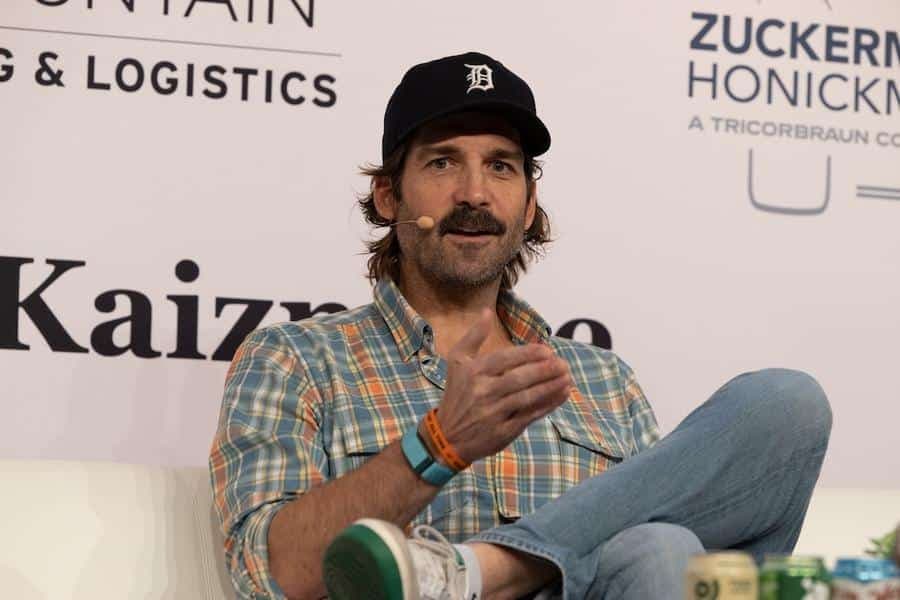
Venture Capital firm Morrison Seger, or “MoSe”, has quietly – and quickly – become one of entrepreneurial beverage’s most active investors. Founder Rogers Healy breaks down his perspective on what makes for investment grade innovation in the CPG space.
Speaker:
Rogers Healy, Founder & CEO, Morrison Seger VC PartnersTranscript
Note: Transcripts are automatically generated and may contain inaccuracies and spelling errors.
Speaker 1 [00:25] My guest on the stage, I should say, is Rogers Healey. He's a multi-exited founder, entrepreneur, and investor with over 20 years of experience building businesses. But trust me, that's really just like the short version that I can give you in the time that I have, because Rogers has been in a Disney movie, he sold clothes, he's run one of the largest real estate firms in Texas, and he's one of the most prodigious private collectors of music memorabilia that I think you'll probably ever meet. Across his diverse career, Rodgers has leaned on his intuition more often than not, and like the rock legends who inspired the name of his venture capital group, Morrison and Seeger, Rodgers has the ability to tap into inspiration where he finds it, and he's been finding it a lot in beverages poppy, bath water, sanzo, slate, goat fuel, spade, Stiller, Zico, Little Saints, Cove soda. Those are just a few of the next generation brands that you'll find in the Morrison Secret portfolio. From functional beverages to reimagined better for you versions of classic favorites, Rogers assembled a forward-looking portfolio of disruptive drinks while also backing the technologies that are shaping our future like anthropic Kalhi and OpenAI. So over the next 20 minutes, we're going to break down his perspective on what makes for investment grade innovation in the CPG space and maybe tap into a little of that inspiration ourselves. The Q&A lines are open, so please send us a question, and Rogers, come on up.
Speaker 2 [01:51] Good morning. Good morning.
Speaker 1 [01:56] Come on
Speaker 2 [01:56] guys, go Knicks. Better, yeah, OK.
Speaker 1 [02:00] See, I should have worn my hat on stage, but you know, I know, next time, next time
Speaker 2 [02:03] I use this app called Hotel Tonight where you can usually book a hotel like as you're landing in the city. And I did it while landing in New York on Tuesday and ended up finding a hotel. The only one available was a block away from Madison Square Garden, which was a lot of fun last night when I was trying to sleep, so. Go next. These are some of our beverages that I wanted to put on display. Um, excited to be here. Thank y'all for, uh, spending some time with me.
Speaker 1 [02:29] Absolutely, I'm excited to have you here. What's, how do you start your day when, uh, out of that assembly right there?
Speaker 2 [02:34] Um,
Speaker 1 [02:36] so look, I, I,
Speaker 2 [02:37] I love beverage, and I think everyone's gonna kind of tell you a different version of what it's like to be an investor in beverage, but I'm, I'm a frat guy that is still kind of stuck in a frat guy's body. I drink a lot of beverage, and I drink them throughout the course of the day, um, but. Yeah, I drink a lot of water. I drink a ton of sparkling water. I'm an early Waterloo investor and we're friends with the team, and one of the questions I've always asked them is like on the website, it doesn't say is there a limit to how many you can have per day. So yeah, I'm always, always drinking, always hydrating,
Speaker 1 [03:08] pushing the limits. I like that. Yeah, so I mean, so again, you know, coming from a perspective of you love beverages, you're a consumer, you drink a lot, tell us how you got sort of hooked onto the beverage investment game and making deals and the business side of the business.
Speaker 2 [03:24] Yeah, sure. So like you said, my background is real estate and I was really fortunate-ish to kind of find success early in real estate, um, kind of serendipity, but also, you know, kind of forced my way into finding. Success in business. I don't, I don't have a background in um being a winner and that was kind of my calling for real. I, I was a classic loser in the sense that I tried everything and I kind of sucked at it and then I got into real estate. I was like, man, this is the first thing I got to do that I just can't quit and you know, it was great and I found in real estate the best way to make money or the best, you know, the definition of a good deal is a deal that makes you feel good, but the way to make money in real estate is on the buy. And so my mind was kind of trained early on to look for good deals and as I grew my real estate companies, you know, like you said, I was really fortunate to have, you know, a, a pretty big firm, but, you know, I, I was good at finding talent and when you're a founder of a new company, an old company doesn't matter, you've got to have some sort of differentiator and, and mine as a founder was spotting talent and the parallels for consumers, especially beverage, are so applicable. That I would find these deals early on and like with Waterloo, I had a meeting at my office. This was 8 or 9 years ago and this guy walks in. He was a creative guy, and he walked in with a with a black cherry Waterloo. I was like, What's that? He's like, it's a sparkling water brand. I was like, that's really cool. How do I get access? How do I invest? And I think that's just kind of the world that we have to live in as founders as just being like relatively not ruthless but persistent to a point where people eventually respond.
Speaker 1 [05:00] So is it more about that intuition and sort of being flexible and being able to read, you know, the, the moment, or do you guys have like a, uh, you know, investment thesis that sort of sets the parameters around what you do and do not want to do? Sure,
Speaker 2 [05:16] uh, and again just to kind of be very level set, there's a lot of people like, especially in New York City that are trained investors that have worked for large companies and there's a process which we all have to follow, but It starts with a feeling, you know, and I think whether it's seeing the logo, meeting the founder, tasting the actual liquid, that's a feeling, and I don't care what anyone says, that's how it starts, and for me that is our process and as this has become, you know, you know, more and more established, the company and Alexandra from my team is on the front row where she belongs. Uh, you know, I, I tell people that we invest in stuff that is really simple, that has no chance of being controversial, right? And in the beverage space, there's a few verticals that just kind of makes sense and you know, the process is, you know, you got to try it, you got to taste it, you got to see it. I got to like the logo, but the team is equally as important, right? Because as a founder myself and as someone who's grown businesses and sold them, you know, you all that have been there, you know, it's not easy. And, and especially in beverage, this is the hardest vertical in consumer period, right? Period. There's no way to make a drink like, like a lighter weight. It's, it's beverage and it's, it's expensive to do it. So you got to have your own smell test just to make sure that you can poke them and prod them knowing that like you're in this for probably a long time. You're probably gonna have to raise a lot more money than you think. You're probably going to have people that eventually create a company with the simple goal of taking you out, and that happened to me in real estate. There were companies along the way that literally were founded just to pick off agents that I had grown from scratch and the first few rounds of that, I was like, Oh my God. And then finally I was like, screw it, let's go. Let's go to war. And I think that's the headspace you kind of have to adapt to as this progresses.
Speaker 1 [07:04] Well, so we're talking about like intuition. I mean, is there a, is there a ranking? Is there a priority? I mean, you have a, you have a great meeting with the founder. You really connect with them, but maybe the package needs some work. Maybe the liquid needs some time. Is, is that something you're gonna go for? Sure,
Speaker 2 [07:20] you know, and, and sure, right? And I think that. I, I don't mind super early stage stuff if the team is realistic, right? And, and there's a gentleman over here that has an awesome company that, um, you know, he's already pivoted and I think that that's crucial. I think that it, you know, being open to feedback without emotion is a really hard thing to master, and it took me, you know, I'm 46 years old now. I look a lot older. But I was 24 when I started my real estate company and there was no way in hell that I ever was going to be open to feedback because in my mind it was named after me, it was my idea, it was my vision, like stand out of the way and then eventually over time like a lot of these things that kept happening to me were my fault, right? And I had kind of an aha moment where I was like holy smokes, most of the issues that I've that I've experienced are because of me. So I think having that headspace as a founder, like I met a 17-year old founder in the lobby. Just freaking awesome, right? And the first thing he said, he's like, I, I love help. I was like that is just so valuable, but you know for me I had to get baptized by fire where some people are just, you know, born smarter or have, you know, more experience than I do and that's, that's really difficult, but it takes time, right? And you know, and especially with aluminum, like if y'all have been in the game for a while, last year was not an awesome year for aluminum pricing. You've got to figure it out, right? And you've got to grow a little bit slower than you think. Nobody in the beverage space ever won by being everywhere overnight, period. That's how they lose, right? But that's a hard thing to grasp with a first-time founder, a first time operating team, unless they have people helping them that have actual experience.
Speaker 1 [08:58] So I mean again it's like
Speaker 2 [09:00] you're probably such a lonely couch. Like I feel like anyone want therapy, yeah, doctor tell me
Speaker 1 [09:07] I'll send you the bill. Um, so I mean enthusiasm is certainly one thing. You meet a lot of enthusiastic founders who are all about their brands. What's the next level of that? Because I'm sure again you're going to meet a lot of people who have a lot of energy. How do you drill down deeper to see if this is really the real thing?
Speaker 2 [09:24] Reality, you know, there's got to be a level of reality with this. I'm a very ambitious guy. I'm a dreamer, and you know I've found ways to stay anchored with my faith and my family and You know, with experience, and I think that I, I'm decent at giving advice because I've made so many bad decisions over the course of my life that cost me a lot of time, a lot of money, and a lot of, of heartache, and I, and I think that's, you know, that's valuable, but You know, a billion dollars is a lot of money. You all that are in New York City tomorrow, there's going to be a $1 trillion IPO, a multi trillion. Those are big numbers, but like $10 million is a lot of money. $5 million is a lot of money. $100 million is a lot of money, right? But I feel like if that's the lead, then you might not be aligned with me because you know a lot of investors are going to write a check and say, all right. Send me an update. I'm like, no, no, no, no, no, I'm going to write a check and I'm going to say let's talk every single day. When you need help you reach out and when you go to raise money from people that trust your discernment, your experience, your wisdom. My duty is to honor their trust and so that means that we have to really be humble with this from the start because all these beverages, whether it's Sanzo or Whey or Slate or Waterloo or Stiller or Path, the only thing that they own that no one else owns is their network, which means there's nothing proprietary well with Path there is because they're vertically integrated. But there's really nothing proprietary about this, right? And so you have to find a way to really team up, and I think it starts with the founder and the operating team that being humble and being open to feedback is crucial because at the end of the day, as fun as all this stuff is that we do, it's business, period. It's business and business sometimes one of the objectives is to make as much money as you can and that's, you know, that's really, really tough. You guys read the statistics in this where you know 90% of beverage startups probably won't make it. Big deal in real estate. The average real estate licensee in the state of Texas lasts less than 90 days, and I would hear that stuff. I'm like, no, no, no, no, no, you're all going to make it, but you've got to trust me. You've got to trust the team. And we kind of perfected that flywheel, but it just got to the point where it wasn't fun for me and I had kind of lost the excitement of the growth and I had to take that energy and that excitement, that innocence and apply it to a completely different vertical.
Speaker 1 [11:42] Well, I mean, with that in mind and talking about, you know, working with these young brands, how are the investment, how are investments structured at Morrison Seger and how do you sort of, you know, align those, those, yeah,
Speaker 2 [11:52] let's, let's give a shout out to Morrison Seger real quick. Bob Seger, Van Morrison, I know y'all are watching. That's what I named the company after. I've never been to Detroit, but I love everything that Detroit represents, and Bob Seger is from Detroit, so there's, there's Open kimono. Um, I like. Tom Selleck too, thank you. Yeah, my wife loves the Tom Selleck thing. She's like, how much longer is the mustache gonna last? I was like, until we have a beverage exit. How much longer could be forever. Um, I'm kidding. Um, so we corral capital, uh, uh, depending upon the deal, um, we'll do secondary deals, we'll do super, super early stage. My wife and I are the first investors in every single deal that we do, and I think that shows strong conviction that You know, Sanzo, like he lives here. He wasn't raising money and I love the brand. I drink the liquid and I messaged him for about a year on LinkedIn and he finally responded after I sent a video of my daughter, who was 2 at the time, drinking one of his drinks. He's like cute daughter. I was like, Ah, he responded. Now we're going to, we're going to find a way in. I like to, I don't have a traditional fund. Everybody that has advised me on the legal side, accounting side, experience side is like, You need a fund. I was like, Yeah, but if I have a fund, I have to be dedicated to a certain type of deal. I like the fact that we can do a secondary transaction, a late stage transaction, a celebrity backed transaction, and I have different people that like those kinds of deals, but a lot of these ones that we're a part of all start as an advisor, and again, that's not normal for people that are, you know, I'm a venture capitalist, which is like kind of funny, but I'll get involved early and something like this clothing company Snaps. I got a significant chunk of equity before they had sold a single shirt. And we spent a year making them what I would consider to be investable and then we raised a ton of money, and they're on their way to the moon. So it just depends, but I do think later stage deals are easier to raise money for. It's just the return potential is not significant. There are people that like later stage deals. It's usually people that would invest in public equities, maybe real estate, but then I've got my wildcatter friends that love early stage stuff. And again, the easiest way to get them excited, like Stiller Stiller soda is one of our favorite deals. I got to spend the day with Ben Stiller yesterday filming content and getting stuff prepared for. You know our Ray's, that's an awesome name to go and promote, right? And the soda is literally called Stiller soda. That's just fun. low hanging fruit. Who are my friends that are accredited that like to invest, that happen to love Ben Stiller, that drink beverages? Great, right? So you know that's just the way that my mind thinks and that's how you make money in real estate. You have a listing. I know that's potentially interested in moving to this location that would like this house. That's the way the game is played, and I feel like most people think so high level, which almost overcomplicates it, where with me I'm like, no, I'll bring the world in to invest in this. And then once you have a lot of investors, you've got an army of people that want to see this thing win. And again that's, that's not for the faint of heart, yeah, but that's just the way that my, my mind operates, and I feel like it kind of works, especially with beverage.
Speaker 1 [14:55] Yeah, and that strategy doesn't really seem like it recognizes borders of, like, you know, there's been some, there's crossover in the portfolio of drinks that are maybe adjacent or similar, but it sounds like, you know, that's OK. With you if those other sort of, you know, boxes are being ticked and you feel good about the structure of the deal and the founder and that sort of
Speaker 2 [15:17] yeah, I'm on a board. I'm on the board for a few different companies, so like with energy I literally can't be in another energy drink because I'm on the board of Goat Fuel, but I look at beverage kind of in three categories. There's the true startup, you know, let's say that Stiller's is a true startup, less than, you know, really a 2 year old company doing really, really well, based in New York. Sanzo is on its way. Waterloo is super late stage. Let's say Waterloo does $400 million in revenue this year. Let's say Sanzo does 50. Let's say Stiller does 10. Waterloo is probably closest to an exit, which means Sanzo then becomes my late stage deal. Stiller's becomes my mid stage deal. They were all sparkling waters, which they're not. I can give all of them the same amount of love and attention without any kind of conflict of interest. And so, you know, in beverage we have, you know, protein, which everyone knows about protein. We have sparkling water. We have alcohol. The only thing I don't do in beverage is THC or cannabis because I'm not a consumer and I just can't get behind it. Um, so I, I think that's OK to do that, right? And you mentioned all these really awesome brands that we're a part of, but I think that the one thing that the founders and the operating teams will say, you know, that we're involved in is that we're available, and, and I think that as an investor and as a founder, but as an investor, the one thing that every founder needs from investors is encouragement. Right. And picking up the phone and literally just proactively saying how can I help unfortunately surprises a lot of people versus like, hey, what's going on? Why is revenue down? What's going on with margins? Why are we not targeting like come on, we all need friends. And if you've been a founder long enough, you realize that once you hit a point of critical mass. It's really, really, really freaking lonely, which means you need a friend, OK? And I can speak from experience because living at a relatively high level in real estate when my company was named after me, I was so lonely and no one ever ever called and just said, How are you doing, really? Right, and I didn't raise money and I didn't ever think, I'd never thought I'd be in New York talking about beverages. I was the real estate guy in Texas for 20 years, grew the largest independent real estate company from scratch and named it after me, but I was freaking miserable, miserable because I wanted to be talking about this stuff. Um, so I, I think that's unfortunately a really rare thing for investors to do, but that's part of my goal. In this space is bringing my ignorance and my experience outside of this space and just being like, hey man, chill, we're all going to make money. You find something you like and you're good at it, you're going to make money but just be a normal human, right? And I think that people are like, I can't believe you post pictures of your family on LinkedIn. Why not? It's my family. That's why I'm working and I think that that just makes it more real and authentic and that's just part of the fun.
Speaker 1 [18:07] That's, that's great. That sounds amazing to hear. Yeah, uh, so tell me a little bit about what you're looking at ahead. I mean, we know, no THC, but I mean, you know, it seems like you guys are stretched, I mean, tapping into a lot of different areas. What's, is anything sort of getting you more excited than anything else?
Speaker 2 [18:24] Sure, yeah, you know, we, we, we're, um, real estate is, you can, I, uh, thankfully none of y'all live in Dallas other than Alexandra. You can. I had my face on 40 or 50 billboards at a time in Dallas for a long time. You can market yourself however you want in real estate as long as you follow very, very simple rules. I can't market myself with Morrison Seeger. I cannot go buy an ad in a newspaper. I cannot go and promote an event because Soliciting, so I have to find creative ways to do it, and it's just by being myself online. I tell you this to where that leads to, you know, we have pretty good inbound traffic for deal flow. I respond to every single pitch. I respond to every message. I respond to every note. Sometimes I screw up and I get them confused, which I did this morning, but that's awesome. But I'm always looking for more, right? I think that's the fun part about beverage is right when you feel like you've seen every innovation. You see protein in everything, right? You see like fiber, I think, is about to be a huge, huge trend, and I'm telling you this in large part because I am now plant-based, which is something I never thought I would have to deal with, but I'm seeing fiber firsthand in Texas too, dude, it's awful. It's Awful, but whatever. That's part of it. So yeah, I think that it does reach a point of ridiculousness with some of this stuff like we got pitched a bunch of oral cure deals and last year at the peak of like you've got to be kidding me, I told my wife I was like someone just sent me caffeinated toothpaste. Which I'm sure they'll figure it out. They'll find their people, but I was like, man, right? So but and beverage, look, beverage is an experience, right? You have the people from Tripp talking. They are their brand. They're their brand. Ben Stiller is fun. Ben Stiller is an entertainer. Soda is fun. When you open the soda called Stiller's, this It should give you a feeling, right? And I think that is what's so enjoyable about beverages based off the vertical and based off the taste, there's an audience for it, right? People will always pay $3.04 dollars, $5 for a drink. Beverages are recession proof as long as you target your audience with proper marketing and storytelling.
Speaker 1 [20:29] Well, we got a little bit of time left, but I, I, you know, I brought up the music before, and really that's not an insignificant piece obviously with the name of the investment firm, but also your memorabilia and your big collection that that amazing, your children,
Speaker 2 [20:43] my children are Henley after Don Henley, Collins after Phil Collins, and Winwood after Steve Winwood. I know they're all watching as well. Hello Phil Collins, Don Henley, and Steve Winwood, yes.
Speaker 1 [20:52] Amazing. So real quick, how does that passion, that connection that you have make you a better investor?
Speaker 2 [20:59] I think again that Morrison Seger, I started the company as a joke. I was literally like so depressed with real estate that I was like, I'm going to start a company called Morrison Seeger, and I was like, Huh, this is kind of brandable and I think I like it and whatever. But eventually people asked me. on the investor calls or you know pitches like how do you know Morrison Seger? I'm like, well, I grew up with them and they're like really? I was like, yeah, it's Van Morrison and Bob Seger. They're like, No way! I love night moves or I love and then it's just like you talk versus that awkward like pitchy, you know, don't read me your deck on a Zoom like let's just talk and I feel like that's what music does more than anything is it connects like. Backstage, believe it or not, he was a columnist in the Boston Herald where he wrote about rap music, backpack rap, right? And it's like, and because of that we connected and I feel like that is part of kind of my job as a, as an investor is just to find a way to get to the real authentic person as quick as I can and I think music music does that
Speaker 1 [21:58] well. I'm sold. I'm sold. Make sure to find Rogers and chat with him because he's got a lot of great inspiration. Roger's awesome having you. OK.
Related Videos
The State of Cannabevs: Strategy on Deadline
With federal regulations about to put this fast-growing industry into a time-out, we look through the lens of brands, distributors, and lobbyists for potential futures for this fast-growing segment.
AI and Online Retail: Brand Building Meets Agentic Commerce
In a special tactical presentation, sales, marketing, and tech experts share a concrete playbook for making your brand legible to AI agents — without gutting what makes it human.
Retailer Profile: Launching and Maturing with Whole Foods
A rare founder–buyer conversation on what makes a pitch resonate, how brands can build productive retailer relationships, and what growth actually looks like once you’re on shelf.
Exit Interview: How Dirty Shirley Cleaned Up
Longtime beverage marketing veteran Adam Kost discusses his lean startup, proof-of-concept strategy, the key insight that gave Dirty Shirley the oxygen it needed to grow.
Disruption at Scale: A Conversation with Athletic Brewing CEO Bill Shufelt
Athletic’s rise has reshuffled the deck of beverage categories. Shufelt shares how he's navigated explosive growth and what he’s learned about raising capital, brand positioning and category creation.