Search across the BevNET CPG Media network including BevNET, Nosh, Brewbound, Taste Radio, Nombase and CPG Jobs.
Meet the Investor 1: Elly Truesdell, New Fare Partners
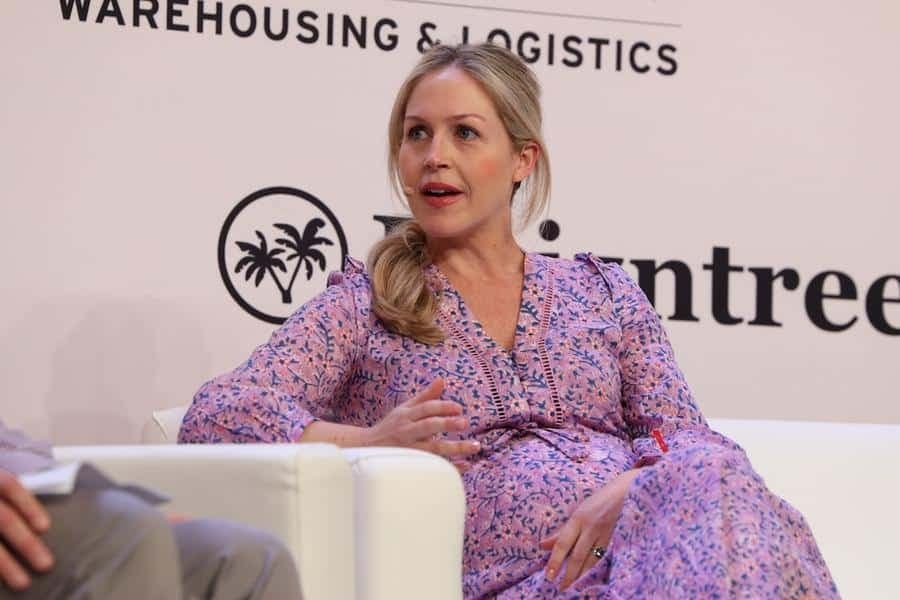
Truesdell has spent her entire career building brands, first as a Whole Foods Forager, now as a CPG investor of considerable renown. She discusses the ways she recognizes and fosters breakout potential in her portfolio.
Speaker:
Elly Truesdell, Managing Partner, New Fare PartnersTranscript
Note: Transcripts are automatically generated and may contain inaccuracies and spelling errors.
Marty Caballero [00:27] Great to see everyone here. I'm Marty Caballero. I'm the managing editor at Bevnet.com. Quick shout out to all the editorial staff who are here and at home. We have a wonderful team working every day to bring you the best news and analysis, and we thank you for being insiders or just being here today. So this is going to be the first of 3 interviews that we're going to be having with investors during this conference, and I'm really excited to be kicking things off with Ellie Truesdale, who is the founder and managing partner of Nu Fair Partners, which is a venture capital firm centered on the modern eater and evolving American palate, but she's much more than that. She's a founder herself, she's a mother. She holds a BA. She's a board member, and for nearly a decade she was the global director of local brands and product innovation at Whole Foods Markets. At New Fair she's part of a group that's backing innovative, better for you brands like Omsom, Tacombi, Actual Veggies, Midday Squares, and Lucille, a nutrition company with a mission to bring joy, dignity, and better nutrition to older adults. So I'm going to Her brain onstage here for the next 20 minutes, and I encourage you guys to do the same as well. You can text questions through the portal. We should have the information up on the screen here, and you can text questions through the portal, and I will be doing the asking. So please ask away. Ellie, please join us on the stage. Great to see you. I think we got like comfier chairs this year. Nice job, whoever did that one. A great. So, as I mentioned, not just an investor, but you really have a really interesting background and kind of specific experience in this as from your experience at Whole Foods, and I wonder, you know, did you find the transition from that role where you're foraging, you're looking at brands, you're trying to find the next brand that's really going to pop at Whole Foods now you're In directly in those brands, it seems like there would be a fair amount of crossover between those. Do you feel like they were kind of similar natural transitions?
Speaker 2 [02:33] Yeah, more than I probably saw originally. I had a lot of people encouraging me over my years at Whole Foods to consider going into venture or to step into the fun world, and I didn't necessarily see it. You don't. I think when you're a merchant or a buyer, it's just a big part of your job. Like all you're doing. I hunting for the next and most interesting brand, but it's been very transferable. I mean, so much of our investment philosophy and how we think about brands in the new fare world is informed by my work, which was almost 10 years, first in the Northeast and then globally at Whole Foods. And what was so interesting about that job, which I think sometimes goes overlooked, is that it touched every Category of the store. So I, you know, I worked with a ton of beverage brands. I mean, I worked very closely with every category buyer. John, who was on stage earlier, and I worked really closely together and was, so I sort of got enough of an acumen for every part of the store. So that was meat, seafood, produce, and it was certainly a big part of the focus area was CPG and you know, center store.
Marty Caballero [03:36] Well, I guess with that being said, I, I mean, does, is there an investor thesis at New Fair, and is that something, you know, directly related to the Whole Foods experience? Yeah,
Speaker 2 [03:47] absolutely. I mean, so much of what we think about, because I should mention we're a small fund. It's a $20 million fund one. We invest exclusively in food and beverage, not exclusively consumer, but we, we definitely focus on it. And so much of our thesis is built around we just feel there's a really a more informed consumer than ever who's basically still demanding better products that are available on the market. I think you can, you can certainly look around, we may talk about this later and say this is a really saturated landscape, but we just feel like there is always opportunity to innovate and to make things better, and you see that every year, every decade in Food InBev, and so. We want to be finding opportunities or underwriting, um, products and in some cases, technologies that are meeting that consumer demand that isn't there yet. So, a lot of times I saw that, um, in my world as a buyer, and now see it as an investor in terms of the infrastructure, and what's actually allowing and providing for brands to be able to meet the consumer need, in many cases, for like a simpler ingredient deck or shelf life extension. Um, Much of what the consumer wants is healthier, better for you products or a higher quality product with a very simple ingredient deck conveniently. So there's all of those things like we look across the value chain for those opportunities, but so much of what I did and the work that we did at Whole Foods for so many years was to just identify those new emerging brands of high growth and in many cases it was because they were meeting a new consumer need.
Marty Caballero [05:17] So over that time I mean we've had so many new tools that have come into the ecosystem and now you know just it seems to be changing all the time, but strategy wise, how has the actual strategy of brand brand building changed over the past 10 years or so? Are there still are the fundamentals still the same, or was there a rethink, a change in there?
Speaker 2 [05:39] Yeah, I love thinking often about how this would have been different 1015 years ago. I started with, gosh, I think almost 18 years ago with Whole Foods, and so in some ways completely different landscape, different, certainly different retailer landscape. There was a real playbook at the time, 15-ish years ago. You Very often, um, if you're a natural foods brand, you were gonna launch in a handful of stores or a single region with Whole Foods, you'd move to a couple more regions. We'd grow nationally, then you'd move to conventional. You know, channel lines have completely blurred. It's a completely different, um, landscape in that way. And so you have to think about brand building differently. Um, but the one thing I think about a lot that's really different is just in terms of in many ways Whole Foods was a place for discovery, still is, but I think you think about today, like you can't discount the rise in obviously in social, in content, and influencer content. Um, that sort of also created brick and mortar places for discovery in a very small way. So I walked in and saw my 11-year-old niece the other day, and I had an Erawan bag, and she was like, couldn't believe that I knew what Erawan was. And meanwhile, I'm like, I can't believe you know what Erawan is. Um, but she, it just reminded me, it's like so unique today. That you're you're marketing to this cross section of age ranges that are completely different and that she's going to be, you know, she might find something or anyone might find something that's only available in Southern California, but now with e-commerce what it is that you're still going to buy that product and be able to discover it from across the country or the middle of the country. So there's, there's landscape differences in terms of, you know, How much I think the sort of glut of content has allowed there to be even more brands probably um than ever before, but also a different discoverability. And then beyond that, I mean there are just so you said strategically, but there are so many different just like tools, tactics, resources available to brands. So I often think of like some of the best brand builders of our day, like back in my 15 years ago start. I always think of Sir Kensington's. I mean they were early with a great product, but they were really just incredible at building their brand. They were always looking for new partnerships for collabs. They were one of the early. brands to invest in influencer marketing that I can think of, but what it, what has not changed and what they were always so committed to, and you want to see this today in terms of brand building, is just they were executors. They were founders who were incredibly curious and creative and sort of whimsical, but they executed. They were in stores building out case stacks, doing overnights, sort of all of what you'd want to see from a team, and that has not changed those fundamentals of brand building, I think. Never go away. It is today just being a bit more strategic, probably more than anything about, you know, customer acquisition and how do you sort of how do you break through the noise
Marty Caballero [08:34] and maybe being less distracted as an entrepreneur from, you know, other things that can take your attention away from execution.
Speaker 2 [08:41] Yeah, I think it's a good point. There's, there are so many ways to be distracted today as a consumer, as a founder, there's so there. Now so many tools at your disposal that's, that's almost an interesting skill or um quality of a team or a founder to think about is how are they just ruthless in their pursuit of something like that makes brings to mind um Justin, who's the founder of Botans who were in our portfolio and sold recently, and he was just really maniacal about the things that he wanted to be doing. He never does press. He does, you know, like he, he really just stays. Focused on what was bringing ROI to the business and so yes I mean I think that's that's really important. Yeah,
Marty Caballero [09:23] well you've got to do some press, you know,
Speaker 2 [09:26] I recommend it, but it worked for him
Marty Caballero [09:28] and you mentioned Discovery which you know super transferable over the Whole Foods and now is there a place, is there a method that you use to discover brands and products and interesting things now, or is it sort of just a little bit of everything?
Speaker 2 [09:44] Yeah, I mean, I think we benefit from one residual from the time at Whole Foods is, you know, for so long I was a person that people came to to launch products, so I've tried to maintain that sort of reputation in the industry and be really accessible and available. So a lot of it is through other entrepreneurs and founders, through, you know, cold inbounds because they're aware of what we're doing at New Fair. But a lot of new tactics just in. Of how you're scouring different channels, whether it's Reddit, whether it's new social feeds, like what's blowing up on TikTok, but I think we have to be pretty careful there. It's like there are now, because there are so many new channels to launch a brand, you know, we want to be identifying them, looking for sort of those cool new hot things and also ensure that we think that they're going to be enduring and lasting.
Marty Caballero [10:38] I'm going to throw this one out there a little bit, but you know over the last years we've seen a lot of brands become great at creating content for these social media feeds and sort of just being entertaining kind of in this ecosystem. Is that something that you sort of look at and how great is this content, even if it's just a funny video that features the product?
Speaker 2 [11:01] Yeah, I think that I mean we have Great portfolio company example which is Midday Squares that probably has been like the one that everyone would bring to mind, and it's a phenomenal skill that they have uniquely as a team to to create content, um, to be sort of outlandish and bold and brash, and you just, you can't pay for that. You can't replicate it. It's not something you necessarily can hire for, so it's so unique to them. What I would say for any other brand who has a similar strategy is it also doesn't mean that you can't do all the other things. I mean, they self manufacture. That's a huge undertaking. They've gone through, you know, many iterations of finding the right team to make sure that they're operating at the highest level. So that's still so critical. But yeah, I mean, I think anything you can do to grab the attention to find new customers and eyeballs, I mean, So much now I think the name of the game is just like lower customer acquisition or ways to convert customers quickly, but then it doesn't change all the fundamentals of needing to have an incredible product, wanting to see that repeat that loyalty.
Marty Caballero [12:06] It goes back to that execution that you mentioned that's being paramount. Well, you know, the portfolio that you guys have is diverse because you have some brands that are sort of smaller and sort of getting into the market. This traditional broader distribution you have ones that maybe have accelerated pathways through partnerships for some of the smaller brands, you know, just being able to show their potential and sort of get past that first hurdle to be credible is just a big challenge. I mean how can they show that potential that, you know, it's worth another 6 months, it's worth sort of sticking with it.
Speaker 2 [12:41] Yeah, I love this question because we love brands that have been around a while, you know. I think there's really something to say. We, so I brought in Vista Hermosa, the corn tortillas, over 10 years ago to Whole Foods to a single store. They were making their tortillas in their restaurants Tacome and delivering by bicycle to the Williamsburg store to start. We invested in Vista Hermosa a little over 3 years ago, so like 7 years into their journey, and they've just in the 2 years become the number one shelf stable tortilla at Whole Foods nationally. So that's many, many years of plugging away, building their brand, real focus on the Northeast region before growing and not dedicating a lot of capital or dollars. So it was a scrappy, scrappy team and operation. And so I think if you're a smaller brand, like there's no reason to be discouraged by the maybe celebrity or X. Factor driven brand and path. It's just a different one. Like that is, it's more accelerated. There's, as far as I'm concerned, more pressure. You have to scale immediately, quickly, have the team to support a national launch and all of that what comes with it. But if you're a small brand, um, I think just really proving your velocity is proving your, um, your repeat and your traction in a single market, in a single channel that like. You can just, you can see this is a beloved product enough that if we do invest or others decide to invest and you put capital towards it, you're going to be able to accelerate that pretty quickly. So I think trying to recognize that finding your way as the number one in your category at independent grocers or, or having an alternative channel strategy by building your base of business in your community in fitness studios in And you know there's a brand called No Biggie that just launched it. I love their approach and their strategy. They're really focused on where kids are, and so it's birthday party venues. It's a little gym where kids go for gymnastics, and that's, that's going, that's going to be different. It's going to be you're not investing a ton in trade to build your brand. And then if you're watching word of mouth sort of follow that strategy as an investor, that's something that we get excited. About even if it's in a certain region or metro, you sort of can take that and say, all right, I think we'll be able to replicate that in other parts of the country,
Marty Caballero [15:00] and that feels like something that you can work into that content storytelling as well, sort of that word of mouth and that
Speaker 2 [15:06] absolutely, yeah, yes, exactly there are now there's so much more you can do in single locations and make it feel so much bigger than it ever has before. I think about. Um, Fishwife or I think about some of these other companies that have managed to do incredible sort of pop-ups or smaller events that become they feel much larger than they are.
Marty Caballero [15:29] Well, you know, I'm sure you saw, uh, you can see the difference between maybe Whole Foods when you were there and then you go to the sample fridges and you see this wide array of function and, and different sort of, uh, audiences that they're going after, and I wonder as an investor, Seeing a lot of these things, do you believe in oversaturation? Is that a real thing, or are there infinite ways to innovate on a category product?
Speaker 2 [15:53] I definitely believe in oversaturation. Um, it's, it's a good question in that Absolutely. Like, there are certainly, you know, there are many, many of the same thing in probably all consumer categories. Um, Americans love to consume. And so, but I also don't want to like say that without also saying, we always, very often, you asked about our thesis earlier, very often we're looking for one of two things in products that we invest in. It's either, um, you're really solving a problem for someone, and, and often the founder has solved the problem. In their own life, you know, Bill's speaking later from Athletic. He stopped drinking, wanted a great tasting, higher quality nonalcoholic beer. He made that. We're investors in a company called Lucille which the founder was having. Her grandmother was in and out of the hospital with a condition, and she was being given Ensure and Boost, and she, the young founder, was looking at the back of the label and couldn't believe that doctors were handing out these products. And so she developed and created. An alternative for seniors and so it's either like you're meeting an acute need problem or the thing to the saturation point is you create something that no one really needed in their lives but has become totally indispensable. So I think of botans as an example. I think of Rayos. I think of maybe an lollipop or a spin drift. Maybe those aren't so specifically solving an allergen or a need in your life. But they're such good products that they become totally ubiquitous. So yes, we are very aware of saturation, and we also believe that there are always going to be breakout brands.
Marty Caballero [17:30] I like that you didn't know you need it until you had it, and now,
Speaker 2 [17:33] now you can't live
Marty Caballero [17:35] without it. It makes sense. We have a couple of minutes left. I wanted to sort of just broach this topic, you know, it's the economy changes all the time right now. We hear a lot about the K-shaped economy. Lower income consumers are increasingly spending on better for you products, but higher income consumers are kind of driving the overall market gains. What is your sort of, how do you sort of come down on that in terms of your investment thesis and sort of how you demonstrate value in the marketplace when there's that bifurcation?
Speaker 2 [18:06] Yeah, it's a really interesting time with a lot of conflicting data points in many ways, and it's a tough economy. I think I might have seen a headline about inflation rising again this month just being reported, and food inflation right now is definitely a concern, but it's been pretty incredible to watch the resiliency of natural and organic foods. If any or none of you are following John Foraker on LinkedIn, I would highly recommend. And just because for years he's done such a good job of just painting, I think, the macro picture in natural foods and just the incredible acceleration that's gone on over 20 years. I mean, he, I think I saw a stat of like the organic foods market has accelerated 2 times to the conventional market for 2 decades. It's not like this has been over 3 years, 5 years. It's been for 20 years that it's been lapping conventional and so. I think we just believe that consumers right now being more informed about their health than ever and partially driven by there being a real health crisis in the US in particular are looking to invest in health and wellness through their purchasing and so are prioritizing food and beverage over other categories, spending less on travel, spending less on services, and still really paying up for food and drink which we think will endure.
Marty Caballero [19:24] Well, and lastly, uh, I know you're gonna be doing some one on ones here, uh, at BedMt. If someone's going to be sitting down and pitching to you, how, what advice would you give them? How do you like to be pitched? What's the best way to connect?
Speaker 2 [19:37] Uh, I just want to hear your story. I want to understand why you are so passionate about doing this for the next 1020 years of your life and, you know, what sort of unique value proposition you think it's providing, um. And yeah, just like we want to understand what's incredibly unique about you and why you're building what you're building.
Marty Caballero [19:58] Amazing. Great, Elly, thank you so much. Wonderful time talking with you.
Related Videos
The State of Cannabevs: Strategy on Deadline
With federal regulations about to put this fast-growing industry into a time-out, we look through the lens of brands, distributors, and lobbyists for potential futures for this fast-growing segment.
AI and Online Retail: Brand Building Meets Agentic Commerce
In a special tactical presentation, sales, marketing, and tech experts share a concrete playbook for making your brand legible to AI agents — without gutting what makes it human.
Retailer Profile: Launching and Maturing with Whole Foods
A rare founder–buyer conversation on what makes a pitch resonate, how brands can build productive retailer relationships, and what growth actually looks like once you’re on shelf.
Exit Interview: How Dirty Shirley Cleaned Up
Longtime beverage marketing veteran Adam Kost discusses his lean startup, proof-of-concept strategy, the key insight that gave Dirty Shirley the oxygen it needed to grow.
Disruption at Scale: A Conversation with Athletic Brewing CEO Bill Shufelt
Athletic’s rise has reshuffled the deck of beverage categories. Shufelt shares how he's navigated explosive growth and what he’s learned about raising capital, brand positioning and category creation.