Search across the BevNET CPG Media network including BevNET, Nosh, Brewbound, Taste Radio, Nombase and CPG Jobs.
Founder Interview: Tom First on the Challenger Mindset
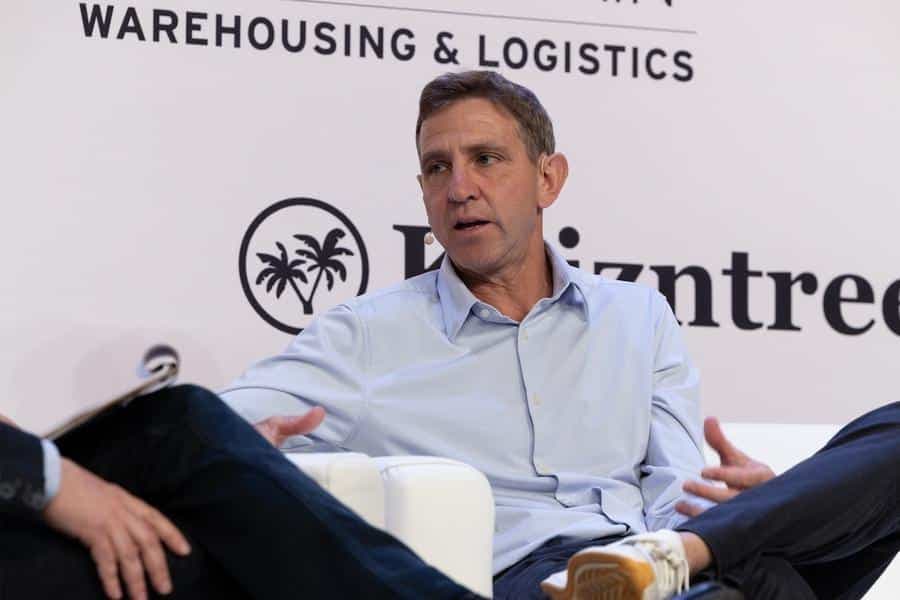
Culture Pop CEO Tom First, a longtime entrepreneur, investor, and board member, shares strategies for keeping brands nimble and lean, with a focus on catching category leaders over the long term.
Speaker:
Tom First, Founder & CEO, Culture Pop
Transcript
Note: Transcripts are automatically generated and may contain inaccuracies and spelling errors.
Speaker 1 [00:27] Our first, uh, interview is gonna be with Tom Furst of Culture Pop. Now, Tom Furst is a beverage guy. And if you're new to the business and you hear the name Tom first, you probably think of Culture pop. Uh, if you got in during the 2010s, you think of Tom as an investor and a board member, um, someone who worked for First Beverage, even though he didn't found First Beverage, which is a weird thing about the name Tom First. Um, he helped build Essentia and Yao and Health Aid and more as an investor and board member. Um, when I first met Tom, he was running O Water, uh, I believe. Uh, we were, I don't know if we were subletting from him or he was subletting from us, um, but he was in our office in Harvard Square. Um, it's 35 years since Tom first and his partner Tom Scott launched Nantucket Nectars, uh, which combined with Snapple and Arizona to really, I think, raise the curtain on that, uh, healthier beverage era. Uh, of beverage entrepreneurship that, that John spoke about at the start. I think that the Tom and Tom Juice Guy radio ads really helped establish uh the footprint that so many founders uh follow today. This concept of the founder origin story as the branding backdrop. Um, now with Culture Pop, Tom's once again gone back to that favorite social media channel of his, the radio, um, and while that medium might feel laid laid back, uh, the voice that he uses hides a fiercely competitive founder. And it hasn't taken Tom long to establish Culture Pop as a viable alternative to poppy and lollipop, to be invited into those same sets in the modern or the probiotic soda category, and to really be considered one of the, the few true challenger brands in that category. Um, even though there are so many people hopping in. Um, and I think he's done it because he knows what it means to be a challenger. Uh, he's been disciplined about going to the fundraising well. He operates a lean team, um, and he's playing the long game. Uh, so Tom's here to talk about how when the category is growing fast, the competition may be better funded. You can still get into the conversation and change it as a challenger brand, even if you're speaking a little bit more quietly than the competition. Let's please give one of the legends of the beverage business a warm welcome. Tom, come on up. Good to see you.
Speaker 2 [04:07] Good
Speaker 1 [04:07] to see you.
Speaker 2 [04:09] Legends.
Speaker 1 [04:11] Sorry, it's, it's not grizzled, but yeah,
Speaker 2 [04:14] you wanted to use like one of the old guys and how about
Speaker 1 [04:17] archetype.
Speaker 2 [04:18] Yeah, here we go.
Speaker 1 [04:19] Um, although, you know, Tom's got a few years on me and he looks better. Um. Tell us a little bit because we, we want to pull a lot of knowledge out of you really quickly, so. What, how did you arrive at the positioning for Culture Pop quickly by way of background?
Speaker 2 [04:41] I mean, It's funny, I had the idea for probably 5 years before I started, and um I wanted to make soda with ingredients similar to how the category started at a low calorie profile, so I mean, I started with fruit juice, um, which is where soda came from, but if you look at the origins, it was herbs and spices and fruit juice, and it was a gut health product that was sold in pharmacies. Um, I'm not a, I'm, I'm personally not a fan of sweeteners, and so I really worked hard to create. Complexity and layers of flavor without using a sweetener and without using refined sugar. I had actually a lot of conversations at that time with Whole Foods about how the product would be formulated, and they were really excited about the fact that we were not using any sort of refined sugars and we were fruit juice based, but that was the idea and then it was really hard to figure out how to get the spices into liquid form and at the right ratios and As you guys were talking about earlier, going from tiny batches to big batches, and I mean, we have chili powder in our orange mango and a couple of the earlier batches tasted like a taco. I had to throw those away. But um we really figured out how to steep spices into a fruit juice blend and make a relatively low calorie. Soda that's not overly sweet but is still an indulgent delight
Speaker 1 [06:14] was the functionality, which is sort of, you know, at least one of the big, uh, hooks for the category initially, was that part
Speaker 2 [06:23] of it? Absolutely. I mean, I was very involved in the kombucha industry. I was an early investor in health aid and worked really closely with Justin and Dinah and Vanessa. I saw the power of gut health as a function in kombucha. And so I looked actually really closely at the kombucha category. And saw that, you know, consumers wanted this. It had a variety of flavors. It had gut health. It was lower calorie than soda. But kombucha also had its limits in terms of consumer appeal. And a lot of the early ideas for Culture Pop was how do we make a more mainstream, shelf stable lower priced gut health soda that could be merchandis all over the store and that's what I was thinking about, you know, Ollipop and Poppy were Before us, um, I was sort of putting it together at the time that Poppy had come out. The Ollipop was before that, and there's, you know, it was honestly a more, a different play. It was more diet, they were diet positioned soda trying to hit a calorie level with sweetener in it, and our entry is, you know, culture pop is not really diet positioned. We're still low calorie, but we don't have the taste of uh of stevia or or sweetener in the product.
Speaker 1 [07:39] And is that what you wanted to, was that the uh the piece of relative positioning that you leaned on from the start?
Speaker 2 [07:49] Yeah, I mean, more than anything else, it's having a real taste driven by fruit juice and herbs and spices. I think when you drink our product. and you look at the ingredients, it tastes exactly like what it's in. It has, it's a little bit of the Nantucket nectar play, honestly, like we worked really hard and looked at Juice way back when and a lot of them were like 10% and they were very highly sweetened and we made something that, I mean the orange mango just flavor of Nantucket nectars was so vibrant
Speaker 1 [08:20] and what ignites all brands. Yeah, that spike once they do the orange mango.
Speaker 2 [08:26] Yeah, well, there's different flavors now but and you know that's what I was really worked hard to accomplish with culture pop is to get A real flavor where, um, and I think when people I always say like drink our product for a couple of days and it's hard to drink you know, something that it doesn't taste, have that quite as real a taste and I don't mean that as, you know, putting down anyone else's product, but we work really hard on that taste level and it's evolved as you described earlier. You have to keep working on it and we've evolved the way we make the product and, and, and how it tastes over time, gotten better and better
Speaker 1 [09:06] and you were behind right and these folks had Uh, acquired money. They had sort of gotten a lot of the early press, um, and there, clearly, everyone had the right idea that there was an audience for this. Yeah, so. What do you, uh, do you think that Do you still think of it as we need to establish our own identity in this category, or is it that we need to think of our identity relative to the category leaders when you're in this position?
Speaker 2 [09:48] Honestly, I've always been in this position. I mean, even though we were early with Nantucket Nectars, Snapple, it was almost like a similar story. Snapple was about the same time and got very big very quickly, and we were like a little Challenger brand there. And then Arizona came out. You know, in 1992 we launched in 1989 and Arizona blew up and then actually Sobi came out not that long after all these brands got bigger than anti connectors before we scaled and I would say my approach, and I think a lot of people's approach is Make a great product, great liquid. Keep working on it. On your packaging, on your messaging, and, and the reality is marketing is telling a story in its simplest form, like what is marketing? You're trying to tell a story. So part of that is like, what is the story you want to tell? How do you make it really simple? And then how do you, how are you going to distribute that message? It's got to be appealing. It's different today than it was 20 years ago. A social is a big deal and how you captivate people, consumers in the world. There are different channels and different tactics, but the foundations are very much similar. It's what is the story and how do you say it in a really simple way? And we've, we've worked over time. We've built a very strong Social presence that's critically important. As you described earlier, we've, we've overlaid it with the really traditional old school approach of radio. I'd be shocked at how well radio works, especially for the CPM. I mean, it's a, a low CPM but if you can marry that with really good social content and amplify it, it's a, it's a, it's been a good tactic for us.
Speaker 1 [11:40] Now, Uh, as part of that story, is it your, to your advantage to just say, we have the simplest, best tasting. To, you know, then to say overlay that and keep repeating it and hoping people stumble, or is it that you're just trying to build slowly?
Speaker 2 [12:02] I mean, we're testing a lot, you know, over time we've tested a lot of different messages. We do talk a lot about. You know, real taste and the fact that we're, you know, we're sweetened with fruit juice. We do talk about the fact that we don't use stevia or we don't use a sweetener. For some consumers are perfectly happy with stevia. There's a large cohort of consumers that don't like the taste of stevia, and some of them don't even know that we don't use stevia. They see there's another brand. They know. They know these other brands and we're on the shelf and they just think oh it's probably just like those so it's really important to deliver that message that we are we're different in the category and it's funny we literally get messages every day that I had no idea that you were different. I tasted the product. I'm so happy that you make it this way. Um, but we're trying, you know, we've sort of honed in on the messages that are working. There are good ways to figure out what resonates with consumers, what converts, um, and then when we find it, we really, you know, drive and pound on that.
Speaker 1 [13:08] Now, when you accelerate, what, what does that look like? In terms of the, in terms of that messaging, in terms of that,
Speaker 2 [13:18] I mean, we could be, it could be radio where we found an ad that is working really, really well and we'll, we'll lean into that one piece of content. It it could be in paid social where we've got a piece of user-generated content that really performs and travels and we'll boost that and it could be. Just our organic social content. It's funny figuring out what works and what doesn't. We, we work hard, uh, on our, on our channels to have the personality of our company, our brand mimic the way that we make the product. If, if you see our social, it feels like who we are. Um, and I, you know, I always felt like during the nectar days like we made lemonade with fruit juice, you know, lemon juice, water, and sugar. That was it. And it was really easy to just say we make the best lemonade you can buy in a bottle. If we didn't, we didn't make a good lemonade, it'd be hard to talk about that because I'd have to be like, Oh, we make average lemonade, come try it. And so I think like a good, good product, good message work really well when you can just be honest.
Speaker 1 [14:27] But there's got to be an eagerness to shout that. You know, particularly in comparison to products that aren't doing that, yeah, and you're dealing with resource constraints, you're not able to shout as loudly, yeah, so how do you, uh, I guess what's your order of operations for staying patient, for picking your spot, for not getting out too quickly on something that you can't afford?
Speaker 2 [15:00] I mean, look, I think it's, it's very hard. It's challenging to be overly aggressive and to fail. Like if you, you, we, and we've done that at times where we've spent a good amount of money on something that it took us a while to figure out it wasn't working. So if you're, you can put your foot on the accelerator and waste a whole lot of money and not perform well, it is also challenging to be patient, as you're saying. When you don't have the kind of resources that really big players in your category have. So I think, you know, being really Um, analytical about your, how you deploy capital and what the real return on it. I mean, it's funny like you look at the AI world right now and the different players and In technology, you know, Google is known as the most efficient deployer of capital in the history of business, and that's one of the reasons they've been so successful in different areas. Business is similar across a lot of categories like we have the challenge of figuring out where to put our resources and make sure they are productive in some ways. We could go out and hire 70 salespeople and do no marketing at all. Or we could do all marketing and see if we could survive with 10 sales guys out there, salespeople, and Um And so you just have to, you have to really figure out where to spend your money and make sure you're being efficient and as everyone said on the stage before, be willing to change when things aren't working.
Speaker 1 [16:38] So let's, let's talk about that decision that you made. We could go out and hire 70 salespeople. We could focus on marketing. Which way are you? Tilting culture pop. I
Speaker 2 [16:50] mean, it's a balance. Our evolution has been to focus on markets, territories, and retailers that we feel like we can lean into and perform well and then watch our velocities really closely. So if you look at our performance in, you know, the retailers that we have people in the market, we've spent marketing dollars, we've got items right in the top of the category performing really well. We then have to take that and start going into more and more retailers, become a bigger player in mass eventually, eventually go into club, um, you know, we're just starting up in Kroger in a division, perform really well, and then get expanded in Kroger. Um, so it's, it's, it's, uh, sequential is how I think about it. So
Speaker 1 [17:37] you build a selling story in a few categories. Which ones are you concentrating on with Culture
Speaker 2 [17:44] Pop in, in what?
Speaker 1 [17:47] Uh, with different channels,
Speaker 2 [17:49] yeah,
Speaker 1 [17:50] which channels are you,
Speaker 2 [17:51] you, I mean, we started in natural and specialty. That's where the brand started, and then we went into regional grocery, and then we went more national grocery. We've become, you know, we, we perform really well in the food channel. Um, we're in a little bit of Walmart. We've grown our velocities a lot in Walmart over the last couple of years, so we hope to grow that business and Um, and then grow the food channel and eventually become, you know, in, in a lot of the more mass retailers.
Speaker 1 [18:21] What was an example of a place where you had to decide between acceleration and patience with the brand?
Speaker 2 [18:29] Um. I think it's in the The in bigger channels outside of core territories is the real challenge because like when you're when these companies are evolving as a founder, company leader like opportunities land on your lap all the time and you're, should we go there, you know, we, you get an opportunity in Texas for instance we're very strong in the Northeast we're strong on the West Coast Pacific Northwest, Midwest, and then you get an opportunity. In Texas, are you going to go? Texas is a big state. It's very spread out, people down there, you know, run radio, and those are the decisions that are really hard. Like do you double down in areas where you're strong and make sure that you have the appropriate resources to spend. Or do you go, you know, wider, and, and, and then the question is when do you do that? How long can you wait? And look, we, we sat here early on and watched Poppy and Ollipop explode and spend a ton of money and it was like a battle between the two of them and um social media talking about do I like Poppy, do I like Ollipop? And it's really hard to be patient in those situations and just say, hey, you've got a beautiful brand and a terrific product and the consumers that have discovered your product, love it. Are you willing to be patient and let this play out? And I think we feel really reassured by just continuing to grow velocities and continuing to see consumers love the product and incrementally improving our positioning and the way that we market or create collaborations to drive velocity of the brand. So yeah, it's hard being patient, but I, it's kind of my personality.
Speaker 1 [20:18] What does a patient company look like, uh, from a financial standpoint? Do you wanna stay close to profitable? Do you wanna stay, you know, like a steady loss that doesn't involve huge expenditures? What's it look like?
Speaker 2 [20:32] I think it depends on the category, honestly, and how you're going to market. If you're a DSD brand, these are very expensive businesses to build. You're going to have to raise a sizable amount of capital. You have to keep investing against it. You want to be a good partner to your distributors, but I think most of the brands here that are attempting to go national, they're building a DSD network so that you can get the type of service levels you need for like really high velocity items. They'd at every stage of the game, you realize you need, you need more capital. These are not internet businesses with 80% margins. I mean we've got You know, really healthy gross margins, but we'll still, we'll still need to, you know, raise capital to get to the promised land. And look, I've sat on boards, I've been investors, I've seen the story over and over again. Um, and there are just, you got to hit benchmarks and prove yourself, um, but these businesses become really valuable and, and their consumers are unbelievably loyal, um, and over many, many years, they're still very big brands that are, that are, you know, throwing off cash.
Speaker 1 [21:51] What's your sort of long-term window? I, I mean, in, in your, when you write the story of culture, pop. What is the, the point at which you say, well, it became time to invest. We went out, we raised, we, we decided to really hit the accelerator. Um, when, when does that happen for you?
Speaker 2 [22:20] Look, I'm not 35 years old anymore.
Speaker 1 [22:23] So neither am I,
Speaker 2 [22:24] yeah. Um, honestly, I don't think about the world that way. I mean, I, you know, I'm a, I love creating products. I love the competition of this industry. I probably wouldn't do this if I didn't have the personality that I have. I like the battle. I like the fight. I like the people that I've met over the years. And I, I mean, I think about making Great products and I love building packaging and I like the response from consumers. One of the best things about this industry is that everyone will let you know where you stand 7 days a week. You know, the retailer will tell you, the consumer will tell you, Jerry Rita will tell you, your, your distributors will tell you where you stand, and that's the beautiful part of this industry. I, you know. Selling software with a one year time horizon to close a deal, that's not my personality. I like the instant gratification. I've got a short attention span, so kind of works well for me.
Speaker 1 [23:27] How has it changed? And how have you changed since that first company?
Speaker 2 [23:33] Someone asked me this question. I think the biggest, I mean, this dates me, but the biggest thing that's changed is that, I mean, the, the large retailers are larger, um. You know, it's when you get into a big retailer, it's a big hurdle. It's a big expense, you know, there's 4000 something Walmarts. That didn't exist in the Nantucket Nectar days. Um, you know, Albertson's is whatever it is 2000 stores. So these are big decisions that have big, you know, implications for your business in terms of what you need to spend and do to perform well. And they're kind of, there's gatekeepers to distribution for your distributors where you've got to get through these. These benchmarks to have critical mass for your distributors to want to take, take on your product. Honestly, in the old days at antic connectors, we sent an army of people and said go open the accounts because it wasn't terribly chain-driven. That's obviously the marketing side is, is, is different. There are different channels and social is a big player, um. The old days we could run radio or TV or whatever and there weren't other options.
Speaker 1 [24:47] One last quick question. A lot of those big chains are trying to carve out sort of smaller footprints for brands that with momentum to enter them. How have you found those to work? Are they effective or not?
Speaker 2 [25:01] Yeah, look, I'm, when I started doing this, I was like an anomaly. Like I was a kid in an industry that was dominated by big companies. The incredible thing that people here are doing is young people are changing this industry, the food and beverage industry. That wasn't true, so I You know, I'm really happy that retailers are recognizing that innovative products are changing the food and beverage landscape, and I think it's amazing.
Speaker 1 [25:31] Well, I hate to say it, but you cleared the path, so thank you.
Speaker 2 [25:36] Great, thank you.
Related Videos
The State of Cannabevs: Strategy on Deadline
With federal regulations about to put this fast-growing industry into a time-out, we look through the lens of brands, distributors, and lobbyists for potential futures for this fast-growing segment.
AI and Online Retail: Brand Building Meets Agentic Commerce
In a special tactical presentation, sales, marketing, and tech experts share a concrete playbook for making your brand legible to AI agents — without gutting what makes it human.
Retailer Profile: Launching and Maturing with Whole Foods
A rare founder–buyer conversation on what makes a pitch resonate, how brands can build productive retailer relationships, and what growth actually looks like once you’re on shelf.
Exit Interview: How Dirty Shirley Cleaned Up
Longtime beverage marketing veteran Adam Kost discusses his lean startup, proof-of-concept strategy, the key insight that gave Dirty Shirley the oxygen it needed to grow.
Disruption at Scale: A Conversation with Athletic Brewing CEO Bill Shufelt
Athletic’s rise has reshuffled the deck of beverage categories. Shufelt shares how he's navigated explosive growth and what he’s learned about raising capital, brand positioning and category creation.