Search across the BevNET CPG Media network including BevNET, Nosh, Brewbound, Taste Radio, Nombase and CPG Jobs.
Entrepreneur Interview: Catching Up With Ben Weiss
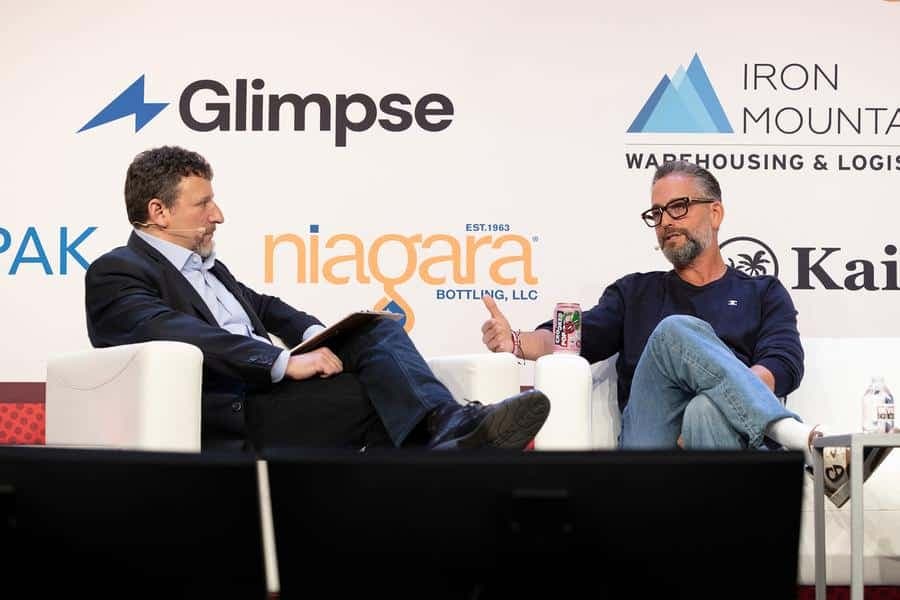
Ben Weiss, the founder of Bai, sits down for a conversation on entrepreneurship, brand building, investment, and the state of the beverage industry as he launches new brand Crooked Pop.
Speaker:
Ben Weiss, Founder & CEO, Crooked PopTranscript
Note: Transcripts are automatically generated and may contain inaccuracies and spelling errors.
Speaker 1 [00:27] I get to interview our next speaker who I really like a lot. It's Ben Weiss, and I have no idea why he's doing this. Um, he has 1.7 billion reasons not to. Um, but it's good to have Ben back. I have really missed his passion and his ability to find the gaps in the market, to make an argument that he's the only one who can fill them. Um, when Ben Weiss is convinced he's on to something, he tends to repeat himself a lot. Things like devolution. Um, and that happened when I spoke to him a couple of months ago. He's got this confidence in the product and a willingness to put his whole self into an enterprise, and that really seemed to be there. And I think for us understanding how he gets to that point. Uh, where what might seem at face an outlandish reach is actually to him something pretty inevitable, uh, is something that most entrepreneurs can learn from, um, because he's so good at exercising that ability to make the big dream achievable. Um, and that's why I'm glad to welcome back the founder of Bay and now the founder of Crooked Pop, Ben Weiss. Come join me. You may sit on the couch. Thanks. I get the chair. You get the couch. Welcome back. Why are you doing this?
Speaker 2 [02:23] Oh God. I do it because I, I love this industry as much as I hate it, yeah, and that love-hate relationship with the industry, uh. You know, has captured me and I also see an opportunity to continue to disrupt on another side of the industry. Uh, I've learned a lot about that other side of the industry over the last 5 years. Uh, and I think there's a moment there that I'm going after. And it is an extension of the devolution.
Speaker 1 [02:58] So let, let's talk about that for a minute. Um, you For a long time had made sugar an enemy and then it became sort of the beverage establishment became. I, I, if not an enemy, a challenge, something that needed to be disrupted, why, how is it now, and how is it on the, the three-tier side?
Speaker 2 [03:26] Why? Because otherwise you're just slinging drinks. And, um, and that's a tough business. You know, we're in a very competitive industry. It's ubiquitous, it's everywhere, it's overwhelming. For me, we always had to attach a higher purpose to it, right? So the Bevolution was that purpose. It was about taking sugar off the streets. I, I, I, I say eat your sugar, don't drink it. You know, 50% of The sugar we take in comes from what we choose to drink, and I think we have the ability to provide flavor without sugar. Uh, so that is always kind of at the, at the base of everything we do. Um, but we also see a moment to disrupt where the consumer that, that kind of, uh, we went on this journey with the non-alk is now of legal drinking age, and they're taking their drinking habits into alcohol and they're doing a beer what they did to soda, um, and You know they're sober curious so we speak to a sober curious consumer which is a very difficult task because they're not there um and what we wanna do is we wanna bring them back,
Speaker 1 [04:31] bring them back to beers
Speaker 2 [04:33] specifically to beer,
Speaker 1 [04:34] yeah, OK,
Speaker 2 [04:35] because we're regulated as a beer, although we are reimagining it. We look obviously nothing like it in the category that we're choosing. Obviously we're taking cues from the beverage, you know, the non-alk space which is, uh, the modern soda movement. So we're creating a new category and we're first movers in hard soda
Speaker 1 [04:53] and as being treated like beer, you, you've got much more access to convenience store distribution, drugstore distribution, those, those fast moving channels, um, to do that, obviously you had to design the product in a certain way. What were the key attributes that you were looking for?
Speaker 2 [05:13] Yeah, so it's a great point. We, we chose to position this within beer in the highest segment of beer. We saw an opportunity to sit alongside hard seltzer as a trade up, but not as a distilled spirit, because I feel the growth engine needs to be within beer because quite frankly, the laws that you just alluded to, whether it's distribution or excise taxes all suggest a low ABV sessionable product should be a ferment, not a distillation. So what we set out to do was create A new alcohol that lived at the high end of fermentation, and we call that alcohol osaba, which is an organic super dry alcohol, uh, made from organic ingredients like quinoa, amaranth, millet, and cassava,
Speaker 1 [05:56] osada,
Speaker 2 [05:57] osava,
Speaker 1 [05:58] osava. Now this is something you're gonna hear again and again from Ben, organic super dry alcohol alcohol, um.
Speaker 2 [06:07] Which is what needs to be fixed when you know, like when you want to disrupt. Uh, I, I, you know, you gotta fix what's broken in the industry, and the fact remains, consumers, this next generation of consumers who are looking to refresh in alcohol are not drinking malt-based beverages like they used to.
Speaker 1 [06:27] Now that's That's a product fix and I want, I, I appreciate that. I wanna talk about the structural fix what you saw in terms of distribution in 2014, 2015, how that's changed. If it's changed and what, what that means for the folks in this room because you sort of alluded to it with just slinging drinks, right? Yeah,
Speaker 2 [06:54] it's tough to sling drinks in the elk space. It's, it's a lot easier in the non-alk space. There's a three-tier system that, that, you know, is, is designed in my opinion for generations prior to, to, to the, the, the moment we live in. And there's great consolidation going on in the distribution side of the alcohol space uh with Reyes becoming the largest total beverage solution. Um, and that's an indicator and we're trying to operate within that new route to market. Um, but I think all of the disruption, whether it be on the structural side of distribution or on the product side, is because this consumer has rethought how they drink. Um, and that's now firmly in the smart age in alcohol. The consumers are smart. They want transparency. They want to know what they're drinking. They want to know what's in it. And you're often not given that opportunity in RTD. Uh, so I have a lot of respect, and that was really the bellwether, and the reason why I got into the alk space is hard seltzer, and I saw when people run to seltzer, they're really running away from bad ingredients.
Speaker 1 [08:02] They're really running away from what? I'm sorry,
Speaker 2 [08:04] from products they don't trust and bad ingredients, and they know they trust seltzer. So when you see that growth, I'm always about what's on the other side of that, like when they're ready for flavor in their lives again. And I think that consumer is there. I call it the smart age. I think they're smart, and I think they want flavor that they can trust. Now, the, the industry has to allow for that transparency, and they have to allow for these new beverages to hit, to meet up with that consumer in a meaningful way. And that, that's what I love and hate about the industry. It's hard. It's hard to sell to a consumer that's not there.
Speaker 1 [08:38] Is, is that also the choke point on the distribution level that they don't believe it's there?
Speaker 2 [08:44] Ah, it's hard to ignore. You know, it gets to a point where, you know, it's hard to ignore. The graphs, right, there's no graph that suggests beer is going to continue to grow. Um, what's going to replace that volume? And that's where you see all, you know, whether it's THC or RTDs with vodka. Um, you know, everyone's trying to Um, sell things that aren't beer. What I'm trying to do is reimagine beer for the next generation of consumer, and that's what Osava is.
Speaker 1 [09:13] What's been your biggest surprise, uh, in starting over? Surprise. What? What, what surprised you the most now that you're, you're back in?
Speaker 2 [09:24] I, I wouldn't call it a surprise, but what's proven to be the case is it's just a new starting line, right? You don't, I don't get a jump start because of buy. I might be able to stay in the game longer. I might be able to, you have relationships, but you still have to meet up with that consumer in an authentic way, and that is a journey that you. You gotta start over and you gotta embrace, and that's what's beautiful about the beverage. That's what I love about the beverage industry. You'd have those moments. I had it at buy. I have it today, you know, my dad and I sold the first case of Bae. I've got my son working with me now, you know, in this fight, and I always call it a fight because it's a fight. It's designed for brands like us to lose, right? So that's a beautiful romantic thing that I love about the beverage industry.
Speaker 1 [10:10] You are a great hand seller, a great, uh, you know, 1 to 1 marketer. You're great behind the table. What are some of the attributes, you know, what are some of the techniques that, that make you good at that, that these folks should?
Speaker 2 [10:27] I think it's the same technique that made me good at raising money. I think the people on the other side of that conversation, whether they're going to hand me a check or they're gonna buy a drink for me, know that I would write that check, know that I would drink that drink. And I think there's an authenticity about it and a conviction. Um, and early on when you're trying to get a beverage off the ground, that's all you have because you love your brand. I love this more than you love it right now, right? And my job is to get you to love it. And that takes time, that takes a lot of no's, that takes a lot of failures. And then success, if you're lucky, just happens amidst all that failure. And, and, you know, it's a, it, in a lot of ways, and I've met a few entrepreneurs here today and certainly over the last 5 years. It's, it's lonely starting a beverage brand because of that, because you have to out-love everybody with your product.
Speaker 1 [11:22] How do you stay, uh, focused while you're Trying to share that much love.
Speaker 2 [11:29] Share it
Speaker 1 [11:30] with with everyone else. Like I, I mean how do you stay focused? How do you stay sane, um, you know, we said I'm saying, yeah, I don't talked about that there's a little bit of darkness that comes from going deep into belief in one's brain, yeah,
Speaker 2 [11:47] but it's beautiful to come out of it. It's beautiful when you give everything you have to a beverage. You give it your soul. There's a, there's a an epilogue in the book where my son Jack, who's here today. Gives me permission to do this again because every time you do this, it takes a bit of your soul. You're giving your soul. You're giving your time, you're giving your resources, you're giving your ability to make more money elsewhere and it's, it's, it's sacrifice, right? But on the other side of that, when you find a bottle in a, in a garbage. Uh, you're reminded how special it is,
Speaker 1 [12:22] um. Tell us about the basement, um, in, in that it's a place that you sort of need to escape because you spend too much time tinkering down there, um. What does it look like when, when maybe the product isn't quite ready yet and, and what's the point where you know where it is?
Speaker 2 [12:43] So basements play a role in my life because I just feel like, you know, they're cheap, humble places to start a business and You know, the best part of a basement is the steps to get out of the basement, right? And when I go in the basement, I'm there to quiet the noise cause you always have 80 mile per hour winds in your face and there's a lot of conflict and there's a lot of just pressures and you, you just wanna silence that for a second and retether yourself to your dream as to why you decided to take this journey. And you got to be brutally honest with you and your product and what's working, what's not working, why it's not working. And hopefully, you know, you, you take those steps out of the basement and you're, you're, you're ready to continue to fight to bring your brand to life. And there's a mentality you take, and that's why I call it the the book-based mentality. Um, it's about being scrappy, motivated, tenacious, um, So it's a, it's, it's something that I've carried on throughout Bay's journey and I've, I've certainly used it in this journey.
Speaker 1 [13:44] Now with Bai, one of the key changes was a pretty significant change to the product. Um, where you decided to go, you know, 55 calories or less. Um For someone who's so enamored of the products that you, you produce, how do you convince yourself to make that big a pivot?
Speaker 2 [14:16] When we created Bai5, it was because my little sample table told me those interactions I had one on one with consumers that people were starting to do this. And there was a lot they loved about Bai and it's, you know, full calorie capacity, which went away after 6 months of being in business, that I, I knew I needed to make a, a lower calorie version. And I said when we did that, we stumbled upon the answer to the diet dilemma. I did not set out to do that. I was a mid-calorie. high sugar product for six months of its initial, uh, life cycle. Um, but it's, it's being nimble, it's understanding the signals, right? I always say there's signals and there's noise in this industry. You got to shut yourself off from the noise and you got to really follow the signals. And as an entrepreneur, as a young startup, you're able to be more nimble. And I remember making that switch from Bai to Bai5 and it took 6 months and we were done. And then the one, the one thing that made me say, let's just get rid of the full calorie because for a period we had both, was I saw my customer, this perfect consumer, going up to an 8-foot uh open-air cooler of Bai and it had Bai and then Bai5. And we had one flavor that kind of crossed over, it was a peach. And she grabbed the full calorie peach. She didn't even know that there was another peach. And then she read it, I saw, she saw the sugar, she put it back and she grabbed an honest tea. And I remember watching this from a distance and I'm like I went back to the office and I said we are out of the Bai business and now it's Bai5 and we made Bai5 the growth engine. Now
Speaker 1 [15:52] crooked marker been in market for a while, since 2019, 1 of the last things in that book, um, it's pivoted multiple times. Yep, um, what did you learn from each stage and, and why is now the time to really get out of the basement with it?
Speaker 2 [16:13] Well, I knew when we came out, it was dangerous because there was a growth engine in beer which was hard seltzer. Um, the problem was I was, I was looking at what happens after people get bored and frustrated with seltzer and I felt like I was creating flavor that they can trust. The reality is, I just, it was interpreted as an overpriced seltzer, it never made it to the consumer. Um, and we kinda had a pivot, and we made a pivot to a, a bit more of a, of a canned cocktail. And that really wasn't the answer. And, and quite frankly, what we were doing all along was perfecting the alcohol. And as I look back and I'm like that was really time well spent because I had time. The reality is I had time. Today is the moment that consumer's there and ready and waiting for a new category to emerge because I do believe, you know, hard soda is the evolution of hard seltzer. And I think we can get that consumer and we can keep that consumer in a premium way. And we just had to wait for them to be ready, and I think they're ready.
Speaker 1 [17:13] Yeah, we, we've, we've seen a few established brands start to switch that way. I mean, Owl's Brew making that move toward the, you know, from boozy tea to boozy pop, um. What are people saying about it, about why it won't work,
Speaker 2 [17:31] why it won't work,
Speaker 1 [17:31] yeah.
Speaker 2 [17:33] Um, I gotta be honest with you, I'm not getting a lot of that right now, which is a great signal. Like again we chase signals, not, not noise. Um, I think there's an intuitiveness. I think there's a lot of tailwind coming out of this, you know, non-Ak space that, that consumer who's now sober, curious, and 21 years old, is very comfortable drinking a poppy or a lollipop and now they understand that, OK, Crooked Pop is the cultural cousin of that. And we're taking that modern soda movement into alcohol, and we've got a very unique alcohol source. It's a lot to unpack, but that is what this represents, and I think that consumers are ready for that and looking for that.
Speaker 1 [18:11] And how do you simplify it for them?
Speaker 2 [18:13] Uh, you just put, you know, mascots of fruit with their tongue out, having fun with the tongue tied, and you make the brand fun and not too serious. Um,
Speaker 1 [18:23] let's go back to enemies for a minute. How should the brands here find the enemy that they want to take down as a piece of their brand growth?
Speaker 2 [18:36] Um, I think if you're really innovating, you're very different from, you're an evolution of those that have the space on the shelf that you want today. And with Bai, we were very fortunate to find our quote unquote enemy, and I use that word and fighting and enemies. I mean that is just to create a mindset, right? It's galvanizing. It is, um. But Vitamin Water was very much our enemy. We, we knew we were the evolution of Vitamin Water and if we sat adjacent to them at the time, I think we had a good shot and You know, so we try to find our enemy. Like right now our enemy is hard seltzer. I think hard seltzer still plays a role in better for you, but I feel like if you're drinking seltzer, you, you, you should be drinking a hard seltzer because it delivers the flavor.
Speaker 1 [19:22] We only have a little bit of time left. I wanna talk about fundraising real quick. Um, you obviously made a bunch of money off Bai your investors. You're very proud that they made a lot of money off Bai, um. What kind of advice would you give to the founders here about control and dilution, um, and their relationship with getting investors to support their growth.
Speaker 2 [19:47] I would say as an entrepreneur, you are a fundraiser. You are fundraising 24 hours a day, 7 days a week. You should only take in as much money as you need when you need it, and then the next time you need more, you try to get it at a higher valuation because you proved out your concept and you manage your dilution because at some point you owned 100% of the idea. Question is what are you gonna own at the end? And if you think about it early on, you got a better chance of owning a substantial amount of it at the end.
Speaker 1 [20:14] OK. Were you happy with how it worked out for you?
Speaker 2 [20:18] Yeah I'm not doing this for the money. Yeah, this is not, you know, this, this is $45 million of my own money right now.
Speaker 1 [20:26] What are you looking forward to most about this,
Speaker 2 [20:29] about,
Speaker 1 [20:30] about this, yeah,
Speaker 2 [20:32] uh. I, uh, whether it's this or or Bai or any other beverage, it's, it's when they start loving the brand as much as you do. It's a beautiful thing. It's rare air and it is a gift that the beverage industry gives you.
Speaker 1 [20:46] It's really intimate thing.
Speaker 2 [20:47] It's very, I mean, they're consuming it. It's a very intimate thing.
Speaker 1 [20:51] Yeah. Well, listen, I appreciate you sharing these intimate thoughts with us, Ben. It's great to have you back, always,
Speaker 2 [20:56] chef. Thanks man. Appreciate it.
Related Videos
The State of Cannabevs: Strategy on Deadline
With federal regulations about to put this fast-growing industry into a time-out, we look through the lens of brands, distributors, and lobbyists for potential futures for this fast-growing segment.
AI and Online Retail: Brand Building Meets Agentic Commerce
In a special tactical presentation, sales, marketing, and tech experts share a concrete playbook for making your brand legible to AI agents — without gutting what makes it human.
Retailer Profile: Launching and Maturing with Whole Foods
A rare founder–buyer conversation on what makes a pitch resonate, how brands can build productive retailer relationships, and what growth actually looks like once you’re on shelf.
Exit Interview: How Dirty Shirley Cleaned Up
Longtime beverage marketing veteran Adam Kost discusses his lean startup, proof-of-concept strategy, the key insight that gave Dirty Shirley the oxygen it needed to grow.
Disruption at Scale: A Conversation with Athletic Brewing CEO Bill Shufelt
Athletic’s rise has reshuffled the deck of beverage categories. Shufelt shares how he's navigated explosive growth and what he’s learned about raising capital, brand positioning and category creation.