Search across the BevNET CPG Media network including BevNET, Nosh, Brewbound, Taste Radio, Nombase and CPG Jobs.
Beverage School Summer 2026: Understanding Co-Packing
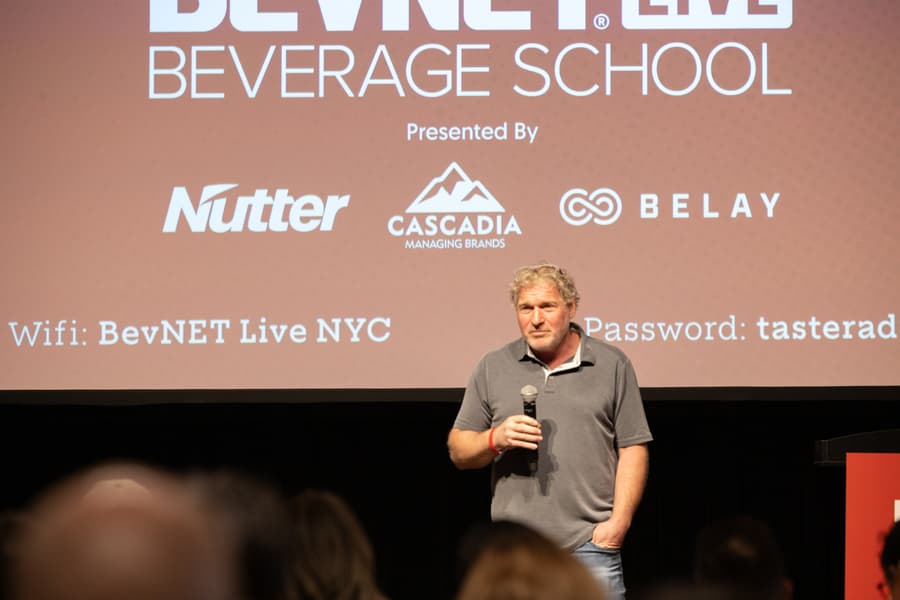
Featuring:
Brian Dworkin, CEO, Castle Co-Packers
Transcript
Note: Transcripts are automatically generated and may contain inaccuracies and spelling errors.
Brian Dwerkin [00:28] I'm Brian Dwerkin. I'm the founder and CEO of Casa Co Packers and also the co-founder of, uh, Full Circle Distributors. Um, so I'm gonna walk you through basically the symbiotic relationship between the co-packer and the brand. Um, the reality for an emerging brand is it's a mess out of the gate. Everything seems simple, easy to make in your kitchen, and then you scale it up in a plant and everything goes wrong. Um, you know, the co-packer is the one you lean on, and at that moment in time, you've already made promises to everybody and you want to cut corners and all you care about is getting to the finish line and you have the co-packers saying stop the bus, this is gonna be messed up. So basically communication with your co-packer about what you're planning in advance, your launch party, your, you know, you have a friend that owns a store that's supposed to, you know, launch it next week, um, the realities of what you're doing so they could actually tell you the reality of what's gonna happen. A little bit about our companies. Castle Copeackers is a bottling plant, hotfi, cold fill, carbonated, back in the box, um, cans, glass, plastic. Full Circle, which is the largest independent DSD house in Pittsburgh, um, does pretty much most of the brands that have been bought and sold in the last 1520 years. Our start back in the day was with honest tea. Uh, Seth and I are very good friends, and it all started that nobody wanted to brew tea, and we were willing to give it a shot as the newbies for brewing tea. We learned, we learned a lot during the way, and honestly, it was a lot of give and take. Um, Seth had people breathing down his neck as far as investors, Whole Foods had no clue how, um, how much he's gonna sell, how much he needed, when he needed it, and we'd be on the phone constantly. All right, as he grew, we had to find ways that like, basically they ran more at different times we invested, we put a dedicated line in for them, um, and, and honestly a lot is believing in the, in the entrepreneur that's behind the brand. If you have a co-backer that believes in you that doesn't think you're full of shit, um, they're gonna do a lot more for you. Um, the, the person that calls you back right away, chances are they're the one desperate for business. The good co-backers out there want to see your business plan. They want to be part of the company. They understand the more you grow, the more they grow if they invest. All right, then there's always a point that you outgrow that co-packer. You have different stages. You have small co-packers, medium sized co-packers, and then you have the, the co-packers that, hey, once you hit the Coke and Pepsi level. Um, it's honestly communication and knowing at what level you are, all right, and as long as the co-packer trusts you, they're gonna tell you when they're reaching max capacity, so you're not burned in the end. Um, the other part too is expectations on both sides. Um, Cobackers aren't a retail shop. We're not Alibaba. Um, we have long lead times. We're juggling a boatload of customers. Everybody's the most important customer, not one, and nothing goes to plan. It's not like we could plan a schedule of 8 hours and say we're gonna exactly have 15,000 cases by the end of the shift. Oh sorry. Um, so the biggest thing is planning out ahead, 90 day projections, building float into your plan, um, you know, don't cry wolf, the, you know, a lot of different stuff where you have to learn to like wait 24 hours to make the phone call. Um, emergencies cost everybody time. You're also using up all your goodwill favors if you're using everything at once. Everything's a fire to fight. Um, you want them to know as much as you. Uh, it doesn't need to be kept secret. Like if you're changing a SKU, it doesn't need to be like last minute. There's a boatload of paperwork for, uh, the quality departments that sometimes takes 3 weeks for them to get done. Um, be a good partner, be a good customer, all right? You care about your product, they care about getting paid. They're not an interest-free bank. Um, a lot of times the, um, uh, brands assume that they could string out the co-packer. The co-packer has the biggest expenses, and they also have the smallest margins. They're aligned with the brand for margins. Other suppliers have way bigger margins than your co-packer. They've built in most cases, 50 to $100 million dollar infrastructure, and they have people that are paycheck to paycheck even though they make a good living. Um, honestly, be polite. The words please and thank you don't go far enough. You're dealing with average people. You may deal with the CEO of the company one minute, but everybody else you're gonna be dealing with is just average people. It's their job. They don't understand you're an entrepreneur. They have one crazy entrepreneur in the building that's their boss managing multiple crazy entrepreneurs, it's tough for them. Also, the other part too is always tell them where you're going, what your dream is. They're believing in you, less of the brand. These are just some simple kind of a cheat sheet of different things to go through at different times, um, and honestly just so that things work well on both sides. The Cer doesn't want to screw you, you don't wanna screw them, um, you need them as much as they need you. Um, this is just some stuff that came out of Seth's book about our relationship and, you know, what we both learned along the way. Um, you know, different stuff like, you know, urgency is the brand's problem, not the co-packers. Our phones don't stop ringing. We have everybody wants to come out with a new brand. Everybody thinks they're gonna sell for a 10X. Um, so what makes you different? And how well you work together because everything is an emergency doesn't make either of you money. Another just scorecard for everybody if you wanted to go through and kind of rate your relationship with your co-packers. And honestly in the end the long game is plan ahead, communicate with your your co-packer, um, and honestly you become and, and I'll say in my case I become friends with everybody, um, I see them out at shows, go out to dinner, um. Um, I, I'll use Seth as an example. Our relationship goes back 21 years. He started a new brand 3 years ago. I got a call at 11 o'clock at night when Honest Tea shut, uh, Coke shut down the brand, and his first thing was how quickly can we start another tea brand. Um, my running joke is always you're with us for one week or life. There's no in between. All right, I've run out of stuff. I cut the slides. Does questions? Yeah, I was gonna say I'll answer some questions. Yes As far as quality, I mean, any reputable co-packer is SQF certified, so if they've got that, you've have to trust in the process. And and once again, it's no different than with the brand, it's going there and meeting the people. You're, you're gonna read if these people know what they're doing or if it's a shit show. Sorry guys, I swear a lot. It's OK, it'll happen. Any anybody else? Would you see No, that that's the last factor. Yeah, uh, the question to know if proximity to where you live, um, is the, is the best way to choose a co-packer, um, and, and I think it's proximity means nothing, um, maybe where your customers live or, you know, the retailers, but more of honestly what your product is and what matches the plant. Um, plants are all different sizes, specialties, and we've tried setting up to be one stop for everybody. I mean, we're a medium sized co-packer, we're not the largest, we're not the smallest. Um, we feel that that's the niche that we want to be in, um, and we're happy with it. And my, my plan is to transition it to my children one day. Um, they enjoy the business, they know I love it. Um, but I would say what works well with you as far as personalities, plants ability, um, honestly, if you get a warm fuzzy feeling from them.
Speaker 2 [09:27] Well, Brian, when you talk about that, um, is there a difference between, OK, it doesn't, you're in New York, it doesn't need to be a New York copacker, but you're in New York, does it make sense at this stage to get a California co-packer?
Brian Dwerkin [09:38] Oh, definitely not. I mean you're gonna have more buying power when it comes to. Shipping across the country for a long time to come. You want to be able to actually give a ton of volume to one co-packer, and then eventually it hits the point where you want to say, hey, all right, freight's killing me, my investors are beating me up. I'm gonna have to set up another plant. But I, I usually say you only need two co-packers these days, one in the east, one in the west, and always start in the east. It's cheaper to ship from uh ship from east to west. What? Yes. that At some point your accomplish. Yes They were bought by Coca-Cola and at that point in time we were, I'm gonna say we're about a 10 year old company, um, we were definitely not gonna continue doing business with Coke. They, they didn't have plans for us to continue, but, but, oh sorry.
Speaker 2 [10:47] The question just to reiterate was how do you pick the right size co-packer knowing that you're going to be scaling.
Brian Dwerkin [10:56] That's a tough one. different code-backers have different capabilities, so I'd say in most cases you're better off starting with a small co-backer that they, they know their limitations and, and be upfront with them. Um, but then it depends on the level of your investors. Sometimes your investors would rather you spend more, bleed more at a larger plant because of all the infrastructure they have. Um, I, I'd really say it's very product specific. I mean, I would say, you know, for instance, I'll use like a protein product these days as far as protein and liquid. Not every coat packer can do that. You need some specialized equipment, some know-how, um. I wouldn't go to like the smallest plant. I would go to one of the larger plants.
Speaker 2 [11:44] Anybody else? You know, you mentioned earlier that it's cheaper to ship from east to west. I'm wondering, is there specific reasons for that? Uh,
Brian Dwerkin [11:54] just the freight lines produce comes from California this direction. The truckers get paid top dollar for that, and they want routes back to California, so it's really just the gas and their time to get them back.
Speaker 2 [12:07] Yeah, um, you know, is anyone here based in California? Let me to get a sense, or is everyone here East Coast or middle country? Yeah, um, you know, is anyone here run into a problem finding a co-packer? I mean, what is something if, if you're having difficulty getting a co-packer to agree with you, what, what are some best practices when, you know, taking that first meeting?
Brian Dwerkin [12:35] You gotta sell your vision uh for me that's what it is. If it's just an email and you, you send over, hey, I want a quote, uh, straight up I don't really take it seriously. Um, I feel like you're just, you know, sending spam email out to everybody, um, send an email, hey, can I get on the phone? I did some research, you know, looks like your, your plant has the ability to do what I'm looking for, wanna run it by you, see if it's a good marriage, um, it's all about a relationship. I mean. I, I could tell you for my plant we don't make any money for we probably lose money on a new brand for the 1st 6 months to 1 year, um, we probably take out about 3 new brands a year that's part of our plan like, OK, you you gotta lose to win, um, and it's really based on personality and what I think of the the founders.
Speaker 2 [13:27] It's about being a human being,
Brian Dwerkin [13:29] yeah, it, it's all the human element, um, the brand's never gonna be what you start out as. Uh, your label's never gonna be the same. The inside's never gonna be the same. It's also your demeanor. Uh, you immediately go into panic mode on things. That does not help as an entrepreneur. It's all about solutions, figuring it out, um, and maybe I'm too blunt most of the time with brands. Um, I've been doing this on my own for 21 years and I've seen it. Nothing, nothing's ever the same. 5 years later, you don't even remember what you were before. My, my company, my plant is nothing what it was before. We, we were originally gonna be small runs, high margin niche products, started with organic, thought it would never grow, would always be just, you know, select people that could afford it, and then it took off. Um, you know, products like probiotics, we were, you know, the, the first co-packer for Covida, right, hey, we thought it would stay small. We, we didn't know Pepsi was gonna buy it in the end. Uh, products like Guayaqui started with us. Um, honestly, my, my people didn't even know what we were putting in the bottle.
Speaker 2 [14:41] Yes. What's a typical contract like?
Brian Dwerkin [14:46] Everyone we do is different. So every product these days, I mean, it's not like you're dealing with soda or water anymore. Every product reacts differently on your line and your processors, your tanks, your mixing. Kind of how we, we view it is we say let's run for a minimum 3 months and then see how it goes and see how to build the contract. Um, and honestly, any contract we come up with, it, it goes in a file draw and we never talk about it again. It's, it's, it's an outline. and I'm gonna say more on the brand side is it's broken out of the gates. Uh, you're entrepreneurs. It's, it's so hard when you don't know where your business is going or even where the market's going. But really just the fundamentals you care about is making sure that like, hey, listen, if they screw up, they'll pay the piper. If you screw up, you pay the piper, and you'll hold your vendors' feet to the fire that if they screw up something in the plant, that you're going to go to bat for the plant to make sure they're made whole. And the plan will do the same thing for you.
Speaker 2 [15:49] Brian, thank you so much. Great to have you.
Related Videos
The State of Cannabevs: Strategy on Deadline
With federal regulations about to put this fast-growing industry into a time-out, we look through the lens of brands, distributors, and lobbyists for potential futures for this fast-growing segment.
AI and Online Retail: Brand Building Meets Agentic Commerce
In a special tactical presentation, sales, marketing, and tech experts share a concrete playbook for making your brand legible to AI agents — without gutting what makes it human.
Retailer Profile: Launching and Maturing with Whole Foods
A rare founder–buyer conversation on what makes a pitch resonate, how brands can build productive retailer relationships, and what growth actually looks like once you’re on shelf.
Exit Interview: How Dirty Shirley Cleaned Up
Longtime beverage marketing veteran Adam Kost discusses his lean startup, proof-of-concept strategy, the key insight that gave Dirty Shirley the oxygen it needed to grow.
Disruption at Scale: A Conversation with Athletic Brewing CEO Bill Shufelt
Athletic’s rise has reshuffled the deck of beverage categories. Shufelt shares how he's navigated explosive growth and what he’s learned about raising capital, brand positioning and category creation.