Search across the BevNET CPG Media network including BevNET, Nosh, Brewbound, Taste Radio, Nombase and CPG Jobs.
Beverage School Summer 2026: The Entrepreneurial Life
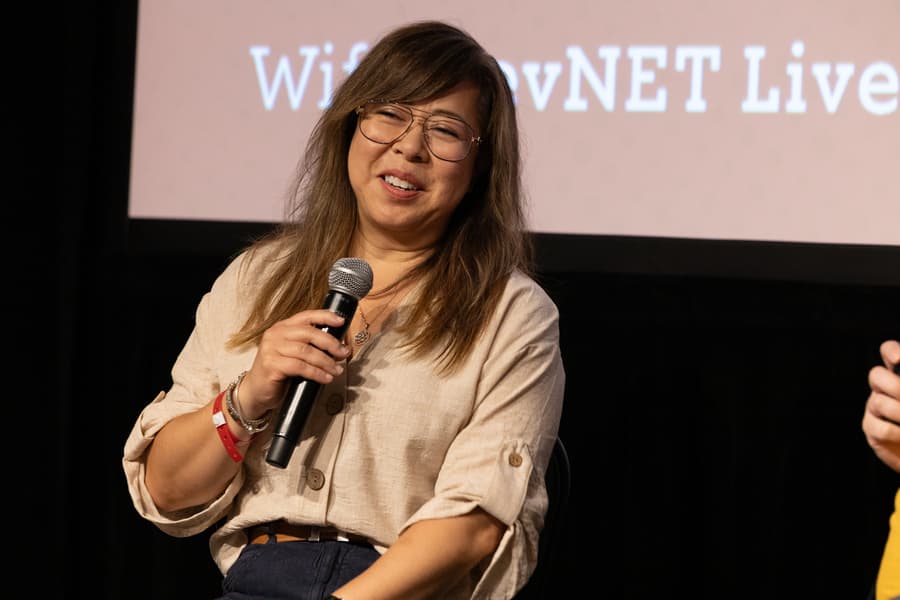
Featuring:
Madeline Haydon, Founder, Nutpods
Transcript
Note: Transcripts are automatically generated and may contain inaccuracies and spelling errors.
Speaker 1 [00:27] First, we're going to have a sit-down conversation with someone who has been in your seat before as the founder of a nascent startup, trying to get this off the ground and not always knowing exactly what you're supposed to do and saw it through to an exit. Uh, I'm going to welcome up Madeleine Hayden, the founder of Nutpods, the, uh, dairy alternative creamer, and we're gonna sit down and we're gonna talk about the entrepreneurial life. Thank you for being here. It's great to see you again. Nice to see you. So, kind of, we have a short amount of time to talk through your basically your life story, but I wanted to start by asking about the origins of nut pods and in particular what drew you to starting a company. What were you doing before that and how did you decide to take the plunge?
Speaker 2 [01:20] Well, as Brand geo I came from blood banking, so I was a supervisor for a regional blood supply, and the closest I came to food and beverage was thank you for donating a pint of blood bread. We also have juice and cookies in our canteen area and so, but, uh, in just necessity is the. You know, motherhood of invention and so for me with nut pods I'm lactose intolerant. I'm from Seattle, so we love a good cup of coffee and I was drinking a lot of almond milk at the time and I was thinking like, oh man, everywhere I go it's either like so much almond milk that your coffee is cold or it's processed non-dairy creamers with hydrogenated oils and artificial this and thats or. Like the big canister of powdered non-dairy and I just, I just decided like I want to have something better. I don't think I'm alone and I stopped waiting for the big boys, the big food companies to make it, and I, I started with my little Oster blender in my kitchen.
Speaker 1 [02:25] Well, there's a difference between just making something for yourself and deciding I'm going to start a company, raise capital, bring this to the world.
Speaker 2 [02:35] I was living in Southern California at the time. I had a lot of friends that were there. This is the time of like forks over knives, plant-based, vegan, keto, paleo. We were all coalescing in Orange County. And when I was talking about just, oh man, almond milk is so thin in your coffee, we were all just talking about like I, there has to be a, a better option out there and so and. I have to say I think if I was just making it for myself I would have quit. There's so many near death experiences of any startup and it's really hard if you come in here thinking I'm gonna make a lot of money with my brand. I assure you there are easier ways to make money than being a a startup founder, but when you really think that you're doing a product that not only will help yourself but will help other people, it helps you get through it helps you push through.
Speaker 1 [03:33] You did the classic founder CEO role. You led the company yourself for, you know, over a decade. Um, how did you step into that role, you know, adapting to being a chief executive and, you know, what do you think founders in the audience should consider before they put themselves in that position and give themselves that level of responsibility?
Speaker 2 [03:56] So two answers for you. When you were the founder, as you yourself and I, uh, I was the full-time unpaid, uh, team member for Nutpods for the 1st 3 years. So the real answer is I couldn't afford anybody else. The other real answer is nobody else concept pre-revenue wants to attach their name to something that is not their own idea. So that's what makes this entrepreneurial journey hard is that you're putting yourself out there financially you're putting yourself out there reputationally and so I think one of the things that you should think about. Is what is your tolerance for uncertainty because that's what entrepreneurship is about. It's about not knowing what's ahead, it's about you not knowing what you don't know because you're not there yet and about having a belief in yourself that somehow you'll figure it out. Now it's harder when you have a co-founder because you're gonna have to split roles. And when you think of a CEO, it's not just, it's not just the, the face and the name, it's also all the responsibilities, meaning. You make a call and it's great that's awesome, but when you make the wrong call you gotta live with that too and so and also being able to handle people you're building out teams can you build out culture? are you geared that way and are you comfortable with being able to talk to investors being able to do the all the things that a CEO has to do aside from just being the name and the face to the brand? Yeah,
Speaker 1 [05:38] delegating is a skill. And knowing when and how to do it. Absolutely, um, you know, also famously when you started the brand you were pregnant. I mean you were at a major turn in life and so how did you balance having a a newborn baby at home and like a newborn company that you were trying to get off the ground.
Speaker 2 [05:59] Well, I love real answers. Don't you guys want real answers? OK, real answers is this person of color, pregnant, like visibly 3rd trimester, new to the industry because I came from blood banking, never been a CEO before. It was hard. It was so hard and so, but I think. You do what needs to be done. If you are committed to your brand, you will find a way. I would love to say to all the women out there, I did transcendental meditation. I did yoga on Tuesdays and Thursdays. You don't have the luxury of work-life balance because you were doing everything. One of the things that I would say, and I still believe it to be true is when you're an entrepreneur, you are a farmer. You have to deal with um unstable finances. You also work on the weekends. You work in the evenings because the farm doesn't wait. The cows need to be milked and uh it's hard to go on vacation and it's really true about the entrepreneurial life and so I think that's one of the things that you have to you have to really. Accept, maybe not embrace yet, but accept if you're going down this journey. Yeah,
Speaker 1 [07:22] I mean thinking about it from a personal life perspective as well. I mean, how was your husband playing a role here and you know, again, thinking of how you balance childcare on top of that too, um, you know, I think that's something probably a lot of people in the audience will relate to is like, oh God, how do I take care of all this personal life responsibilities as well as like you said, growing the farm.
Speaker 2 [07:46] So my husband was an investment banker and if you know that industry they also work long hours and they travel a lot and so and he was supporting our family for the 1st 3 years including bankrolling nut pods so he would work all all year and then he would give his bonus to find nut pods and so it really was a um a family business in the beginning, you know. He wasn't the co-founder um because he supported me but he didn't think that this category was big enough and as an investment banker so wonderful to have when you're raising money in the deck. Not exactly the cheerleader you want as a startup founder and so, but he supported me as best he could and truthfully what that meant was financially because he had his job to do. He was financially supporting us and it takes a village to raise a kid. It takes a village to raise a brand and so I built a. Community I had a lot of friends that helped me with child care and sometimes it was awkward it was awkward to talk to investors carrying a newborn baby in a car seat because my first one was in preschool and there was no way of escaping. I, you know, I'm raising a brand and a kid but that's also what made this an authentic um you know journey.
Speaker 1 [09:17] Um, this was 2013 when you got started. At the time, crowdfunding was still relatively new, and you had a pretty successful Kickstarter campaign. Um, how did you approach that as a means of raising money? And, you know, I'm curious about it being of the time as well, you know, still novel, still exciting.
Speaker 2 [09:39] So Kickstarter was, remember, three-legged blind dog like you could not invest in me because I was so new to the industry and I was such an unknown. And so, and I didn't come from a Rolodex dating myself here of all my family and friends where I could be like, do you have an extra $10,000 that you can like put your faith in me, Brad? And so I did it the hard way. Now here is the blessing about crowdfunding specifically when it's non-equity with Kickstarter. You just have Kickstarter backers. They're not equity partners in your business, which means that when you actually go to raise venture or private equity, you don't have to clean up. We had, you know, 510 Kickstarter backers. Can you imagine dealing with 510 like investors or angel investors on your cap table to clean up? I would also say what I didn't know going into Kickstarter and what worked out really well. Was that it starts your SEO so it helps you be discovered, if you want. You know, proof of concept before you launch, and it's like, am I onto something or am I the only one who cares about a healthy non-dairy creamer? It's a great way to do that and I had that proof of concept not only in the US but actually around the world. So it turns out people want a healthy non-dairy creamer globally.
Speaker 1 [11:04] If you were starting today in 2026 with the landscape being what it is, do you think you would still try Kickstarter or has it moved on?
Speaker 2 [11:15] You know, I would try Kickstarter because number one, we did it with a camera it's such a capital efficient way to launch your business to get that critical proof of concept that I just mentioned you're getting real funding you know Kickstarter projects have raised everywhere from um $10,000. Don't do that. It costs way more than that in terms of back or rewards and shipping and handling. but also like we raised $32,000 we've had um other brands on there that have raised millions of dollars on there. It can be quite large and also one of the beauty about having Kickstarter backers is guess what, if you have a product that is uh that is approachable for ECO, they could be your like built in first consumers right there that can help start that Amazon flywheel.
Speaker 1 [12:10] So one thing that's basically true of the industry is you will make mistakes. There will be mistakes made. Everybody has them. For you early on, what was your biggest mistake?
Speaker 2 [12:22] So I'm gonna fast forward and when you build out a team and I'm and it's it's a common one but I did, I did it too even though I heard about it so you know you're you're at that point where you need to have someone with experience and you end up having a lot of people that have more knowledge than you and you feel like uh they know more than me and I'm supposed to manage them and they have more connections so I hired a person. That was not a cultural fit to what I was trying to build as a company but also congruent with my leadership style and they were smart and they were experienced and they had a lot of um knowledge that I wanted for my brand. But I, I hired for that experience. I didn't hire for the cultural fit and I'll tell you, like, especially if you don't work well together, there is no room, there is no room for people on your founding team that you don't work with well because everything is so critical. You have to be so lean you have to be so scrappy that you have to believe in the product or you or the mission or all three and I think. If you're looking only for experience and you don't particularly work well with that person, it's a huge distraction.
Speaker 1 [13:47] Yeah, absolutely, there has to be trust. Yes. On the flip side, what do you think was the best decision? What was the smartest thing you did, you know, in those first few years that helped set you up?
Speaker 2 [13:58] So we all know it's lonely it can be lonely and you have family and friends and they work for other people and they don't know how hard it is when you're pushing this huge boulder uphill and you don't have necessarily a lot of network and people that you can talk to and it just feels really lonely and I remember one time I was talking to an industry colleague and I said maybe I need to find a co-founder. And he is, and he was a speaker and he was nice to me and he talked to me a couple of times and he said, Madeleine, he said, I don't think you should do that because no one at this point is going to care as much of nut pods and they're not gonna work as hard as you and so I was really glad that in my weakness of like it's so lonely, it's so hard. That I didn't bring on another co-founder because the partnerships are a whole other deal that you have to balance and manage and communicate as well.
Speaker 1 [14:58] Absolutely. And so I think we only have about 30 seconds or so, but before we go, is there a piece of advice you have for the founders in the audience who, that they might not know?
Speaker 2 [15:12] One of the best things that I did is I put together an advisory board. It was coming from blood banking. I knew I didn't know this industry and I knew that I couldn't open doors by myself and so I ended up. Meeting people, establishing a relationship with them, not bumping into them saying, hey Brad, so nice to meet you, can you be my advisor, but building a relationship too and then. Having an advisor for each functional area, I had a marketing, I had a sales, I had an operations, I had a finance, and they became my advisory board to help guide my brand to market. They helped make me make decisions based on their own, and I used Y Combinator. They have, um, advisor template so it helps you know about how much to award. Make sure you have a vesting schedule because I had a dud and I had to I had to replace her and so but I think that's a great way to help you build your community access the experience that you have and when you have an advisory board in place they take it more seriously than just me calling up Brad saying what do you think about this and him telling me advice off the cuff.
Speaker 1 [16:26] Excellent. Well, Madeleine, thank you so much. It's great to see you again, and she and all of our speakers are going to be available at the end of the session at the round tables in the back of the room, and we want you to ask all your questions of them then. Thank you so much.
Related Videos
The State of Cannabevs: Strategy on Deadline
With federal regulations about to put this fast-growing industry into a time-out, we look through the lens of brands, distributors, and lobbyists for potential futures for this fast-growing segment.
AI and Online Retail: Brand Building Meets Agentic Commerce
In a special tactical presentation, sales, marketing, and tech experts share a concrete playbook for making your brand legible to AI agents — without gutting what makes it human.
Retailer Profile: Launching and Maturing with Whole Foods
A rare founder–buyer conversation on what makes a pitch resonate, how brands can build productive retailer relationships, and what growth actually looks like once you’re on shelf.
Exit Interview: How Dirty Shirley Cleaned Up
Longtime beverage marketing veteran Adam Kost discusses his lean startup, proof-of-concept strategy, the key insight that gave Dirty Shirley the oxygen it needed to grow.
Disruption at Scale: A Conversation with Athletic Brewing CEO Bill Shufelt
Athletic’s rise has reshuffled the deck of beverage categories. Shufelt shares how he's navigated explosive growth and what he’s learned about raising capital, brand positioning and category creation.