Search across the BevNET CPG Media network including BevNET, Nosh, Brewbound, Taste Radio, Nombase and CPG Jobs.
Beverage School Summer 2026: Small Format Channel Strategy
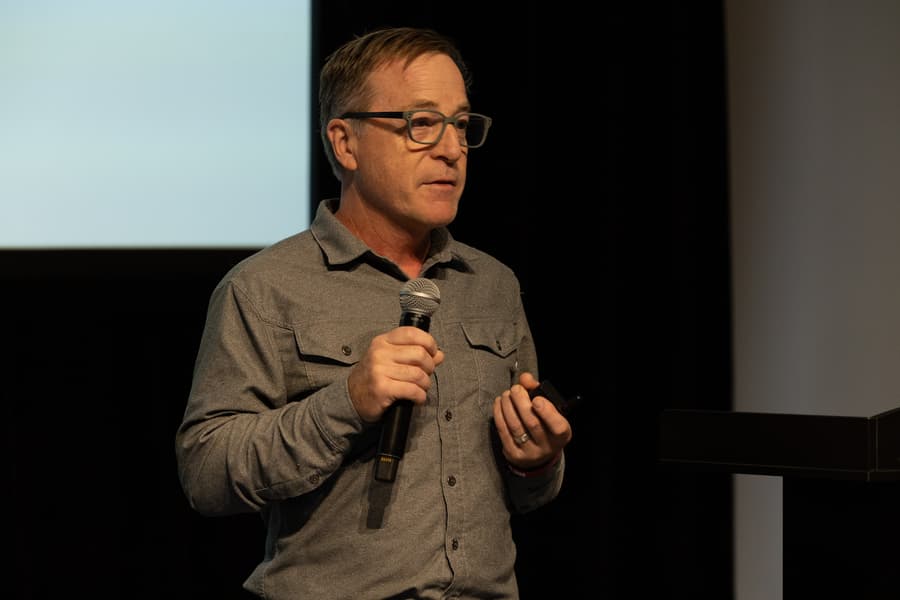
Featuring:
Andy Steele, Founder, Anonymous Sales Consulting
Transcript
Note: Transcripts are automatically generated and may contain inaccuracies and spelling errors.
Speaker 1 [00:27] Uh, happy to be here. I think the last time I was at Bevnet was maybe 1213 years ago, so it's been a while. Um, this is probably the least important slide you're gonna see all day. It just talks about my background. I've, I've worked for some great brands, uh, I had a number of exits, um, started my career as a retail buyer, so I kind of cut my teeth in the beverage space working for some of the retailers here on the bottom. Um, learned a lot along the way and actually got pretty good at buying beverages and kind of figuring out which brands were gonna make it. Uh, in the convenience store channel, so that's what we want to talk about today. Um, you know, so convenience store, uh, channel is a very fragmented channel. It's 150,000 doors, right? How do you go after that elephant? Um, not one bite at a time, but strategically. So, um, if you look at kind of how the channel is structured, there's, um, like I said, 150,000 doors. Um, if you look at national retail chains, that only comprises about 30% when you take the top 50 chains. So think about all the convenience stores you know and love and you go to every day. Um. Add those all up, it's only about a third of the total channel volume, and then you add to the next, you know, 150, and you still only get 6% more. So it's really the mom and pops that make up the majority of the channels, about 2/3 of the channel, and those folks are really hard to go after the onesie twosies. So really, you know, how do you, where do you point the gun? How do you really go after this channel effectively? I think wherever you launch the brand. You got to dominate in that market. So whether it's Boston or, you know, a market like New York is really expensive and hard. So we'll talk about you kind of maybe where a more rational start might be for your brand. But, uh, kind of what Bill talked about, you want to show examples of success, you know, um, that kind of can, you know, resonate in other channels of business when you go talk to, you know, the supermarket chains and things like that. But typically convenience. For most beverage brands is where they first discover a brand because the cost of entry is really small, whether it's $299 399 dollars, or whatever. I can try your brand very effectively. I don't need to buy, you know, a multi-pack and spend 15 to $20 to try your brand. So that's something to keep in mind when you kind of launch. Um, this is something I've done, you know, for any brand that I've worked for. It's an account scorecard, and I say it's hidden for my own protection because, you know, I'm kind of ranking a lot of the effectiveness of retailers that we're selling to. So VPO talked about that. It's probably the number one most important thing in the channel. Um, and typically, the number is one. If you can sell one unit per store per day in the community. Store channel, you're going to be successful. And you're not going to start out that way. You may, you may start at half a unit a day. And as long as you're trending positive, buyers will kind of, you know, they'll give you a little more leash to, to last. Um, execution. How does this store execute traditionally? And you can figure this out on your own just by doing store visits, right? Um, I always tell people, go there on a Saturday night. And see what the shelves look like. If they're empty, not stocked well, um, that's probably not a good executing chain. Um, and then also cost of entry, you know, we talked about, you know, there's going to be slotting fees, there are going to be rebates and buildbacks and all that sort of stuff. Um, Typically, the better performing chains, it's going to cost more. Um, but typically that math works because of the higher VPOs. So eventually you're going to get a kind of a on the right hand side here, a score. Um, who's the ace of spades, who's the 2 of diamonds? Like, go after the aces and the, and the queens and the jacks and the tens, you know, kind of leave the, the lower, the lower performings, uh, to the side. And I, I, I think knowing early adopters in terms of buyers, when I was a buyer, I wanted to be first. Not every buyer thinks that way. So I would just, whether it's an advisor or whether you know these people already through, you know, your experiences, um. I would go after early adopter buyers first. You're going to get great feedback anyways. Um, we're gonna rewind the, the clock here. Uh, 1998, uh, there's a brand that launched, and this is, you can, if you figure it out, just blurt it out. Um, it launched in 1998 in the US and they went to three markets. They started west and then went to east, and I was a buyer in Boston, uh, for Store 24. Um. And they basically, Boston was their, their 3rd market, OK. Their 2nd market was Austin. And what I saw in the data was they were outselling Gatorade. After about 4 months in the market, and their original market was Santa Monica. Anybody? No, who? No. No. No. 1998 Red Bull. So they had their, their philosophy was, hey, we're not going to go big market, we're going to go smaller market, right? Um, and Austin college town, Boston college town, I had 500,000 college students I was marketing to. And within 60 days without selling our number one beverage item. So I'm like, holy moly, this is the next big thing. And so they did it differently. If, if you recall, they had one skew, they were self-distributing. I don't recommend that, but it worked for them, and they already had obviously a massive global brand, but nobody knew what energy drinks were in 1998 in the US, and so they kind of broke the mold. And so you can self-distribute. It's a good way to kind of get going, to get a lot of experience, get a lot of feedback really quickly. It's not sustainable, and eventually you're going to have to find a different distribution model. But yeah, that was just something that was like, kind of, for me, a small market rollout makes a lot of sense. I think also having an east, a central, and a West makes a lot of sense when you're talking to buyers. Um, just, and this is just information, but, um, East Coast convenience store operators, just kind of a ranking, um, kind of where they are and where they're headquartered, and, um, you know, this is basically the top, we'll call it 30,000 doors that you're going to target, um, to go after those, those large region and national chains. Um, and, and this is available for downloading, uh, central, um, as well as the west. And then there's just the pretty. Pretty picture of all of them. And again, certain operators welcome new brands. Certain retailers actually invest in your brand, believe it or not, so they've got programs for that as well. Um, we're talking about, uh, DSD, uh, delivery, but also grocery wholesalers, um, McLean, Cormark, some of the other regional ones that are out there. Um, these distributors are in these accounts every week. This is where they're getting their cigarettes and their candy from. So, um, typically, Beverage companies, they don't do beverage as well as they do other grocery items, but I've seen it work really effectively. I used to work for Ollipop the last 3 years, you know, that brand was built on a direct model in a large format customers, but in small format customers we use the grocery wholesalers pretty effectively. To Bill's point, they're not, they're point A, point B transactional vendors. They're not great salespeople, but you know they're going to be there pretty much every week or every other week servicing those stores. And generally, Lower markups, DSDs have between 20 to 30% markups where these guys are kind of in the single, single team markups. So the other thing I discovered, I was a McLean customer for two years when I was a retailer, didn't know they had this, but they have consolidated shipping. So instead of shipping to McLean's 30 warehouses, you can ship to 3, and it's a real savings, and I didn't know this until about a year ago. So if you do go that route, I would certainly ask them about consolidated shipping. Um, what else? And when you talk to buyers, uh, be prepared to hear that your baby is ugly. Um, I think someone said it earlier, you never get packaging right. So when you do those first production runs, make them limited, um, as, as, as best you can. Nobody gets it right the first or second time, it seems like. Um, they're gonna say, I don't like your distributor. They'll be like, you know, I wish you were a grocery wholesaler or I need a DSD because I don't want my store people, you know, spending their time putting your product up. I need that service. So be fluid. Um, I need more margin and beverages are pretty much 45% or greater is what the retailer is going to look for. Um, I need a free fill, pretty standard, um, you know, whether it's a slotting or actually, you know, a free, a free case, that's, you're not going to get around that. They're going to say, I have a contract, I can't carry your item, that may or may not be true. They may just be kind of pushing you off, so you kind of have to do a little digging there. They all seem to have some sort of charity or golf tournament that you're gonna have to get involved in. So, and it's a great way to sample as well and get your brand out there in front of their store people. Um, the category is too new. If, if a virus is like that and hesitant, you may just want to move on. You know, there's plenty of other ones out there. Uh, like I said, there's so many, uh, arms and legs to go after in the convenience store channel. Um, and if, you know, if they just don't respond, you're going to get non-responses. Just know that there's going to have to be ways to get around there, whether it's a, um, again, a broker or someone else that you need to, to get involved with. And I would always say, always, always go visit the store ahead of time. Know what their assortment looks like, know what the retail, how they promote, how often they promote, all that sort of stuff. Do they allow displays? What's your POS policy? And you know this is the kind of the list of the ranking of them, but there are certain retailers that you can ship direct to. These, these are, they're, they're very few and far between, but these are some great operators that have their own warehouse and distribution systems that typically they want you to ship to their DCs. What else can I tell you? Um, what I've discovered lately is that these, uh, retailers are, are really good volume retailers, very easy to do business with, lower trade spends, and typically she is shopping here, and she's the one that, you know, kind of is the family gatekeeper in terms of dollars that are spent on beverages. So I wouldn't sleep on those. And last but not least, uh, I walked into Walmart the other day, right-hand side, it was a wall of protein. And I'm not saying protein is, is the solution, but clearly there are trends that happen, whether it's fiber, protein, nootropics, whatever that next trend is, whatever you're working on right now, could be on this wall in a couple of years. So you never know. Um, but yeah, just happy to talk more aboutvenience store channel, take questions, whether it's now or later.
Speaker 2 [11:02] Yeah, does anyone have any questions?
Speaker 1 [11:06] Yes sir, please. Sure. Yeah,
Speaker 2 [11:27] the question is about how do you actually procure a meeting with a buyer.
Speaker 1 [11:30] Yeah, I think if you're, if you don't have a ton of experience like already, um, you know, a lot of times you go to the store, ask, ask them, where's your buying office, like who's the buyer, that type, like, and it half the time may not know and may not be the wrong person or whatever, but sometimes that works, right. I mean, there's databases out there. There's plenty of distributors. Like if you have a distributor, they should know, but if you're at that very infancy stage. The internet works great. I mean, LinkedIn works great. I mean, there, there's enough out there that you can start, start that, but I mean, you know, if you just find an advisor, very, I mean, they'll, they'll give you a couple of people to just get started with, or they should. If they don't, then find a different advisor. Yeah. Yeah,
Speaker 3 [12:15] yeah, I have a question regarding RangeMe. Um, a lot of buyers like to go through RangeMe. Yeah, from my experience, a lot of times they deny you, ignore you, and I've been able to get around that by getting in touch with them directly and even have been gotten accepted by a store. Um, what, what, what's your experience with RangeMe? What, what, what do you think about
Speaker 1 [12:31] that? I haven't used it a lot. I don't really like it because it's very innocuous. There's no interaction, so I think, I think buyers use it just as a way to like filter through. I don't, I don't. I don't have anything great to say about it.
Speaker 2 [12:47] You know, I think, um, a question that's come up a bit, a few times is the human element. Uh, Brian was talking about that with co-packer meetings. How does that factor in with buyer meetings? And, yeah,
Speaker 1 [12:57] I think especially in the community store business, it's a very tight knit community. Well, you know, when buyers kind of rotate around certain retailers as there's been a lot of consolidation type of thing, and there's been people that have been in the industry a very long time, like a guy like me have been her 30. It's pretty sad, but it, it's a very tight knit community, um. And there's a lot of camaraderie, like people, you know, want to see everybody do well for the most part, um, in the industry, both, both on the retailer side and the supplier side.
Speaker 2 [13:27] More questions? You know, talking about convenience store in particular, um, that can be a that could be a channel that's not right for every product and every brand, but you know, the space is evolving. There's, in particular retailers like 7-Eleven that are bringing in more next generation, better for you brands. How do you know that your brand is something that even category wise is right for convenience?
Speaker 1 [13:51] Yeah, I mean, I think. It, it's a hard one to know. I think the more, the higher on the scale you get, the better for you. The harder the hurdle is, right? Because let's, let's be honest, Bubba is kind of the, the face of the convenience store channel, but that is changing. I think what I've seen is that if you go into a natural grocery, you know, those brands typically have had a tougher time and convenience. That's changing, especially with convenience now that food service is elevating. And so I would say target those. Convenience store operators that have a really good food service business. I mean, you know the, you know, the ones, those are the ones where you go and you feel good about your kids getting a sub or whatever at. Um, so to me, that's, that's the, the target I would shoot for. Um, I mean, I will always be very aware of price point, right? I think once you get over 399, 499 a unit, it gets infinitely harder.
Speaker 3 [14:46] Another question. Yeah, another question. What percentage of those corporate stores like Cumberland Farms and whatnot are controlled by Pepsi and Coca-Cola, and what sort of like percentage does an independent brand, um, you know, what are the odds like of getting that shelf space? Yeah,
Speaker 1 [15:02] I hate the word controlled because on the outside of the store is the retailer's name. It doesn't say Coke or Pepsi, but to your point, the reality is that those contracts do exist and, and. They're becoming less and less of a, of an issue because, you know, the soda business is declining. Let's be honest, soda's business is declining. You've seen the rise of modern soda, um, so that's kind of punching a little hole in it. Energy for sure, but you know, those brands are a lot on, on, a lot of those brands are on those trucks, but new energy brands have been able to penetrate that, that market. They're giving more space to it. I would say if you're a juice or a tea and you're a high sugar brand, that's going to be hard because those categories are declining. But you've got to be new and innovative, and you've got to come with numbers. Now you may do it natural channel first and grocery, but, um, convenience is, is, to me, convenience is the true health of a brand. If you can do well in convenience, you're going to do well in any channel.
Speaker 2 [15:55] Andy, last question, how many charity golf events have you been to in your life?
Speaker 1 [16:01] More than I can count, but it's, it's a job hazard, you know what I mean?
Speaker 2 [16:05] Yeah, exactly. Thank you so much. Great to have you. Great to see you again.
Related Videos
The State of Cannabevs: Strategy on Deadline
With federal regulations about to put this fast-growing industry into a time-out, we look through the lens of brands, distributors, and lobbyists for potential futures for this fast-growing segment.
AI and Online Retail: Brand Building Meets Agentic Commerce
In a special tactical presentation, sales, marketing, and tech experts share a concrete playbook for making your brand legible to AI agents — without gutting what makes it human.
Retailer Profile: Launching and Maturing with Whole Foods
A rare founder–buyer conversation on what makes a pitch resonate, how brands can build productive retailer relationships, and what growth actually looks like once you’re on shelf.
Exit Interview: How Dirty Shirley Cleaned Up
Longtime beverage marketing veteran Adam Kost discusses his lean startup, proof-of-concept strategy, the key insight that gave Dirty Shirley the oxygen it needed to grow.
Disruption at Scale: A Conversation with Athletic Brewing CEO Bill Shufelt
Athletic’s rise has reshuffled the deck of beverage categories. Shufelt shares how he's navigated explosive growth and what he’s learned about raising capital, brand positioning and category creation.