Search across the BevNET CPG Media network including BevNET, Nosh, Brewbound, Taste Radio, Nombase and CPG Jobs.
Beverage School Summer 2026: Route to Market
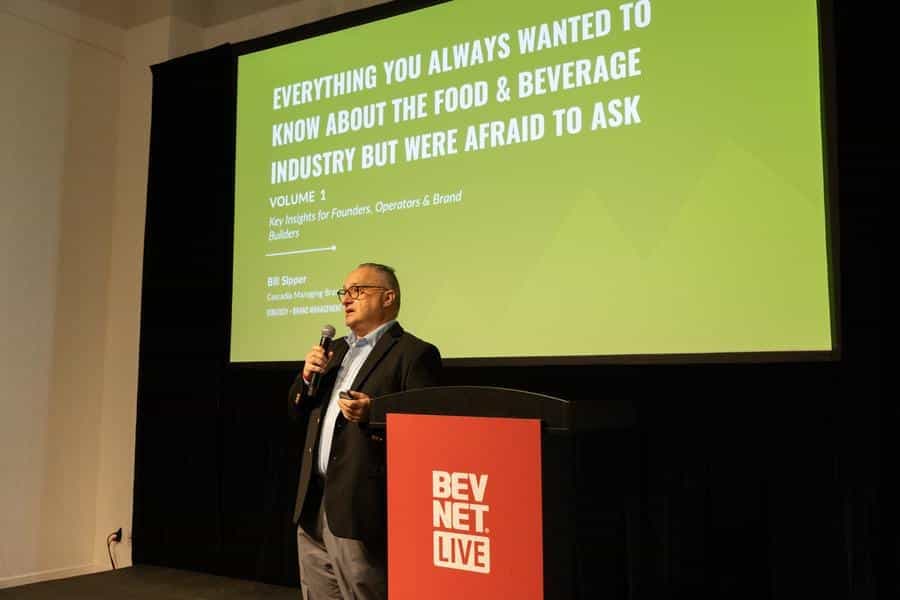
Featuring:
Bill Sipper, Managing Partner, Cascadia Managing Brands
Transcript
Note: Transcripts are automatically generated and may contain inaccuracies and spelling errors.
Speaker 1 [00:27] Our next speaker is Bill Siper from Cascadia Managing Brands. Bill's gonna talk about route to market. He's written a book about the subject. He's been doing this for years. I'm gonna hand the stage over to Bill.
Speaker 2 [00:41] Thank
Speaker 1 [00:42] you for being here.
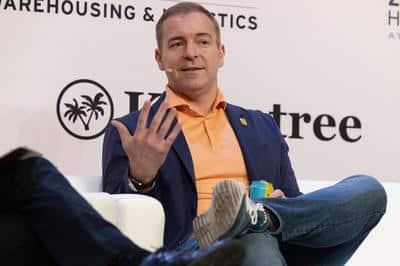
Speaker 2 [00:43] Thank you, thanks for having me again. So first of all, good morning. Thank you for coming. Um, first, I wanna say that, uh, my monitor is not working. So, uh, I might be winging this whole presentation. Um, no, uh, I'm gonna go through some stuff that's a bit. Cynical and depressing. It's not as bad as I'm gonna make it seem. I've been doing this for 30, 35 years, and, uh, I've kind of seen a lot, you know, it's like I've seen this movie before. So the brands that succeed are usually brands that. Think through the situation and don't try and go too fast, um. On my clicker here, OK. And what you're about to see is, is basically the first part of our new book called Everything You Always Wanted to Know about the Food and beverage Industry but we're Afraid to Ask. It's made specifically for people that can't afford, cannot afford a consultant and just wanna learn about the industry, um, so experience is the name. Uh, everyone gives to their mistakes, right? That's why I'm here. I've made a million mistakes. Guess what? You're gonna make a million mistakes. I'm still gonna make mistakes. We just don't have to make the same mistakes over a second time, right? And that's where we can add guidance. It's an industry that nobody really explains. It, it appears easy, and it really is easy. But you do have to know a couple of ground rules. Um, by the way, sorry, Cascadia has been here for 15 years. My brother and I, Bob, have 30, 35 years in the industry, C-level experience at, uh, brands like Avian, Nantucket Nectars, uh, uh, Naked Juice, Fresh Samantha Odwalla. We brought Zico to market, Hint Water to market, Liquid Death to market, um, so you know, we've kind of done this a couple times and we've seen the crash and burns, big company and small. Um, the food and beverage industry, it's capital intensive, it's relationship driven, um, and it's margin sensitive, and most founders enter with a great product without all of the operational rules that you need to get a brand off the ground. Yeah. Um, so the hard reality is 90% of all food and beverage startups fail within 2 years. And it's usually not because the product was bad. It's, it's usually because. They went too fast or they didn't have enough capital or they didn't get their volume per store up high enough before they went into Walmart and Costco and they got crushed, right? So there are ways to avoid those pitfalls again, I don't want to be doom and gloom because a lot of brands make it, OK, we've seen it. Uh, the margin stack. This is a really important slide that I want everyone to kind of focus on. If you want a shelf price of $4.99. Let's take this a step back. You have your cost of goods sold. You add what margin you think you want, and then you hopefully know the distributor and retailer's margins. And then you come up with a price on the shelf. That's the wrong way to go. Go to the shelf, figure out what your pricing competitors are, and work backwards. And if the math doesn't work, rethink it. Don't just force it through. You have to have a plan. So if you sell it for 4.99 and a retailer takes 40% margin in New York City they double whatever they pay for it to give you an idea. A distributor would take 30 to 35% margin. You're gonna spend 15 to 20% at least in the first couple of years on trade spending. And uh your broker fee is about 5%. That brand revenue is $1.47. You take $1.20 away for your cost of goods and you're left with 27 cents. OK. Gross margin excites. But contribution margin is what you really need to focus on. And if you don't understand the difference between the two. See us later and I'm happy to, you know, chat about it. Um, skipping distribution steps is the biggest mistake in the industry. Uh, the most common and most costly mistake is expanding distribution before you have velocity. Our five-stage channel framework provides a disciplined path from specialty stores to mass retail ensuring brands build all along the way. Natural specialty is a great place to start. OK. Why? Typically, you're gonna have an all-natural product, you're gonna have a niche product, you're gonna have something that's just a little bit different, right? The people that shop in specialty and natural food stores are definitely your consumer. That's the demographic. If you go to Walmart and you're sitting on a warm shelf and no one's ever tasted your product before and there's a sea of hundreds and hundreds of other products, what's the motivation for them to buy you? Packaging? A lot of brands have great packaging, right? So start in the right channel, start, you know, look, we flip this model all the time and when we work with bigger companies. So, but for this room, natural specialty is, is really your, your first step into, uh, distribution. Second step is usually regional grocery. Here we go. Thank you. Um, and you've gotta make sure you have data. That's what they're looking for these days. It doesn't have to be fancy Nielsen Circana spins data, although that's always helpful, but. You have to have something to present to them that says, hey, I'm in 500 stores in New York City. I'm spending X amount on marketing, which could just be demos, that's fine. And I'm moving 3 bottles per skew per store per day. That's data, right? What we tend to do is we go in and we talk about our product or ourselves or our story. But they need to know it's going to sell before they put it on the grocery store shelf. Independents like in the Natural Food Channel and Specialty Food Channel, for example, are much more lenient. They're not looking for data per se. Now they want the product story. Um, then your third channel is usually convenience stores. You add a high velocity channel with strong impulse purchase. You want to be cold. If there's an old Pepsi saying, if it's cold, it's sold. If you wind up on a warm shelf where no one's ever seen you, no one's ever heard of you, it's hard to motivate them to, to buy your product, even if you look, sparkling ice is 10 for $10 every day, close to it. How do you beat that? You probably can't. So you've got to find other, other ways. Um, then you have, you know, national grocery stores. I always like to start with the better ones first. I like to start regionally first because we minimize our shipping costs, um, and, and then the step after that is your overall Albert's and Safeway, uh, uh, gosh, uh, Publix, um. God, at this age. Stuff just leaves your brain. It's amazing how the brain functions. You wanna talk about velocity. I got it. Supermarkets, I can't remember even though we call on them. Kroger, you know, all of those major chains, um, you know, they have to come, they should come later if you want to be successful and don't let anyone BS you. The only important metric here is units per store per week. That number determines your survival. Give you an example. I don't think this is confidential. The average brand starts out at about 0.25 bottles or cans per store, per skew per day, OK? Everyone that comes to us starts and says that they expect to sell at least 1 a day per SKU per store per day. It doesn't happen. OK? On the other hand, we had a, a different approach to distribution with, uh, liquid death. And then we realized that the volume was 8 cans per store per skew per day. And then we said, OK, bingo, we're going national forget this little California test, it's time to go bigger, um, and it's really a simple model. Doors multiplied by, uh, your volume, your cans, bottles per day times 52 weeks is an annual volume. Make sure your projections and make sure your expectations are real. Again, not gonna lie to you. If you come out with a product today, there's a really good chance that you're not gonna get an order for 3 to 6 months. So you need to survive long enough in this business to get by. The dangerous middle is that, you know, uh, 1 to 10 million in revenue where brands, you know, are, they're not small enough to be scrappy and they're not big enough to scale and when you're in the dangerous middle, it's because your distribution is growing, but your velocity per store is not. The minute you see your velocity per store slow down, stop, stop expanding, figure out what's going on. Uh, trade spends increasing, but your contribution per unit is shrinking. Working capital is consumed by inventory, uh, before distributor payment arrives. We'll talk about that in a minute, and the brand is adding SKUs, uh, to look bigger rather than to serve proven demand. So discipline, prove velocity. Uh, protect margin, expand only when the engine is running clearly, right? You wouldn't get in a car with no gas and say, I'm gonna drive from New York to California, right? You, you wouldn't do it with no oil. Don't do it with your brand. The distribution system. Um, one of the most misconceptions in the food and beverage industry is that you get a distributor and you're getting sales. So let me, for the distributors in this stream, sorry, Mark. Distributors don't do anything. They deliver. Think of them as UPS or FedEx or the US Postal Postal Service until you get some velocity. You're gonna do all that work for them in the beginning and be happy that they deliver and merchandise the shelf, OK? They have too many brands to focus on. Something that's new even if we have, we have a brand that we brought to LA, true story, it's happening right now, um, comes from, uh, Eastern Europe. They wanna do two test markets. They wanna spend $2.6 million in advertising and they're in about 100 accounts right now in LA. There's no way to make that math work, OK, so either they're gonna realize that their marketing is not what they think it is, or they're gonna realize that, um, you know, the whole model isn't working right and they need to fix it. Ironically, in New York with very little, uh, marketing, they, they are in about 500 stores right now and the volume is actually very, very good, but, um. Uh, I'm gonna let you guys read this slide because it's, it's important but not that important. But the, this is more important. The wrong distribution model can make a good product commercially unviable. Let's talk about UNFI and Cahi. Traditionally, UNFI and Cahi, the two largest natural specialty food distributors, don't take a brand unless you can get a chain authorization first. Traditionally, you can't get a chain authorization first until you have data. So What they do well is if you got Safeway tomorrow they'll service every single store. What they do very badly is they're not in the stores. They don't have sales people in the stores. They don't have merchandisers. That's where DSD becomes the most important and most critical in your game. Yes, you do have to piece together a lot of distributors to cover Albertson's and Safeway. But they will merchandise for you and they will actually sell it for you once you prove some volume. Uh, pricing architecture. I've got about a minute. Um, look, if it doesn't work at the shelf price, your marketing is not gonna fix it. Define the competitive retail space. Know that the retailer is gonna look at 35 to 40% margin. Subtract the distributor margin at 30 to 35%. Subtract another 15 to 20% to get net revenue and then subtract your cost and that's what you're left with contribution. If your contribution margin is 15% or lower, you have to rebuild it. I'm not gonna talk about customization. All this is in the deck for you, um. So sustainable growth is what drives the beverage industry. You need to be disciplined. Every brand that I know that has come out and and went and gone to Walmart first or gone to Costco first when no one knew who they were without a marketing budget failed. Know your product, respect the channel, uh, prove velocity, price backwards, and protect your capital. Cash is oxygen. And the longer you're able to stay on the shelf, the, the, the better your chances are that the consumer picks you up and likes you. Thank you.
Related Videos
The State of Cannabevs: Strategy on Deadline
With federal regulations about to put this fast-growing industry into a time-out, we look through the lens of brands, distributors, and lobbyists for potential futures for this fast-growing segment.
AI and Online Retail: Brand Building Meets Agentic Commerce
In a special tactical presentation, sales, marketing, and tech experts share a concrete playbook for making your brand legible to AI agents — without gutting what makes it human.
Retailer Profile: Launching and Maturing with Whole Foods
A rare founder–buyer conversation on what makes a pitch resonate, how brands can build productive retailer relationships, and what growth actually looks like once you’re on shelf.
Exit Interview: How Dirty Shirley Cleaned Up
Longtime beverage marketing veteran Adam Kost discusses his lean startup, proof-of-concept strategy, the key insight that gave Dirty Shirley the oxygen it needed to grow.
Disruption at Scale: A Conversation with Athletic Brewing CEO Bill Shufelt
Athletic’s rise has reshuffled the deck of beverage categories. Shufelt shares how he's navigated explosive growth and what he’s learned about raising capital, brand positioning and category creation.