Search across the BevNET CPG Media network including BevNET, Nosh, Brewbound, Taste Radio, Nombase and CPG Jobs.
Beverage School Summer 2026: Financial Fluency and Margins
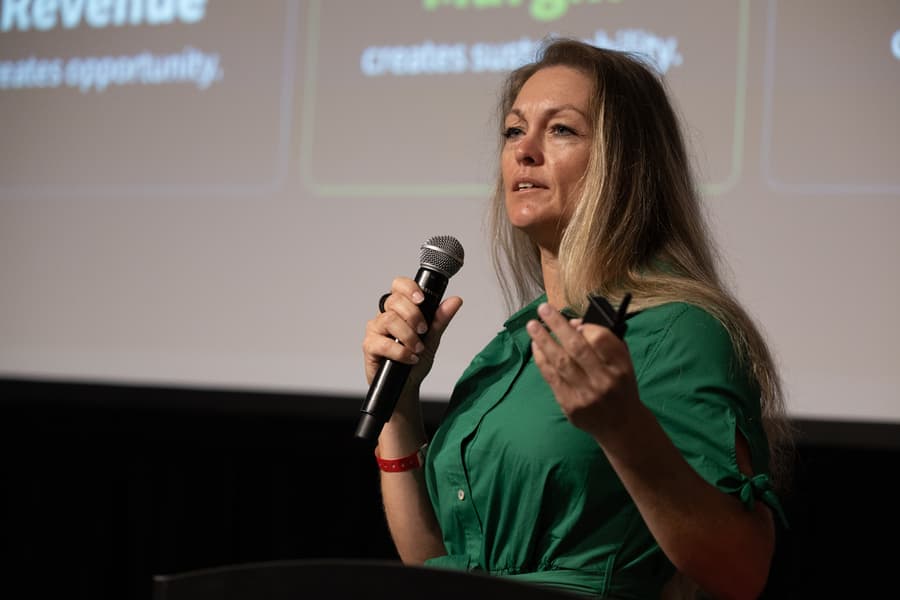
Featuring:
Claire Pelton, Growth Marketing Manager, BELAY
Transcript
Note: Transcripts are automatically generated and may contain inaccuracies and spelling errors.
Speaker 1 [00:28] We'll run through a lot of financial, you know, information. Uh, we're gonna continue that with our last speaker, Claire Pelton, who is the growth marketing manager at BELAY here to talk about financial fluency and margins. Claire, thank you.
Speaker 2 [00:44] Thank you. I have the sexiest subject of the day, accounting and margins. Um, So I'm part of BELAY. BELAY offers both assistant, uh, services, VA EA, but most importantly fractional accounting, CFO, and bookkeeping services. Uh, I head up the team that basically handles all things marketing for financial solutions or services, but I do have deep experience in retail eCom, and I've worked with hundreds of CPG founders, uh, in the past 10 years. So here's my goal here, right? So it's been touched on a lot in the last presentations, but basically defining. What's the difference between revenue, profitability, you know, a healthy business, or just a lot of sales, right? Because what's gonna happen as you're growing is if you miss the mark on your profitability or your margins, you're dead in the water, right? So cash, it's been said a billion times, cash is king in a CPG brand, any kind of product-based brand, um. And I'm gonna give you some tools and some ideas and some questions and thoughts to kind of look at your business and see, you know, the health and where you are. So this is the way I like to describe these three items. A lot of people kind of lean on revenue as like, oh my revenue's at blah blah blah, like 2020 million a year or 15 million a year, 100 million a year, but it's kind of a vanity metric unless you know your. Margin and you are sustainable at scale, right? So like a lot of people come to this event they're growing they're in hyper growth that's where I meet most of the CPG founders that come into our belay world um and then of course cash flow that's your survival mechanism um again it was velocity was touched on on a previous presentation if you're not moving product it's a lot harder to have cash there to buy more product and move it again. So here's a good example. So if you don't know your profitability in the distributor at, you know, in different sales channels, just a 3 cent leak per unit, like you can see at these revenue numbers how that increases, right? So a lot of the clients that come to us, they're maybe at like 2 million, they're growing, they're getting into Whole Foods, they're getting into different retailers. They need a proper accounting structure. A lot of times things like distributor deductions are not even hitting their chart of accounts properly. We've got founders getting in the weeds trying to figure out like, oh well, where's this charge from? At that point they're trying to be an accountant and they're trying to manage accounting. When, um, you know, folks like us at BA we can take that and systematically build that into their financial reports month over month we can meet we can talk about cash flow every week and really understand where their cash is going and help them with tools to avoid this type of craziness. So here's, here's where we get down to, to a lot of the hidden costs, especially at scale. So do you know your sales number for, you know, what do you, what's trade spend, right? And this can also be broken down a little bit more into, you know, by SKU, by channel, right? Like there's more than just the big retailers that you're selling in. A lot of people are selling on Amazon. A lot of people are selling through their Shopify account, right? Uh, so chargebacks, deductions, promotional allowances, you know, I, I, I don't know how many conversations I've had with founders that didn't realize that they were giving away free product for promotions in stores and realized like, oh wait. Is that a marketing expense? Is that a product expense, right? So just eliminating the confusion there. Um, let's see, better questions create better financial clarity. So these are the questions that you need to ask yourself. Um, what is your actual margin by channel? This is like something as a product based or inventory based, especially complex one that's omni-channel, this is probably the top question you need to be asking yourself, like beat this into your head is. How, what's my profitability on Amazon versus D2C? It's probably gonna be a giant difference, obviously, uh, maybe Amazon's a little bit better because you have more visibility, so you're gonna take a little bit of a hit, but at, you know, baseline understanding what is your actual margin by channel and then you can build your product pricing and you can go backwards and say I need to have this much of a margin. And this is where I need to price things and some of your retailers or some of your sales channels might not make sense anymore, um, which customers are actually so that kind of goes in the same process there, right? What is your fully loaded landed cost that can change depending on what you're doing if you're coming in by freight by ship, air, um, you know, like an ice cream brand may have a really crazy landed cost versus a. Fully, you know, turnkey product, right? So you're fully loaded landed cost is from. Where it's made to hitting the customer, right? Um, how much growth can your cash flow support? This was also touched on on previous conversations, pre previous presentations, um, you know, it might not make sense you might not have enough cash to grow hard, right? You might need to just chill and, you know, lean into what you do have and then grow smartly, right? But us as accountants, we show you and CFOs, we show you. You know this is what will happen if you get into this channel before you've gone and and made a really bad move, um, and then which costs increase as we scale so if you get into different 3PLs you get crazy with some new costs associated with growing. Um, growth is exciting, but then you can kill your business really quickly if you're not smart about it. So with growth comes, you know, you need sustainability, which is your margin. Um So know where every dollar goes. I'm not gonna overread this so you guys can read it here, but um, so what have we done? So we made, I've got a QR code if you want a handy little resource we just listed out 6 ways, like very simple, right? You can build on these, but 6 simple ways that when we have conversations with founders we get these questions asked over and over again, um, you know, and here's a good jumping off point. Here's my challenge for you too. Get up in your P&L and and hopefully you're in your P&L as a founder, right? Uh, or meet with your accountant or bookkeeper whoever's supporting you and go and look and see which channel. Brings in the most revenue and then go and look which channel brings in the most profitability and I bet you there will be an interesting thing there if you are confused at P&L profitability revenue, please talk to myself or my wingman Tyler who's here um he's very skilled in ECO and he's a very talented CF CFO um, I'm gonna wrap there are there any questions? While I'm up here, I'm gonna bring this is Tyler Kitchens. He is my colleague and a very well versed CFO also in ECO CBG, all that fun stuff, so he's gonna help me answer any super technical questions. Hello.
Speaker 3 [08:23] spot of when to bring in BELAY. Is it a revenue like if you're north of 5, 10, and, and when do brands know, oh, like it's too late, we need to, we need to bring in BELAY.
Speaker 2 [08:36] Well, I would say like 2 to 5 million is the sweet spot, but we've had like pre-revenue brands that are hyper growth. They've got a plan. They've got investors lined up. I always lean towards you're better setting up a really quality scalable accounting system before you need it because when you get too far into the weeds and you get into a growth stage and you get too complex it's a lot harder to re-engineer that and fix it. So earlier rather than later and the way Bla is set up is we literally have the base level like I just need a bookkeeper I just need my numbers up to date accurate. Um, all the way to advanced level CFO services, so that's what's so great about the fractional model is you can enter in at pre-revenue with a bookkeeper and then outgrow that and go to an accounting team and then maybe more complex service model within that accounting team structure and then bringing on a CFO when you're starting to get into investor meetings and forecasting and things like
Speaker 3 [09:38] that and then one follow up question exactly how far can you go with QuickBooks?
Speaker 2 [09:45] Oh, that's a Tyler question.
Speaker 4 [09:47] This, I will answer this with my deeply New York accent here. Um, so, uh, that is a very good question because I answer it weekly, um, with the right team. You can go as far as you want to with QuickBooks. I feel like some of the, hopefully nobody here is from NetSuite, but, uh, you can spend a lot of money on some of those higher systems. Uh, but if you have the right people running it, you can do it on much cheaper systems. Um, we've, I've personally ran $100 million dollar companies on QuickBooks. Um, I had no issues, had no problems. We, we did track inventory obviously in separate systems, uh, but we're able to use API to bring all that in over to QuickBooks and it was no problem.
Speaker 1 [10:31] Excellent. Well, is there any more questions from the audience? I think we can probably wrap a little early and then hand time over for the round tables and uh please uh encourage everybody to you know take full advantage of this. Claire, thank you so much for being here.
Related Videos
The State of Cannabevs: Strategy on Deadline
With federal regulations about to put this fast-growing industry into a time-out, we look through the lens of brands, distributors, and lobbyists for potential futures for this fast-growing segment.
AI and Online Retail: Brand Building Meets Agentic Commerce
In a special tactical presentation, sales, marketing, and tech experts share a concrete playbook for making your brand legible to AI agents — without gutting what makes it human.
Retailer Profile: Launching and Maturing with Whole Foods
A rare founder–buyer conversation on what makes a pitch resonate, how brands can build productive retailer relationships, and what growth actually looks like once you’re on shelf.
Exit Interview: How Dirty Shirley Cleaned Up
Longtime beverage marketing veteran Adam Kost discusses his lean startup, proof-of-concept strategy, the key insight that gave Dirty Shirley the oxygen it needed to grow.
Disruption at Scale: A Conversation with Athletic Brewing CEO Bill Shufelt
Athletic’s rise has reshuffled the deck of beverage categories. Shufelt shares how he's navigated explosive growth and what he’s learned about raising capital, brand positioning and category creation.