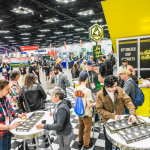
Despite estimated production volume declines of 4%, craft brewers are feeling confident halfway through 2026, according to the Brewers Association’s (BA) mid-year report.
Small and independent craft brewers’ output declined 4% in 2025 – more than 25% less than was previously reported by the Brewers Association (BA). The BA issued a correction of its 2025 Beer Industry Production Survey (BIPS), which was published last month, after receiving “revised production figures for a small number of regional craft brewers,” a BA spokesperson said in a statement shared Tuesday with Brewbound.
More than half (55.45%) of Brewers Association (BA) defined regional craft breweries beyond the top 50 recorded production volume declines in 2025, but there are still signs of improvement compared to 2024, according to annual data shared last week by the trade group.
There is more anticipation for Brewers Association (BA) president and CEO Bart Watson’s annual “State of the Industry” address this year due to intentional adjustments to the Craft Brewers Conference (CBC) schedule, which now places Watson at the end of the three-day conference’s content.
Now may be the time to invest in mints or hot dogs, as sales could rise following Monday’s Craft Brewers Conference (CBC) keynote address by hospitality expert Will Guidara.
Rising gas prices may be bad for consumers’ wallets, but increased costs and their impact on shopping habits may actually be good for the beer industry, according to National Beer Wholesalers Association (NBWA) chief economist and VP of analytics Lester Jones.
The 2026 edition of the Brewers Association’s Craft Brewers Conference (in Philadelphia (April 20-22) arrives amid turbulence for the trade association’s membership and an evolution of its marquee event. The craft brewing industry has now recorded three consecutive years of declines as craft brewers fight for relevance in a crowded total beverage marketplace.
Headed to Philadelphia in the next few days for the 2026 Craft Brewers Conference (CBC)? We’ve compiled a list of the top Brewbound stories and podcast episodes attendees should revisit ahead of the Brewers Association’s (BA) big event.
The 2026 Craft Brewers Conference (CBC) is just days away. This year’s CBC may be shorter than previous incarnations, but it’s still a packed three days of education, networking and deal seeking. Beyond the main stage presentation, there are plenty of education sessions that should be on your radar. Here are 10 sessions that caught our attention.
Over the last two years, 1,072 craft breweries have shuttered, while 817 new breweries opened. Speaking to Brewbound following Tuesday’s release of the Brewers Association’s (BA) Industry Production Report, staff economist Matt Gacioch zeroed in on the brewery opening number.
Beneath the surface of craft beer’s 2025 production decline (-5.1%, to nearly 21.86 million barrels) were power moves, usurpings and stumbles among the industry’s top 50 breweries, which the Brewers Association (BA) released today.
A majority of U.S. consumers still want expanded beer home delivery options, according to the sixth annual Direct-to-Consumer (DTC) Beer Shipping Report, commissioned by Sovos ShipCompliant and the Brewers Association (BA).
U.S. beer shipments did a 180 in February, increasing 0.2% year-over-year (YoY) after a 1 million barrel loss in January, according to the latest report from the Beer Institute (BI).
Brewers Association president and CEO Bart Watson believes the Craft Brewers Conference works best when it’s “the big-tent event that everybody is coming to and connecting with.” On the latest edition of the Brewbound Podcast, Watson explained that he views the largest annual gathering of craft brewers (April 20-22 in Philadelphia) in four buckets.
U.S. brewers shipped nearly 1 million fewer barrels year-over-year (YoY) in January 2026, according to domestic tax paid shipment data shared by the Beer Institute. Shipments topped 9.6 million barrels in January, a 995,677-barrel decline from the nearly 10.6 million barrels shipped at the start of 2025.