Despite estimated production volume declines of 4%, craft brewers are feeling confident halfway through 2026, according to the Brewers Association’s (BA) mid-year report.
Small and independent craft brewers’ output declined 4% in 2025 – more than 25% less than was previously reported by the Brewers Association (BA). The BA issued a correction of its 2025 Beer Industry Production Survey (BIPS), which was published last month, after receiving “revised production figures for a small number of regional craft brewers,” a BA spokesperson said in a statement shared Tuesday with Brewbound.
More than half (55.45%) of Brewers Association (BA) defined regional craft breweries beyond the top 50 recorded production volume declines in 2025, but there are still signs of improvement compared to 2024, according to annual data shared last week by the trade group.
This year’s dive into the Brewers Association (BA) annual production report and craft breweries’ volume trends is coming to an end, with a final installment analyzing contract brewed brands and alternating proprietorships.
As previously reported in Part 1 of our 2025 hospitality-driven brewery data dive, brewpubs recorded the smallest year-over-year (YoY) decline in 2025 production volume (-1.7% YoY) among all craft brewery types, according to the Brewers Association (BA).
Craft breweries continued to battle declines in 2025, but hospitality-focused breweries – including brewpubs and taprooms – were a “bright spot for the industry” last year, according to the Brewers Association (BA).
Microbreweries recorded the largest year-over-year (YoY) volume decline in 2025 among all Brewers Association (BA) defined craft brewery types, according to data from the trade group. The decline underscores microbreweries’ continued battles for space and attention on crowded retailer shelves and distributor trucks.
Was craft brewers’ 2025 less bad than we thought? The Brewers Association issued a revision to its annual production report. We’ll cover that, plus, interviews with Victory Brewing co-founder Bill Covaleski and director of brewing operations Joe Slavick, as well as Odell Brewing CEO Eric “Smitty” Smith.
Despite wavering scans, beer wholesalers appear to remain optimistic about the category, according to the latest Beer Purchasers’ Index (BPI) from the National Beer Wholesalers Association (NBWA).
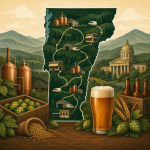
Vermont craft brewers are one signature away from expanded self-distribution privileges. The state Senate approved a bill on May 21 that would allow malt beverage manufacturers to self-distribute up to 3,000 barrels of beer under their existing manufacturer licenses.
The top 50 Brewers Association-defined craft breweries once again posted results as diverse as their portfolio mix these days, according to 2025 production data shared Friday by the trade group.
American Cider Association (ACA) CEO Monica Cohen has departed the trade group as it transitions to a “staff-led operating model,” the ACA announced Wednesday.
Beer shipment volume continued to rise in March, and there are signs that the category is reaching a point of “broad based stabilization,” according to Beer Institute (BI) chief economist Andrew Heritage.
After a week of good (dare we say sunny?) vibes in Philadelphia, the Brewbound team regrouped to put a bow on the 2026 Craft Brewers Conference. Plus, a trio of Pennsylvania-centric interviews with Carbon Copy’s Brendon Boudwin, Brewers of PA’s Hannah Ison and Love City’s Kevin Walter.
With today’s overcrowded shelves and endless bev-alc options, more and more suppliers are fighting for less and less retail space. Global Partners’ Mark Buonomo, New Trail Brewing’s Paul Gephart and Lawson’s Finest Liquids’ Matt Roth and Seth Talmon share tips for sticking out and getting one of those coveted placements.