
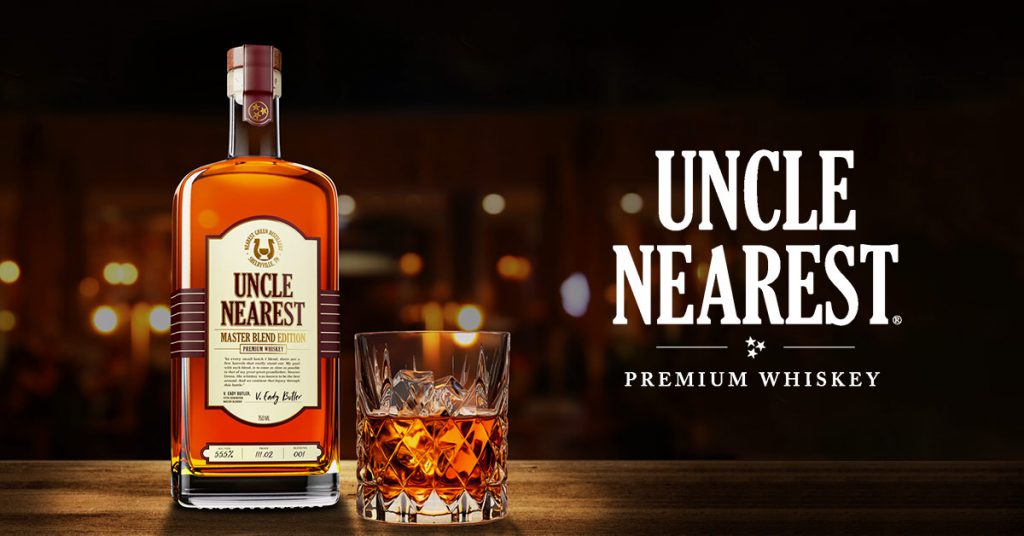
The court-appointed receiver for Uncle Nearest Premium Whiskey says the embattled whiskey company still holds “significant value,” but will need to clarify incomplete financial records and its capitalization table, and shed non-core assets before evaluating future offers for investment.
Twelve employees have already been laid off – 13% of the company’s workforce – and there are plans to continue to “evaluate the workforce and expenditures of the Company,” according to a quarterly evaluation of the company filed October 1 by the company’s receiver, Phillip G. Young Jr.
Uncle Nearest went under the control of the receiver in August, after Farm Credit Mid-America, a primary agricultural lender, filed a complaint alleging that the company has failed to meet its financial obligations for more than a year, resulting in debts totaling an estimated $100 million.
Uncle Nearest argued a receivership would be inappropriate given the availability of less drastic remedies and cause potential “catastrophic” damage to a brand steered by its CEO and founder Fawn Weaver. But the company did not refute that it is in default on more than $100 million in loans and would not be able to make its upcoming payment. That admission, along with a number of other factors, merited having a neutral third party take over the company’s operations. The judge appointed Young after he was proposed by Uncle Nearest.
Young’s first quarterly report provides the clearest look yet at the company’s financial standing.
Despite the challenges, Young does not believe that an immediate fire sale is necessary.
“While some non-income producing assets may be sold as part of this receivership, the receiver believes that the core of the company’s business can continue with a refinanced debt structure or, alternatively, can be sold as a going concern,” Young wrote.
Young’s report seemed to support Weaver’s allegation that some of the company’s financial uncertainty was the result of overstatement of whiskey barrel inventories by former CFO Mike Senzaki.
Previously paused whiskey shipments have started to resume after reconciling barrel counts at Tennessee Distilling Group, a company that distills, bottles and stores some Uncle Nearest products.
Young’s report noted he had found validity to “some of the allegations” committed by a “former employee” and to date, has found no evidence of misappropriation, theft, or financial impropriety by the company’s founder, its management team, or any current employee.
“While there have been multiple transfers among related entities, the receiver has found no evidence of defalcation to date,” the report added.
Challenges Ahead
The report highlighted several major challenges ahead for the company, with the majority centered on untangling financial records.
Uncle Nearest’s cap table is “incomplete and unreliable,” according to the report, and may not reflect secondary market sales, including transfers that previously belonged to Weaver. Young added that the sheer volume of creditors and shareholders is another challenge, with hundreds of constituents asking about the status of the company.
The absence of solid financial controls and the unreliability of certain financial records has also complicated a historical financial analysis. The challenge has been compounded by missing financial statements prior to 2024 that were reportedly erased from the company’s systems by a former employee, according to the report.
Revenues were significantly down at the time of the takeover due to litigation-related disruptions, delinquent vendor payments, and credit holds, but the cash flow crisis has eased in the last two to three weeks with Farm Credit’s additional infusion, as well as the resumption of shipments and increasing sales.
Workforce Cut, Non-Core Assets For Sale
The transition into receivership was “as smooth as one could possibly hope,” according to Young, who added that management and employees have all been cooperative. After proposing a 13-week budget, Farm Credit Mid-America has also been cooperative: The receiver negotiated a forbearance agreement in which the lender agreed to cover a $2.5 million gap for immediate cash needs and professional fees, in exchange for certain operational and financial benchmarks.
In addition, the receiver outlined views on a number of issues related to the company’s financial situation, some of which have been eye-catching at face value.
- Young found that several non-income producing properties, including in France; Martha’s Vineyard, Massachusetts; and Tennessee, were purchased for specific business purposes, and that they all had the possibility of producing revenue (directly or indirectly) in the future.
- Young is liquidating Uncle Nearest’s budding cognac project, which includes vineyards, a château, and intellectual property. With an estimated $15 to $25 million required to launch a cognac line, Young decided the venture was unrealistic; he noted he has begun fielding offers.
- Young is also investigating the sale of the company’s vodka business assets, and other real estate that is not essential to the core business, in the next three months.
- In September, Young filed a request for clarification on whether 10 entities associated with Uncle Nearest should be included in the scope of the receivership, citing a failure of the Weavers and Uncle Nearest to “recognize corporate formalities and division of finances.” The judge has ordered each entity to respond and essentially verify that they operate independently from Uncle Nearest.
Next Steps
While the receiver has begun the process of reconciling the cap table and sourcing data for financial reports, further budget cuts and actions to increase sales and profitability will continue, the report added.
Once the company’s financial statements and cap table are verified, the receiver will evaluate offers for future investment in Uncle Nearest, whether by debt refinancing, equity investment, or a sale of substantially all assets.
Young closed the report with an aim to resolve the receivership by the end of first quarter 2026.
Meanwhile, Weaver took to social media today to deny some of the more salacious allegations that have surfaced throughout the case, and to contrast headlines about other companies in financial distress.
While this case has demanded much attention, the whiskey industry’s recent struggles – including an oversupply and downward shift in demand – have left other companies in hairy situations. Garrard County Distilling Co. , closed in April after less than 14 months in operation and went into receivership for an unpaid $26 million debt. Also in Kentucky, Luca Mariano Distillery filed for Chapter 11 bankruptcy only a month after it opened, and Kentucky Owl Whiskey’s future is unclear following the bankruptcy of its parent company, Stoli USA. Many major whiskey companies are also reckoning with declining sales.
Since the start of the lawsuit, Weaver has called on the brand’s fans to “clear the shelves.”
“The fundamentals of Uncle Nearest remain strong. Our business continues to grow,” she said.