

Ready-to-drink cocktails (RTDs) remain one of the hottest segments in bev-alc, seemingly avoiding the quick rise and fall of the former new kid in town, hard seltzer (for now). Even the previously formidable flavored malt beverage (FMB) segment is starting to see the impact of consumers moving away to the more premium, typically spirits-based offerings.
The evolution of RTDs into their own category has been driven by the youngest legal-drinking-age (LDA) consumers, who seek variety and flavor-forward beverages.
In an attempt to appeal to the next generation of drinkers, many beer companies have expanded their portfolios to include RTDs. But adding another SKU to an already crowded segment – dominated by some of the largest bev-alc companies in the world – isn’t necessarily the answer to capturing (or recapturing) those consumers and occasions, according to Rhinegeist VP of sales, Marc Venegoni.
“They’re ambitious, they’re curious,” Venegoni said during a webinar last week, hosted by data and consulting firm 3 Tier Beverages.
“They’re not truly beer enthusiasts, maybe like I was in my early 20s when craft was just on the rise,” he continued. “But we think a lot of it’s because they don’t understand it.”
RTD consumers are primed to become craft beer drinkers, they just need help understanding what the segment can offer, including what they seem to want most: “easy-drinking liquid,” fruit flavors and variety, Venegoni said.
Craft is battling two core consumer shifts, according to Venegoni. One is the group of consumers that still drink craft beer, but not as often, preferring to mix up their purchases with other bev-alc.
Venegoni reiterated a Brewers Association (BA) survey that found that 94% of craft drinkers also drink other types of bev-alc at least once per month.
“How do we satisfy more occasions for these consumers that they’re just not as loyal as they used to be?” Venegoni said. “Fifteen to 20 years ago, a premium light drinker that drank bottles, that’s all they ever drank, and MillerCoors had a stat that if you were a Miller Lite 12-pack bottle drinker, you’d leave a store if they didn’t have it. Now, that’s unheard of.”
The second consumer shift primarily encapsulates what’s happening with the youngest LDAs. In a BA consumer survey, respondents were asked why they don’t drink craft beer at all or more often. The leading response, selected by half of respondents aged 21-34, was that they “don’t like the flavor” – 13 percentage points higher than respondents 35 and older who shared the same sentiment.
That feeling is likely due to those consumers maturing in a craft market focused on West Coast IPAs and other bitter flavor profiles, Venegoni said.
To discover which flavors the youngest LDAs do want, Rhingest surveyed a group of 21- to 29-year-olds on the “most appealing” and “least appealing” flavors and styles in bev-alc. The most popular flavors were hard lemonade (56%), fruit punch (52%), light beer (48%) and hard cider (48%). Meanwhile, about half of respondents wanted fewer imperial IPAs (52%), porters/stouts (50%), IPAs (49%) and non-alcoholic offerings (47%).
Rhinegeist’s own innovation strategy to bring consumers back to craft beer is to lean into some of the trends happening outside of the segment, and put a craft twist on them.
One of the ways the company is doing this is with Bubbles, a fruited ale that has been reimagined a few times throughout the Cincinnati brewery’s 12-year history. The brand acts as a “transition liquid” for consumers, in that it’s “not really an FMB, not really a craft beer,” but appeals to consumers looking for flavor-forward offerings, Venegoni said. It has also introduced some wine drinkers to craft beer, attracting those consumers who like the flavors of fruity wines, but prefer the more sociable nature of drinking a can of beer, he added.
Additionally, Bubbles is addressing Gen Z consumers’ desire for new and variety, experimenting with seasonal and limited-edition extensions of the brand. Venegoni likened the strategy to that of Anheuser-Busch InBev’s Busch Light Apple, but on a smaller scale. The company also tries to tie an occasion to the extensions, such as Holiday Bubbles, a new offering coming out later this year.
“[We] bring something out, show it to them, let them try it, and then take it away,” Vengoni said. “Hopefully, that leaves them wanting more for the next time it comes around.”
The strategy appears to be working, as 48% of Bubbles consumers are 35 or younger, Venegoni shared. Additionally, Rhinegeist now claims 20% of the “craft flavor market” across the company’s footprint.
Once a consumer is familiar with Bubbles and the Rhinegeist brand, the company then steers them to try other offerings within its portfolio. For example, on the Bubbles landing page on Rhinegeist’s website, the company lists “related beers,” which include not just Bubbles variants, but also KolschRokr, a 5.1% ABV kolsch that appeals to the light, easy-drinking characteristics the same Gen Z consumer base may be looking for.
“This is a space we can continue to grow and innovate in to bridge the gap between maybe what an RTD is, or the flavor malt beverages and stuff we can’t make as a craft brewery, to what a traditional craft brewer beer could be and should be,” Venegoni said.
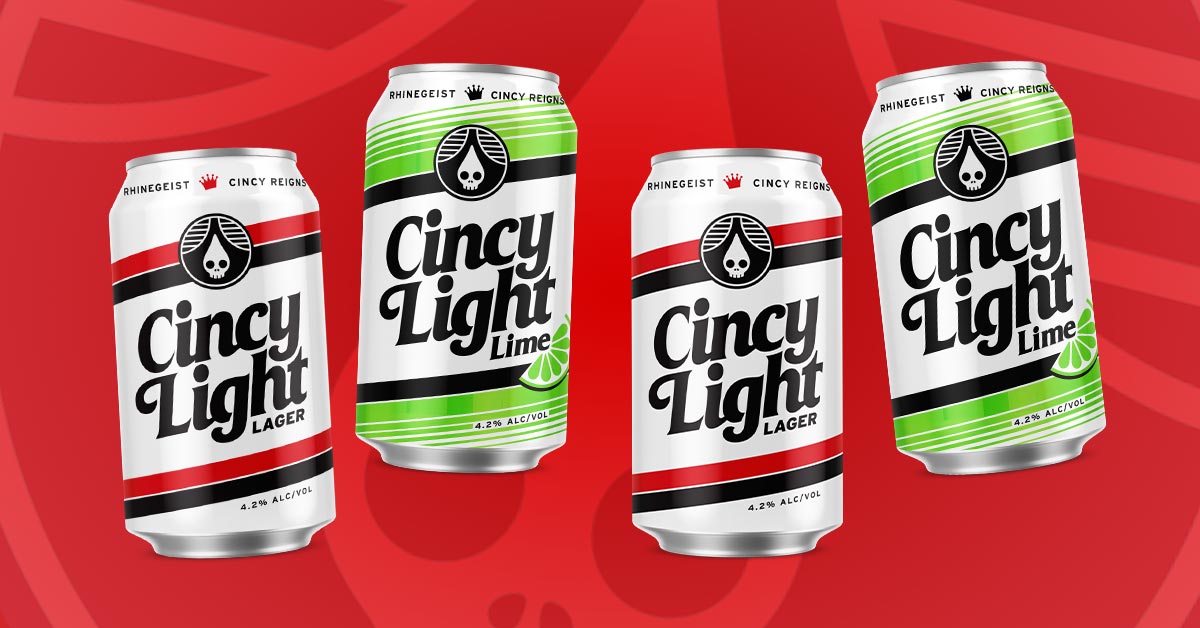
A similar strategy is playing out with Rhinegeist’s Cincy Light brand family, which is appealing to the younger LDAs seeking light beer alternatives.
“We’re not just saying, OK, Bubbles is our solve for flavor, and that’s what we’re going to hitch our wagon to,” Venegoni said. “I don’t think you can do that. … There’s way too many occasions out there.”
Cincy Light, a 4.2% ABV American light lager, launched in June 2023 and has continued to maintain growth in off-premise scans, with dollar sales up 3.7% year-to-date (YTD), through September 6, according to data from 3 Tier Beverages. The offering has been boosted by collaborations with athletic programs, such as the University of Cincinnati Bearcats.
This year, Rhinegeist introduced its first flavor extension for the brand, Cincy Light Lime, which is already the company’s fourth-largest SKU in its portfolio, Venegoni shared.
Lime pale lagers are the ninth-largest craft style and flavor combination in NIQ-tracked off-premise channels in the last 52 weeks, through August 9, 3 Tier Beverages consultant TIm Oldread shared during the webinar. The style also leads growth among the top 10, with dollar sales up about 20% in the last 52 weeks.
The popularity of lime pale lager is an example of how it “solves for some of that flavor, occasion, light, refreshing liquid that the consumer finds in some of the seltzer RTDs,” Venegoni added.
Other craft style and flavor combinations on the rise include No. 2 citrus American wheat ale and No. 3 Mango American Wheat Ale, both up nearly 10% over the last 52 weeks, Oldread shared.
Beyond Bubbles and Cincy Light, Rhinegesist is exploring other “innovation avenues,” such as intoxicating hemp beverages and flavor innovation through the use of hop and extracts.
“In general, flavor can’t be solved with one thing,” Venegoni said. “We think we need to continue to widen the funnel for what our consumers [want] and offer them different things, because that’s what they’re demanding.
“They’re demanding something for each occasion, whether they’re out with their friends or they’re home by themselves, having something that appeals to that core consumer in those different occasions is vastly important.”