
New Belgium Brewing Company turned down the innovation firehose to a drip – for the most part – to start 2025.
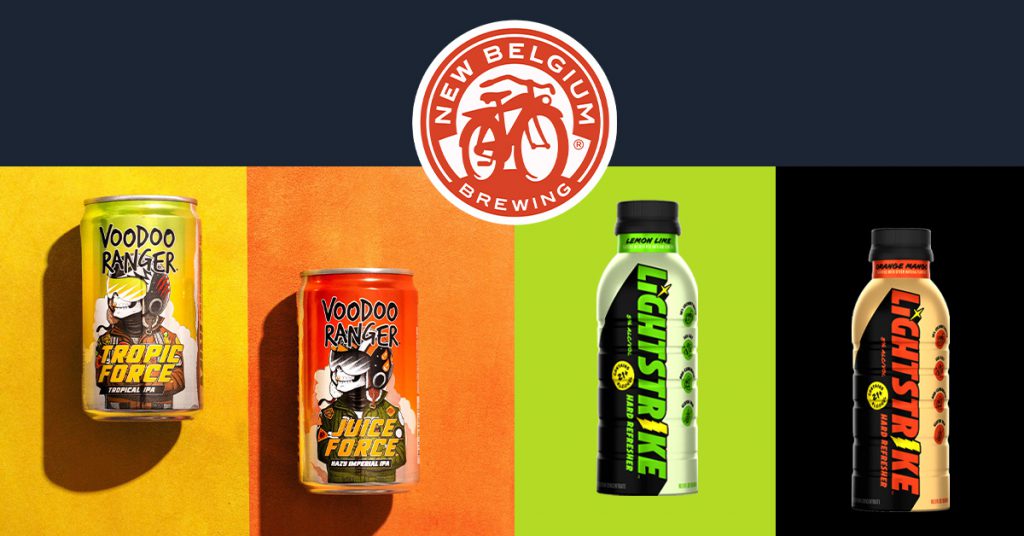
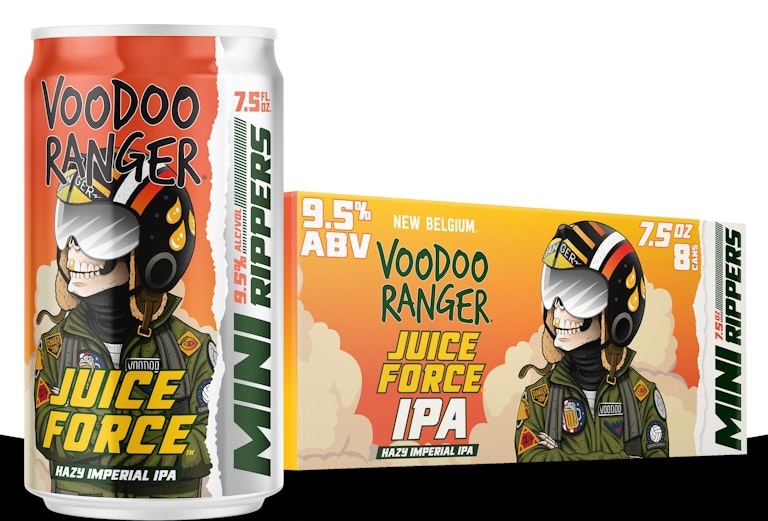
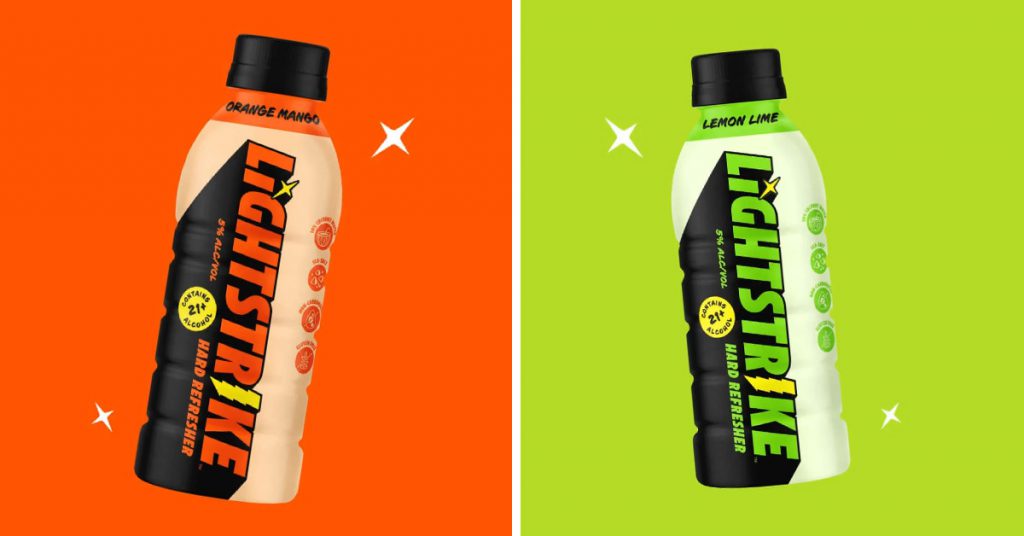
Yes, the company did add “Mini Rippers,” 7.5 oz. 8-pack cans of Voodoo Ranger Juice Force and Tropic Force (both 9.5% ABV). And it rolled out LightStrike, a 5% ABV non-carbonated hard refresher line, aimed at Millennials and Generation Z consumers.
However, the slowdown allowed New Belgium to focus on the brands that are growing, test these new SKUs and assess where the company is in an increasingly challenging bev-alc market, CEO Shaun Belongie told Brewbound last week.
Even as category and macroeconomic headwinds set in, New Belgium continues to gain share as a total craft business, Belongie said.
Kirin-Lion (aka New Belgium Brewing, Bell’s Brewery and Kirin Ichiban) holds a 1.57% share of beer category dollars year-to-date through June 15, in Circana-tracked off-premise channels.
Belongie pointed to the year-over-year growth of Voodoo Ranger Imperial and Juice Force as driving New Belgium’s trends.
In addition to those brands, the Force family – Voodoo Ranger Juice Force, Fruit Force and Tropic Force – has been a standout and is “almost as big as the rest of Voodoo Ranger, including Imperial” IPA, accounting for around “45% of the company’s entire portfolio,” Belongie explained.
“Getting some of the noise out of the system in terms of what to focus on has really helped those brands perform,” he said.
It also helped the company try out a new package format and a beyond beer offering, as well as expand c-store distribution.
After Slow Start, Mini Rippers Gain Distribution
Mini Rippers Juice Force and Tropic Force packs picked up distribution more slowly than expected, Belongie said. The company is also continuing to experiment with pricing on them, after launching with a goal of a $10 price point.
“It’s hard to find a $9.99, 6-pack, which for many, many years was the entry point to the category,” Belongie said. “And so we’ve been experimenting with, ‘How do we get to that price point?’ Because we do think there is this magical part of that that can really drive the brand.”
Distribution has started to pick up, with around 25,000 outlets carrying Mini Rippers and rate of sale increasing, leading to “a lot of good momentum,” Belongie said.
“There is a bit of discovery, and in some ways, training that has to happen to help people understand what this is, because it is in some ways such a novelty for craft,” he added.
That includes retailers. Some viewed Juice Force and Tropic Force 8-packs as 6-pack replacements, Belongie said. However, one-for-one replacements led to lost sales velocity for both New Belgium and retailers.
Belongie pointed to the retailers who added 8-packs to their 6-pack assortment, finding them “full incrementality” and meeting “a different occasion.”
“It has very little impact on 6-packs,” Belgonie said. “Whereas, if you get rid of the 6-pack and put this in its place, the velocity of that item is going to be much less than a 6-pack at this point.”
To better communicate the overall proposition, New Belgium has made packaging tweaks to emphasize the “mini sizing,” Belongie said.
Outside of the grocery channel, opportunities still exist to take Mini Rippers in “dump bins, single-serve opportunities or on-premise bucket specials,” Belongie said.
“There’s so much richness for this as a concept,” he said. “The novelty of it, it just needs some time. We’ve got to do a better job of making sure there’s more opportunities for us to get it in people’s hands, but it’s also just a patience and a time thing, which there’s not a lot of in the category right now.
“The thing we continue to hear from distributors, retailers: What are those things that are winning? And those are the things that they want to focus on.”
LightStrike Finding Its Groove in C-Stores
The introduction of LightStrike came with its own challenges – for starters, finding where to produce an alcoholic beverage in 16.9 oz. resealable PET bottles.
Belongie explained that finding co-packers proved difficult, due to them not having alcohol licenses. New Belgium did find partners in North Carolina and California, who had to acquire alcohol licenses and retool operations to produce LightStrike.
Those issues left New Belgium struggling to forecast how much product it’d have in Year One and forced the company to pick between rolling 4-packs in grocery stores or single-serves in c-stores, Belongie said. Due to excitement about the product from grocery buyers, that’s where the company focused its efforts.
At the halfway point of the year, Belongie admitted LightStrike hasn’t performed as well in the grocery channel due in part to the shrink-wrapped 4-packs lacking a “premium” look and making it difficult for consumers to see the product attributes.
However, LightStrike has performed stronger as a single-serve in the c-stores carrying the brand, Belongie said. As such, New Belgium is doubling down with the brand in the channel due to singles costing $2.50, a much easier price point for trial compared to $10 for a 4-pack, he added.
New Belgium will launch a new LightStrike flavor, Blue Rush, in 15-pack trays that are easily broken down for singles, Belongie said. Blue Rush will launch nationwide September 1.
New Belgium is also rethinking LightStrike’s pack type, Belongie shared. A carton-type package is expected later this year, which is aimed at helping consumers find the product more easily, he added.
New Belgium at Nearly 50% ACV in C-Stores
Among New Belgium’s strategies for 2025 was to expand its c-store distribution. Belongie said the company had been stalled at 40% ACV (all commodity volume).
Belongie argued that New Belgium’s velocity and rate of sale should command being in more stores.
“We really had a push this year to get to 50% and we’re closing in on that,” he said, crediting the company’s distributors.
Belongie teased that 2026 will see New Belgium launch “distinct” innovations to the convenience and grocery channels. It’s one of the learnings from this year’s step back launching several new products. Among the learnings from this year is that there isn’t a universal Voodoo Ranger shopper.
“We do think there’s innovation opportunities in both,” he said. “But it was helpful for us to step back and think about the shopper in both of those channels and understand what they are looking for and to some degree, it’s not probably universal.”