
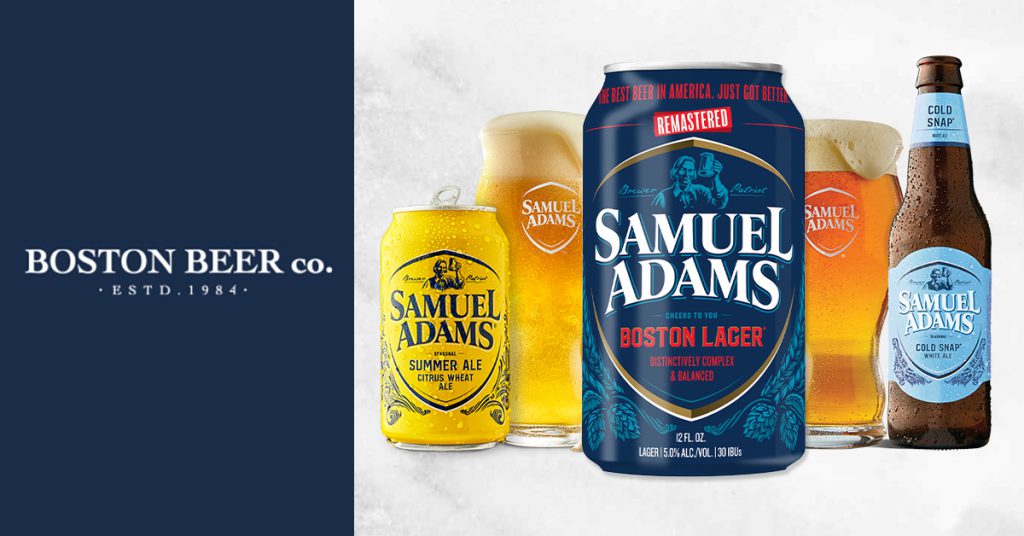
Q2 was once again a thorn in Boston Beer Company’s side, despite a rosier Q1, according to financial results released by the company late Thursday.
Boston Beer shipments (sales to wholesalers) declined 0.8% year-over-year (YoY), while depletions (sales to retailers) declined 5% for the three-month period ending June 28. Those declines are on top of Q2 losses recorded in 2024 (shipments -6.4%, depletions -4%) and 2023 (shipments -4.5%, depletions -3%).
The latest results follow a more positive start to fiscal year 2025 (FY25), with Q1 shipments increasing 5.3% YoY, to 1.7 million barrels, and depletions down 1%. The company noted during the April release that shipment gains may have been partially due to inventory levels, which were slightly higher than previous quarters, but still “at an appropriate level for each of its brands.”
Boston Beer founder and chairman Jim Koch said the Q2 depletions declines were the result of pressured volumes “across the beer industry due to economic uncertainty impacting consumer behavior” as well as some “poor weather in some key selling weeks.”
Q2 net revenue increased 1.5%, to $587.9 million, while net income increased 15.5% YoY, to $60.4 million, an increase of $8.1 million. Gross margin increased 380 basis points, to 49.8%.
“While the external environment remains dynamic, we were able to grow share in the first half of this year,” Koch added in a press release. “We have a diversified portfolio of iconic brands, strong innovation pipeline and the best sales force in beer. Despite a weaker volume environment, we have raised our gross margin guidance as we continue to see positive impacts from our multi-year margin enhancement initiatives.”
Year-to-date (YTD) through the first half of FY25 (H1), Boston Beer shipments declined 1.7%, while depletions declined 3%. H1 net revenue increased 3.6%, to $1.042 billion, while net income increased 30.7%, to $84.8 million (+$19.9 million). Gross margin is up 410 basis points YoY, to $49.1%.
Through July 19, YTD depletions have declined approximately 3% compared to the same 29-week period in 2024, according to the release.
“We are encouraged by our strong gross margin and earnings performance in the first half of 2025 and the positive consumer response to our Sun Cruiser innovation,” president and CEO Michael Spillane said in the release. “While the macroeconomic environment remains challenging and we do expect shipments to rebalance in the second half of the year, our first half performance and strong operating plans for the remainder of the summer give us confidence in our ability to deliver our full year financial guidance.”
Growth from Sun Cruiser, Boston Beer’s spirits-based hard tea offering, as well as craft brand Dogfish Head, were unable to combat declines from Truly Hard Seltzer and Samuel Adams in both Q2 and H1, according to the release.
The company added that “impairment of brewery assets of $5 million increased by $1.6 million from the comparable period of 2024, due to higher write-offs of equipment at third-party and company-owned breweries.” Year-to-date (YTD), the impairment has increased by $1.3 million.
Boston Beer noted that the company “expects that the trend of shipments exceeding depletions will reverse in the second half of the year” as “the third quarter is a much larger volume quarter than the fourth quarter given the seasonality of the business.” They also noted that the company “was not able to fully ship to meet demand” in Q2 2024 and “caught up in the third quarter.” As a result, Boston beer expects “the 2025 shipment reversal to occur in the third quarter, with shipment declines expected to be in the low- to mid-teens.”
Boston Beer Lowers Guidances, Now Including Tariff Impact Estimates
With the latest results and “the financial impact of tariffs programs announced to date,” Boston Beer has updated its full-year guidance. The updated guidelines include:
- Depletions and shipments down high-single-digit to down low-single-digit (previously down low-single-digit to up low-single-digit);
- Gross margin, including tariffs, between 46% and 47.3% (previously between 44% and 46.5%);
- Gross margin, excluding tariffs, between 47% and 48% (previously between 45% and 47%);
- Capital spending between $70 million and $90 million (previously between $90 million and $110 million).
Previous Boston Beer guidance did not include estimates for full-year total cost impact of tariffs, but the company has now shared those figures and its updated estimates ,which are now included in the guidance.
Full-year total cost of tariffs on the company is now estimated to be between $15 million and $20 million (previously estimated to be between $20 million and $30 million). Gross margin impact is expected to be between 70 and 100 basis points (previously between 50 and 100 basis points).