
More than a decade after the first states legalized recreational cannabis, the interaction between it and craft beer remains as nebulous as ever.
In a recent post that he described as “long, convoluted, murky and contradictory, just like this topic,” Brewers Association (BA) chief economist and VP of strategy Bart Watson explored the effect of various forms of legal cannabis, including both marijuana and hemp-derived, delta-9 THC, on consumers’ consumption habits.
“When I look at the data and research, I see signs that there are effects between cannabis and beverage alcohol, but not in a single direction,” Watson wrote. “For example, cannabis may be taking some occasions from beverage alcohol (particularly in this new beverage era), but legalization has lowered cannabis pricing and in doing so increased disposable income for cannabis consumers.”
The specter of legal recreational cannabis had long generated anxiety in some craft brewers who feared drinkers would eschew craft beer in its favor. In reality, drinkers have been drinking less beer, but not necessarily because they’re opting for cannabis.
“Per capita beer volumes have been declining for several decades, but that’s largely been the result of the corresponding increase in spirits – largely driven by cheaper relative pricing – and until the last few years, total beverage-alcohol consumption per capita levels were quite steady,” Watson wrote.
Since 2000, per capita U.S. beer shipments per legal-drinking-age adult have declined from slightly more than 31 gallons to 25 in 2023, according to Watson’s analysis of data from the Beer Institute (BI) and the U.S. Census Bureau.
The amount of pure alcohol Americans consume has hovered around 2.5 gallons per capita for decades, though it has wobbled a bit in recent years. From 2020-2022, the per capita amount crept above 2.5 gallons, peaking in 2021, but noticeably fell below 2.5 gallons in 2023, according to data Watson shared from the National Beer Wholesalers Association (NBWA). While 2.5 gallons per capita remains steady, beer’s share within it has declined.
As beer competes for drinkers’ share of mind, fridge and wallet, legal cannabis may pose less competition, due to declining prices post-legalization.
“Legal cannabis only takes beer money out of consumer’s pockets if they are spending more on cannabis post-legalizations,” Watson wrote. “And given how large price decreases have been in many states, it’s hard to see how that’s the case.”
The price of bud in Colorado dropped from its peak of $2,007 per pound in January 2015 to $658 per pound last month, according to Colorado Department of Revenue data shared by Watson. Similarly, cannabis tax and fee revenue in the state has fallen from its 2020 peak near $40 million to around $20 million this year.
“It’s reasonable to assume there has been some demand growth in the era of legalization, but that it’s nowhere near as large as state sales figures suggest, particularly when so much of that growth is simply black market moving to legalized markets,” Watson pointed out.
A near equal number of respondents in the BA’s annual Harris Poll have reported drinking less craft beer due to consuming more cannabis (314) compared to drinking more craft beer and consuming less cannabis (315) since the question was added in 2018, Watson noted.
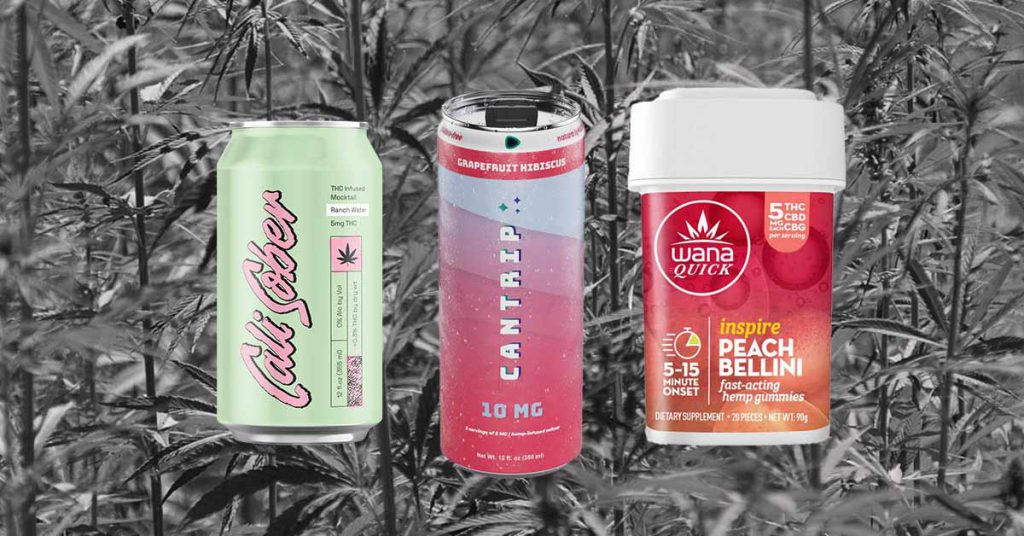
Intoxicating hemp beverages, which are more like beer in package format and delivery than other cannabis products, have taken off in recent years due to tweaks in the interpretation of the 2018 Farm Bill.
Minnesota was an early mover in the THC drinks space and legalized the practice outright in 2022. Nearly half (45%) of the state’s craft breweries are selling at least one THC offering, according to Watson’s findings. However, the rise of these drinks has had little impact on Minnesota’s share of total U.S. beer shipment volume, which was 1.8706% in the two years before THC drinks were legalized and dipped to 1.8685% in the 17 months following, he noted.
“Craft sales in Minnesota and other states where these beverages are popping up are weak, but I don’t see a lot of evidence they are worse than where you can’t buy them,” Watson wrote. “It’s a challenging year for everyone.”

Beer Institute Clarifies Position on Intoxicating Hemp Beverages
As intoxicating hemp beverages proliferate, the BI recently clarified its positions on the segment:
- “The legalization of consumable cannabis products is for American voters, state Legislatures and Congress to decide.
- The Beer Institute supports efforts underway by lawmakers to close an unintended federal loophole that is enabling the proliferation of unregulated intoxicating hemp products across the country, including those containing synthetically derived THC.
- Government experts have publicly highlighted the lack of scientific data regarding the consumption of intoxicating hemp and cannabis products.
- Intoxicating hemp and cannabis products are fundamentally different than beer and the taxation of them by government entities should reflect these stark differences just as governments at all levels in the United States have consistently reaffirmed the different tax treatment between beer, wine and hard liquor.”
Should intoxicating hemp and cannabis become federally legal, the BI argues that federal excise taxes on products containing the substance be set at a tax rate “higher than the highest rate for any beverage alcohol product.”
Furthermore, the BI believes that regulators at all levels of the government “prohibit co-location of the sale of alcohol beverages in the same retail venues as intoxicating hemp and cannabis products” in order “to avoid consumer confusion.”
The trade group called for a “‘zero tolerance approach’ for THC-impaired driving until proper field measurement technology and protocol are widely available and guidance on safe levels of consumption is established.”
It also “supports prohibitions on public consumption of intoxicating hemp and cannabis products that mirror those presently in place for tobacco,” “potency testing and warning label requirements” and policy that ensures cannabis products “do not primarily appeal to those under 21.”
“Even if intoxicating hemp and cannabis products are legalized, the Beer Institute supports continuing the federal prohibition against combining intoxicating hemp and cannabis with alcohol,” the BI wrote.
At the BI’s Annual Members Meeting earlier this month, Fierce Government Relations managing partner Kirk Blalock told attendees during a panel discussion that federal legalization of cannabis remained unlikely, but “new leadership” could create “more open minds.”
Blalock specifically called out that outgoing Senate Majority Leader Mitch McConnell (R-KY) “does not want to see this go.” Senate Republicans elected Sen. John Thune (R-SD) as their new majority leader on Wednesday. Thune opposes legalization and supports reversing cannabis reforms made during the outgoing Biden Administration, according to Marijuana Moment.