Zoe Licata joined Brewbound in 2021 after several years of freelance reporting and documentary work. She’s a Massachusetts native, guinea pig for bev-alc innovation and savant in Gen Z culture.
Several bev-alc trade groups, including the Brewers Association (BA) and Beer Institute (BI), submitted comments to the Alcohol and Tobacco Tax and Trade Bureau (TTB) last week, raising concerns over notices of proposed rulemaking (NPRM) regarding nutrition and allergen labeling on wine, distilled spirits and malt beverages.
Beer is starting to lose share of bev-alc dollar sales in the on-premise, according to a recent report by CGA, the on-premise arm of market research firm NIQ. In the last 52 weeks (L52W, ending June 14), beer claimed 39.5% share of total bev-alc dollar sales in NIQ-tracked on-premise channels, marking a 0.3 percentage point decline year-over-year (YoY).
A legal dispute between two Pacific Northwest cider brands is bringing into question what defines a “recipe” and how airtight – and specific – agreements between bev-alc brands and their manufacturing partners need to be. Schilling Cider has filed a civil complaint against Incline Cider and its parent company Compass Brands, LLC, alleging Incline breached a “recipe agreement” and shared confidential information with a competing company
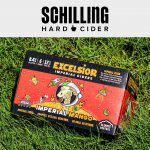
Schilling Cider’s Excelsior Imperial Mango, the No. 2 hard cider in the Seattle-based company’s lineup and the “No. 1 fruited cider” in the U.S., is now “climate neutral.” As of this month, “any greenhouse gas emissions generated through the cider’s entire lifecycle” – from the production of Imperial Mango to its “disposal” – are entirely offset
Bauman’s Cider was created as a passion project by founder and head cidermaker Christine Walter, combining her family’s farm roots and abundance of apples with her love of science and fermentation. After a decade in business, Christine and her cidery are leaders in making high quality cider and finding ways to connect more consumers with the segment.
Boston Beer Company is winding down its own-premise operations in Los Angeles. The company plans to close its Truly LA and Angel City taprooms at the end of their respective leases, according to an internal memo sent today by founder and future-CEO Jim Koch, and confirmed by Brewbound.
Molson Coors’ lackluster share performance was a driving factor in the company’s soft Q2 and lowered full-year expectations. However, leadership was still able to pull out some positivity during Tuesday’s call with investors and analysts.
Molson Coors has lowered its fiscal year 2025 (FY25) guidance once again after a softer than expected Q2, due to continued macroeconomic headwinds and “lower than expected U.S. share performance.”
“Flavored alcohol” across categories has become a lonely bright spot for the bev-alc industry, which is finding itself particularly pessimistic in 2025, according to the latest monthly report from Bump Williams of Bump Williams Consulting (BWC).
Boston Beer president CEO Michael Spillane is ending his leadership role with the company after just over a year, according to an 8-K filing submitted today (Friday, August 1) to the U.S. Securities and Exchange Commission.
In this week’s edition of A Round With – our Q&A with industry leaders, created exclusively for Brewbound Insiders – AHA executive director Julia Herz chats through the organization’s next chapter (including the return of Homebrew Con), why homebrewing is important for the industry and what’s still exciting her in beer.
The Trump administration has imposed a “universal” tariff on every country for goods imported into the U.S., with a 10% baseline for those that the U.S. holds a trade surplus – meaning the U.S. exports more than it imports – and 15% for those the U.S. runs a deficit. The latter amounts to around 40 countries, with 26 countries facing tariffs higher than 15% rate.
Beer ordering remained in contraction in July, according to the latest Beer Purchasers’ Index (BPI) from the National Beer Wholesalers Association (NBWA). Total beer and all but one beer segment were in contraction in July, according to the survey, which asks wholesalers if they are ordering more or less product each month compared to the month before.
Brand extensions of some of Anheuser-Busch InBev’s (A-B) top brands helped the company outpace U.S. beer industry trends in Q2, the company shared Thursday in its quarterly earnings release.