
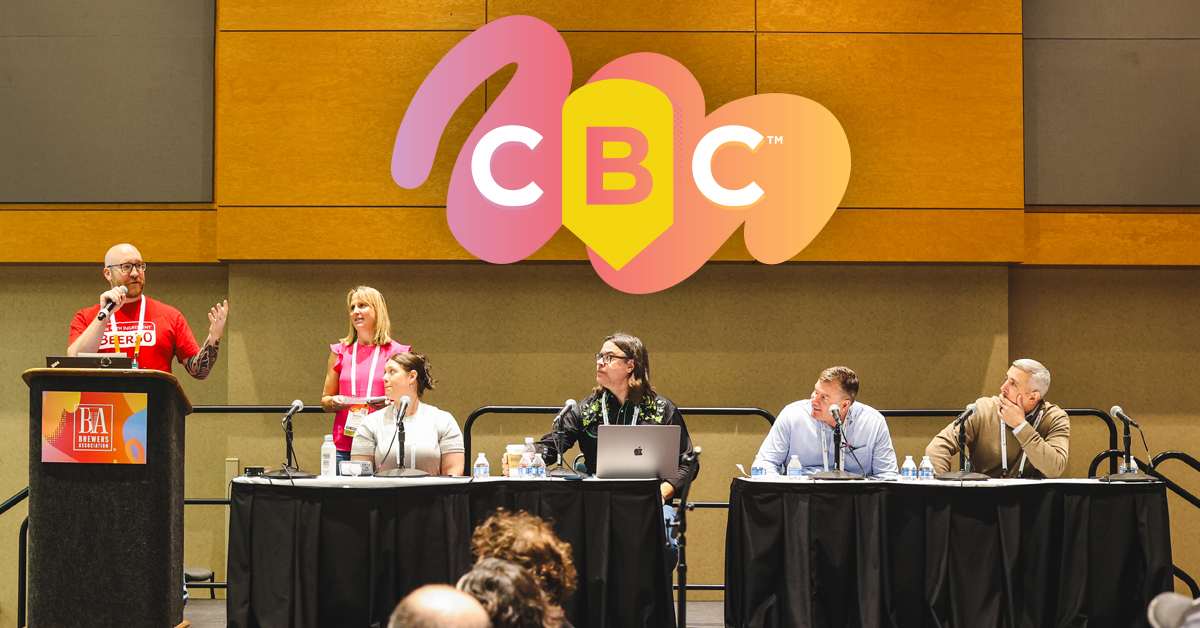
Despite recent headwinds, craft beer continues to have the largest share of beer sales at Total Wine & More stores. But “it won’t stay that way” if industry trends continue, according to the chain retailer’s senior director, merchandising, Andrea Starr.
Starr spoke last week at the Craft Brewers Conference in Indianapolis on a panel discussion that included: Ahead of the Curve Strategy co-founder Dan Kiefer, the E-Premise Group co-founder Ethan Stienstra and Bump Williams Consulting president Dave Williams. The conversation, titled “Craft Beer Isn’t Dead: It’s Actually Where You Want to Be,” was moderated by Holidaily founder and chief brewista Karen Hertz.
At the core of craft beer’s trends is that the industry is in a “transitional phase,” Starr said. As the segment’s core consumers age, they are changing how and what they are drinking. At the same time, craft is struggling to recruit members of the youngest legal-drinking-age generation, who make purchasing decisions differently than craft’s core consumers have historically.
Additionally, craft beer has an overall “customer problem,” Starr said. On one hand, consumers are gravitating toward “things that they know,” consolidating more into “big brands” than they have in the past, Starr said. At the same time, some consumers are drinking less, and when they choose to drink, their bev-alc options are only increasing.
“The pie is shrinking and the pieces of the pie are shrinking,” Starr said. “So we have to give people a reason to choose craft.
“You can’t just be local or small batch,” she added. “You really have to have a value proposition. Why are you creating this product? What is your mission statement? How are you different from your competitors?
“Everybody making the same beer and different quality levels is not helping the industry.”
Reputation and Authenticity ‘Still Matters’
Within craft beer’s overall negative trends, there are still “success stories,” Williams said, highlighting breweries that have been able to buck trends and find growth – many of which are the same breweries that were dominating growth during craft’s boom.
“You look at some of the biggest success stories in beer today, they’re from brands that are two-plus-decades old, not just outside of craft, but within craft as well,” Williams said. “Brands that have evolved, that have weathered the storm, that have shifted a little bit how they approach the market, without changing their DNA.”
The fact that legacy craft brands are still finding ways to connect with consumers demonstrates that “reputation still matters in beer,” Williams added.
“Authenticity” also still matters, he said, as demonstrated by the “lack of consistency” in purchasing behaviors for some crossover products from big-name brands outside of bev-alc. Major names in the non-alcoholic beverage world haven’t all been able to make a significant impact with their bev-alc versions of products, because those offerings don’t always feel “authentic” to consumers, WIlliams said.
The desire for authenticity is a win for craft beer, he said. But the industry needs to capitalize on its advantage.
“You have to continue to believe in the potential, otherwise what’s the point?” Williams said.
Branded House vs. House of Brands
Craft beer was built on consumers’ love of breweries as a brand, making purchasing decisions based on the reputation of a brewery more than the specific characteristics of a beer. Now, consumers – particularly younger LDA drinkers – shop for individual beverage brands, i.e. they look for Sip of Sunshine rather than Lawson’s.
“Twenty years ago, perhaps it was easy: You were a branded house,” Kiefer said. “It was ‘Brewery X,’ and you made a Brewery X IPA, Brewery X Wheat Beer [and] Brewery X Porter.
“People buy brands now.”
An example of a brewery having a “branded house” and a “house of brands” is Sierra Nevada, Kiefer said. The Sierra name is the branded house that still holds its own reputation and recognition, while Sierra’s Hazy Little Thing family serves as a recognized brand in itself.
“It’s vital to get the right mix between branded house and house of brands, so you don’t lose consumers or have to build every new brand from scratch,” Kiefer said.
“There’s a lot of different shoppers, and you’re going to have your super loyal customers, but it’s hard to expand into grocery and things like that just on your overall loyal following,” he continued.
“The younger kids today of legal drinking age, they’re the ones that are buying brands. They don’t want you to tell them all the nerdy [things], or ‘You’re not good enough for this IPA’ or ‘You gotta learn to be acquiring taste.’ They want it to sound delicious. They want it to sound fun. And they want to try it; they want to see the packaging, and it should be fun and attractive.”
A key aspect to that latter point is “shopability,” or the ease of which consumers can find the information they’re looking for that helps guide their purchasing decisions, such as ABV or beer style, which should be visible from every angle, no matter the package format or retail channel, Kiefer said.
“It’s about craft on their terms,” Kiefer said. “Go to the audience where they live and talk to them about it. I’m not saying dumb it down, I’m not saying don’t be nerdy about the craft … [but] craft got really used to talking to ourselves, and it was an echo chamber. And what we’re seeing is the brands that are winning are talking to people on their terms.”
“[Consumers] have so many choices, so why are they going to pick up your brands?” Starr added. “It needs to be super simple. It’s not going to be the snobby craft of five years ago.”
The Portfolio Triad: Dominant, Broad and Universal
All the panelists highlighted the importance of knowing a brewery’s consumer base and tailoring a business’s strategy to best fit with the base.
However, craft brewers also need to see if there are “layups” that they are ignoring, Williams said.
One of those layups is IPAs. The beer style still has a dominating share of craft beer dollars, and that’s not likely to change anytime soon, Williams said. While the market for craft IPAs is certainly crowded, ignoring it all together isn’t necessarily the best move, because it then eliminates a brewery from the one of the largest shares of the pie.
“If you’re not competing in that, you don’t want to, that’s fine, but now you’ve got to adjust your size-of-prize expectations and understand what the size of prize is, and are [there] these styles that are these layup styles that you’re not hitting,” Williams said.
“It’s not saying that you can just go out and create a style [and] it’s the winning solution,” he continued. “But how are you approaching that style? Are you approaching it to be a dominant force? Are you approaching it to be competitive, or are you currently not even competitive in an area that commands third in business, 40%, 50% of all the craft dollars?”
Williams encouraged breweries to take a hard look at their portfolios, and see how it targets three different consumer areas:
- Dominant, or offerings in a style where a brand can have a leading presence, typically the core of a brewery’s lineup or leading flagship, beloved by the most dedicated consumers;
- Broad, or offerings that can speak to a consumer base beyond its core consumers;
- And universal, or offerings that speak to a general, large consumer base that goes beyond brand, e.g. IPA, even going more general to speak to consumer trends beyond beer, like flavor.
“There’s a lot of ways to win in craft beer, there are a lot of avenues you can go down,” Williams said. “But you gotta make sure that you’re assessing yourself against the best in class that’s out there, what your shoppers are drinking, and where you have areas for improvement, because there’s a million ways to win.
“May not be large scale, may not be as easy, but there’s still a lot of ways in the core fundamentals of the business.”