
Industry executives gathered for Beer Business Daily’s annual Beer Industry Summit in Coronado, California, earlier this week.
Below are recaps of conversations featuring leaders of some of the beer industry’s largest players, including New Belgium, Diageo and Pabst.
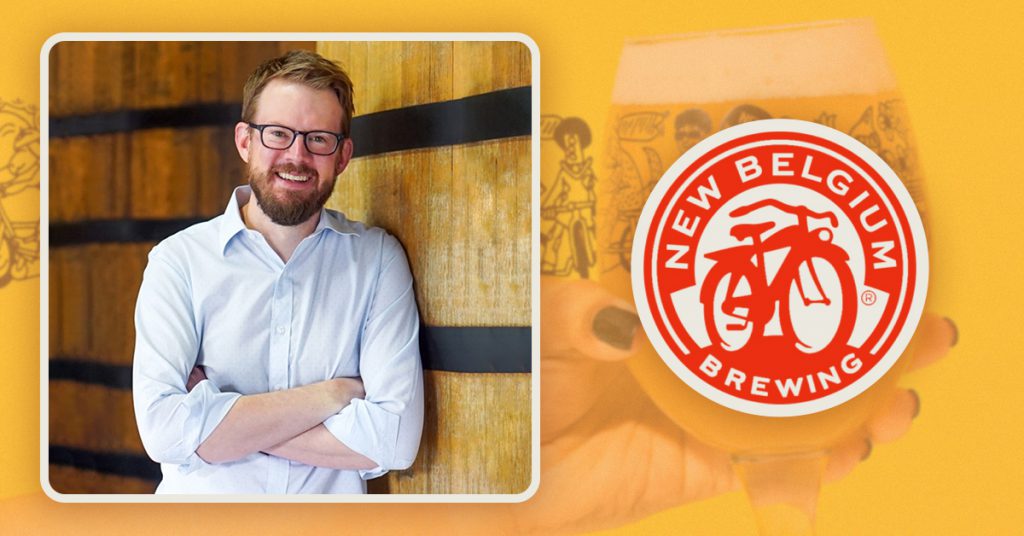
New Belgium CEO Shaun Belongie: Voodoo Ranger Will Not Rest On Its Laurels
New Belgium continued to dominate craft scans in 2023, led by its Voodoo Ranger brand family, which claimed six spots in Circana’s list of the top 30 craft brands by dollar sales in tracked off-premise channels.
As the company faces the comps – including multiple double-digit gains – New Belgium will not rest on its laurels, new CEO Shaun Belongie said on stage Sunday.
Belongie was promoted from CMO to CEO in November, filling the role left vacant by Steve Fechheimer earlier in the year.
Belongie said New Belgium continues to look at its brands and opportunities “differently,” and that the company is pulling inspiration from other beer brands on how to continue to grow and evolve past presumed limits.
“If you look across the category, you see those winners in the category now, they change the conventions of where that brand can go,” Belongie said.
“Constellation, for example, is a company that we looked at a lot, because 10-15 years ago, you could see a ceiling of where people thought Mexican imports could go and what channels, what stores, it could really go into,” he continued. “We see the same thinking today with Voodoo Ranger.”
Voodoo Ranger was able to extend its reach and pass its initial ceiling by looking outside of traditional beer channels, finding growth in convenience, which led the company to double its points of distribution of the last two years, Belongie said. Now, convenience is the No. 1 growth channel for craft beer.
Beyond distribution, New Belgium is looking to expand Voodoo Ranger into other segments, starting with the national launch of Voodoo Ranger Hardcharged Tea. New Belgium believes the brand can play in the increasingly crowded segment because of Voodoo Ranger’s existing consumer base, which skews younger and more multicultural than typical craft consumer, and prioritizes flavor.
New Belgium tested Hardcharged Tea in select markets in 2023, and found that if the “execution is right” – including placing the product on the hard tea shelf, rather than the craft shelf – Hardcharged has the potential to compete against decades-old flavored malt beverage (FMB) brands. For example, during testing Austin, Texas, Hardcharged – available in the market as a 24 oz. single-serve can – was the third highest selling FMB behind Boston Beer’s Twisted Tea and Mark Anthony Brands’ Mike’s Hard Lemonade.
The area Voodoo Ranger won’t step foot in yet is cannabis, as New Belgium’s parent company, Lion Little World Beverages-owned Kirin, has no desire to participate in the category, Belongie said.
Belongie also discussed the overall health and future of Kirin’s craft beer portfolio, which also includes Bell’s Brewery. Belongie said the company is “really happy” with the brands in its portfolio right now, and will continue to focus on them. However, the platform was “built as a foundation for future brands to enter,” and there is an opportunity to add.
What will guide any future acquisitions will be the existing values and mission of New Belgium and Bell’s, which include premium ingredients, quality and social impact, Belongie said. New Belgium will look for companies with a “similar guide” to join the company and that mission.
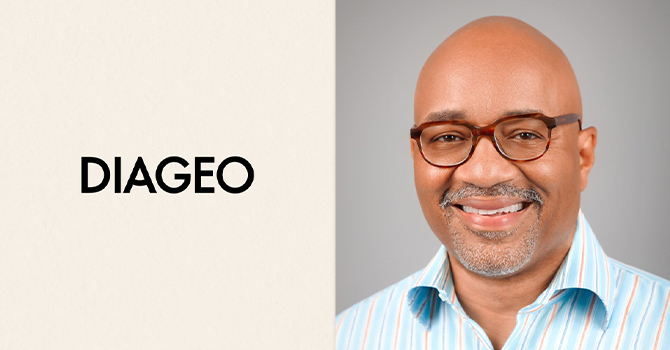
Diageo’s Rodney Williams: Guinness 0.0 Went ‘Gangbusters’ in 2023
Diageo Beer Company (DBC) president Rodney Williams discussed an important innovation for the beer-centric arm of the global spirits giant: Guinness 0.0.
“We launched it a couple of years ago, and struggled to get the supply right the first year, but it’s done gangbusters for us this year,” he said.
With Guinness’ non-alcoholic offering, Diageo has another “opportunity to tell the brand’s story,” particularly to consumers who assume the beer is heavy in body or high in calories. Rather than “seeing the teetotalers” drinking Guinness 0.0, the company notices that full-strength beer drinkers “mix it into their routine.”
Williams was tapped to lead DBC and Diageo North America’s operations in Canada in August 2022. Prior to that, he spent more than a decade in senior leadership roles at Moët Hennessy, most recently as president and CEO of Belvedere Vodka.
One of the things he’s noticed about beer that “differentiates it from spirits” is its “pace of innovation,” Williams said. One avenue for the Guinness brand to find innovation inspiration is its own-premise taprooms in Chicago and Halethorpe, Maryland.
“It’s another expression of beer being fun and beer being relevant,” Williams said of the company’s hospitality centers.
The Chicago taproom has served as “a high tide” that “raises all boats” for Guinness’ on-premise accounts in the city, the top 25 of which were up +8.8% in October and November compared to the same months in 2022, which Williams called “remarkable.”
Elsewhere in the Diageo portfolio, the Smirnoff Ice FMB brand family finished 2023 +5% in dollar sales and +1.2% in volume at multioutlet retailers and convenience stores, according to market research firm Circana. Williams pointed to market research that Generation Z and millennial drinkers have broader palates than their Generation Z and boomer counterparts, which benefits Smirnoff Ice.
“It skews younger, more female and more multicultural than the base Smirnoff vodka brand, so [it’s] quite complementary, ultimately, to that franchise, so we see RTDs as really driving synergies within the broader product portfolio.”
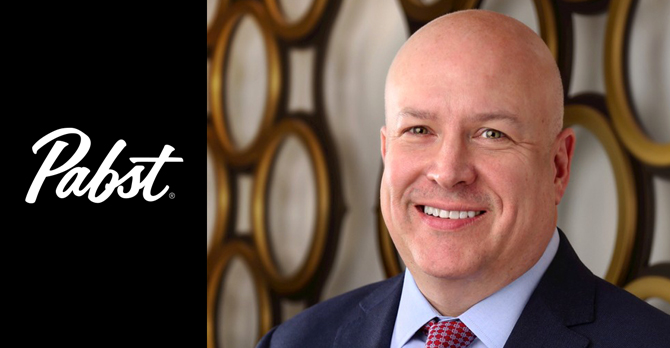
2023 for Pabst was ‘A Very Good Year’
2023 was “a very good year for us,” Pabst CEO Paul Chibe said and explained how a confluence of factors landed the country’s No. 9 brewery +7.7% up in dollar sales and +6.8% in volume at multioutlet retailers and convenience stores tracked by Circana.
“The story of 2023 actually started in the summer of ‘22,” he said. “That’s when a lot of corrective interventions that we started to make in the Pabst business started to take effect. And then by the time the April events happened, then that really put a wind behind the business and we ended up having a very good year.”
Chibe admitted the significant sales declines suffered by Anheuser-Busch InBev’s Bud Light (what he called “the April events”) benefitted Pabst, but was quick to add that the company had already been focusing on business fundamentals to improve sales of Pabst Blue Ribbon (+13.3% in dollars sales, to $274.2 million, per Circana).
Those fundamentals include ensuring the brand is “distributed where you should be distributed,” “making sure you’re getting your ad activity,” and “making sure your marketing is compelling,” Chibe said.
“You do those things, certainly good things will happen,” he said. “We feel like we were doing those things when we started to see improvement in the business and then it’s picked up obviously starting in April.”
In addition to Pabst Blue Ribbon, the company’s portfolio includes legacy beer brands National Bohemian, Lone Star, Rainier, Heileman’s Old Style and Jack Daniel’s Country Cocktails (JDCC), a line of FMBs produced under a licensing agreement with Brown-Forman.
With the launch of Jack & Coke spirits-based, ready-to-drink canned cocktails – the result of a partnership between Brown-Forman and Coca-Cola – Chibe “anticipated more cannibalization than actually happened,” he said. JDCC is protected by “natural insulation” from the difference in price and alcohol base.
Chibe cautioned industry leaders from innovating too quickly:
“One of the challenges that hurts our industry is that people are throwing stuff out there so quickly that you’re not stabilizing your user base,” he said. “You’re not gonna be sure that you’re getting to a stable place then to build your next innovation.”
“All you’re doing is swapping that trial volume for the next thing,” Chibe said. “Then you’ve never gotten anywhere.”