Search across the BevNET CPG Media network including BevNET, Nosh, Brewbound, Taste Radio, Nombase and CPG Jobs.
Sponsored Workshop: Hops! For Beer and Beyond
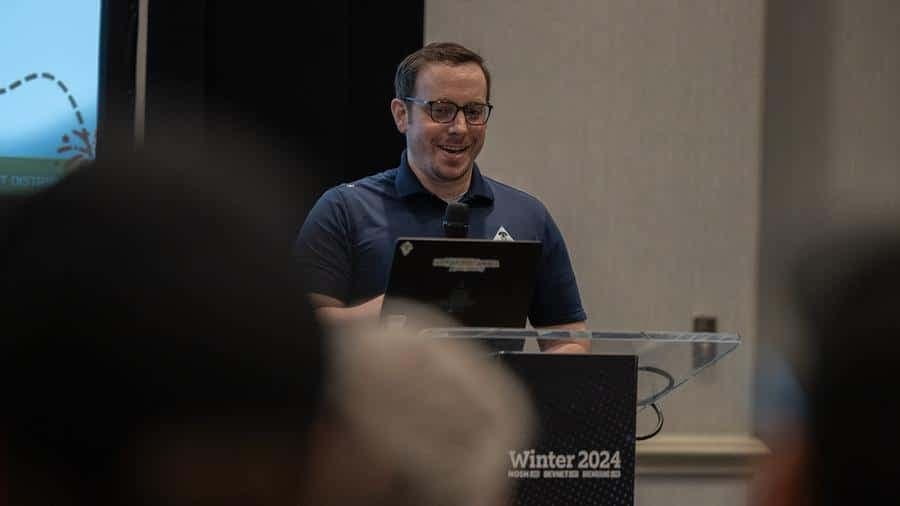
Learn about John I Haas, the history of hops, and how they can be a powerful flavor option for your next beverage. Stay for a hands-on workshop where you can dose our liquid hop products into beverages and complete a hop rub and sniff like the pros do.
Featuring Shae Maloney, Brewing Solutions Specialist, John I. Haas
Jeff Dailey, Sensory Manager, John I. Haas
Transcript
Note: Transcripts are automatically generated and may contain inaccuracies and spelling errors.
Shay Maloney [00:08] This is Hops there for More Than Just Beer, um, and we're super excited to be here to talk to you. I'm Shay Maloney. I'm a John I Haas Brewing Solution specialist, and my co-presenter here is Jeff Daly, our sensory manager, and today we're gonna talk to you all about hops. A kind of what they are, how they're grown, they're grown, some of the botany, and then how that ties into the craft beer revolution. And then basically how that goes from craft revolution to flavor and beyond. To start, I just wanted to talk about what hops are. These plants are flowers known as Humiosubulus, but there are actually several different species. Japonicus is in China and Japan, and then Euanensis is in southern China, but there's not a lot of research on them because they're mostly ornamental and not a lot is known about them. But the plant itself has been around for over a for like 6 million years or so when it first came about, and it crossed into North America approximately 500,000 years after it made it to Asia, but it's a perennial climbing plant. It's, uh, originally from the Rosales family uh related directly to the Cannabisier family, so, um, we know that they are direct cousins, uh, but over several million years we get what we know today. Um, as hops. So hops are dioecious. It means they both have male and female flowers on different plants. Um, this is important because we are only interested in the female side of things. Uh, males don't really have any value for, for brewing, but they do for breeding. So we need the males specifically to get their DNA. And in general they are wind pollinated plants. However, during commercial breeding you don't want this to happen, so you do very controlled breeding and the pollen expresses for what the breeder wants in the wild you're not going to find these beautiful climbing vines of hops. They are. Wild hops are found in hedgerows, and they'll be found by like shady outcroppings and stream beds and things like that. You're not going to find them in beautiful fields like we see during harvest. So everybody knows cannabis is related to hops. So I just wanted to touch on some differences. Hops are a perennial plant, whereas cannabis is an annual plant. And the main differences that are important is that hops have lupulin glands that are on the inside of the cone, whereas cannabis is a trichrome, and they have it all on the outside. Another key difference is that hops don't have any of the psychoactive compounds in them. And so like you're not going to find any of those essential oils or good things in the vines and the leaves and things like that, whereas with cannabis you will find some of those THC compounds in all of it, so the stock systems, the leaves, all of that. So they are quite different, but both have those essential oils that we find really important for beer. And beverages. There's um pretty specific growing requirements for hops. Um, they grow specifically in these latitudes about thirty-fifth to fifty-fifth, um, and because of how much daylight that they require. But, um, a key thing is that we know that hops grown in Australia that are super important. Things like Galaxy, uh, don't follow these guidelines. They're outside of that. And, um, of note, 90 96% of American hops are grown in the Pacific Northwest, and 80% of that is grown in the 50 mile stretch from Prosser to Yakima. So very important, uh, area for us. So harvest season is usually dependent on the year, usually late August to early October, but it totally depends on the season, whether it was wet, rainy, cold, dry fires, all of those will depend. On how the plant ripens and so a lot of what we rely on is the farmer's intuition of how and when to pick varieties and all different varieties have different windows for picking to get different attributes from them. So, um, for what this means for us as Ajaz John Ahaz and our our team of brewing solutions, we do about 6 weeks of nonstop work, um, because we do sensory intake on every single lot that comes in from harvest. Um, for challenges, uh, hops face several different, uh, challenges. Uh, molds and mildews are big ones. Uh, powdery mildew, um, and wilt disease are a big one, and Downy mildew. And then we also have things like mites and aphids and spider mites and things like that can, that can pose challenges and affect quality. Um, to go back in time, obviously, to talk about hops, you have to start with the European origin because that's where everything started. Um, pre to pre 1000, we have early evidence of hop gardens, um, but those were like very small, very personal hop gardens that weren't being used for. The kinds of purposes that we do now, um, and it really wasn't until the early 1600s that we, we started seeing hops being grown for local needs, so, um, not just yourself but for your town and, and using that, um, and this is also the time span in which first pot plants were brought to America from Europe, from Europe. Nuremberg is a huge important factor. So from the 1850s all the way to the 1960s, Nuremberg was the most important market and is a huge center for hops. It was the biggest and most important hop market in the world up until the 1960s, which is pretty impressive. Through the 1980s, Germany was still. One of the largest producers in the world of hops. However, we started seeing record yields in the US as well as Germany, so that's when it starts progressing its way through. And then in the 2000s we really start to see the push for new varieties and new sustainability interests as climate change became more and more of a deal. And that's also the, the push came from the craft brewer, uh, the craft brewing revolution. So the very first beginnings of that started to come and there was a push for more flavor. Once European settlers came over to the US, um, they didn't last very long without their beer, so they brought hops with them pretty quickly afterwards, um, around 191,620. And um again, this is still really small scale. These are these hop gardens where people are making their own home brews. They're, they're making things only very small for their households rather than for like the town or for um outside of that. And um a lot of the hops still were not grown there. They were um imported from Europe. So, uh, the little red dot is where the biggest hop market in the US was in this time period. So hop products are super important because basically from the beginning, um, people were using whole cones, but that's not about it. Everybody, uh, knew that hop utilization was gonna be important even from the really, really early times. So, whole cones were used up until the earliest 20th century and are still frequently used today, um, things like Sierra Nevada, if you ever heard of them, they are still a big user of whole cones, um, but they're the earliest and longest used. Um, we moved into plugs a little bit later, which were easy to push into Firkins, so they're just kind of compressed little, uh, tablets. Of whole cones and then it really wasn't until the 1970s that um pellets were kind of invented and really didn't come to popularity until the early 2000s when ABI really kind of made some of that influence and what happened is that uh the people who were working at ABI in the early 1980s and 19990s started wanting to retire and go into the. Craft brewery as like a hobby, and they brought the knowledge of pellets and some better utilization into the craft industry. So that's how pellets started to get their rise in popularity and you would think extracts would have come much later than that, but really the first beginnings of extracts started in the 1800s. There was always the need and the push to have better hop utilization. And so they started doing trials really early. So back in the 1800s when they were doing these trials, they were using some pretty grody things, um, a lot of uh organic solvents like hexane. Um, to extract those hops, which you probably don't want in your beer these days. So by the 1980s, ethanol was the primary um solvent used to do that extraction. But again, um, we didn't really want a lot of ethanol in our beer added anyway. So, um, the innovation then became later in the early 19990s and to the 2000s where um we started using CO2 and super critical CO2 to drive those extracts. In a little bit cleaner way, so who are we and why do we matter? Um, we're John I Haas. Um, we've been around for a very long time. Um, our history starts back in 1794 with George Barth. Um, he was in Nuremberg, the center of the hop market during this time, and, um, a little few years later, uh, an Austrian immigrant was, uh, also doing hops. His name was John Haas, and so, um, by 1977. Uh, Barth and Johnny Haas became one global group called the Bart Haas Group. And that's kind of where we really started. So by the 1980s, um, we started our own first private breeding program um by hiring uh Doctor Jean Probasco to do that breeding program because there started to be the drive for not only um super alphas and things like that, but really the very beginnings of um exciting new flavorful hops where at the time. Um, things like Cascade were considered highly flavorful and too maybe too much flavor for what we were making in those days. Again, like I said, by the early 1990s we were doing, um, CO2 extractions and so John A. Haas is one of the first ones who in innovative installed a super critical CO2 extraction system and started making those hop extracts. Um, by 2003, we formed a, a joint venture with, um, to create the hop breeding Company. Our joint venture is with Yakima Chief Ranches, and we created, um, really popular varieties. I don't know if you've ever heard of Citra. Um, and then, uh, in 2020, just a few years ago, uh, Johnny Haas and our Barth Haas Group formed an innovation platform called the Greenhouse so that we could continue working with our, um, partners across the seas in Europe to, uh, keep making, uh, innovative and high-tech, uh, hop products. So, um, we do have to kind of talk about, about the future, um, so, uh, X 114, the hop of yesterday's future, was first crossed in 1990 by Jean Probasco. Um, and really didn't make a lot of waves because it was too much. It was too flavorful. It was too intense, and it really wasn't until a little bit later when they started making a little bit more waves in about 22002. Uh, to, um, start using it a little bit more, and it wasn't until 2008, like years later, that it was finally launched and commercially named. Does anybody want to guess what X114 was called? Citra. So it's, it was crushed in the early 1990s and didn't make waves until 2008 because of how much change and how much flavor it provided. So today we are a global brand, the Barthaas Group. We ourselves, John A. Haas, Barthaas our company Betaech, which does outside beer products for things like the industry, like the sugar and alcohol industry, as well as bees, which is really cool. And then um HPA is our southern partner to do, um, Australian HPS Hop Products Australia and then Yakima Valley HPs. So we are one big global, uh, group now, but we couldn't talk about any of this without talking about Yakima. So Yakima Washington is, um, in central Washington. And it's not at all like what you think of most Washington towns where it's rainy and cold like Seattle. It is very sunshiny and actually a lot more similar to like central California than Seattle, and this is a huge growing region, which is really important because outside of hops we are also creating in the Yakima. Valley that 70% of the nation's apples, we have 42% of the nation's pears, and we also supply 80% of the nation's hops and 20% of the world's hops. That's a huge amount in that space, that 50 miles or so between Prosser and Yakima. It's an important region for us. And for others, um, so not only is it important for the hop industry, but also important for agritourism. Um, not only is produce important and, and being the largest, uh, supplier of apples, we also bring hundreds of brewers into, um, into the valley every year for hop selection. Yakima, is one of the oldest, um, AVAs in Washington history, and they are home to almost a third of the state's planted acreage for wine grapes. Um, and we also, uh, already have producers because of how much produce is there that we have places like Treetop that's been around there since the 1950s and Del Monte, uh, has, has a prominent fruit plant there, as well as Levemint, which is a huge producer of peppermint and spearmint. So this area for us is super important to bring in people to the valley. It's a really small town usually, but during these seasonal activities we bring in hundreds and hundreds of people to our community in order to come and see. The valley and, and get a hop selection and, and get to see the best of what we can grow there. All of this leads us to the craft beer revolution, but why is that important and what does it have to do with flavor today? I'm gonna pass over to Jeff to explain.
Speaker 2 [14:39] All right, thanks, Shay. So I'll be honest here, this next set of slides was mostly emphasized for the Bevnet group that was here the other day. None of them really understand craft beer. This is going to be a little remedial for you all, but I still think it's important to understand where we came from, especially in these challenging times, where we came from, the ethics involved in creating the communities that made craft beer great are exactly what moving forward is likely going to buoy the market. And improve and grow like we used to do about, you know, starting 2030, 40 years ago. Wait, there was a revolution. Well, if you are unaware, since 1965, where there's 173 brewers, we have ballooned to almost 10,000 breweries in that 50-year span. Now, starting in 1965, there was a stranglehold on the industry by breweries such as Stroh's and Miller, Coors, Budweiser, you know those names, but Then there was a desire for a couple of different elements from the consumer base, uh, just like in the rest of the food processing industry, this is the time when there was innovation where we went from generic spaghetti sauce to extra chunky and things like that. Um, there's a desire for higher quality. There's a desire for more choice, and that meant from 1965. When there was a relatively high degree of disposable income for people through today. Uh, we saw starting with an inch in the armor of those major macrobreweries, there was Fritz Maytag. In 1965, he bought a little old brewery called Anchor Brewing that had been open at that point for about 50 years, and he really kicked things off. He was not at all an elite, even though he came from a very well-off Iowa farming family. He really believed that beer is for everyone. That was his first principle, that beer needed to be better, beer needed to be more, beer needed to not be elite. It was for everyone in America. It's of the democratized quality, the democratized beverage that is meant for overall consumption. Now, starting with what he did in 1965, we had a number of other events that started the process. We, you know, Charlie Peppasian, uh, with the legalization of homebrewing by Jimmy Carter, Charlie Peppasian started the American Home Brewers Association. Sierra Nevada opens in 1982. 1st JBF in 198983. There's only, again, at that point, less than 1000 breweries and the attendees were under 50. New Belgium. Now me being from Fort Collins, this is a big deal. 1991 was a watershed moment, and from there to 1995 with the IPO of Boston Beer and the opening of Stone here in California, we saw an increase from about 170 to over 1100 breweries in the country. But you see that line, it's still pretty flat. There has not been really the sort of growth that we all got excited about and why we opened our breweries in the last two decades. From that 1100 to 10,000, there's a couple of other hypotheses why that growth happened, and the first I want to talk about is the desire for community. And there's that desire for community because from 1965 through about 2000, and this data is derived from Putnam's book which you all should read called Bowling Alone, there's a precipitous decline in American participation in civic organizations, bowling leagues, things like that, those places that we call third spaces. Now from there, and this is my own. Extrapolation of the data. There's been an even worse decline in that sense of community, that belongingness, that coming together. 1 in 3 adults at this point describe themselves as chronically lonely. 73% of Gen Z, that group that we really need to drink more. Feels that very same way. So what can we do about that? You all know, as people that have taprooms that hosting community events really increases turnout 10 to 20% by most estimates within the industry, and for those events, if they're consistent like trivia, fundraisers, things like that on a weekly basis, this can increase consistent attendance by up to 85%. And since the BA started disclosing and separating out data since 2018, even through these challenging times, you know, the last couple of years since COVID, we still see taprooms opening at a rate 3 to 1 relative to microbreweries overall. And in terms of closures, yes, we do see, well, this brewery is closing their third taproom. Well, they still have two, and that's still at a lower rate than the overall microbrewery, um, segment of the industry. According to all estimates, all. Flavor houses and marketing companies that analyze these sorts of data. There's the issue of community, and that that does a lot for us in order to buoy and make sure that our industry is healthy. The other element, the other hypothesis that I have with regard to the explosion of the crap brewing industry is that desire for flavor and the ability for companies like ourselves and you all working together to provide. That greater amount of flavor, that more interesting, more unique, more dynamic flavor from hops like citra. This is where we come in. So Shame uh mentioned Sierra Nevada, the release of Cascade, it's near failure, and Sierra Nevada saving it, and that was their flagship, and we owe, between them and Anchorstein, we owe everything for the growth of the industry, but it was that unique Cascade flavor that really did the job. In 1990, America's favorite IPA for the last decade running, according to all polls, uh, Centennial was released to celebrate the centennial anniversary of Washington becoming a state. But those are great hops. Those are public hops. Those provide unique, invaluable flavor. But I'm going to point out what I think really caused the crappier revolution, and that's citra. When you think about Cascade and Centennial, they are workhorses. They are found in a couple of flagships that are decades and decades old, that continue to exist because they're amazing. But really when you think about what's in 85% of beers today, it's a hop like citra. You know, we see citra introduced in 2008. We see GABF for the first time selling out and selling out 60,000 tickets in under an hour, and during this period we see 500 breweries opening per year. That gets us to the 10,000. So with the introduction of citra and its success, we went through the process of releasing all these other highly flavorful, highly unique hops, starting with citra in 2008, Mosaic, one of my personal favorites in 2012, Equinat, an undervalued hop, um, laurel. Come talk to me later. I think that Laurel is due for a resurgence. It's amazing in lagers and IPAs. It's definitely not a standout on its own, but every single award that our amazing brewing team has won in the last 5 years since we started entering competitions on our own has been a lager based on laurel. Saro, another undervalued hop, come talk to me about Incognito, came out in 2018. Talis in 2020, and most recently, hopefully all of you are aware of Crush that we commercialized this year. Please come by and smell some. It's amazing. Now how do we go about breeding these hops? How do we validate them? How do we make sure that they're unique and valuable to the industry? This comes down to how we approach the breeding process, how we approach our R&D process, and it's based on sensory. It's all sensory as a feedback loop to growers, to the breeding program, to our R&D team, and to customers on how to better use our products. Sensory plus. is how we have integrated sensory that's used in the flavor space that's used in the broader consumer packaged goods and foods industry where we look at hops as unique agricultural products but as building blocks on their own. No two lots are citra the same, and there's no way to make sure that every lot of citra is the same. So instead we go about characterizing each lot of citra or every other variety into its essential components based on dominant and secondary sensory characteristics, and we classify them and we look to use them, combining different lots synergistically to produce the ideal consistent product. In the use case of our product Lupamax, which is a T45 concentrated pellet type product, we prioritize using those building blocks to create a consistent year over year and consistent product to product ingredient that you can all use to create the highest quality beer and that also focuses on highlighting the work of those amazing farmers in the Pacific Northwest. Now in terms of what I'm going to focus on here is what I think will help us get back to those first principles of dynamism, quality, a lot of more options for customers in order to kind of quench their thirst. And starting with Hop Kick, which is our 100% all natural clean label water soluble, 100% sugar free, so there's not going to be any refermentation produced using a proprietary extraction technology. It's the pure essence of hops. It's not a hydro distilled product. It's not a supercritical CO2 product. It really goes from monoterpenes through thials to get you that full true type hop character currently available in Citru Mosaic, El Dorado, Centennial, and very, very soon Galaxy. It's also useful as you expand your own businesses into Beyond Beer because you want to offer everything to everyone to the degree that your production can handle it. It's our favorite thing for producing the best hot waters on the planet. It's great in ciders. It's great in CBD and THC here in states like Minnesota that allow the Wild West to exist where Indeed makes amazing beer. They also make amazing THC seltzers. Uh, and light beer are coming back, and Hopcake is amazing for those. If you're starting to diversify your business and buying out smaller craft energy drink industries, it's great for that, and so on and so forth. It has a versatility, it has a versatility of use cases starting with modulation. We're at a low dose of about 250 mL per barrel. You get this nuanced flavor boosting, and it can modify or modulate basic tastes like it can adjust down bitterness because of its characterization. If you increase that dose, you get optimization, where if you're already using other natural flavors, natural flavors with other natural flavors, synthetic flavors, it really can turn those substandard flavors into a more holistically appreciable flavor that the consumer is going to like a lot more. Additionally, if you're going into the beyond beer space, it's great at cutting back on the acetic acid character in kombuchas and hard kombuchas. If you've bought your own distillation setup, but your gin is coming out too harsh, that complex hop chemistry can really cut back on the alcohol, the ethanolic burn, and it's just an overall amazing ingredient for all those use cases. Now if you're looking, especially for hop waters to have that really, really amplified true to type hop character, that's where you get into about 500 mL. 500 mL per barrel to 1 L per barrel in terms of the dose rate and it's phenomenal. The other product that I wanted to tell you about is Euphorics. It's our new product that we just released in June. It's a blend of highly concentrated hop oils that via our sensory process we have targeted and blended along with 100% natural botanical extracts. So this is an FDA natural flavor. It's not just something that the TTB gets lets you get away with as labeling is a natural flavor. It's fully natural. Its optimal use rate is incredibly low. We're talking about 0.5 mL to 10 mL per barrel. Providing extremely intense flavors that are beyond what is achievable only with hops. Additionally, these were formulated intentionally so that just like hop varieties, they can all be blended together to create unique outcomes depending on your needs as a producer of beverages. It's available in 4 different flavors at this point, with 5 to 10 more coming in the next year or so. Starting with a peachy keen, which is a ripe peach, fleshy sweet fruit, tropical and slight berry sort of products, so it's not just that canned peach or that peacherine. Uh, one note that can be really distracting, not integrate well with Dry hop, we've got pineapple Paradise, which is like pineapple chunks out of the can. Cosmic Guava is one of my favorites. We formulated this simply because of the fun quote and a tribute back to Tony McGee at Lagunitas where he said, when they produced Lagunitas IPA, what they were intentionally trying to do was to produce a beer that smells and tastes like the weed that they were smoking. We dialed back on that cannabis just a little bit. Uh, to reflect more modern cannabis varieties, it's an amazing, complex, very overripe guava character along with those cannabis notes that you're going to expect. Finally, pomelo Daydream, I'm just going to say this, it smells and tastes exactly like Fresca, uh, and that's the point. It's mouthwatering, it's sweet. It's not overly pithy, and it works really well in lagers at low doses to bring out a nice citrus note. Now we don't have any of these back here today, but if you come by our booth or when you go to the Firestone party tonight, we will have hop hop water called Howl produced by our friends at Varietal Brewing Company in Toppinish. And please feel free to take pictures of this recipe. This is all for you. This is our preferred way of producing a highly flavorful, highly efficient, highly stable hop water. It's got a combination of citra, and El Dorado hop kick, as well as the cosmic guava and peach flavors that I was just talking about. You can use your choice of preservatives in terms of sodobenzoate. I personally Don't recommend Valcorin just because I don't have a lot of experience with it, but you all are masters of your own domain, and you should go about producing beverages that you know will be safe for your customers because this is not beer. It's not regulated by the TTB. It's regulated by the FDA, and they will fuck you up if you get people sick, just as a warning. Now the most important part of this workshop, because it's not a sales pitch is this hands on bit. After this, after this next slide, it's up to you to get up and come try our beverages, come try our products, or if you want to experience what we think are some of the best hops on the planet, we've got a hop rub over here for you to explore. Uh, Shae and I will be around to answer questions along with everyone else from John I. Haas. Feel free to ask us anything that you want, including products that we didn't talk about today. Over the sidebar, we've got our hoppy hydrator which we made for CBC at Vegas. Now anticipating Vegas being Vegas, we realized that people probably wanted Gatorade, but we wanted to make it with hot products. And Shea leading the formulation, we did an amazing job and it's here today for you to try. We also have Topochico as a blank canvas where you can go about playing around with our different euphorics. Tasting is blazing, seeing is believing, smelling is believing. So please have fun with that. Over here at the side table we've got Citro Mosaic, Crush, Galaxy, and Eclipse, which I'm particularly proud of because over the last 5 years we heard you Galaxy was not at its best. And since then I've been to HPA a number of times in order to lead their harvest quality team to integrate that Sensory Plus program and really turn things around, and we're very happy with crop year 24. We also have HPC 1019. If you're not aware, that is the next major unique hop that we will be commercializing here in the near future. And for you loggerheads out there, we have some 1134 and friends of the friends of the company from CLS, we love highlighting El Dorado. So that's it from me. Thank you all. Please talk to us. If you leave here today, but you still have more questions, please feel free to email us at [email protected]. And now I get to stop talking and annoying you all. So thanks.