Search across the BevNET CPG Media network including BevNET, Nosh, Brewbound, Taste Radio, Nombase and CPG Jobs.
Livestream Interview with 3 Tier Beverages
Transcript
Note: Transcripts are automatically generated and may contain inaccuracies and spelling errors.
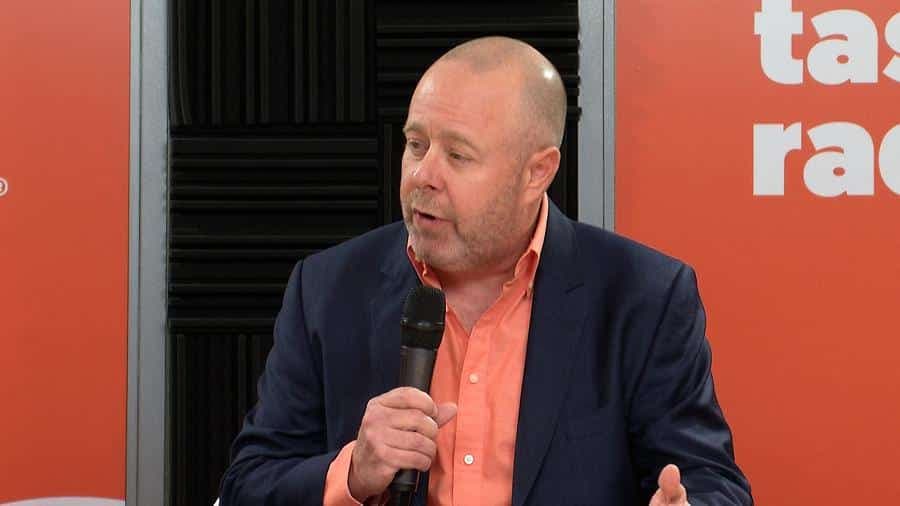
Brewbound [00:24] Good morning from Marina del Rey, California. It is day one of Rebound Live. I am Brewbound managing editor Jessica Infante, and I am in the Brewbound Live, live stream lounge and, uh, thrilled to be joined by these two guests. Uh, Consideration for the Brewbound Live live stream has been generously sponsored by our friends at Three Tier Beverages, a Chicago-based data consulting firm for, uh, beverage brands of all sizes. So we are gonna have a lovely chat. I am always, always, always thrilled to be with both of you. Joining me today is Three-tier Beverages founder, Don Bixel. How are you doing, bud?
Speaker 2 [01:00] It's good to see you, my friend.
Brewbound [01:01] Oh, it's so good to see you. And three-tier beverages consultant Mary Mills. Mary, how are you doing? Hi,
Speaker 3 [01:06] Jess, I'm good. Great to be here with you. It's
Brewbound [01:09] so great. I mean, you know, we are old chums and you guys are some of the best in the business at what you do. So let's, you know, let's have like a chat and just tell the people at home all about three-tier, how three-tier can help their brands and, and more importantly, what you guys are seeing out in the market. So. You know, John, I will never forget meeting you for the first time at Brewbound Live in 2019. And you just had the seed of an idea for 3 tier and it's been so incredible to watch the organization grow and develop over the years. You guys really are, I think, the gold standard for, for data services in, in Bev Elk. But what do you, what do you think has been the secret to your success? Because I have some thoughts, but I would love to hear it from you.
Speaker 2 [01:48] Uh, far and away, Jess, it's, it's the people, it's the amazing group of talent that, uh, uh, the group of misfit toys that we've put together here in the data industry, um, we, we, we've got industry veterans that come from, uh, Circana, that come from NIQ, uh, people that have got diverse backgrounds both on the supplier and the distributor side, uh, some on the retail side as well, um, but it far and away it's, it's, it's the people.
Brewbound [02:13] You, I mean, your team has some of my favorite people in the industry, so. You know, you've, you've got Mary who's a genius, so well done there. I mean, let's just, you know, for the folks at home, what services does 3 tier offer its clients?
Speaker 2 [02:29] You know, 3 tiers, uh, evolved over the years. I mean, when I sat outside of Brewbound at 2 in the morning with a certain gentleman, owner of a brewery that may be in Coronado, uh, till, you know, the wee hours trying to discuss what was going to happen next in my career, the idea was trying to provide analytical services and consulting to all the different breweries, wineries, distilleries that are here in the United States. And over time that's really evolved into being primarily data focused. We play fractional sales analytics. We work with a lot of the marketing teams as well, diving deep into the data and that's not only in arrears with the retail measurements, but we've really begun over the last couple of years with our enhanced partnerships with both VIP and with NIQ to really begin offering additional services.
Speaker 3 [03:21] Yeah, and I think that's what's been really cool in in the last year or so is we've been able to, as Don said, kind of expand on on those services and um as a Nielsen veteran myself and we have a couple on the team, um, you know, we were talking about a year or so ago about how the, you know, the scan data is really kind of the backwards looking piece of it. Um, which is obviously important, but as we think about what's what lies ahead and kind of the consumer side of it, as Nielsen calls it the full view, so we really wanted to be able to provide our clients with that full view. And so that we now are lucky enough to have access to NIQ's Omni Shopper data, Spectra data, the CGA on-premise data. So it really allows us to give them that full view of what's going on and what's driving the trends that we're seeing and helps us to be more predictive for what's to come.
Brewbound [04:10] Right. And one thing that I've always found really impressive about what, what you do at 3 tier is, is, I know, you know, brands can go straight to NIQ or straight to Circana and get the data for themselves. And for some brands, that makes sense to do, but for smaller providers, that might not make sense. That's basically trying to drink from a fire hose. So, what you with 3-tier do is you really take all of that information. And put it into a format that those smaller Bev Elk brands across beer, wine, spirits, RTDs, your, your client portfolio is, is really impressive. But you really put the information into something that they can use, something that's understandable, something that really helps them digest and create selling stories. Stories because we get, we get the data too, and it makes my life so much easier to just be able to say, hey, I wonder, you know, how is this brand performing? How is this segment selling? What are the trends? What's the dollar sales? What's the volume? And your dashboards are like, easy enough for me who, you know, looks at numbers and gets a little nervous because I have a Catholic school education and really the, the math learning there is not great, but you make it so easy.
Speaker 2 [05:14] I mean this company was really built for somebody like myself. I mean, I come with a, a sales and uh a marketing background and you know I always needed, you know, that extra set of eyes to be able to actually turn it into something useful and for years we bought data when I was at previous companies. And we knew we could not subscribe to additional services so we had the resources to be able to add that full-time sales analyst, that full time marketing person, that full time retail execution person on the chain level, so we are that person that kind of sits in those gaps as companies develop or ones that are. I'm, I'm always. Surprised. I never thought that we'd be working with companies as large as we work with now, just assuming that everybody had all the answers, but the unique qualities of all of our individual people are able to solve those unique niches and those unique questions that people have. Instead of just having one person, we offer an access to 18 of us.
Brewbound [06:14] You have 18 people now. That's crazy
Speaker 3 [06:15] to me. It is. It's wild how quick we've grown and it is great to have the unique perspectives that everyone
Brewbound [06:21] brings. Yeah, and like John, you mentioned it before, you, your, your teammates are veterans from. Some of the, the biggest names, you know, across CPG and Bev Elk. So, but let's talk about your clients. Do you know off, offhand how many you have in each category?
Speaker 3 [06:39] Do you want the real number or the number? Yeah,
Speaker 2 [06:41] we've done, I think we've done this before. Um, the, the answer is I, I, we have, um, we've worked with 300 clients and organizations over the last 5 years, a, a number which is just, um, incredible. How much we've been able to help and assist in the industry and we really officially launched in June of 2020 this platform so in about 4.5 years we've got approximately 200 full-time clients and we've got about 30 to 40 ones that we've worked with on a fractional basis this year. Um, but the unique thing about us, and I've always been very impressed by our organization, is no one leaves. You know, the only time that we've lost clients is when they've gotten swallowed up by a larger organization, and what's been exciting for us is we then begin to work with those larger companies as well. Huge
Brewbound [07:27] testament to the service you provide. So let's get into some client success stories. Is there something that sticks out in your mind as a client that's really been able to succeed after coming into the three-tier fold?
Speaker 2 [07:37] Yeah, it's a great question and I think I wanna be careful not to um give individual clients, but, but I, I think that, um, if I were to think about it, maybe the project that we did just recently for the, uh, the large brewery out in the East Coast, um, they came to us looking for a solution to expansion, uh, looking for ideas for new innovation as they moved into this year and their next 3 to 5 year plan. And I think that that's where we're kind of uniquely able with all of our resources to be able to provide them, you know, a roadmap, um, for them to take a look at and potentially follow and it's, it's been kind of fun to watch as they've made their announcements to see some of the things that they, you know, took from us and some of the things that they're starting to move forward with.
Speaker 3 [08:26] Yeah, yeah, that was a really fun project because as we talked about earlier it kind of we were able to use the data they already have their depletion data, the scan data, but we were able to then tap into that new data that we talked about the consumer data, the spectra data that allows you to really target so that we could help them make those informed decisions about what are the white space opportunities, what makes sense for your brand. And it really, you know, it allows us to be an extension of their team because they obviously know their business far better than we ever would, but we can provide that outside perspective of what we're seeing in the industry, what we think those growing segments are going to be, what markets we think make the most sense for them based on craft saturation or, you know, where styles are performing the best. So it was a fun one to work on.
Speaker 2 [09:11] Yeah, I, I think the other things that I think about are, are. You know, the project that we did with the kombucha brand out here on the West Coast, um, utilizing spectra data to target exactly where they needed to go with a specific retailer and, and the work that we do with distributors. I, I, I think that that's been the most rewarding for me as an ex-supplier partner to be able to provide solutions for distributors when they've got their monthly business objectives, being able to uncover where the opportunities are for them to hit their goals for their supplier. Partners and to create selling stories for the reps out there in the marketplace that's been some of the most rewarding work we've been doing over the last couple years with with our distributor partners as well.
Brewbound [09:49] Well, so let's talk about that a little bit. What exactly, what kind of, what kinds of projects do you take on for wholesalers?
Speaker 2 [09:56] You know, it's as simple as the first step, which is access. Um, a lot of, uh, distributors and even major suppliers internally get their data pre-spun. Um, they get their data, uh, spun from the supplier, uh, that is trying to tell their story. I mean there's different ways to shake up any of these data sets. So if you've got a major supplier that's coming to you, they're gonna spin the story in the way that looks good for them. Um, we've got a major supplier partner. one of my favorites, one of our favorites, and she's been in the industry for a very long time. She came to us and asked specifically for Danny Braeger on our team and John over at NIQ to provide quarterly looks at the data that were not spun by her internal teams. And then for the distributors it's the same thing, it's giving them access to data that is raw, that is built for them, showing exactly how they're doing in their market area and showing them the real story.
Brewbound [10:53] I, I, in my old life had to write these sell sheets, so I know how you can, you can take those numbers and make them say a lot of different things. So it is possible. Well, Mary, you have one of the sharpest minds in the game for insights. What are you seeing across Beth Ek right now?
Speaker 3 [11:09] Yeah, I mean, it's, there's a lot of things that I could talk about, but I think one of the biggest ones that, you know, we've been talking about for several years is kind of the blurring of lines between categories, right? When RTDs started to explode, starting with hard seltzers and then moving into spirits, we're seeing such a crossover of how consumers are, um, you know, shopping these categories, but I think what is, you know, we've really started to see evolve is really that. You know, starting to bleed into total beverage and so our clients are, you know, not only curious about what's happening in total beverage but starting to release products in that space. So not even just non-alk but truly in a more traditional beverage category. So I think it will continue to be really important for us to have line of sight into what's happening not just in the Bev Alc space and as we've seen softer trends for the Bev Alk space too. You know, understanding where there's growth in those adjacent categories to help our clients, you know, find the right places to, to innovate and kind of think about what's coming next, um, and then the other thing I was gonna mention because, um, Kaylee from NIQ and I later today are, are, um, gonna be on the stage talking about, um, what we're calling kind of the highs and lows of beer right now. So I think what's interesting there is just we're seeing so many almost conflicting trends of, you know, whether it's high ABV versus low ABV or. You know, premium price segments versus budget price. So, um, that will be a fun one to, to dig into later today too.
Brewbound [12:41] I cannot wait for that presentation. You always do such a fantastic job making it, you know, like understandable and relevant, which is huge. Interesting that you talk about the like the blurring of lines and the diversity in product because I just, you know, watched. The first round of our Pitch Slam competition and the products that were presented ran the gamut. We had, uh, an all quinoa beer, uh, a limoncello, uh, like a combo of a seltzer and wine. We had, uh, something that is like a mid-strength beer, like about 3% alcohol by volume. Uh, I don't think we had any non-nog beers, which was a change because we usually have quite a few. But it's been really interesting. And Don, I know last year you provided your, you know, wisdom and insights as a Pitch Slam judge, uh, and you did such a great job. But this year, 3 Tier and NIQ partnered to provide a super generous data and consulting package, not just for the winners, but for all of the participants. But, you know, what advice would you have for any of these brands who are just getting started right now in what is a really challenging market?
Speaker 2 [13:47] I, I was fortunate to come early this year and was also able to attend Bevnet in New York City. And I was just in Cincinnati recently meeting with very good friends of mine at uh Mad Tree Brewing. And had a very good conversation with their owner, and a lot of the conversation revolved around the idea of the word brewing as it's kind of evolved with both them and both uh other organizations. The word beverage is coming out more or the lack of a specific word qualifying what their brand is. Um, I, I would look to Bevnet. I would look to. Some of the non-alk, some of the better for you brands that are out there, the functional beverages, and really take your cues from some of those. Um, if you are only looking within your segment right now, you are really missing out. I mean, the changes are happening so rapidly. It's like with everything else in this evolving world. I mean, it's happening so fast and sets are changing from fall to spring and spring to fall so quickly and Making a good bet based upon data, but still looking cross-category at things that within your segment nobody else has touched yet, having the courage to go out there and say, I've seen something over there and bringing it over into your unique category, and don't be afraid to play locally with things that may never make it into the market, into the retail environment, just to be able to utilize them in your Tap rooms or your your sampling spaces and to be able to take those chances because as Mary said the lines are so blurry and they're blurry across retail, not knowing where to put certain things on their shelves across distributors not being beer distributors anymore or not being spirit spirits distributors anymore and with suppliers not only playing in 11 little sandbox.
Brewbound [15:40] Wow, well, how can a strong data partner help brands in these really challenging times?
Speaker 3 [15:44] Yeah, I think a couple things. I mean, for a lot of our clients that are smaller, you know, we kind of mentioned earlier a lot of them are, you know, lean teams with just a couple of people and so they might not have that sales analyst and so we can, we can be an extension of their team and, and that's something we really, really enjoy doing. But even for bigger suppliers, you know, kind of across the, across the spectrum in terms of size, um, you know, I think having that outside perspective is always really important. I think as a supplier, and Don could probably speak to this better than me having been on that side of things, but you know, you're kind of in a bubble in terms of what, what you're seeing, what you want to be seeing, so to have a third party kind of come in and be able to give their perspective, I think, I think can be helpful.
Speaker 2 [16:30] Yeah, I, I, I would just add on that, you know, back to your question about how many different suppliers or, or retailers, distributors, trade organizations that we work with, uh, being able to work across all of them gives us the unique ability to be able to, you know, share the insights that. Seeing from these different avenues and to be able to try to provide you out of the box is such an interesting word and I got an email just before this from one of our partners. I was looking for an out of the box solution and there isn't such a thing you know and it's it's a long conversation of trying to find that but You know, to add on to Mary, it really is we're providing an extension of your internal teams. That's really what it is,
Brewbound [17:15] yeah, which is huge because today, you know, everybody's lean, everybody's trying to save where they can, so. But foregoing something as important as data is really unwise. So that's, that's what you guys are here for. Don, you mentioned the trade organizations that you work with, which reminded me that 3 Tier very generously provides access to dashboards to all Brewers Association members, correct?
Speaker 2 [17:37] Yeah, we do, um, to the Brewers Association and to the American Cider Association. We work with them and in one of the Reasons we came up with the prize packages for, you know, you know, you know, for the, um, what's it called for pitch slam, my apologizes for pitch slam, um, was to provide access to, um, a, a powerful tool from Nielsen which is their buyser tool which provides, you know, a fractional access to just about every market that's available in the United States and then provide access to our er our services as well. Uh, the winner is going to get, you know, a year's worth of ours. Services and everybody that's up there on the stage is going to get access to both the Nielsen data and our services for 30 days so it gives them an opportunity to see something that they might not necessarily have access to otherwise.
Brewbound [18:25] That's so incredibly generous and I am so glad you just said visor because I have been wondering.
Speaker 3 [18:31] We, we've heard lots of different pronunciations. So yes, Pfizer. Uh,
Brewbound [18:34] and for everybody at home, the word is spelled B Y Z Z E R, correct? Yeah, man, I was thinking it was bizer for a really long time. So that's very helpful. Uh, aside from lines blurring and everything being slightly chaotic, what are trends that you are both looking to see how they play out in 2025? Yeah,
Speaker 3 [18:53] I
Brewbound [18:53] think,
Speaker 3 [18:54] you know, you were, you mentioned earlier with Pitch Slam that you didn't see as many non-AC participants this year. I think non-Ak is here to stay. It's going to continue to grow, but I think we saw so many people jump into it that it will be interesting to see, you know, if we look at kind of what happened to Seltzer. Where everyone saw the growth that was happening, everybody jumped in, and now it's needed some time to kind of settle, so Seltzer's not going anywhere. Non-elk's not going anywhere. I think we'll continue to see growth, but I think in terms of entrance, I think it'll be interesting to see if people keep jumping in or if we start to see that level out a little bit.
Speaker 2 [19:31] Yeah, I, I think that the amount of low instead of no that is coming into the space is going to be interesting to watch, especially when you start looking at price points. Will the consumer continue to invest in a product that has no alcohol at relatively the same, if not more, uh, for a traditional six pack of a product? Will they continue to invest in no for wine or spirits as well if they're priced the same way? The same question. Is going to be raised when you've got the middle of the road, you know, where do you price yourself? Who is your consumer? And I think that there's a misconception that non-alk drinks are only for people that have stopped drinking entirely. I think that they've done a great job of finding a space where people just want to take a break. Last night I was a great example. I had 3/4 of a Modelo at our our. Mexican dinner last night after the uh the party at JuneShine and at JuneShine I I tried one of their and I had a little bit of their hard kombuchas and then back at the bar upstairs with our very good friend uh from uh now Breakthrough Beverage here in California uh we sat at the bar and enjoyed uh a a great Heineken 00. So I think that the consumer lines of blind have blurred so much as well between full strength. Middle strength and no strength. I think that's the trend that I think is going to continue to evolve over this next year and the aptogens and everything else that is starting to play with THC, CBD, and others.
Brewbound [21:00] Amazing. You know what was really interesting to me listening to all of these Pitch Slam pitches was how often being a parent came up in relation to how strong or not strong a parent, uh, product is, and it was like having my whole life just, just explained back to me.
Speaker 3 [21:16] Well, I think it's, you know, the, the idea of like a lifestyle brand, um, which you're seeing across a lot of different categories, but, you know, I, I think we used to kind of shy away from. Um, that side of things, but I think it's, you know, it's something that many people can relate to, and I think putting it in that perspective, um, you know, it, it kind of hits a chord, as you said, you know, it kind of is like, oh yeah, I, I, I understand that. I, I feel that.
Speaker 2 [21:41] Well, lifestyle continues to, I mean, if you, if you look at what's happening, you know, and it continues to happen with brands such as Michelob Ultra, I think that they're striking that kind of perfect balance between, you know, what is happening. Now, you know, with the lower in alcohol, the lower in the calories, the lifestyle brands, I, I think that that's going to continue to grow, and I think that all of these that are kind of playing in that are going to have a lot of runway in the next several years.
Brewbound [22:04] I have noticed that there are so many Michelob Ultra challenges coming out, so it'll be interesting to see how that works because we've seen that before and it doesn't always play out, but now I think, you know, the door is open for much more diversity in that segment, so. Well, both of you, this has been a delight and, uh, you're both so wise and I always love hearing your, your takes on the industry, but I just want to thank you both so much for spending this time with me but also for your very generous sponsorship of the rebound Live live stream because uh we know not everybody can always make it out to LA in December so you're really making it possible for everybody at home to gain all of the wisdom that everybody here in the ballroom is gonna be getting throughout the day. So thank you. Good,
Speaker 3 [22:46] thanks for having us, Jess.
Speaker 2 [22:48] Thanks a lot, Jess.