Search across the BevNET CPG Media network including BevNET, Nosh, Brewbound, Taste Radio, Nombase and CPG Jobs.
Brewbound Live Winter 2024: Pitch Slam Semifinal Round
Transcript
Note: Transcripts are automatically generated and may contain inaccuracies and spelling errors.
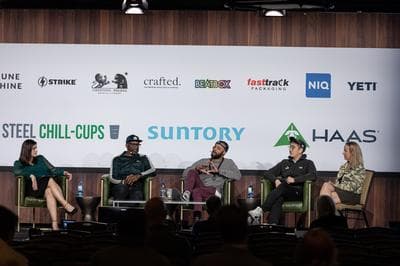
Ray Latif [00:24] Good morning everyone and welcome to Brewbound Live Winter 2024. My name is Ray Latif. I'm the editor and producer of Bevnet's Taste Radio podcast, the number one podcast for anyone building a business in food or beverage. I'm also the host of Rebound's Pitch Slam. We've got a lot in store for the next couple of days and we are kicking things off with the semi-final round of the 16th edition of the Brew Brown Pitch Lab. It's a one-of a-kind business competition that gives entrepreneurs behind the beer industry's next breakout brands an opportunity to sample their innovative products and showcase their business plans to a panel of expert judges. The entrepreneur with the best overall pitch and product will be awarded a $10,000 industry awareness package from Brewbound. Additionally, NIQ and three-tier beverages will provide the winner with one year of data in consulting, a package valued at $35,000. Good news for all presenting brands. NIQ and three-tier beverages are giving each 130 days of data in consulting, including NIQ's buzzer package, which is tailored to emerging businesses. The winner will also receive a free ticket to Brewbound Live Winter 2025. The pitch slam, as I mentioned, begins with a semi-final round in which entrepreneurs from 12 brands will have 2 minutes to deliver their best elevator pitch. Our judges will provide approximately 2 to 3 minutes of feedback following each pitch. If the presenters attempt to go longer than the 2 minutes they have allotted, they'll hear the dreaded gong. Don't want to hear that, folks. That means we went over. The judges have already sampled the products. After all the brands today have presented, the judges will pick 5 brands to move on to the final round which takes place tomorrow. The 6 finalists will be chosen by audience vote at the end of today's semifinal round. We're going to show a list of all the participating brands and a number next to their name. Live stream viewers and those here in the audience will have an opportunity to vote for their favorite brand by texting a number corresponding to their favorite brand, excuse me, by texting a number corresponding to that brand. Using a phone number that we'll provide after the semifinal round. We're going to show that number, as I mentioned at the end, you'll have until 10:00 a.m. Pacific time to vote. We're going to announce the six finalists at 11:40 p.m. excuse me, 11:40 a.m. today. So stay tuned for that. Let's meet our panel of esteemed judges, beginning with Justin Ray, who is the senior category manager for beer at Whole Foods. Next we have Peter Highmark, who is the president of Highmark Distributing. Next we have Eric Phillips, who is the chief commercial officer of Schilling Cider. Samuel Chiwenga, who is the co-founder of the People's Republic of South Central and the winner of last year's Brewbound Pitch Slam competition. And last but certainly not least is Nate Grover, who's the executive director of bar and beverage for Applebee's. My goodness, what a judging panel. Excited. Thanks so much for doing this. All right, let's get started with our first contestant for the semi-final round of the pitch slam. That person is Graham Penniman, who is with SoCal Vibes Company. Come on up. Hello, good to see you. Your microphone, please check on your timer. Good morning everybody. I am very proud to be here. Thank you very much, Judges, Bevnet and everyone. Uh, I am the director of sales and marketing for two brands. Honest Ape Cider is the original and SoCal Vibes is our expansion. You can see up here we have our products shown. We make ciders and mead and Growing cider brand. Uh, we are in locations all around, uh, have been around for going on 10 years now, and, uh, 700 locations. Uh, we make ciders and meads that are drier and crisper than most out there, and it's something that's a signature element to our, uh, beverages. We use, uh, champagne yeast and more varieties of apples than uh than most, so that we get a nice rich, robust flavor. And we are really fun, you know, as you can tell by our product and packaging, we are very aware of our audience. We began with a tasting room in the early days and soon discovered what Southern California consumers enjoyed, which was low sugar, low. Low sugar, dry, crisp uh beverages that were very sessionable. So we have uh Honest Abe, which is the higher ABV, the more craftier, complex flavors. These are inspired with a, with a hint of nostalgia that create a feeling of familiarity. And are really great for nighttime occasions where the the difference in the two brands is Vibesco are really meant for daytime occasions. They are lower ABV, sessionable, and really more crushable, single fruit flavors, simpler, more mainstream. Thank you. Mr. Well done. Thank you. Uh, actually, there's no feedback until tomorrow, but hopefully you'll make it tomorrow. Uh, Justin, let's start with you. Um, what do you think of the products that you tasted yesterday? Uh, I felt that the liquid tasted great. Uh, it was, I think the champagne yeast gives it a little effervescence, uh, and I believe we tasted the peach, um, which kind of added like a nice sweet balance on it. Uh, I also like the packaging. Um, it seems very ready for market, which it seems it's already in. Um, my only bit of feedback, um, I was a little mystified by the plant-based callout. I felt like that was kind of a given since it's cider, but also given the market, uh, I think that it, it could be an applicable call out, but, um, it's just something I don't see on other cider packages. Mhm. Peter, uh, cider competitive category for sure. Uh, do you see a runway for success for SoCal? Well, cider is a tricky beast out there in the market. Um, I love the product we tasted yesterday. I love the fact that it wasn't super sweet, so it definitely had a distinction from other things that are out in the market. On the other hand, we carry some dry ciders, and they're very, very specialized. So you mentioned that you know your customer very well. If we move on, I'd like to learn more about how you're going to reach the customer, who they are, how you, how you get to them. I did love the packaging on the, on the peach, a lot of very clear SoCal cues on that. So I think it would stand out on the shelf, but I really want to understand how you're going to reach the consumer. Eric, you know a thing or two about cider. What's your thoughts on Southern California? I mean, I'm a sucker for cider, so that's a pretty straightforward one right there. Uh, I was pleased, uh, you know, we try a lot of ciders, you know, in the cider world, and, uh, absolutely a solid product as these two guys just said, and You know, I think there's an opportunity to allow a little bit more of the Apple characteristic to come through, but also if you're going for a little bit more mainstream and you're calling out the peach specifically, which is the flavor that we tried, then by all means go for it. I think it's what, what consumer you're trying to reach and you know, as he was explaining, it's their more mainstream brand, so go for it. Sam, we'll call him Chewy because that's what he likes to be called, but you know, Graham talked about this brand being a fun brand. Do you get that from the packaging? Yeah, most definitely. The packaging was great. Um, I really like the flavor. Uh, I didn't get a lot of apple, but I don't think that's what that, that, that line was about, um, but I think it does, uh, match with the SoCal, uh. Consumers flavor which is dry and crisp, so they know that at that point. Nate, do you think, uh, consumers are looking for a brand and products like these? Well, I think on-premise, the cider skews are limited. Uh, so I think you've done a great job, um, with a fun name and leaning into flavor. And like these gentlemen said, the packaging is, is beautiful. So, you know, should someone order one at a casual dining restaurant and then walks through the restaurant, I think it'll stand out. And then uh I'll echo what these guests said. I thought the liquid was great. All right. Great start to the competition. Let's keep it going with Victoria. Oh yeah, you can clap. Who's clapping? Well done, yeah. Let's keep it going with Victoria Brodsky of Besa Hard Seltzer. Come on up. Your microphone.
Speaker 2 [09:19] Thank you, Ray.
Ray Latif [09:19] Please keep an eye on your timer.
Speaker 2 [09:20] Yes, absolutely. Well, good morning, everyone. Good morning everyone. I'm Tory Brodsky, CEO of Bessemi Vino. We're an organic canned wine brand that is creating innovative, ready to drink products. Our flagship product is our, uh, hard seltzer, the first of its kind made with organic wine. Now, if you don't mind, I get a little bit nervous. I'm just gonna have a little liquid courage. Mhm Thank you. Delicious. Anyways, um, we created this product for that consumer that's in that transition phase between not quite a college girl anymore, but not yet a wine mom kind of person, you know, the kind of professional that's not afraid to chug some alcoholic beverage at 8 a.m. Um, this product is 5% ABV, 140 calories, and made with just organic wine, uh, natural flavors, and a touch of cane sugar. Now we started out actually as a canned wine company and only launched this product in June in just 3 test total wine stores. Since then we have grown 140% on average month over month in case sales, with our last month reaching over 600 cases in sales. Um, we also sell this currently just in a 12 count variety pack for 2599 MSRP, and we are now in 25 total wines in 95 on and off-premise locations across California. Um, we actually just signed with our, our private, new private equity partner that's going to help us and commit to bringing this product into the lives of every American's household and becoming a household name, reshaping the wine industry which we know it really needs, and becoming a legacy brand, not just another trend in the RTD space. Thank you, cheers.
Ray Latif [11:23] All right, good stuff. Uh, Peter, let's start with you. Uh, you know, we have two concentric ovals here and in the middle we have Besamivino with their hard seltzer. Um, what do you think of the opportunity for this brand? Um, I think that, um, from what I tasted yesterday, from the packaging I've seen, and from now hearing this, uh, target consumer. It's spot on, um, I guess my question would be, if you want to be kind of ready for the masses, is that target really the masses, the Venn diagram between sorority girls and working moms. Most of my, uh, territory is, uh, working class people that don't necessarily fit in that, but I think it's, it has a broader application. I think maybe you need to broaden the vision on how you get to those people. Eric, I don't think I've tried a wine infused or wine-based hard seltzer. Have you? And what do you think of the taste of basamivino? Yeah, I think it's an interesting concept because there's a lot of opportunities. I really appreciated that it was called out. It's very clear that this is the base, this is where the alcohol comes from, where historically seltzers, there was a lot of confusion around what is the alcohol base. And so I appreciate understanding what the audience and the goal is. If that translates, that's, you know, to be seen. It sounds like sales are continuing to increase, so there continues to be opportunity, as Peter said, identify that group and I think really go strongly after that, but that might Eventually Create a market that doesn't expand beyond that. Chewy, in terms of the taste and flavor. I know you're a beer guy, but, uh, as far as hard seltzers go, what do you think this? No, I liked it a lot. Um, it's a new take on an old idea, the wine spritzer, um. Packaging was great. The sleek can is nice, um, invokes a certain image. I'm just kind of wondering about the organic product and it doesn't say organic on there. It's got a little. A little confused on that, but I thought the product was great. Nate, do you see more, more of your folks coming into Applebee's looking for products like these like hard seltzer, wine, sort of a combination of both, yeah, a little bit. You know, I think seltzer's are slow growth on premise. You know what I did love about your particular product is, you know, we tried the fruit punch, and fruit punch is not a flavor in this category that you see a lot, so I thought, you know, nice, nice approach there with that lead. I would think about the calories, especially with who you're targeting for this consumer. And Justin, do you see this product as bringing incremental value sales to retailers like Whole Foods? Potentially, I, I wonder if the middle of that Venn diagram is going to reach enough people. Um, it's definitely, uh, you know, one of our core consumers, but, uh, I'm just wondering if this is going to stand out enough in the art, um, like the FMB or the fourth category space, uh, enough to reach enough people. What are your thoughts on the packaging? Uh, as, uh, as everyone knows, we're a very unique retailer and hearing, uh, about the organic callout, um, is a slippery slope. We have very strict, um, like, uh, policy or like regulate or, you know, our own internal policies about, uh, label claims, um, so. I know that doesn't apply to all of the retailers, but, um, I'd be interested to hear more about the organic callout and, and seeing that kind of vetted more fully on the label. All right, great feedback. Up next, we have Ryan Kutcher, who is with Dad Strength Brewing. Come on up. How's it going? I'm good. How are you doing? Good, good. Your time is over here. All right, guys, thanks. I'm Ryan from Dad Strength Brewing, and we believe that the craft beer industry has a drinking problem. Specifically, your primary consumer cannot drink like he used to. 68% of them are men. 35 to 45, their hangovers are getting worse. Their metabolism is shot. Their kids are getting up at 4:30 a.m. because they don't care. I know this guy because I am this guy. My co-founder and college friend is also this guy. 18 months ago, he texted me and said, check this out. I'm mixing traditional craft beer and non-alcoholic craft beer to make a mid-strength beer. My tongue doesn't know the difference. But my liver sure does. I said, it's genius. Let's start a company. But let's be good marketers. We took a walk down the beer aisle to see what we could find, and here's what we saw 10%, 9876, 50. A literal physical hole in the market telling us to fill it with dad strength. But we knew it had to be three things one, super freakin' delicious, because otherwise who cares? Two, 0.9% because that's the magic sweet spot where you can catch a buzz, but you don't catch a hangover and under 100 calories because dad strength is not allowed to cause dad bod. We found a World Beer Cup gold medal winning brewer to help us brew it. It took us a year. We got our first product, IPA. I relocated my family from Austin, Texas to Washington DC to my brother-in-law's basement apartment. So if you think you had a tense Thanksgiving, mine was worse, but the good news is in the 1st 90 days we got ourselves into 100 independent accounts with a rebuy rate of 73.4%. We also got into three chains Whole Foods, Trader Joe's, and Giant. In the first six weeks at Whole Foods, we sold 340 cases of beer and we had 37 on 37 orders. Last month we launched our second SKU, apricot IPA. We launched our second market yesterday in Maryland. And in January, we're hoping to turn Dry January damp with our third product, Hazy IPA and we're coming to Virginia because that's the suburbs and that's the natural habitat for dads. So we're excited about what's in the, what's in our future and that's why we say we're brewed for a better tomorrow. Excellent. Well done, well done. Uh, Brian mentioned that he wants to make something that was super freaking delicious. Eric, did you feel that way? I think the, uh, the opportunity is there certainly for this product, and, uh, I think that they're, um. I think they've got a clear vision of what they want to accomplish and I think that that's a really important thing in this industry. And, and, uh, I'm excited to hear, uh, what the other judges think about, you know, the opportunity as well. I know we had a little talk about that yesterday, so we'll see. Chu, I feel like it might be hard to get as much flavor as you want in an IPA out of a 2.8% beer, but what do you think of the taste? Yeah, I like the packaging. The pitch was great. The beer I wasn't super big on. It is a hard thing to brew a beer at that strength. I think that beer is essentially liquid bread, and without the backbone that comes from the high gravity that you get and the residual sugars, it's hard to create those flavors. But I think the concept's great and the packaging is great. Yeah, Nate, what do you think of the opportunity for a low alcohol beer like this as being something that a lot of consumers are looking for? Well, I think in beer you have to find a way to differentiate, and I think they were spot on in the positioning and the strategy in finding that hole from an ABB standpoint. I think when you think about the on-premise and guests looking at a menu, if the ABV isn't on there, dad strength might Uh, convey a different type of message to that guest. So you may just wanna think about that. Um, and then I did wanna touch on the style, you know, IPAs are, you know, big and bold. Sometimes they're, they're tough to brew, so, you know, as you think about a low ABV beer, is, is IPA the right style? Yeah, low ABV, low calorie, under, it's 94 calories. Justin, how much does that factor into your perspective on that strength? Uh, you know what, the, the ABV space they're playing in, I think is very interesting. There's a lot of potential there, but, um, after tasting the liquid, I'm really not sure what the chief difference is besides the ABV between that and an NA item. I feel like a lot of our consumers might just shift to a true NA that has a little more flavor, to be honest. Um, the calorie thing too, I think it's important, um, that's, that's a great call out, but again, like the low ADB space, uh, seems just very tricky right now, but promising, you know. Yeah, tricky but promising. I mean, but do you think, Peter, that Dad strength could be part of that anchor set for new low ABV beers? Yeah, no, the concept is fantastic. I mean, if I stood up, you'd see I'm your target consumer, so I definitely think there's a need for a product like this. I love the packaging's A plus as a distributor. What I'm looking for is something that pops on the shelf. This is definitely pops, but I'm definitely going to defer to Chuwy on this. It was not my favorite beer that I tried. Uh, but I think that the idea is great. All right, good stuff. Up next, we have Ray Bebuck from Girl Beer. Come on up. Hello, nice to meet you. Please keep an eye on your timer.
Speaker 3 [20:15] How's it going? I'm Ray, founder of Hooray, here to introduce our first product line, Hooray's Girl Beer. Um, look, I know what you're thinking, it's a crazy name. The brand intends to flip the narrative of how women are traditionally marketed to with humor, entertainment, through the anti-marketing lens. Um, over the pandemic, I left finance to go work for an alcohol brand in the Northeast, and I noticed that beer had a girl problem still. From a branding perspective, many female focused alcohol brands felt pink washed, pandering, and out of touch, and it was really working against capturing their intended audience. Self-aware, irreverent brands, and other categories were cutting through the noise, but mainly focused on bro culture. From a product perspective, Gen Z and millennials were clearly moderating their alcohol intake, the vast majority of them, and many were seeking new flavor innovation. Um, seltzers and kombuchas and these sort of Beyond Beer beverages were really attracting a large female audience and capturing that consumer. Um, but light beer's potential was really overlooked in my opinion. Um, this was clearly a huge opportunity for the beer category. Only 30% of beer drinkers today are female, uh, but women will control almost 80% of discretionary spend in the United States, um, in the near future. So even if you're able to convert like a small portion of that population, it's a massive opportunity and one that's really ready for a viable business. Um, so our flavored light beer was what we found to be the solution. Um, we tested hundreds of consumers. On many different types of beers and uh we came up with a line of flavored light beers that felt like it had the mass market potential um and to really build out a robust flavored light beer category that has room to grow. Um, so that's us. Bye girls for everyone except for you, Connor, you know what you did.
Ray Latif [22:19] Well done. All right, Chuy, let's start with you. Some really interesting flavors blueberry, lavender, pineapple yuzu. What did you think of what you tasted yesterday? Um, I liked it. Um, I thought that the packaging was great and that the color of the beer actually matched the, uh, flavor profiles and the can. Um, I like concurrency in a brand and I thought the actual product was good too. Yeah, let's stay on the packaging for a second, Nate. It seems like this is a beer you can see from across the room, maybe across two rooms. Uh, would it attract your guests? Yeah, it's very simple. Um, I actually, uh, the name is very fun, and I, I think the position that you talked about, uh, makes a lot of sense. I, I would like to. See you lean in a little bit more on the packaging to be a little bit more fun and playful to match the name of the beer. And then just one comment on the taste and flavors. I love that you've got something familiar but something sort of unique to give the consumer some exploration. So and then the color of that blueberry lavender was beautiful. Justin, Ray talked about this being a massive opportunity and a girl beer as something that the beer industry desperately needs. Do you agree? Uh, absolutely. Uh, although, uh, I feel like the, the name and it could be potentially polarizing a little bit, um, to be honest, I, you know, we've had some debate within my own team, um. And we feel like it, you know, in, in a way some, some folks might feel like this is pandering, but um I feel like enough it is going to target a consumer, um, that, that we really want to bring in. And I, I do think there's a lot of potential with it, and, and we're actually giving it a shot, uh, in Southern California here. So, um, I'm excited to see what happens with it, um, and then just one last thought about it, um, would love to see as the brand grows, uh, what, uh, like a potential like brand or label refresh, um, the, I feel like it might not stand out on the shelf as much as some other brands. Peter, uh, staying on this for a second, in terms of girl beer's opportunity to unlock a whole new set of consumers for the beer industry, what do you think of that potential? Yeah, huge, um, the flavor was really good and it's not beery at all, so, um, maybe the big girl beer thing might, uh, might be a bit of an unnecessary put off. I mean, discount that because it, it, I understand the idea, but it was really good and non-beer drinkers would love it, so I think it's a big opportunity. Yeah. Did you love it, Eric? I did. Yeah, I'm a big fan of flavor, and I think if you look at all the data right now, flavor is the thing that dictates if someone's going to buy something or not. And I think they clearly understand what their demographic is, what their opportunity is, and they're going after it. That's huge. A lot of people don't know that. Yeah, I just noticed your hair matches the blueberry lavender right there. It lines up not intense, but hold on. All right, up next, we have Chris Garrett from Beergut. Come on up. Hello. I'm well. How are you? Please keep an eye on your timer.
Speaker 4 [25:33] Good morning everyone. I'm Chris Garrett, and I'm excited to introduce Beer gut, the hardcore light beer, a low calorie, low carb, gluten reduced American rice lager. Say goodbye to the bland and boring beers with those nasty aftertastes, those chemical aftertastes taste like chemicals. Say goodbye to the bloating. Beer gut is a crisp and refreshing, clean drinking beer brewed to redefine what light beer should taste like. So when you're ready for a beer that's light, clean, and satisfying, just say, Give me a beer gut. The light beer market has been dominated by safe, predictable brands like Michelob Ultra with nothing to get excited about. Beergut is here to change that. We're not just another light beer. We are the hardcore light beer that is clean drinking and brewed to make you feel good. The choice is simple. Would you rather politely ask for an Ultra or confidently say, Give me a beer gut? Here's how beer guts stands apart. Better tasting beer. We own our own brewery. We control the manufacturing process, and that has led us to a proprietary brewing process with a clean water profile that is crisp, and the result is a satisfying beer flavor. We're a clean drinking beer. Beer gut is crafted to be pure with no weird chemical aftertaste and no artificial flavors. Beer gut is designed for to be enjoyed by everyone for any occasion. And we've created a brand that actually stands for something with our mission-driven impact for society. Every beer gut sold benefits. Every beer gets sold benefits the American Obesity Foundation and their mission to support a healthier lifestyle and eliminate obesity. More than 100 million Americans are considered obese, and we believe that although beer is not healthy, we believe that beer gut aims to be the healthier choice for consumers. Give me a beer gut. Thank you very much.
Ray Latif [27:44] All right. Uh, Nate, I heard the word clean many times. It's even up here on the slide. What do you think of that position as a clean drinking beer? Yeah, and actually that's what I wanted to touch on was just the positioning. I, I think you have a, um, a lot of messages going on here between clean and then give me a beer gut, and then hardcore. And I, I think you've got to find a way to, um, target one of those or a few of those, but slim that down, uh, both in, you know, how you presented, but that, that comes across on the can as well. Justin, how much is the mission driven aspect, the American Obesity Foundation donations, how much does that matter to a retail buyer like yourself? Uh, it's very important. Uh, we're very, uh, we are much lean into cause-focused brands. So seeing that called out on the label was great, but, uh, on this particular item, it's, it's lost. There's, there's a lot of, it's a very busy label. There's a lot of callouts. There's a lot of information, and I think that just kind of, you know, I'm not sure how that could stand out a little better on the label. Peter, in terms of low calorie, low carbs, low gluten reduce, is there something that sort of rises to the top for you? Um, so for a low calorie beer, I, I thought this was a great beer, um, and I love the bar call and and having hearing you say that, um, that would be a really fun bar call. Um, I do agree with everybody else. The, the, the label and everything else is busy. There's a lot going on. I don't know about the hardcore thing, um. And I would be very careful once you're approaching whether it's retailers like Nate or Justin or distributors like me about the negativity about other beers because for all of us, those are big parts of our business, um, that's not necessary. You can stand out without that bashing on anyone else. Eric, uh, let's stay on the flavor for a second because, of course, you know, you're gonna get someone to drink it the first time. You hope you get to drink it the second time. What do you think of the flavor? I think if people are looking for an easy drinking beer, they were able to accomplish that. I think it has a clean finish. There's no really residual aftertaste for me personally and I think that that is something that if you're going that direction, great. If you're looking for something that has a little bit potentially more flavor profile to it and you're looking for a positive aftertaste, that didn't hit for me, but that might not be the demographic. So what are you going for in understanding your opportunity? Sam, last word on beer gut. Uh, the beer was good. The label needs some work, um. But I do like people trying to battle in that light beer category. I think we need more options in that category for sure. If you were to rearrange some of the parts of the label, what would you want to see? What would you want to see in terms of label hierarchy? Um, I don't know, it's, it's, it's, it's really busy. Um, there's a lot of information and it's all the same font. The layout could be a little different. Uh, it's a sticker now, but I think they're gonna go to printed cans, which will help give them more real estate. I think just reworking what's their size of fonts. All right, great feedback. All right, up next we have Samara Oster from Meli. Come on up. Hello. Microphone, please keep an eye on your timer. Hi everyone, I'm Samara, the founder of Meli quinoa beer, and Meli is the first American beer that's made using only quinoa as the grain base. We created it for people who are passionate about thoughtful consumption, and that means eating clean and knowing what we put in our bodies. But it also means embracing balance and indulging in drinks, but with intention and care. Meli's 4.4% ABV. It's free from gluten and sugar, both of which are inflammatory ingredients that more and more of us are trying to avoid. And it also contains the highest quality organic quinoa that we can get our hands on. It's refreshingly fragrant and crisp with a hint of sweetness and minimal bitterness, and we designed it to be an easy drinker, so pleasing to beer aficionados, but also approachable to those who typically prefer other categories. We sell on-premise in 12 ounce cans and off-premise in 4 packs with an MSRP of 1799. Meli was developed during my business school studies at MIT where I partnered with two food scientists to bring this idea to life. It took us 3 years and over 90 formulations to create what's in our cans. We launched in Massachusetts this June with about 4 accounts, and we're now in over 100 spots across the state. About a month ago, we also launched e-commerce, uh, so we now sell to 45 states via e-commerce. As a bootstrap startup, we knew we couldn't spend enough to win the attention of consumers off-premise. So we decided to build our brand in the top restaurants and hotels in Mass, in Massachusetts. We've been thrilled to see how many places are eager to bring on this great tasting woman-owned. Premium gluten-free beer. And for us, menus are the best free advertising we could ask for, but it's also encouraged a lot of trial that drives consumers from restaurants into surrounding stores that carry us. We know we have a long way to go, but we're incredibly proud to have grown Meli from the seed of an idea, no pun intended, into the business that it is today. Thanks. All right, uh, Justin, let's start with you. The Whole Foods consumer probably knows what quinoa is. Is this just a natural fit for your place? I, I think so. I love it. I love the callout on like sort of the alternative grain bill with it. Um, I also love the, the, the other callouts on the label, especially women-owned, um. And, and in the gluten-free space for us too, I think there's an actual play there. I just wonder if um it just has any staying power if like customers are going to repeat and buy it again. Peter, on the other hand, there are a lot of people that don't know what quinoa is. Is that something that's going to hold this brand back, or do you think that's something that people will investigate more? I, I think people will try it. It's a, it's a really distinctive product. Um, I think that it's going to, like, as a kind of traditional beer drinker, my reaction to it was a bit of a surprise of like, wow, this is, um, this is different. Um, but I think there is, there is, there is something there that could be compelling. 1799 for a 4 pack is a little scary. Um, I would be, um, I could think of maybe two retailers of my 2500 that I could successfully sell that. I'm always a little hesitant about gluten-free beers, but Eric, what do you think? I think again, I'm really impressed by everyone understanding their opportunity, understanding the demographic they're going after. Um, I love to see a high price point personally. I always love to push it up for distributor partners, but I also understand that that is, there is a hurdle, right? So understanding that, I appreciate the idea of going after, uh, top restaurants where the price point might not be as, uh, worrisome. So, yeah, yeah. Chey, can you comment on the flavor? Uh, flavor was great, very interesting, um, backbone with the quinoa. I really liked the packaging. The website was great. It, it, uh, really shows where they're coming from and who they're, uh, going after. Uh, my main concern is the gluten-free though, and on the can it says it's processed with wheat, and, uh, if you're looking for people who are looking to avoid gluten, that's fine, but if you're looking for people who can't take gluten like celiacs, you might have some issues with that. So that's my only issue with that, but everything else I really like. Yeah, Nate, I'm sure there are guests that are coming in asking for gluten-free options. Uh, it seems like this would be a natural fit, but is it? Yeah, I mean, for, I love that you're building the brand on, on premise and that's part of your route to market, which seems like your strategy there is very thorough, um. You know, I think the, uh, you know, I think it hit in terms of taste and packaging, um, but I think, uh, on-premise, you just, you have to find your target and that just might be limited, especially with, within the on-premise, probably not ready for casual dining. All right, good stuff. We'll keep things going with David Gull from New Helvetica Brewery Cooperative. Come on up. Hello, good to see you. The microphone, please keep an eye on your timer. Hello Brewbound. My name is David Gall. I'm the founder of New Helvetia Brewing Company in Sacramento. We just celebrated our 12th anniversary, and I am exhausted. In fact, I've had it. I quit. OK, that's not entirely true, but like many brewery owners and founders, I've reached the end of my run. And when a brewery owner is done, you typically have two options you can sell or you can close. And selling really is, well, it's possible, it's not a great option in our current market closing, we just have too much good stuff to do still. So why am I here? I'm here to tell you about another possibility the co op. In our case, we are talking about a community and worker owned cooperative. I first brought the co op idea to my employees and they signed on. Then we collectively brought the idea to our customers and neighbors and the craft beer community, and they are continuing to sign on. New Hove is already an established brand. We've been on shelves at Whole Foods and chains throughout Northern California in the past, restaurants and bars all over Sacramento. Over 12 years. I've created a brand. And a brewery that celebrates Sacramento, made award winning beers, created a gathering place, a reliable partner for nonprofits, and now we are creating a community and worker owned manufacturing asset, the New Helvetia Brewery Cooperative. Converting the brewery that I founded and love into a co op, it achieves many goals. It differentiates our brand from all the other breweries in a highly competitive market. It engages the community to buy in as owners, grow it and support it while maintaining our brick and mortar location and preventing an unnecessary vacancy. Selfishly, it's an exit for me and something other founders might need to consider in the future. Most importantly, however, it keeps our brewers and staff not only employed but in charge of their own economic futures in a democratically organized, equitably shared, and value-driven business. That's a win-win scenario. Thank you. Great job. Well done. Apologies for calling it New Helvetica. That's my font, not the name of the brewery. New Helgesia. Yes, uh, Peter, what do you think of the business strategy you just heard? Um, I think it's interesting, um, and it, and I applaud it. Um, I don't know how well it's gonna travel beyond Sacramento. Um, I, I think it would be super compelling within the community because the community is gonna appreciate it. It's really gonna resonate there. I just don't know how it's going to travel to a wider audience. In terms of the packaging that you saw, Eric, uh, did anything stand out for you? I think they understand their market in Sacramento as Peter's mentioning, and, and really going after landmarks that are in the area, so there's an identification behind the brand. Yeah, I keep going back to you on flavor. I'm sorry, but you are the expert. What do you think of the taste? Not good. The helles was really, really good. I like that a lot. The dip. It had a little work to do, but I'm not a big fan of single hop. Beers. So that's probably more of what that's about. But I like the packaging a lot, um, you know, obviously they're a local brewery, I'm a local brewery, so they know their market. Uh, I would like to have them see something about the cooperative on the can. I went online and checked out the website and learned about it, but in the can, you can't really tell what's going on. But I like the beer a lot and the label looked great. I think it's an interesting concept. Uh, breweries are struggling right now and, um, just shuttering is, is not an option, so. Nate, do you think the regional focus for New Helvetia can be an opportunity, a challenge? What are your thoughts? No, I think the, you know, I think when you build a set on premise and you're building in your menu, you obviously have those that are, um, you know, the more mass produced, popular nationwide, but then, You know restaurants need to have, especially, you know, an Applebee's type concept where neighborhood is critical and having those regional favorites is important. I would like to touch on the beer we tried which brought in some nostalgia, which is hot and trending and a great spot for inspiration, so I love that you're taking a crack at nostalgia with the Buffalo beer and so, yeah, good position in there, and I think it could work in Sacramento like these gentlemen said. Justin, I would think the cooperative aspect of this brand is something that's attractive to Whole Foods. Is that correct? Absolutely. But It was hard to discern from the labels on the, on the beer that we tried yesterday and in fact until I heard the presentation, I had no idea, but I absolutely love the concept, strongly encourage them to rethink their marketing and get that message on the packaging. All right, good stuff. Up next, we have Caroline Folk from Beer Girl. Come on up. Hello. Good to see you. Please keep an eye on your timer. It's no secret women drink beer. This isn't a revolutionary idea. What is surprising, however, is how often and historically the beer industry has neglected appealing to women. From recipes to branding, beer has historically catered to a male audience, sidelining women in the process, and it's time for a change. Introducing Beer Girl. Our mission is simple to make beer more approachable, stylish, and fun, designed to resonate with women who might have otherwise overlooked the beer category as a whole. Today, The beer market is valued at $106 billion making it the largest segment in the alcohol industry. Yet women make up just 25% of that market, while categories like wine, tequila, and vodka show a more balanced gender distribution. While some women have entered the industry, the gap still remains, and we believe Beer Girl is the solution. Beer Girl is here to disrupt the industry, close the gender gap, and grow the overall beer market in a big way. How will we do it? For the past 4 years, I built Wagonheel Brewing Company in Ventura County from the ground up. I managed the financing, oversaw construction, and ran operations, and through that experience, I saw what the female beer drinker wanted and what they felt was missing. Beer Girl is a gluten reduced 3.5% Mexican lager. It's light, easy to drink, and addresses the common complaint from women that beer often makes them feel too heavy and bloated. Our classic Americana branding resonates and represents all kinds of women, offering huge potential for mass growth and distribution. While the craft beer market may be in decline, Beer itself isn't going anywhere. People are drawn to simplicity, familiarity, and authenticity, and that's exactly what Beer Girl delivers. We didn't feel the need to reinvent the wheel with experimental flavor profiles. Instead, we focused on crafting a clean beer designed to stand the test of time without compromising flavor. Our 120 barrel brewing facility allows our beer to stay at an affordable price point, giving distributors and retailers great margins. And as we expand beyond this facility, economies of scale will allow us to keep that price point. All of this coupled with strategic branding, major partnerships set for the new year, and our independent sales program launching in January will allow Beer Gir to accelerate at a rapid and organic rate to not only be successful in California, but to become a household name nationwide. Thank you so much. Yeah. Right. OK, beer girl, uh, Eric, I see at the, uh, behind you it says it'll appeal to women who typically reach for seltzers, wine, or spirits based on what you heard, based on what you tasted. Would you agree? I think it's clean, easy drinking beer, straightforward, no, no frills, no gimmicks. It's, it was mentioned, uh, Mexican style lager. Great. Go after it. Uh, again, pretty clear what the demographic is, pretty clear what the messaging is on the can. Uh, I'd like to see if that translates if you eventually go to Cartons. It sounds like there's a good business plan behind that. Does that also translate in your packaging and if that's the route you go? So it'll be interesting. Yeah, let's stay on the packaging for a sec. Beer girl, it's 4 times in the front of the can, very clear what it is. Chewy, do you like it? Um, I'm not big on the packaging, but the beer was really good. Um, I understand the concept, uh. Yeah, OK. Nate, you want to follow up on that in terms of the packaging and the flavor? Yeah, I mean, from a concept standpoint, I, I loved it, you know, beer for girls, it's, it's an easy get. The, the packaging supports that. Um, the, the lighter lager callout is a little distracting to me, I think if you could move that positioning. And then just one comment on the taste. I don't know that it lived up to the sparkling or call out there, so just maybe something to work on from a taste standpoint, but love the easy get in the positioning. Justin, what are your thoughts on the 3.5 ABV for this product? Yeah, I think it fills in a nice spot, uh, in terms of, um, uh, uh, like a segment like we're trying to reach our consumers. Um, I just wonder, uh, with this, um. You know, being a craft brand, uh, and, and, and a craft se centric retailer, um, just wondering if, uh, you know, the staying power and the dedication behind the brand to build it and, and keep it in stores and kind of build that goodwill, not only within our own stores, but our customer base too, if we had it on the shelves. Yeah, Peter, we heard that the founder had quite a bit of experience in this business. How much does that influence your decision or to take on this bread or not? Um, the beer itself was great. I think the concept is great. I like the direction we're going. I agree with Chuy. The packaging is, um, it's not great. I like the simplicity, but like the call out, it just, it, it looks lower value to me, so the opposite end of the 1799. So I would want to premiumize it a little bit more, and I'm a little worried about the 120 calories. It's not that light. All right. Let's keep it going. We got Simon Chen coming up from Match Point Brewing. Come on up. Hello. There you go. Step right up and keep, please keep an eye on your timer.
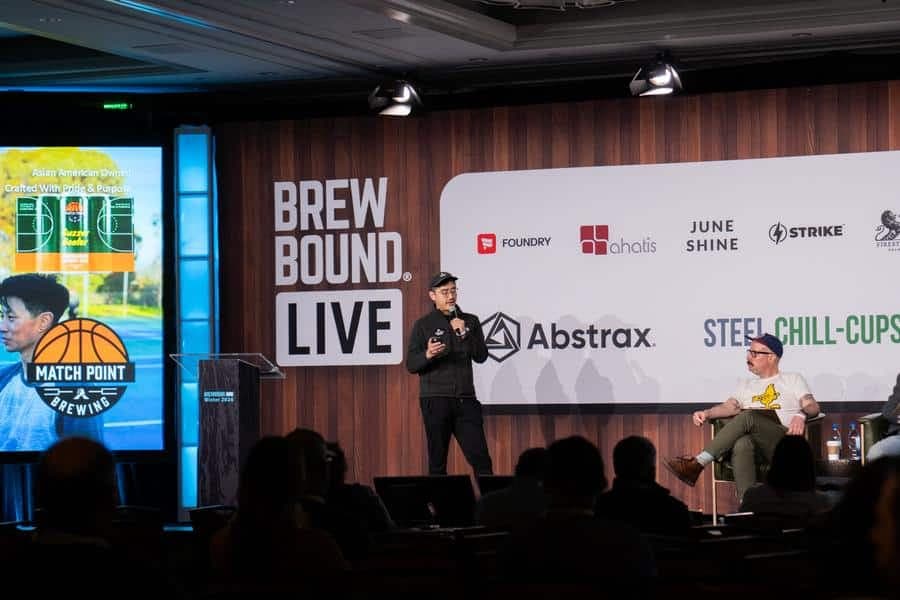
Speaker 5 [45:38] Hi, I'm Simon Chen, co-founder of Match Point Brewing from Albany, California. Growing up as a first-generation Chinese-American in the Bay Area, I was immersed in the diversity of food, culture, and surprise tennis. It's how I met my co-founder, Johnny Wang, and former doubles tennis partner. While health trends come and go, getting outside, playing sports with friends will never go out of style, and one of the best things you can do for your mind and body. Our beers won't make you a better athlete, but they're a great way to celebrate after a match and enjoy some liquid gold. Every partnership with Match Point Brewing starts with a handshake. Together with local gyms, schools, service clubs, and organizations like the USTA, we've built community through tennis, basketball meetups, tournaments, watch parties, and even mahjong nights where you can toast with our beers and savor some steaming hot dim sum. Did you know Asian Americans are one of the fastest growing groups in the US at 22.4 million strong? 30% of us live right here in California. Last year we spent $95 billion on CPG. We value products that speak to our heritage in an authentic way, but we're still underrepresented in the beer industry. Today we're here to share our story with beers like our jasmine rice lager, Mandarin wheat ale, Vietnamese coffee lager, Five Spice Cezanne. We wholesale to retailers at $70 a case. Demand for beers has continued to grow with strong placements at more than 50 local Asian restaurants. Some I'm proud to announced have been awarded the Michelin Bib gourmand, good food, beer, and good value. What more could you ask for? Earlier this year, we opened a taproom in our hometown of Albany, which serves as a training ground for new beers. In partnership with Tap Twice Tea, we developed a series of tea-infused beers, educational workshops, and planning to release a Hojita cream male for distribution. Through these partnerships
Ray Latif [47:46] All right, good stuff. Uh, Chuy, let's start with you. Uh, jasmine rice lager and a mandarin wheat eel. These sound pretty interesting. What are your thoughts? Uh, yeah, rice lager is a popular style right now, and I thought they, they nailed it pretty good. It was really nice. The, the wheat, um, could do some work. I the flavoring. I didn't really, I wasn't really big on, um. And I was a little confused with the match point with the basketball, but Yeah, the rice lager was really good. I'm sorry, the rice lager was really good, and I'm interested in his tea concept too. That sounds interesting to me. Nate, Asian American owned, focused on sports, what are your thoughts on the positioning of Matchpoint? Yeah, I think there's a there's a lot going on in terms of the positioning match point, tennis, totally got that. You lost me when you moved to basketball, and then as I moved into the styles, I, you know, it wasn't apparent that there was an Asian influence. Makes sense now in terms of how the styles you went after and the flavors, but I think you, I think the recommendation I would have for you is just stay focused. If it's match point and tennis and there's an Asian influence, stay focused on that and really exploit that part of the positioning. Justin, I kind of asked this before, about another brand. Do you think this is a brand that's gonna bring customers into your stores? I think so. Uh, I, I definitely like the, uh, the, uh, the Asian influenced, uh, flavors, but, um, it's, it's kind of like one or the other, you know, like the, the idea of like tying in sports, uh, or athletic type branding, um, or Asian flavors, you know, it's. I don't know. Uh, I don't know if there's like a middle ground to, to make it like a little more understandable to the consumer. Peter, is Match point, could that potentially fill a hole, fill a need in your portfolio? Yeah, I think so. Um, I, I love the flavors of the beers. Um, I, I didn't catch the, the Asian connection, um, really until now, but I like the fact that it's, it's subtle, so it's not necessarily limiting itself, but it's a big opportunity. I love the QR code on the can. Uh, and the connection to, uh, local events, um, so you know, anything that you can, uh, tie into the local community, um, that's great. So I, I think it's a, it's, yeah, yeah, Eric, in terms of the packaging and in particular the front of pack, what are your thoughts? Yeah, uh, I think that you need to know who you're trying to serve, full pun intended there. Uh, is it, is it going after tennis? Is it going after a different sports? Uh, I, I'm not sure, right? And I think as everyone's kind of mentioned, focus, hone in on what you're excited about, hone in on what you think you've got an opportunity for. Is that the, uh, founders, uh, leaning into their, their heritage, their background, is it? The sports metaphor, is it, you know, the style of beer. I think that's the focus you've really got to contain and, and, and decide on. All right, good advice. All right. Next up on the pitch slam, we have Emma Watts from CIRISO. Come on up. Hello. Yeah, please keep it on your timer.
Speaker 6 [51:01] I should have printed this out. Hi, I'm Emma and I'm the founder of Cerrio, a premium limoncello and canned cocktails brand. Siriso is not your grandma's sickly, sticky, sweet limoncello. It's light, it's refreshing, and it's just as good on its own as it is in a cocktail. With only 5 high quality ingredients and as a traditional digestive aid, it's healthy adjacent. I've done 6 months of recipe development at home, conducted multiple tastings with different age groups, and I'm now looking for a producer who shares my values to help bring the product to market. I got into limoncello because of what it represents. It's an opportunity to slow down and savor the moment. When you think about drinking it, I bet you think about sitting around after a big meal with people you love. Nobody really drinks limoncello alone. That's what Limoncello is about, and that's what the market needs. Excuse me. Over 3/4 of adults in the US have experienced burnout. We need a reason to slow down, relax, and connect, and research shows that when doing that with drinking, people want a unique small batch premium product. My customers are late Gen Z to millennial. They're the ones posting on Instagram about their European summer vacations because they've got that disposable income, and they want to bring a little bit of that lifestyle home with them. They want a high quality premium product that encapsulates an experience, not just a drink. Google searches for Limoncello spritz are up 64% year on year, but there's still a lot of white space to capture. RTD cocktails are still showing double digit growth, and the liqueurs and cordial market is forecast to be worth over 1.5 billion by 2030. This age group finds drink trends on social media, which is why I'm focusing there, sharing my story and building the brand as I go, ready for a crowdfunding campaign in 2025. Competitors' average retail price is $29. I plan to come in as a slightly more premium small batch product at $36 starting with Limoncello and expanding to RTDs as we grow. Thank you.
Ray Latif [53:11] Well done. Uh, Nate, we didn't get to taste any chorizo, but based on the presentation you just heard, what do you think of the potential for this brand? Yeah, I think, uh, it's interesting, and the, the non-elk space is, is non elk, correct. Is it no, no, no. Oh, my apologies. Uh, uh, I mis uh misinterpreted that. Um, so yeah, I think it's, uh, interesting. Uh, I think it's a small market. I love that you're, uh, using social media, uh, to influence your positioning as that's becoming a bigger part of how consumers are changing or, uh, or influencing their behavior. Mhm. Limoncello, uh, something that some people understand and are looking for, but are a lot of people looking for it, Justin? Uh, potentially, um, I, I think it would be an interesting play in the RTD space for us, um, and it could fill in like a flavor gap, but, um, you know, without having tried the products, it's tough to tell. Yeah, uh, in terms of distribution, Peter, again, I mean, do you think that there's a wider opportunity for a limoncello-infused RTD than say other products we may have seen? Um, well, it's a unique idea. It's definitely a white space, um, so I'd be curious to try it and see if it could fill up, but, um, it's not, I don't have retailers, whether they're off-premise or on-premise, uh, asking me if I can bring them a Limoncello RTD. So I'm not being asked for it, but nobody else is putting anything else out there, so it could be an opportunity. Eric, uh, we see the logo, we see some callouts here. What are your thoughts? I think it's just, uh, aesthetically appealing, uh, clearly goes toward the, the product, uh, idea. I think to what Peter's talking about, one of the biggest hurdles is probably gonna be education and then finding where you can sell the product. Uh, I, I definitely think there's an opportunity for it. I think that The, uh, consumer can be found in, uh, not everywhere, right? And so finding those locations and if you can build out a, a big enough base for that business, go for it. Should we, in terms of the business strategy, uh, you know, looking for a producer, crowdfunding, I mean, your thoughts on building the brand that way? Um, I like the logo. I like, um, the concept, um, going from a limoncello to other RTDs might be tougher because people who are in the RTD space could easily just pivot to the Limoncello space. Um, would love to try the product, um, but I like, I do like the logo. All right. I can't believe we're already down to our final contestant for the pitch slam. That person is Nate Argroves from Star Base Brewing. Come on up. Hello. Yeah, please keep an eye on your timer. Hey everybody. Uh, my name is Nate Argroves. I'm the CEO of Star-based Brewing, and our goal is to be the first beer on Mars, which, uh, sounds a little bit crazy. Uh, I think we actually do have a shot at this at some point. I can't explain it all in 2 minutes, but if you want to hear more about that, uh, come find me after. Uh, we're headquartered in Austin, but, uh, our name comes from The name of a tiny town in South Texas that's actually called Starbase. Uh, it's being built out right now to be the world's first spaceport, and it's, it's a pretty cool place. You can see a couple of photos of that here. Uh, we rolled out the brand statewide in Texas a couple of years ago. We've grown to a retail footprint that includes hundreds of locations across HEB, Central Market, Total Wines, Specs, and dozens of independents across the state. We've launched 5 beers onto the market so far. You can see those here. Uh, we also just released our first variety pack called the Mars Explorer pack. All the beers are directly inspired by the space industry. They're inspired by rockets. They're targeting the space demographic. There's 13 million people in the US that work in aerospace tangential industries, so it's, it's a big industry and people who really like space, they love drinking while they talk about space. From a numbers perspective, when we launched in 202, we did roughly 1000 CEs that latter half of that year. In 23, we did 13,000. This year we're on track for 22,000, targeting 40,000 next year. So. Pretty healthy growth from a brand perspective, we're big proponents of sustainability, so we offset our carbon, we source all of our energy from renewables, and we donate 1% of all of our profits to science education. And then finally, one of the areas that I'm most passionate about as a as a space nerd is we invest in space research as well, so. We're doing a couple of different projects right now. We're doing a soil science study with Texas A&M where we're mixing spent brewing grain into lunar and Martian regolith to see if it enhances the crop viability of the soil, and uh, I'm hoping that mid next year we're going to be able to try to brew beer on the space station. So stay tuned for that. But uh, yeah, that's it. Mr. Nate described himself as a space nerd. Justin, do you fit into that category, or in, uh, what do you think? No, I love the concept and I love the tie-in. Uh, I think with most cause-focused brands or mission driven. It's just how do you succinctly convey that on the label, very busy label, um, kind of hard to discern that, but other than that, like, overall, I thought the packaging design was great, very. Active and I would probably buy it just on the concept alone without, you know, not even being familiar with anything else about it. Yeah, that positioning space space Focus, the official brewery of Mars, do you think that's going to be attractive to consumers, Peter? It's unique for sure. It's like Justin said, the packaging is so busy. I tried to read the font I couldn't possibly read the information. So maybe there's a different way to communicate that. Um, I'm not a huge fan usually of, um, and I don't, this is gonna sound insulting, so I apologize in advance, gimmicky beers, um, but the beer itself was fantastic. So there's, there's an opportunity there. I'm just not sure how you How you take it to the masses. Yeah, Eric, we tasted a couple of beers yesterday. Could you comment on both flavors that you tried? Yeah, super solid. Uh, my notes here and Occupy Mars, great pun, love puns, obviously. Uh, it's really solid and it leaned into the flavor. I remember actually having a conversation about this when we were judging all the beers and, uh, in the, in the different items that were presented. This one was one of the ones for me that personally stood out and I, and I like that it leaned into the flavor that it said that it was gonna, gonna be on the can. I agree with the, uh, Justin and Peter that tighten up your hierarchy, understand what your callouts are, uh, but you've got a, you've got a concept here that's really exciting. Yeah. Something about the beer stood out for Eric. Would it stand out in a cooler set, Sam? Um, I think so. These guys mentioned the label's busy. It is busy and the font's a little small. I do like all the label. It's just to be clearer, and I think that the main label, if they made it bigger, would stand out better on the shelf, but the beer itself was great. I thought the Martin was the best beer we drank today. All right, Nate, you get the last word of the semifinal round. Yeah, I think I'll echo what these guys said, you know, space is fun, it's interesting. There's an opportunity here for you to stay relevant within the PR and social space as folks continue to talk about going to Mars. So you've got an opportunity to take advantage of that. I did think, you know, with, with the being the official brewery of Mars that um you, you have an opportunity for flavor exploration. Um, to, to maybe go after some unique, um, intricacies in, in, in your styles and, and the taste, but, uh, overall great concept and, um, you know, I think there's potential here. I like that. We have an opportunity to go after flavor exploration. Well done. All right, you know, it's, uh, extremely difficult to get up here and talk about your brand, talk about your passion, your business in 120 seconds. I thought all the semi-finalists did a really good job. Congratulations to all of you. Round of applause. OK, as I mentioned, there is audience voting. Before we do that, I want to just do a very quick debrief with the judges. Talk about some of the things that you might want to see tomorrow, if these 6 brands or the 6 brands uh advance. What should they be talking about? What do you want to hear? Justin, in those presentations, what's really important for you? I think uh for us is a staying power uh uh on our shelves and, and what are you going to do to kind of promote yourselves within the market. I think it's um one thing for a retailer to kind of tee everything up, you know, find distributors. Um, on board the item, do all the, the, the information work on the back end, but, uh, once the product is on the shelves, what are you going to do to connect not only to the, um, with the, with the store employees, like the people selling it, but also the consumers. Peter, what do you want to see tomorrow? Um, I'd like to hear about the route to the consumer. I want to hear about a clear target consumer and then how you're going to get there. If you've got a brew pub, you've got your own venue to get to your consumer, but if you've got to go through a distributor and a retailer, I want to understand how you're going to make it a value proposition to those folks as well. Eric, yeah, for those who make it to the next round, continue to tell your story. What's, what makes you unique in this opportunity? The crowded shelf, I mean, there's so much out there. There's so much competition. How are you going to stand out to what Justin said? I think for me it's, you got to have good liquid, number one, you got to have some packaging that makes someone come back to it and buy it the first time and then liquid brings them back. It's just that cycle. So I think uh what, what makes you stand out for me personally, is the most important. How are you going to compete. Yeah, chewy. I'm piggyback on Eric's comment about the story and how that connects to your product and you, and I think that that's what makes you. In your company different than everybody else and Nate, yeah, I think you've got to find a way to, to stand out and, uh, do it in a, in a quick way, um, you know, especially in, in a restaurant setting, the consumer is, has a lot thrown at them, and, uh, and they have to make an order quick and so you've got to make, you know, that positioning, especially as it gets onto a menu very simple and, and easy, easy to get. Um, and then, you know, how are you going to provide incrementality or fill a gap, you know, that's important to, to retailers. I said that the contestants had a hard time. The judges, I was like, 30 seconds. Don't say anything more than 30 seconds, and that's not a lot of time to give feedback, but all the feedback and advice you gave was fantastic. Thank you so much, judges, really appreciate it. All right, as I mentioned, we will have audience voting. We're going to show a slide right now with a brand name corresponding to a number. Uh, that number, you just text to the phone number that you see, 213-722-3546. The sixth finalists will be the audience vote. So it's really, really important. Brand owners, founders, talk to your people, get them to vote because it's really important, as I mentioned, you will be in the finals if you are the audience vote winner. We're going to announce the six finalists here on stage at 11:40 a.m. Pacific time. We're going to break right now for some coffee and doughnuts, and well, maybe not doughnuts, but pastries here at the Marina del Rey Marriott. For those of you watching at home, stay tuned. We've got content on the live stream, but the main stage content will begin here at 10:00 a.m. Pacific time. Stay tuned for that. Until then, thank you all for watching. See you soon.