Search across the BevNET CPG Media network including BevNET, Nosh, Brewbound, Taste Radio, Nombase and CPG Jobs.
Brewbound Live Winter 2024 - Pitch Slam: Final Round
Transcript
Note: Transcripts are automatically generated and may contain inaccuracies and spelling errors.
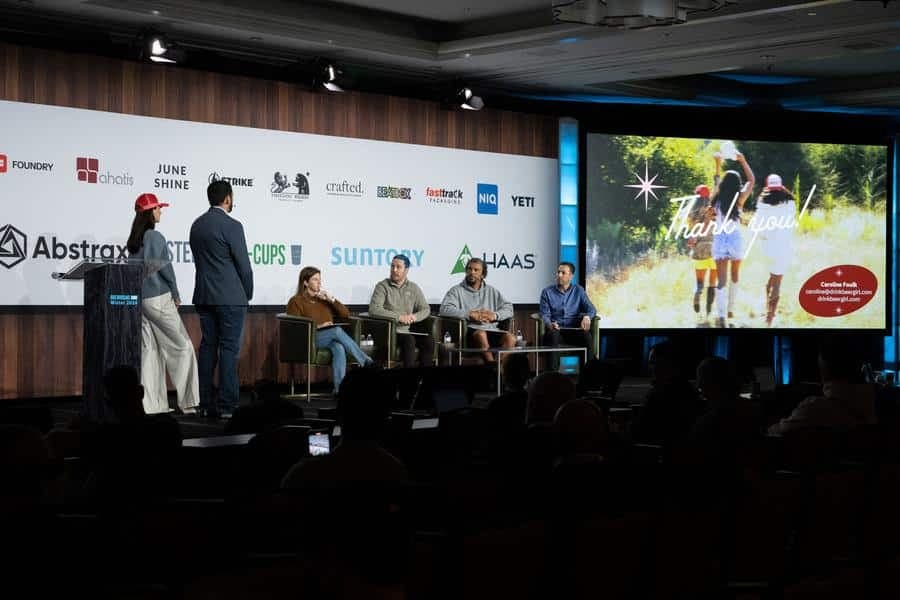
Ray Latif [00:08] Once again, my name is Ray Latif. I'm the editor and producer of Bevnet's Taste Radio podcast, which is the number one podcast for anyone building a business in food or beverage. I'm also the host of the Brewbound Pitch Slam. This is the final round, as I mentioned, of the Pitch Slam, which is a one-of a-kind business pitch competition that gives entrepreneurs behind the beer industry's next breakout brands an opportunity to sample their innovative products and showcase their business plans to our expert panel of judges. 6 brands from our semi-final round, which was held yesterday, have moved on to today's final round. Here are the rules. Today's contestants will have 4 minutes to to deliver their pitches. If they attempt to go longer than the 4 minutes they have allotted, of course, they're gonna hear this sound. No one wants to hear that, of course. Our judges will have 4 to 5 minutes to provide feedback and ask questions to contestants. They've already sampled the brand's products. The winner of the competition will be awarded a $10,000 industry awareness package from Brewbound and a free ticket to Brewbound Live winter 2025. Additionally, NIQ and three-tier beverages will provide the winner with 1 year of data in consulting, a package valued at $35,000. NIQ and three-tier beverages are also giving each participating brand in the competition 30 days of data and consulting, including NIQ's buzzer package, which is tailored to emerging businesses. So we have a new judge joining the panel in addition to 3 of our judges who joined us yesterday, beginning with Rebecca Maisel, who is the SVP of Legal and Government Affairs for Gulf Distributing. Once again, welcome back, Eric Phillips, who is the chief commercial Officer of Schilling Cider. Sam Chawga, the co-founder of People's Republic of South Central, once again the winner of the Brewbound Pitch Slam 2023, of course, Nate, yes, yes, yeah, you got to clap for that. And of course, Nate Grover, who is the executive director for bar and beverage at Applebee's. There's no audience voting in this round, just to let you know. All right. Let's kick things off with our first presenter. Let's go to Mars with Nate Argroves from Starbase Brewing. Come on up. Good to see you again. How are you? Good. There you go. This time you get a clicker. Press that green button. Yep. Keep an eye on your timer, please.
Nate [02:34] Thanks. All right, hey, everybody, uh, I'm Nate. I'm from Starbase Brewing, and, uh, if you didn't hear yesterday, or I guess right now, our goal is to be the first beer on Mars. Uh, so space is back in a pretty big way. You get used to the clicker. Uh, so you may have seen some of these headlines this year. Uh, America's landed back on the moon, uh, companies are getting funded to build a moon base. There's a space race between the US and China, and, uh, the one that's most exciting to me is that, uh, there's buzz about maybe a city on Mars at some point. Uh, more people than ever are interested in this area, more new space fans, and, uh, yeah, it's a really fun place to be playing right now. Uh, sorry. There we go. At the heart of the space renaissance is a tiny little town in South Texas called Starbase. It's the world's first commercial spaceport. It's where the first reasonable rocket is being built. Uh, it's a big deal. It's going to allow us to start expanding to the moon and Mars, and it makes the town of Starbase a place that a lot of space people know about and a lot of people recognize the name and are, are interested in it for that reason. Uh, as you can probably guess by our brand name, our beers are all inspired by Starbase, spaceflight, and specifically our goal of being the first beer on Mars. We have 5 different beers available in package. These are all also available on draft. We also just released our first variety pack called the Mars Explorer pack down there. Um, our beers are only available in Texas at the moment, but we've been investing pretty aggressively in growth, so we've hired boots on the ground in every region in Texas. You can see a couple of our displays that we've gotten here at HEBs. Uh, from a growth perspective, we're on track to finish out this year around 22,000 CEs. Our main focus has been on increasing velocity, increasing rate of sale, uh, growing our volume in retail. We're up roughly 100% year over year, and the lion's share of our growth has been in HEB, which is a big chain in Texas. We're really excited this year to expand with Whole Foods and looking at Kroger and Albertson's as well. We also do a lot in the regional liquor chains in Texas. And you know, long term the goal is Mars, but before we get there we've got to expand outside of Texas. So now that we've spent a couple of years proving out our business model, proving out our velocity, you know, that kind of making sure we know how to grow it from a marketing perspective, we're finally ready to expand. That's a big reason that we're here. If you're a distributor and you're interested in this idea, like there are, there are space people pretty much everywhere, so there's a map here, you know, some obvious places Cape Canaveral, Central Florida. Uh, you've got, uh, Denver, Seattle, uh, the Bay Area, New York, DC, uh, LA here, San Diego, uh, Alabama, like a lot of big space places around the country, and really in every, I would say in every city, there is a demographic of people who are interested in space. So, uh, yeah, we really kind of play to that and, uh, people who like space love drinking while they talk about space, so. To prep for expansion and kind of build brand awareness nationwide, we've gotten connected with some of the biggest influencers in the space field, so these people may not be familiar to you if you don't know much about space, but there's a couple of people on the screen here. Collectively they have over 5 million followers. They Where our swag in a lot of their videos. We also sponsor a bunch of space and tech focused events. So the Astro Awards is basically the Oscars for the space industry. We sponsored that last year. We're doing that again this year. We sponsored some eclipse events that was a big thing in Texas last year. That was a music festival. Uh, we've done a bunch of stuff at Johnson Space Center, uh, stuff for podcasts that are kind of space-focused, and I don't, don't have it on here, but we also work a lot with, uh, space companies. So we do launch, uh, launch parties, landing parties, Christmas parties, stuff like that around Texas. And then last thing is one of the things that I'm the most excited about with the brand is we're really trying to explore what the future of beer in space looks like. So we're working on a couple different projects right now that we've kicked off. The first is a project with Texas A&M where we're mixing spent grain into lunar and Martian soil, so it's a soil stimulant, and we're seeing if it enhances the crop viability of the soil. So you could grow like hops or something in the soil. And then we're also developing a protocol with one of the nation's top microbiologists and Uh, it's basically a way where we can use existing equipment that they already use on the space station to mix wart and yeast, and, uh, we're going to try to ferment the first beer in space. So stay tuned for that next year. Uh, and yeah, we're powered, powered by renewables, offset our carbon footprint, and we donate 1% to, uh, 1% of profits to science education, uh, because we need more future Martian pioneers. So, uh, yeah, thanks for having us, and we'll see you all on
Ray Latif [07:05] Mars. Well done. Slide up to where that X is, that says Ray, even though that's Nate. There you go. Rebecca, let's start with you. Um, you know, what do you think of this space-centric beer brand and the distribution strategy that Nate laid out? I think it's looking good. It seems like it's off to a great start. We actually cover Huntsville, Alabama, so I'd love to talk to you about that. I think there really is a, a, a niche, maybe even bigger than that kind of interest in the space field, but I like the focus, I like the packaging. I like the badge on the can. Um, I feel like it's got a good call to it and I like the consistency across your packaging, and that's definitely something that's helpful when you're approaching retail, especially off-premises to have the packaging look consistent. Um, so I love to see that. I think it's looking great. And you got to taste the beer today. What do you think of the beer? I thought the beer was very, very tasty. I thought that, um, I particularly liked that the German lager was easy to drink. It was lighter, um, but it's still packed a punch. Um, the hazy IPA, it had a great color, nice flavor to it, no real bite. I was impressed. Yeah, Eric, a bit more time on stage, uh, for Nate today. What do you think of the presentation? Any questions that came from that presentation? I appreciate it. It was super focused. You have an idea of what you want to go after. It's very clear you're excited about space. That's the space, pun intended, you wanna be in, right? I think that, uh, continue leaning into that. You have a story. You have an objective. You understand where you want to put your product. You understand the state of Texas, the opportunity that exists within that state. My, um, my feedback would just be, I wouldn't go beyond Texas. Get big there. There's so much opportunity. Texas is a huge state. There's so many people, a lot of people try and get ahead of theirselves and, and, and say, OK, we got to find growth in these different places, occupy, make Texas happen, build your base there, you know, uh, lean into your branding. It's unique. Um, billboard, everything you can, make it happen.
Nate [09:12] Awesome. Thanks.
Ray Latif [09:14] Sam, can you comment on, uh, some of the things that we're seeing right here in the research and how it's powered by renewables, offsetting the carbon footprint and 1% going to profits and education? Is that gonna move the needle for consumers?
Nate [09:24] Uh, I think it will, um, especially with your science-based, uh, approach, there's a, a large percentage of crap brewers who are really into the science behind brewing. Um, just being, being, being a beer for so long that, um, I, I run into them a lot and they have detailed questions. So I think the science space is great. Um, once again, the product is really nice, um. What, what's your plans for expansion and how big is your brew house? Uh, so we're contracting right now. Uh, we have access to a 300 barrel brewhouse. Uh, yeah, we're, we could, I mean, for expansion, there's a lot of places we could go. I think we would focus on aerospace specific markets first. So the big ones would be like Central Florida, Huntsville, Alabama, Southern California, the Bay Area, Seattle, Denver, places where there, there's already like a large contingency of people who are either work in aerospace or they grew up around aerospace or, uh, you know, things like that. And have you guys got any contact with Elon Musk's lawyers yet? We, uh, there's certain things that I can say and not say, but we, we, we work with a lot of, uh, we work with a lot of space companies in Texas. So we do, uh, we do events at Johnson Space Center in Houston. Uh, we've done 4 different events there in the last year. Uh, we work, we, we do like, yeah, launch parties and landing parties with a lot of different space companies. So, um, yeah, we're definitely, we're trying to like. Get in that industry and they're excited that we're excited, you know, I think they see that we're passionate, like we're true fans of what they're doing and we're trying to build public awareness and public support for what they're doing. So good deal,
Ray Latif [10:57] yeah, Nate, I think the big question is this is gonna be something that people who are interested in space are going to, people who are, uh, space enthusiasts are gonna be interested in, but is it going to be interesting to a lot of consumers to a broad base of consumers? Well, Ray, that, that was actually my question for Nate is, uh, you know, for a buyer like myself or others is. How do you, how do you help us think about the positioning in our concept where um we may not have a, a space-focused consumer right.
Nate [11:23] Yeah, so we've noticed that there are people that gravitate towards the brand who maybe aren't necessarily hardcore aerospace people. So we've found like a lot of people, they'll just like they watch the Mandalorian and they are really into sci-fi or they were trekkie growing up or whatever. And so you can kind of ascribe whatever value you have internally from your upbringing or whatever to the brand. And so we've seen it kind of play out in a few different ways there. Great.
Ray Latif [11:47] All right, great feedback, great presentation. Well done. Thank you.
Speaker 3 [11:53] Good job. Oh my
Ray Latif [11:54] God. Right. Up next, we have Caroline Folk from Beer Girl. Come on up. Good to see you again. Your microphone, your clicker, and please keep an eye on your
Speaker 4 [12:11] timer. Hi, I'm Caroline, founder of Beer Girl. At BeerGirl, our mission is simple to make beer more approachable, stylish, and fun in an effort to target the female consumer who would typically overlook the category as a whole. The beer market today is valued at $106 billion yet women make up just 25% of that category. While women have made strides in the industry, a significant gap remains, and Beer Girl is here to bridge that gap. Beergirl is a 3.5% Mexican lager. It's light, crisp, easy to drink, and is paying attention to the future calls for low ABD options. We disagree with the idea that a drink for a woman needs to have a fruity or experimental flavor profile. Women deserve a traditional beer style that's authentically theirs. We honor the generations of women who have contributed to the beer industry with clean, timeless flavors that that are both approachable and empowering. Our classic Americana branding is relatable, distinctive, and timeless. By creating a brand that authentically represents and celebrates every kind of woman, we're creating fiscal growth opportunities by not only broadening our demographic reach, but also unlocking the potential for significant market cap growth. At Beer Girl, we believe a key factor to our competitive edge is our brand name, and that's why we trademarked the name when we initially began product development in 2023. We are planning to ensure that Beer Girl is culturally relevant through strategic partnerships and sponsorships for the upcoming year. Having a secured financial backings means we can uniquely activate our markets, furthering the potential for Beero success and having it become a household name. So why us? How did we get here? For the past 4 years, I served as vice president of Waggamoll Brewing Company in Oxcard, California, where myself along with an incredibly talented team turned this dirt shell into a seven-figure business. I managed everything from construction to finance and operations, gaining valuable insight into what to what the female beer consumer wanted. In 2023 we released our low ABV Mexican lager on draft, and it became our top seller. When I analyzed the data, I saw that women were the primary consumer. Women would come up and say, Thank you so much for making a beer just for me. I'm such a beer girl, hence the name. Our recipe name and branding are all rooted in firsthand consumer data and feedback. We prioritize both on and off-premise retailers, offering half barrel kegs and cases in 4 and 6 pack configurations. With our own 120 barrel brewing facility and canning line. We keep costs low and maintain flexibility for new purchase orders. This should be appealing to both distributors and Retailers that allows for great margins. What you see on the screen is our current wholesale pricing, and as we've refined our recipe and business model, our goal is to wholesale Beer Girl at $50 per case and $150 per keg in the new year. We aim for Beer Girl to be the beer for every kind of girl, ensuring accessibility across diverse markets. In January, we'll be launching our independent sales program with territory reps stationed in every primary market throughout Southern California. Each rep will work in tandem with the community manager to activate local events, increasing consumer loyalty and buyback rates. Yesterday we received feedback on our can designs, and while we appreciate the feedback, the feedback from our target audience has been different. Feedback on our brand and overall concept has been overwhelmingly positive, and we can tell you that girls are excited about Beer Girl. Um, a common question I know that we're going to receive is whether or not we're worried about alienating ourselves from the male consumer. And this is my answer. One, our primary, um, focus is to engage women who often overlook the category in favor of seltzers, tequilas, and vodkas. If we can capture even 10% of this audience, it would represent a multi-billion dollar opportunity. Capturing a small share of women from other al alcohol categories has immense market potential. I don't know about you, but I want to be a big fish in that pond. At its core, beer. is a Mexican lager, and men love it too. During activations this fall at my alma mater USC, we saw first men saw firsthand how men appreciated Beer Girl's flavors, crushability, and most importantly, proudly supported our beer girl trucker hats across campus. We're also strategically planning male-focused partnerships to show that men can love Beer Girl too. Lastly, it's worth highlighting that women control 70% to 80% of consumer spending by empowering them to embrace beer while unlocking a powerful demographic that's long been underserved in the industry. We're ready to scale with strategic branding partnerships, in-house production advantages, and an accessible price point. Beer Girl is set to thrive in Southern
Ray Latif [16:25] California and beyond. Thank
Speaker 4 [16:28] you. How fast can
Ray Latif [16:29] I got it all in. You slide up to that edge right there. Well done. Uh, Eric, let's start with you. Uh, you know, we heard yesterday and today about the opportunity from or for Beer Girl. Um, do you think that, uh, the opportunity has been amplified based on the presentation today? I think you have a clear understanding of your vision. Um, my recommendation, I would say to anyone would just be lean into it, right? Understand what you want to do. Don't go beyond that. I think you have a product that resonates. It's very clear you've created a, a need state, right, uh, for an underrepresented demographic, right, in, in that. So, uh, keep leaning in. Feel free to, uh, you know, own your space when you're talking as well and And uh there's a lot of information to unpack. We wanna also get to know you. Consumers want to know your story as well. Feel free to lean into that. I think that's um really unique to the brand, and you are the brand, so lean into that. People want to know about you. Thank you
Speaker 4 [17:31] so much.
Ray Latif [17:32] Yeah, Sam, in terms of the packaging, uh, Caroline talks about it as being classic Americana. Uh, do you see it that way and you do see it as it being potentially attractive to both male and female consumers?
Nate [17:43] Um, it's, it's definitely classic Americana. Um, I, I still think it's a little busy, but whatever feedback you get from your customers, I think is the best feedback. Uh, I definitely like your plan for your sales and the independent and spreading around area that's, you've thought it through. I know it's hard to do in 2 minutes. I've done it before, so the 4 minutes is a little better. Um, any plans for expanding the portfolio or are you just still sticking to 111 SKU there?
Speaker 4 [18:09] Yeah, so right now we want to win with our 3.5% and we want to win in Southern California. We think having proof, proof of concept here first is the most sustainable way to grow and making sure that first and foremost, like we have an active community that when we move to different markets, it's like, you know, the, we have virality on socials, we have all of the above to make sure that it can move in other markets as well.
Ray Latif [18:33] Yeah, Nate, do you think, uh, Beer Girl would be a brand that would bring people into Applebee's, that would drive incremental value for your stores? Well, I think, you know, beer is an important category, especially at a a concept like Applebee's, but in others in, in casual dining. And so, um, you know, the lager category, and, and, and this was one of my questions too is what Sam was saying is it's competitive both from a domestic as well as an import. Or a craft lager category and so we are looking for incrementality in the category. So I wanted to just had a question for you just around your positioning at retail. Can you touch on how you would differentiate or help a buyer differentiate your SKU either with marketing, pricing, etc.
Speaker 4 [19:17] Definitely. So again, having our own. Um, 120 barrel production facility that allows us when we were to talk to a retailer like yourself, we could be flexible with our price point. Um, and again, we want to have like consistency, but the, the story will kind of tell itself as we have more of these conversations. So one, we definitely can get to an affordable price point and we want to be affordable for the consumer. We want to be the beer for every girl in every demographic. Um, and then number 2, Um, we have a really cool tap handles. We definitely have a, we have a big beer girl that calls out that it's gluten reduced so that women will see it from across, um, the restaurant and want to drink it. And then we also are doing really unique events. That's what I was saying for every sales rep. We have a community manager who will go in, sales rep will be doing sampling. And then the community manager will say, hey, let's do an event. Let's do a tap takeover. Let's call on our community. And we have really cool, again, with our branding, like unique assets to bring into the restaurants on-premise. Um, and, you know, consumers can walk away with those products. And that's what we're happy to provide from a monetary perspective.
Ray Latif [20:25] All right, Rebecca, your thoughts on the branding, positioning and the taste of the product. OK, so I, I love the branding. Um, I, I think it's really cool, uh, that you are seeing this kind of opportunity and, and you're running right at it, you know, it's right on the nose. Beer girl. We're after the girl. This is what we want. The men in my life that I know are not afraid to hold a can that says beer girl, so I don't worry about the men too much. They'll be OK. Uh, and the product tastes great. So I think you have that going for you. Um, I was really impressed with the taste of it. Um, the packaging again, it's simple, it pops. It's a straightforward call, uh, and I think that's, that's really cool. I, I think your strategy, it sounds like to me of sticking with that and proving it out in a small area is a great start. Um, you have a marketing background, so you know what to do in terms of the influencers, but if you can get Uh, the girls to know about Beer Girl, then I think, I think you'll really be cooking with gas, and it sounds like your plans to have boots on the ground and people out in the streets sampling, getting the badge in people's hands and creating that awareness that that's the investment you have to make. And I think that's a better investment now rather than trying to You know, bust out distribution in a, in a larger area. So, um, yeah, I think it's, uh, it's really a cool concept and it's exciting, uh, as a woman who's been in this space forever, uh, to see something like that. So very cool. All right, great feedback. Very well done. Thank you so much. Thank you. All right. Up next, we have Simon Chen from Match Point Brewing. Come on up. You can clap. You should clap. There you go. Hold on. There you go, your clicker. This one right here, please keep an eye on your timer. Uh,
Speaker 3 [22:23] hi, I'm Simon Chen, co-founder of Matchpoint Brewing from Albany, California, where every partnership starts with a handshake and for this pitch ends with a gong. Through these partnerships we can champion our mission of bringing people together and share our love of sports, Asian American culture, and beer. Growing up in the Bay Area as a first-generation Chinese-American, I fell in love with the diversity of food, culture, and big surprise tennis. It's how I met my doubles partner and co-founder, Johnny Wang. Through Match Point Brewing, we wanted to invest in the California community where we've come to call home. And like Jimmy O Yang in the TV series Interior Chinatown, we wanted to break out of the mold and share our unique story at the intersection of being Asian Americans who love sports and beer in an industry we are still very much underrepresented. We know this isn't easy, but things worth doing hardly ever are. We value products that speak to our heritage in an authentic way. If we don't make these beers, others will. And not always tastefully as seen by one boba company on Dragons' Den. This is our why Together with local gyms, schools, service clubs and organizations like the USTA, we've built community through meetups, tournaments, watch parties, and mahjong nights where you can savor some steaming hot dim sum and toast with our beers. The tiebreaker series Jasmine Rice Lager is the MVP. It's full of flavor but still very crushable and a real crowd pleaser. The buzzer beater Mandarin wheat ale is for Sunday pickup basketball hoopers. We featured it at our 1st 3 on 3 half-court basketball tournament during March Madness. It's fruit forward dry hopped American wheat ale. The Drip Shot Coffee Lager was our first seasonal beer available in cans. We made it with dark roasted robustic coffee beans from a Vietnamese owned women's owned company called Little Green Cyclo. We want to make a dark malty beer without the heavy body usually found in coffee stouts. In partnership with Tap Twice Tea, we infused their Japanese roasted green tea to make our tea time Hojita cream ale perfect for sipping after a day on the golf course. Each beer features a QR code to sign up for our events and serves as an entry point to learn more about us and the story of each beer that's difficult to fit on the can. Now we have absolutely no clue how to run a golf tournament, so we partnered with the Oakland nonprofit Wason for their annual golf tournament fundraiser. They grant scholarship college scholarships to Bay Area students in low-income families. Our journey It all started in a garage with a home brew kit and some naive optimism. In 2020 we took part in the brewers Association mentorship program and learned a lot from our mentors. The fastest way to get our beer on shelves was through contract brewing and self-distribution to over 70 independently owned Bay Area retailers. Earlier this year, we opened a taproom in our hometown of Albany that serves as a training ground for new beers and gathering place for events. Beyond the typical beer fests and sporting events, I want to highlight how at cultural festivals, at night markets, the Mid-Autumn Moon Festival, and Lunar New Year, we have often been the only craft beer brand. We will not be here today with our 70+ retail partners, 10 of which have been with us for over 2 years. That means a lot. We believe that we have the potential to be craft beer partners at several sporting venues. Close to home is UC Berkeley's athletic facilities like Memorial Stadium, where we came back in the 4th quarter during the big game against Stanford. Next year, at the Labor Cup tennis tournament, it's coming to the Chase Center in SF which will also be hosting the new Valkyries WNBA team with 22 home games. Oh, I, I guess I still have some more time through these streets. Continue to champion our love of sports, Asian-American culture, and beer. Thank you.
Ray Latif [26:37] All right, well done. Hang on to that. Well done, well done. Uh, Sam, let's start with you. I saw you're taking many notes. Uh, do you have any questions for Simon?
Nate [26:49] Um, questions? No, I mostly comments. Um, I'm from the Bay and I think that, uh, an Asian brewery would do very well in the Bay, as poorly as blacks are represented and crappier Asians are even less more represented, so I think there's a, a niche for that. And I also really liked your community involvement, both like in the 3 on 3 tournament and involving other uh local Asian businesses. Um. Yeah, great job.
Speaker 3 [27:16] Thank you. I, the only thing I have to add to that is, yeah, it's been the Bay Area beer community has been really great. Uh, we've gone to work with Doke Beer and Helicoastal, um, in the past, and, uh, also Foxtail fermentation in San Jose.
Ray Latif [27:30] In terms of presentation, Nate, uh, did you hear a lot more today about sort of the Asian-American, uh, the ability for this to be an Asian American owned beer brand, and does it solidify your feeling that there is real potential for this? Yeah, I think there's potential, and I think the, you know, one of the things I've loved from yesterday and today is the, the, the passion that you bring and the You embody the brand from, you know, being a tennis advocate and your heritage, which is key in a brand and in a company's authenticity is key. Again, the feedback is just as you move forward, you know, find the focus that you want because I think there's a there's a lot going on here. I think the one watch out for you as you expand is make sure you listen to your consumer and make sure you identify. The feedback you're getting from both your frequent, your light, or the consumer that you're hoping to get that you don't have today. Yeah, Rebecca, I'm going to keep coming to you on flavor because you tasted the products today, but um, you know, we see a slide up here that also points out potential. We see football stadiums, tennis courts, um, looks like basketball stadiums as well. I mean, you see that potential for match point actually being in those places. OK, so you described the jasmine rice lager as crushable, and I totally agree. I mean, I was, you know, I wasn't sure what to expect picking up a jasmine rice lager, honestly, and I thought it was, I wrote down surprisingly refreshing. I'm like this is great. Um, so yeah, I think, um, you know, I think you were saying that that's kind of like your flag bearer, like your, your, um, out the gate brand. The Mandarin wheat ale also had a great flavor. I love that, but I kept coming back to the rice lager. Um, so yeah, I think it's really, really cool what you're doing, finding the intersection of kind of, you know, Asian-American culture and sports, and it comes through through your branding and your packaging, you know, obviously it's very sports forward, but then you, you kind of look at the, the Flavors and you'd see sort of that Asian undertone and the, you know, the jasmine rice and the mandarin wheat. I didn't get to try the drip shot, but the Vietnamese coffee is a really cool kind of roundout on the portfolio. So yeah, I think, I think it has the potential to have some, some legs to it. I think, you know, you've got to keep educating the consumer and sampling, sampling, sampling because the jasmine rice lager again it's a unique. Kind of a flavor profile but very crushable as you said. So great job
Speaker 3 [29:53] you yeah and our our tap room has really been a game changer in order to decrease the cycle of feedback that we get to develop new beers.
Ray Latif [30:02] Totally, uh, Eric, thoughts on the presentation. Anything you heard today that gives you a bit more, uh, interest in this brand and any questions for Simon. Yeah, absolutely. I'm really excited for you. I think that you have a clear vision of what you want to try to accomplish. Um, my recommendation would be to Refine your direction in terms of branding. Is it match point? Is it basketball? Is it golf, right? And, and I think own what you understand and what you're really excited about. People resonate with that. They'll come to that. You'll find people because of that. And I also think you find yourself in a really unique time in the US beer industry where brands like Sapporo and brands like Kieran are getting a lot more investment and a lot more conversation is happening around those brands. Lean into that. I really appreciate you talked about Doke Beer, right? And you are finding partnerships in the community that already exists. Lean into that. You're going to find some really cool things in that, I think. Thank you. All right, good stuff. Very well done. Thank you. All right. Next up we have Samara Oster from Meli. Come on up. Good to see you again. Your microphone. Oh, sure, take your time. There you go. That's the one. Please keep an eye on your timer. Hi everyone, I'm Samara, the founder of Meli quinoa beer. Meli is the first American beer that uses only quinoa as the grain base. I developed it during my time in business school at MIT when I was experiencing some health challenges that made me a lot more conscious about what I was putting in my body. I still wanted to enjoy an occasional beer, but I didn't want to feel worse for it. Years prior, I'd stumbled upon a barley and quinoa beer in South America, and it got me thinking about whether a beer could be made using only quinoa. So I partnered with MIT food scientists, and we spent 3 years experimenting with this tiny seed. After 90 formulations, we created a scalable recipe and launched the liquid that's now in our cans. Meli is refreshingly fragrant and crisp, with a hint of sweetness and minimal bitterness. It's 4.4% ABV, free from gluten and sugar, and made with the world's best organic quinoa. We gluten test our product before it leaves the brewery to ensure that meli is always celiac safe. We launched our first SKU in June and we plan to introduce three new beers in 2025. So who's meli made for? Of course, gluten-free consumers, but are beers for a broader audience? We're speaking to the growing numbers of health conscious drinkers who have a willingness to pay for cleaner products but are unwilling to compromise on taste. They care about ingredient provenance, sustainable sourcing, and transparent nutrition, and when they drink, they focus on quality over quantity. We all know these consumers are embracing premium, better for you concepts in other categories, and we believe there's an untapped opportunity to attract the same consumer to beer. To capture these drinkers, we activate meli in unique, unexpected ways. We encourage our followers in our restaurants to cook with meli, which enables them to turn beer-based dishes gluten-free. We collaborate with bars to create melly-based cocktails for their menus. We seek out partnerships in our drinkers' natural habitats like luxury gyms, design showrooms, and private members clubs. And we're working on co-branding opportunities with ethically sourced ingredient suppliers where we can leverage each other's audiences to amplify our brands. Together with our distributor's dedicated on-premise sales force, we're building our brand in the top restaurants and hotels in Massachusetts. We fill a gap for these spots by offering a great tasting upmarket gluten-free beer, and for us, their menus are the best free advertising we could ask for. They increase awareness, awareness and trial, and they drive premium drinkers from restaurants into surrounding shops that carry us. Since our June launch, we've been pounding the pavement and we've grown into 100 accounts, including everything from Oakasse bars to Italy and Time Out Market. I personally train the waitstaff teams because they are our best brand advocates once they've tasted the liquid and are excited to tell our story. Meli is sold on premise in 12 ounce cans and off-premise in 4 packs with an MSRP of 1799. We know it's pricey, but we're not making a mass market play. Our beer is complex to brew. Our ingredients are expensive, and we don't yet have economies of scale. So we're focused on protecting our margins and building a sustainable business with the right accounts and the right consumers. We started with on-premise and independent off-premise, and our plan is to expand into a curated selection of gross. in 2025 we've opened up e-commerce sales to 45 states, but our brick and mortar strategy is about going deep in our backyard of Massachusetts, refining our market presence as we learn more about our drinker, and rolling up our sleeves to personally support the accounts that are taking a chance on us. This also gives us the opportunity to improve our manufacturing processes, shore up our supply chains, and make our operations more efficient so we're a well-oiled machine when we're ready for our next market. If building Melie has taught me anything at all, it's that good things take time, so we're prepared to walk before we run to build this thing the right way. Thank you. Well done. Well done. You can just slide up to that X right there. Perfect. OK, Nate, let's start with you. Uh, we heard Samara talk, uh, about the partnerships with retailers, excuse me, restaurants. We saw the meli paired with a lot of different foods, um, and the focus of on-premise initially. What do you think about that approach? Well, I obviously, I personally love that you're looking at the on-premise to help build the brand, uh, and you mentioned. And cooking staff training, yeah, I'd love to hear what what other things are you doing to help build the brand on premise as well as both the guests and team members understand what to expect from a quinoa beer. Yeah, I mean one of the really interesting challenges we've had, and to be honest we're still learning, is how to even put it on a menu because putting quinoa beer versus just saying melly gluten free next to it results in a very different response in different areas. So a lot of this Also been maintaining really strong partnerships with the managers of these accounts, getting to know them, giving them calls every so often, checking in to see how to see how things are going. The other route that we're starting to explore is partnering with chefs of some of these more reputable restaurants to do some marketing around like Meli-based meals or even pairing some of their meals with Meli. So taking that marketing angle and really leveraging some of these. Very well known, like James Beard Award nominated brands in the Boston area. And sorry, available on draft or no. So intentionally only cans. Part of that is just operationally. We're small and it's a lot smarter for us to just start there, but also we can't guarantee any cross contamination issues as soon as we put it on draft. So we're just making the call right now that we're going to stick with 12 ounce cans. Rebecca, Samara talked about Mellie not being a mass market play. What are your thoughts on that? Oh, I think you're, um, obviously very dialed in on exactly what you want to do with the brand and the product, and from what I can tell, that makes perfect sense. I did have a question about the name. Where does the name come from? Yeah, so, uh, when I was in business school working on this, we started throwing around this term better beer, and so we would be like, it's BB number 29 when we would brew a new, new formulation. Um, and better in Latin is melior, and so we shortened it to be something that was sort of inviting, almost sounded like a nickname. We have a lot of Melissa who are like, it's a beer named after me, Melly. So that's where it came from. OK, that's great. I love that. I thought the product was, was delicious, and I love the concept of going through chefs, and there are so many different fun things that you can do with that. Obviously chefs are celebrities. They have big followings, so that's going to bring some awareness to it, but they also understand the complexity, the flavors. They can. can do fun things with the brand like help pair it with, you know, food that it goes really well with. So and keeping in that gluten-free kind of vibe and I, I think the packaging and the branding is beautiful, um, and it's, it's funny that you said it's expensive. It looks expensive in a good way, you know, Eric, we heard in the presentation that Mellie's going after not just gluten-free consumers but health-conscious consumers as a whole. What's your take? I think people who have expendable income in top-end restaurants are also very health conscious and they have the ability and the flexibility to lean into that. So congratulations on identifying that. I think that's really important. Uh, I appreciate the premiumization conversation 1799. Go for it. Go for it. Own it. Own that space, you know. I mean, you got big margins for your retail partners, right? And you got big margins for your distributor partners. That's huge. That's a business relationship that you're leaning into and you understand, and you're not shying away from it. I think that's really important. Thank you, Sam. You had a question about the formulation yesterday. Do you want to ask Samara anything about that?
Nate [39:03] No, she's addressed today, so I was worried about celiacs and putting the claims of, uh, being gluten-free, but It makes sense. It's a very thought-through process and you're dealing with your scientific team, um, the testing is very important. I, I really like the congruency through the whole, the whole, uh, brand. And if anyone hasn't tried this beer, you need to try it out there. It's very unique. Um, my question would be, It's a beer, but it doesn't taste like beer. Have you guys tried any other variations
Ray Latif [39:33] with really intentional because I actually am not, I shouldn't say this in this room, I'm not a huge beer drinker, and I intentionally wanted a beer that was going to really enable me to not have that malty and bitter aftertaste that so many beers have as like a signature characteristic. What we found is that beer drinkers find it like kind of recognizable, but non-beer drinkers who are like, I'm not touching this. A wine drinker, drink it and they're like, Oh, I would actually drink this. Hard because it's a word of mouth thing, but all this to say where we're probably moving is not other styles so much as flavors. So we're in conversations with an ethically sourced spice company right now and looking at sort of working with them first on cocktails and then in like canned beverages. Nice. Rebecca, we're out of time, but I've got to ask in the few seconds that we might have about the word quinoa on the front of the can. Oh, are you asking me that because I'm from Alabama and Um, it was addressed yesterday, but I didn't, it wasn't brought up today, so yeah. Um, no, I think it's great. I mean, you've got to say what it is, and I think we're at a place where most people understand that, and they, yeah, all right, good stuff. Very well done. Thank you. All right, let's keep it going with Graham Penniman
Speaker 5 [40:49] from
Ray Latif [40:50] SoCal Vibes Company. Come on up. How you doing? There you go. You're clicker. It's this button right here, and your timer.
Speaker 5 [41:02] Good morning. I guess we're close to afternoon. I want to start with a thought experiment. We're gonna do a little vision of the future. It's 2028 Olympics. Uh, we are known as Southern California's regional cider brand, and, uh, we are using that moment as our springboard into more of a national growth and expansion. But backing up to today, we're going to be very focused on being Southern California's regional cider brand and being the best one that we can be. We also believe that shilling is going to be killing it to towns and all of the cider industry, you know, there is going to be a, uh, uh, it's, it's our time, it's cider's time. Uh, so we will work together. The October cider, uh, National Cider Month is going to be big and a thing, so. We started in actually many years ago in Kentucky, 2014 became actual business and in these years, we have reached 700 locations on and off-premise. We're in Whole Foods, Bevmo, Total Wine, Disney called us up. We've been in Disney for 7 years now, actually just signed another product with them. Our pricing strategy is one that we're playing with. We're understanding where the consumer's sweet spot is and how can we be more competitive on the shelf to, to, to have more velocity. How can we make that purchasing decision easier for someone to try something new? So we're working with that. Uh, our diverse portfolio, we've really found that we've got something for everyone all year and every occasion, but we're not trying to be everything for everyone. We know that our target audience are The adventurous, social lifestyle-focused millennial, the music festival, partygoer, younger generation, I mean, we are doing very well around college, university, uh, um, you know, regions. And then also the second generation Latin American, huge population in Southern California, and our Mexican lollipop really inspires a feeling of nostalgia for them. The consumer appeal again, it's got to be, it's got to be enjoyable. Um, and so the most important part though is our flywheel effect with the tasting rooms. We are in Abbot Kinney, we've got one in Gardena. We just signed a 2nd location in a 3rd location, I'm sorry, uh, in Santa Monica. So we're going to grow our footprint in the tasting rooms all across California and really just own this space. We've had consistent growth every year over year. Our sales are up, even in this down period. We have increased our rate of sale in areas where we are really testing new marketing strategies. Santa Barbara is where I live. That's a little test ground for us that I can. You know, really prove these strategies work, and our focus next year is on the trade. We're going to educate servers. We're going to build a community around the servers. The bar and restaurant employee membership program is something we're working on, and that is going to offer industry nights, music, entertainment, comedy. I'm going to do yoga in the park on Saturdays just to give them a community and something that's more healthy and focused. And then, yeah, we're going to be opening that third tasting room real soon. And we sponsored Lightning in a Bottle this year. We sponsor the same thing but different. We're really focusing on the Southern California music festivals, but not just music festivals. We are going to be doing surf competitions, rodeos, volleyball. Uh, we want to again start digging into that sports community in preparation for Super Bowl, for World Cup, and for the Olympics that are coming to Los Angeles over these next 3 years. So, We are going to be reaching the consumer where they are in a very fun and engaging way and then leveraging that. Thank you.
Ray Latif [45:10] All done. Let me slide up to the X there. The judges might have some questions for you. Uh, Rebecca, let's start with you. Cider's time is now is what Graham talked about in the presentation. Do you agree? And what do you think of the taste of the products that you tasted? So I thought the product tasted great. I can understand why you got a high five from Billie Eilish. It's pretty cool. Um, I think, uh, I think you're onto something with cider. I mean, obviously the consumer is looking for. Variety, flavor, you know, something different and I think cider, it is having a moment and I think it will continue to grow. I mean, it sounds like your strategy of opening your different tasting rooms and being solidified in your communities, that's uh really going well for you and I think that's, um, I, you know, I love the having fun with it and activating events and sampling. That's just so important is just the, the, you know, the liquid, the lips. It truly is. Um. But yeah, I think it's, uh, I think cider is having a moment. I'm sure Eric would agree. I, I got lots of opinions. Yeah, I agree. Yeah, um, I'm sure you have lots of opinions, but what are your thoughts on the presentation you heard today, particularly, uh, Graham's point of focusing on the trade in 2025? Absolutely. I think you've, you've identified that there's an opportunity specific within Southern California. Uh, there's good representation for cider in Northern California that has not yet translated down to Southern California, and by treating it as an opportunity, I think go as deep as you can here. You clearly, it's on, it's on your label. It's all about the marketing and the feeling, your identity within the company. Continue to lean into that because there's so much opportunity in Southern California. We personally know as much as you do. So keep going on it. Thank you, Sam, we heard a lot more about uh how they're getting the word out about Silk E vibes and events and aligning with sports. Um, you know, what are your thoughts on that approach?
Nate [47:05] Uh, I think it's right on. Um, I live locally here too, so we're excited about the future and what's coming to town. Um, I'm familiar with the, the other brands they have, and they definitely have a presence in the, the Latin community, and I think you should really lean into that too. Um. Pushing forward, it's, uh, I'm excited for
Ray Latif [47:22] you. Yeah. Nate, any questions about the presentation or anything that Graham was talking about today? Yeah, and funny, some of the questions I had was around marketing and that's kind of what the group has, has been focused on in terms of their feedback. So you've done a nice job of building the brand. I was curious how much of it was intentional versus organic and finding the occasions and the target that you've got now and then as you think about growing, um, what's your marketing strategy to fill gaps?
Speaker 5 [47:53] So we have through the tasting rooms really been able to listen and understand our audience and the Gardena location where we brew our Mexican lollipop, more of a Latin audience is more popular. We opened up in Abbot Kenny and we have a more health-focused, uh, lifestyle social millennial that the wipeout our, you know, Brute dry is more popular. We even kind of play with our formula a little bit for the cactus cooler at our Venice tasting room. So we understand that we know what the product, you know, works best for, and then for that, moving forward, I mean, the music festival space is something, I, I come from the experiential marketing world, and I used to do the absolute tent at Coachella and, and so, you know, we identified that space now, what festivals, what works best, how can we get that liquid to lips. And how do we fill the gaps? I mean, that's where we're doing a lot more smaller community events and, and tastings in those spaces to also then start to connect with more of those and understand better. Um, we know there's a lot of improvement and, you know, we owe, we're bootstrapped, completely owned and independently, and so we are waiting to hit a threshold so that we can then bring in that money, but we want, we've got millions of dollars waiting, ready to invest in us. And we're just trying to be really, you know, smart with how we grow and organic. Uh, it's all been network effect. It's all been word of mouth. We've done very little marketing up until this point. So we've grown the Southern California market to this point with just like word of mouth. Good.
Ray Latif [49:35] Awesome. Nice. Very well done. Thank you so much. Thank you. All right. Let's get down to our final presenter for this final round. It's Ray Bebuck from Hooray's Girl Beer. Come on up. Hello again. Good to see you. Very good. Your clicker, that button, and please keep an eye on your timer.
Speaker 6 [50:02] Hey, I'm Ray, the founder of Hooray's Girl Beer here to talk about our first product line, um, Hooray's Girl Beer. I know what you're thinking, crazy name, um, it's been polarizing, but hear me out, my mom's watching. Um, the brand intends to flip the narrative of how women are traditionally marketed to with humor and entertainment through an anti anti-marketing lens. Over the pandemic, I left finance to go work for an alcohol brand in the Northeast. I noticed that the beer category still had a white space, a large cohort of women who did not drink beer regularly. They're going for things like seltzers, kombuchas, lighter beverages that had more flavor options, um, but beers, particularly light beer's potential with this cohort of women, um, was overlooked. Simultaneously, many female focused alcohol brands felt pink washed, pandering, out of touch. We all know the big pens for her. Um, it's kind of tail all this time, right? Um, simultaneously there were a rise of brands of irreverent selfware marketing and other categories that were really cutting through the noise. This created a problem, um. When I started the company, I surveyed over 1000 people, and nearly 75% of female identifying respondents said they felt like most beer was not made with them in mind, which, which is astronomical given, you know, 80% of consumer spend is controlled by women. Which is a large opportunity, right? If beer were able to capture a net new female consumer that is opting for hard seltzers, hard kombuchas, better for you beverages, it could represent over a $14 billion opportunity. So we're aiming to solve just that. Our product is a line of flavored light beers. We first launched in September with pineapple, yazum, blueberry, lavender 6 packs retailing at 119 to start and plan to launch new flavors in mixed variety packs next year. As a quick overview, we're self-distributing currently out of a rented U-Haul. Um, we're in Whole Foods and Bevmos across LA, 80 doors total, um, and a hand, a handful of key lighthouse accounts. Um, we have a nearly 100% reorder rate. Um, in terms of expansion, we're looking at expanding into new change in, in Q1 that we have locked in, um, and are in discussions with key partnerships with Levy, um, to, uh, focus on stadiums, concert halls, festivals, um, from a marketing partnership perspective, we're, uh, building out a brand ambassador program of influencers, athletes, and comedians, uh, to really represent the brand, kind of doing all the things, um. I'm going to pause here. I was planning initially to talk about where we are in our strategy, but to be honest, I scrapped that this morning and hopefully we can get into that in the Q&A. It was clear from conversations over the last couple of days that this was an opportunity to explain the why of the brand. The goal of this line of products is to bring a oops, a new, a new consumer into the beer category at mass scale. It's no secret that the industry has struggled to bring in a younger consumer and broaden its base of female beer drinkers. Candidly, something that's needed to change beyond the. Status quo, um, and we have aimed to do that by creating a beer that competes with RTDs, um, taking market share back. We tested hundreds of consumers on our product and, and built a, a, a product that, um, both beer drinking women and non-beer drinking women could love. Um, from a marketing perspective, we decided to create an intentionally subversive, rebellious brand. Um, today brands exist both on the shelf and on social algorithms, and our big competition is not just what's in the store, but also the next video on TikTok. To keep our audience engaged, we decided to take a liquid death approach, but girl version, um, creating a satirical post-ironic brand that's self-aware. Um, here are a couple of examples of our sort of marketing tactics, including banning all corners. Thank you.
Ray Latif [54:18] Ray, you can slide up to that X. I'll take this from you. I think Mom is very proud. That was great. Hold on. Hi, Mom. Uh, Eric, let's start with you. Um, you know, I heard from Ray talk about girl beer as having the opportunity to bring folks back into the beer fold, as it were, and stop losing that market share from RTDs and beer al alternatives. Do you, were you convinced today? I think there's a, a huge underrepresented market out there. You've identified that. I think there's a lot of people in this room, both on the retail side and the distributor side, that also understand that. Uh, continue to do what you're doing. Uh, I really appreciate it. I'd love to see what the package looked like. I can see it a little bit here in the carton. I think the call out directly, what is this? Why is this important? Uh, it is really important and I think you've done that. I think you've really identified the messaging that's important to you and to the brand. Sam, what do you think about the liquid death approach to marketing?
Nate [55:17] Uh, I like it. Um, I just saw a little bit of it, but it definitely matches with the way the company's going and what your theme is. Um. My question to you is like, who have you worked with as far as like groups or organizations, or who do you plan on working with who are like-minded, pushing um forward with the, the same themes?
Speaker 6 [55:37] Uh, in terms of like, uh, charities and foundations,
Nate [55:41] in terms of, uh, you know, promoting women and their rights and what they need,
Speaker 6 [55:47] yeah, we're actually donating 1% of proceeds to the Women's Sports Foundation, which is really exciting. So they protect Title IX rights and actually support female athletes by giving them. Money if they can't afford to be a pro athlete. Um, so it's an awesome organization. We're just, uh, we just solidified that so it's really exciting.
Nate [56:07] Awesome. I think that's an easy way
Ray Latif [56:09] to
Nate [56:09] get some
Ray Latif [56:09] pub and push your
Nate [56:10] brand.
Ray Latif [56:12] Yeah. Hey, any thoughts on the presentation that you heard today? Any questions that you have for Ray? Yeah, actually, no questions. Um, uh, presentation was great. Uh, love the flavors as well as the colors. I mentioned that yesterday, and what I've loved about the presentation today is that, um, we've really got to learn more about you, and I think you come back through really, um, your personality comes through within the brand. You know, the one piece of feedback I'd give you is just as you approach buyers really help them understand how Beer Girl can help them grow, maybe not at the detriment of other categories. We're always looking for incrementality. Rebecca, uh, your thoughts on Hooray's girl beer and specifically the flavor as well. OK, um, the flavors were a lot of fun, uh, totally unique and, um, and interesting. Loved, uh, the pineapple yuzu specifically for me. I thought it was delicious, um. The branding is fun. It pops. Um, I was going to ask if you, what kind, if any, of feedback have you gotten from the 80 doors, the retailers that you're in, in terms of why they think the product is pulling, what the reorder rate is, you know, why you're getting such good reorder rate, rate? Like what is retail saying about this?
Speaker 6 [57:20] I think it's a combination of things. I think, um, from, you know, it's always distills to, um. Product and branding, right? So um I think that there is some natural pull, just an interesting subversive brand that you know stands out on the shelf from a product perspective. It's certainly getting liquid to lips. We're doing a ton of demoing. We have a team of comedians doing our sampling, which is really fun and Uh, it's clear that that creates a natural, uh, lift in, uh, like repurchases, um, so mainly those things, yeah,
Ray Latif [57:57] I love it. It's exciting. It's funny. It's cool, um, and again just great to see this going on in the space. It's really, really refreshing. Agreed, outstanding. Well done, Ray. Thank you so much. Man, the judges are gonna have a tough one, tough one to figure out because, uh, this is one of those few times where I don't, I have absolutely no idea who's gonna win. Uh, all 6 presenters did an outstanding job today, very well done. Our judging panel did an outstanding job. Very well done, outstanding. So, the judges are going to head upstairs to an undisclosed room to make their decision. Don't try and chase them. Uh, they're going to make that decision. We're going to announce that decision at 3 p.m. today here on stage, 30 p.m. Pacific time, that is. Uh, right now we're going to break for lunch, but a couple important notes before we do. For Brewbound live attendees, those here in the audience, we have a fabulous workshop presented by Ahati, excuse me. About how you can use data and technology to make better decisions for your business. It's located at the Promenade Room, down, just down the hall. It starts at 12 p.m. Live stream viewers, stay tuned for much more content. We're doing interviews with winners of Brewbound's Best of 2024. And we'll be back here with main stage content at 1:20 p.m. Pacific time. All right, thanks again, and I'll