Tilray Brands chairman and CEO Irwin Simon had a message for Wall Street during the company’s full-year fiscal year 2026 earnings call: “We are no longer defined by one category, one market or one regulatory outcome.”
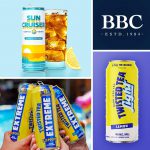
Boston Beer Company has found another growth driver with its spirits-based hard tea brand Sun Cruiser, which continues to deepen its distribution footprint. But the hot ticket item continues to be unable to stop flooding volume from its sibling brands, as the company recorded yet another quarter of shipments and depletions losses.
Ball Corporation’s North American and European aluminum can supply will be hard to come by for the foreseeable future – into the end of the decade, CEO Ron Lewis shared during the manufacturer’s Q1 earnings call earlier this week.
Ball Corp., the largest manufacturer of aluminum cans in the world, reported full-year and fourth quarter global shipments up +0.8% and down -6.1%, respectively, including the company’s now-divested Russia business.
Molson Coors CEO Gavin Hattersley declared the U.S. consumer “remains resilient,” as trade up to premium offerings continues and there aren’t signs of “significant channel shifting,” during the beverage-alcohol producer’s Q2 earnings report today.
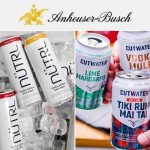
Anheuser-Busch InBev (A-B) reported a +12.1% increase in revenue, to $15.091 billion, and +3.7% volume growth in the third quarter of 2022, compared to the same period last year, the company shared today in its earnings report.
The Boston Beer Company – parent of Samuel Adams, Angry Orchard, Twisted Tea, Truly Hard Seltzer and Dogfish Head – aims to become the No. 1 beer industry supplier in the fourth category, CEO Dave Burwick said during a conference call with investors and analysts to discuss the company’s third quarter 2022 earnings.
Boston Beer Company reported a -6% decline in depletions, while shipments increased +1.4% in its third-quarter 2022 earnings report today. Boston Beer recorded a $27.1 million non-cash impairment of intangible assets related to the Dogfish Head brand
Constellation Brands’ beer business reported double-digit shipment and net sales growth along with nearly 9% depletions growth in the second quarter of its 2023 fiscal year.
Molson Coors’ second quarter earnings report featured varied results, including volume declines, an increase in net sales per hectoliter (+7.1%) and the company’s first increase in U.S. dollar share in more than a decade.
Anheuser-Busch InBev reported +11.3% revenue growth and +3.4% volume growth globally for the second quarter of 2022. “Our business delivered sustained profitable growth,” CEO Michel Doukeris said in a press release. “Our volume increased by 3.4%, our top-line by 11.3% and EBITDA by 7.2%. The relentless execution of our strategy, the strength of our brands and accelerated digital transformation enabled us to meet the moment in an ongoing dynamic operating environment.”
Boston Beer Company’s leadership admitted the company has not performed “as expected” so far this year, lowering its guidance to a volume loss between -2% and -8%, during an earnings call with investors Thursday afternoon.
Due to the “greater than expected continuing decline in demand in the hard seltzer category,” Boston Beer Company has “reduced” its fiscal year 2022 volume and earnings guidance, founder and chairman Jim Koch said in a press release announcing the company’s Q2 2022 results.
Pricing was the clear theme of the question-and-answer portion of Constellation Brands’ first quarter FY2023 earnings call on Thursday. More specifically, analysts were wondering why the company is hesitant to increase price in an inflationary environment. CEO Bill Newlands reiterated that Constellation’s “long-term algorithm on pricing is +1%-2%,” although last year it increased beer prices +3.5%.
Constellation’s beer depletions increased +8.7%, while shipments grew +17.3%, to 99.5 million case equivalents during the first quarter of its 2023 fiscal year, the company reported today. Net sales increased +21%, to more than $1.898 billion, with gross profit of more than $1 billion (+14%). The beer business’ operating income also increased +13%, to $762.8 million.
Ball Corporation, the world’s largest manufacturer of aluminum beverage cans, reported $1.6 billion in sales in its North and Central America beverage packaging business unit for the first quarter of 2022, a +23% increase over the same period last year.