
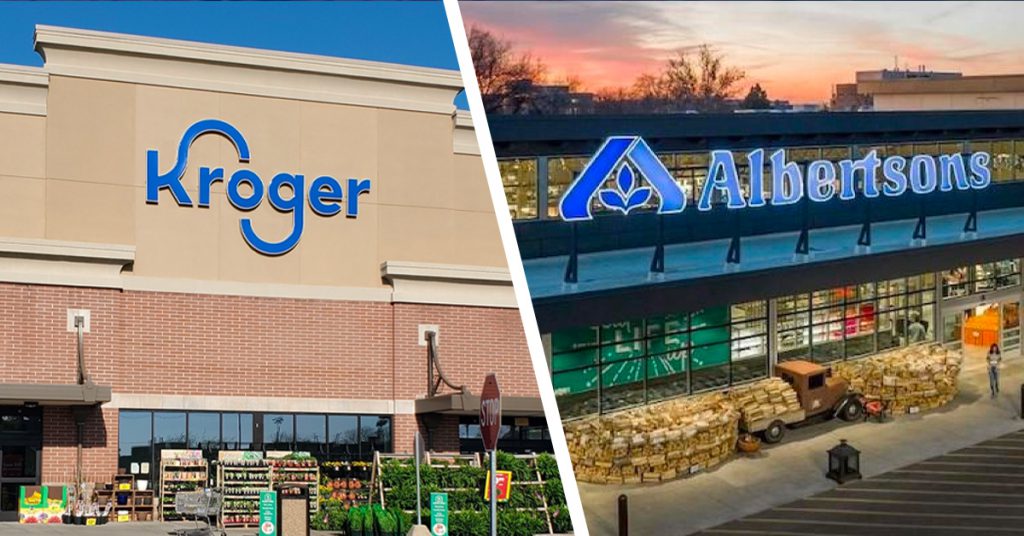
The proposed $24.6 billion Kroger/Albertsons mega-merger was temporarily blocked today by a federal judge, who ruled in favor of the Federal Trade Commission (FTC) suing to block the deal.
U.S. District Judge Adrienne Nelson granted the motion for a preliminary injunction in the U.S. District Court for the District of Oregon, agreeing with the FTC’s argument that Kroger and Albertsons’ plan to divest hundreds of stores to C&S Wholesalers is not enough to create fair competition in the grocery industry.
“There is ample evidence that the divestiture is not sufficient in scale to adequately compete with the merged firm and is structured in a way that will significantly disadvantage C&S as a competitor. The deficiencies in the divestiture scope and structure create a risk that some or all of the divested stores will lose sales or close, as has happened in past C&S acquisitions,” the decision reads.
Kroger and Albertsons expanded its divestiture plan in April and after the FTC rejected the original plan claiming it was an insufficient, “hodgepodge of disconnected stores” while pointing to the failed divestment of Albertsons stores to Haagen following its merger with Safeway. The retailer later published the full list of planned divestments as it worked to stand its ground against the FTC.
Federal regulators have also argued that the deal would eliminate Kroger and Albertsons’ incentive to remain competitive on price amid already heightened grocery prices as well as reduce employment options and bargaining power for the grocers’ unionized workforce.
Albertsons shares fell 2.2% on Tuesday afternoon while Kroger shares rose about 5% after the news broke.
The ruling comes just days after Kroger CEO Rodney McMullen backpedaled on the retailer’s previous stance that the merger was essential to its ability to compete in grocery in the future. For the past two years, executives including McMullen and Albertsons CEO Vivek Sankaran have said they are ready and willing to fight for the deal in court.
Throughout the past four months, they have done just that. Arguing the benefits of the deal in state courts across the country throughout August and September, the retailers top executives continue to fight anti-trust challenges from Colorado attorneys general Phil Weiser and Washington attorneys general Bob Ferguson, in addition to a lawsuit brought by the FTC in January; a Washington state judge has also blocked the deal alongside the federal ruling today.
The temporary block puts the already contentious deal on even shakier ground. With president-elect Donald Trump set to take office in January, global markets and executives around the country are anticipating a loosening of anti-trust regulations that has become a hallmark of the Biden Administration with the FTC under the direction of commissioner Lina Khan.
When it was first announced in October 2022, the company faced immediate opposition in doling out a special dividend payment totaling $4 billion to Albertsons shareholders; the payment was initially tied to the merger announcement with the company later arguing it was separate from the deal after it faced legal opposition in Washington state, California, Illinois and D.C.
The payment ultimately went through in early 2023 after the Supreme Court decided not to hear the case.